Rabbits!

Audubon, John James, artist, and John T. Bowen, printer, Lepus Sylvaticus, Bachman, circa 1845-1848, Smithsonian Institution, Peters Prints Collection, Creative Commons CC0 license.1

There they are: Mr. & Mrs. Cottontail and one of their many offspring. The Eastern Cottontail and its relatives were a common sight in Jonathan and Mary Clark’s world, just as they are today.

We seem to have a bumper crop of rabbits in our suburban Wisconsin yard this year and, no doubt about it, the bunnies are cute and entertaining. But for the gardener, rabbits mean trouble. If you are trying to raise vegetables and fruits to feed your pioneer family, these amusing little fur balls are the enemy. They can consume huge amounts of seedlings and sprouts in just a day or two. What’s a gardener to do?

Last year—after they ate through the plastic fence around our vegetable garden and then devoured our entire crop of green been sprouts—I went to the local big box store and got a roll of metal wire rabbit fencing and some steel posts to hold it up. That worked great for us, but it made me wonder: what did Jonathan and Mary Clark use to keep the ravenous rabbits at bay? Well, I don’t have any documentation from the Clarks’ farm, but during my researches, I have noticed some popular 19th-century methods of rabbit control.

Continue reading

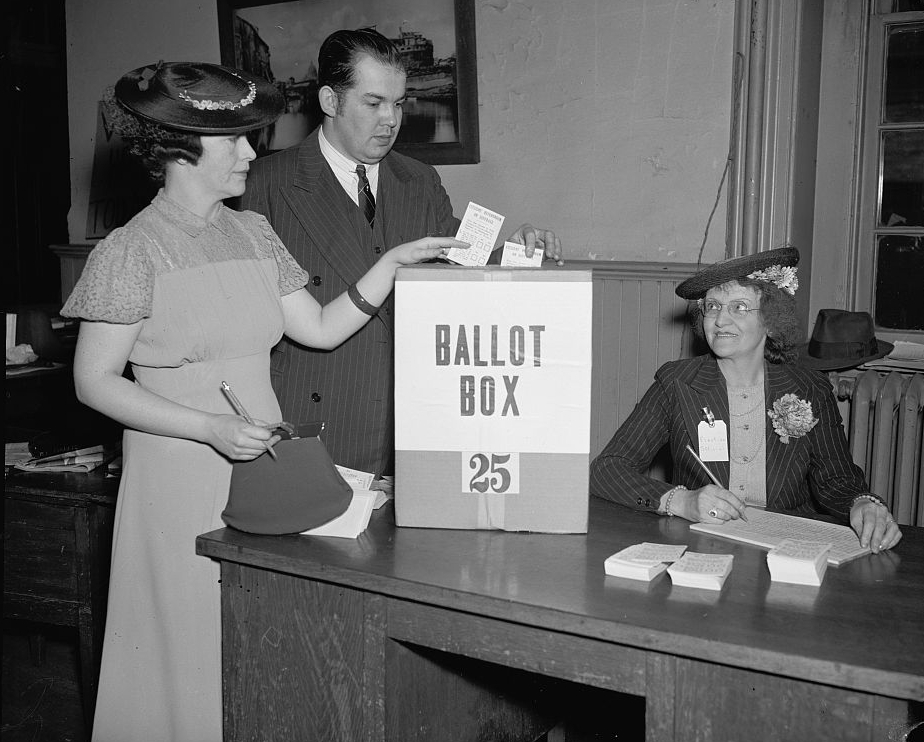
Have you voted?

It’s not too late to cast your ballot in the reader’s poll from our previous post, asking how I should archive the contents of my April 22 Cedarburg History Museum talk here at Clark House Historian. Should I publish the words and images as a series of usual-format CHH blog posts, or as one or more YouTube videos, featuring all the original PowerPoint slides, accompanied by my re-recorded narration?

The polls are still open, and the lines are short. Just scroll down to the Leave a Reply box, below, and where it says “Enter your comment here…” leave your vote for “Blog posts” or “YouTube videos.”  Questions? For the full story, just click this link and read the second part of Monday’s post, beginning at “That was fun!”

In the words of the late, great, Mayor Richard J. Daley, “vote early and vote often!”

Continue reading

Time flies!

[Editor], daguerreotype with added color highlights c.1855 (slightly cropped, and color adjusted), Smithsonian American Art Museum, Gift of Charles Isaacs, (link), Creative Commons CC0 license. Click to open larger image in new window.

Hey! It’s almost been a month since my last post. Sorry about that. I haven’t gone this long between posts in several years, I think, and now I’ve got (the digital equivalent of) a towering pile of half-written posts to finish and topics to discuss. That said, I have been busy…

Continue reading

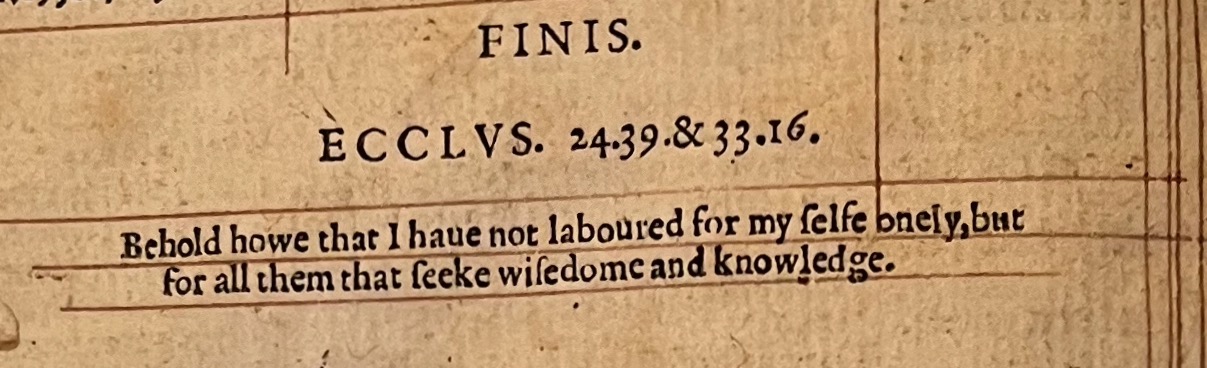
Finis, 2022

[The Bible,] Geneva version, published by Christopher Barker, London, circa 1580-1588. Collection of the Jonathan Clark House, photo credit: Reed Perkins, 2022.

What a year!

Finis. The End. Today is December 31, the last day of a long and eventful 2022. I’m not up to the task of summarizing all the highs and lows of the past year. I’ll leave that to others.

But I thought recalling one special summer day at the Clark House might make a nice valediction at the close of the old year and the beginning of the new. And for me, without question, the best day for the Clark House this year was July 23, 2022, the day we celebrated the generous donation of the historic Bonniwell family Bible and papers.

Continue reading

‘Tis the season…

Time is flying; it’s already been a week since Thanksgiving. I hope you all had time to enjoy the day.

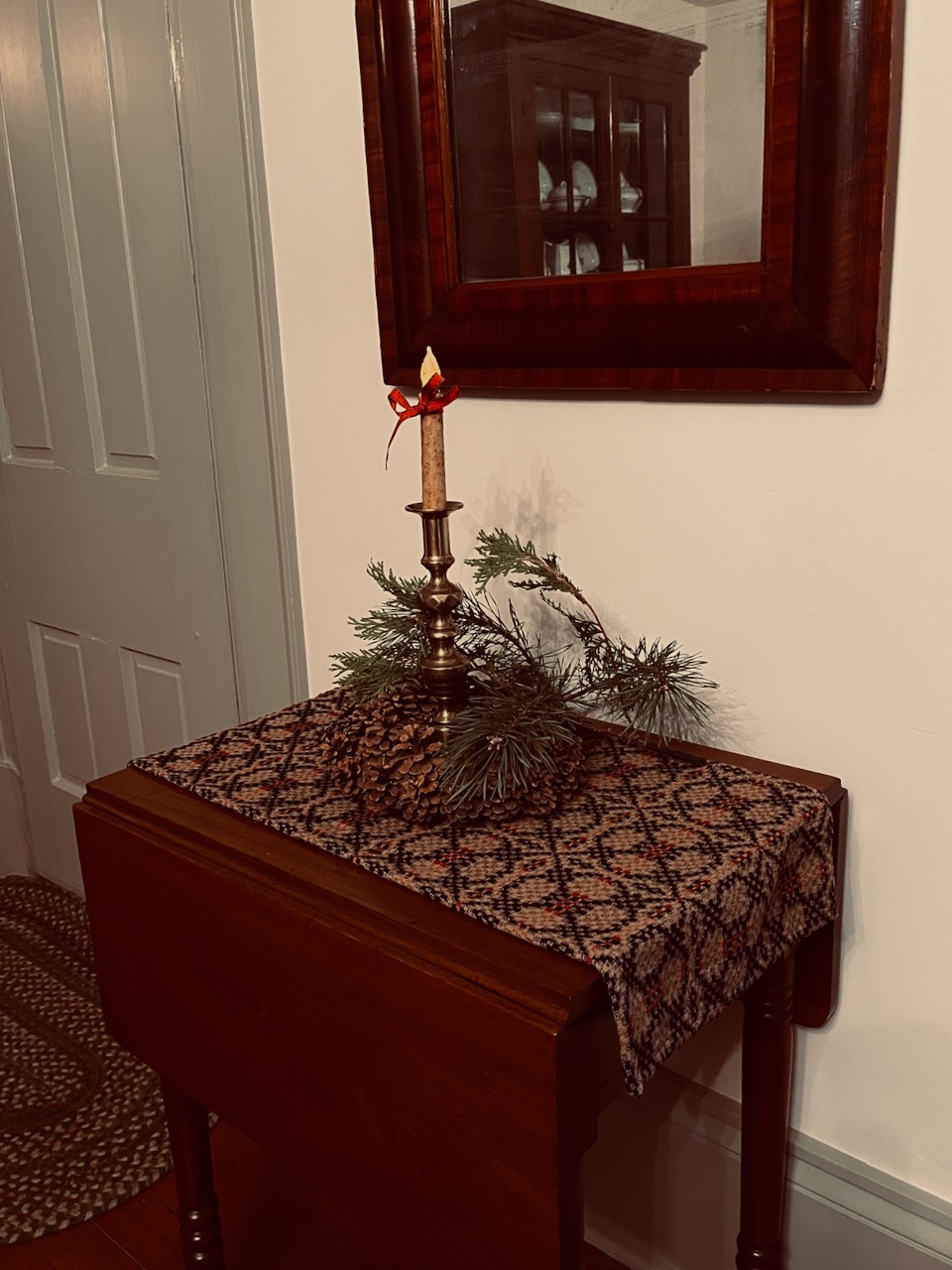
I’m in the middle of preparing several Clark House Historian posts and the writing is going slowly. But! December is here and I’m starting to feel the holiday spirit. So until I finish my current research and writing project (we’ve got to bring the Bonniwells back from the California gold rush!), how about a seasonal photo from my most recent visit to the Clark House?

Clark House front parlor with holiday candle, 2022. Photo credit: Reed Perkins.

Continue reading

The Bonniwell Bible’s provenance or, Who Owned It & When?

Provenance

Provenance is an important concept for historians, collectors and museums. It refers to the chain of ownership of any collectible item, including manuscripts, artworks, official documents or, in our case, a family Bible. Establishing the provenance of an item—such as the Bonniwell Bible—from its creation to the present day is important for several reasons:

  • By studying this Bible as an artifact, a book published on paper, we are establishing its history and authenticity as a Bible, published in London, England, by Christopher Barker, in the Geneva translation, including copious notes, helps and other additions, probably during the reign of Queen Elizabeth I and, more specifically, circa 1580-1603.
  • By studying the inscriptions in this Bible, we can also try and establish who owned the book, and when they owned it. The more we know about this, the more confident we can be about the historical and genealogical information found in the Bible’s many inscriptions.

Who owned it first?

That’s still a bit of a mystery. On the one hand, we do have a solid—though perhaps not unbroken—history of Bonniwell family inscriptions in this Bible, beginning in 1697 and continuing through the early 1900s. First-person family recollections record the Bible’s direct descent from that time until the present day. And we know that this Bible was first in the possession of a related branch of the Bonniwell family and then owned by “our” Bonniwells no later than 1795:

Bonniwell Bible, detail, showing inscription by William Bonniwell, 1798, and ligature WBonniwell, 1795. photo credit: Kendalyne Gentile, 2022.

Continue reading

Back to School, 1842!

I hope you liked our recent re-post of Back to School, 1839! And since I’m still working on a number of new but not-yet-ready projects, I thought you might also enjoy a revised and expanded version of a related post that was first published September 2, 2020.

It’s “Back to School” time for many of us, so I thought you might be interested in this transcription of the earliest known school records of old Washington/Ozaukee county prior to 1845, published on page 328 of the History of Washington and Ozaukee Counties, Wisconsin […] Illustrated. Western Historical Co., Chicago, 1881:

Click to open a larger image in a new window, and see which of the early settler families had school age children, that is, children between the ages of 4 and 16, in 1842 and 1843. (Current Washington and Ozaukee county readers: do you have any kin listed in this summary of early school censuses? Let us hear from you via the Leave a Reply box, below.)

Continue reading