Turck, Turk…Durk?

Spelling variations in old records

Durk, Peter [Turck], baptismal record, 1798, detail. “Peter” starts the left column, father “Jacob A. Durk” is at the top of the center column (source). Click to open larger image in new window.

In a previous post, reader Laura Rexroth asked: Why did they spell Peter Turck’s name incorrectly [i.e., Durk] when he was baptized? That’s a great question, and super relevant to successful historical and genealogical research. So let’s talk about the Turck family surname and, by extension, the whole issue of spelling in earlier times and documents.

There are two main issues to keep in mind:
• variations in spelling that existed at the time the source material was created, and
• subsequent misreadings, including incorrect transcription or indexing of sources

Continue reading

Clark House News

The Friends of the Jonathan Clark House February newsletter is here! Many thanks to all the volunteers, donors, and Clark House board members for their continuing work “to collect, preserve and share the history of the Jonathan Clark House and the early settlers of Mequon Thiensville.”

Once again, Clark House executive director Nina Look has done a wonderful job leading the work of the museum, coordinating the volunteers, and putting together an informative and generously-illustrated newsletter. Just click on this image of the first page to open your own downloadable pdf in a new window:

Continue reading

CHH Reader Challenge – results!

At the end of last month, while working on some longer posts about the Turcks and Clarks, I had some fun creating the first Clark House Historian Reader Challenge: where you get to be the historian!, and today we have the results. The original challenge went something like this:

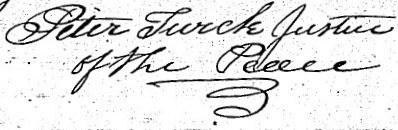
Here’s an excerpt of a document that will be part of an upcoming post. Can you read and transcribe it? (Ignore the squiggles in the top right corner, they belong to another record on the same page.)

The original CHH Reader Challenge #1. Click to open larger image in new window.

And I gave y’all a hint, the full page from which this record was excerpted. And as a second hint, I suggested that a look at my discussion of Kurrent handwriting might be helpful.

So what is this a record of, and what does it say?

Continue reading

Wintertime

…and I’m still “snowed under” with research and writing.

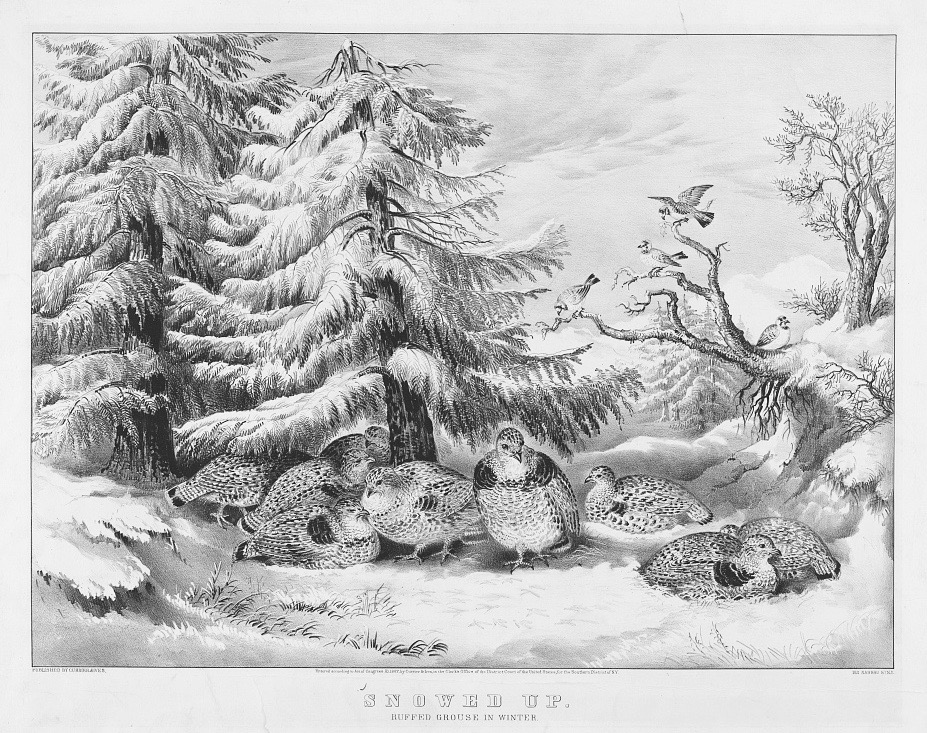
So here’s another seasonal image from 19th-century America’s favorite printmakers, Currier and Ives:

Currier & Ives. Snowed Up: Ruffed Grouse in Winter. , ca. 1867. New York: Published by Currier & Ives. Photograph. https://www.loc.gov/item/2001706217/ (cropped and edited for better color). Click to open larger image in a new window.

It’s a covey of ruffed grouse, sheltering under snow-covered firs. A scene like this would have been familiar to Peter Turck and his growing family in New York’s Hudson River valley, young Jonathan M. Clark in Vermont or Lower Canada, and the settlers in Mequon and points farther north and west.

Continue reading

Snow!

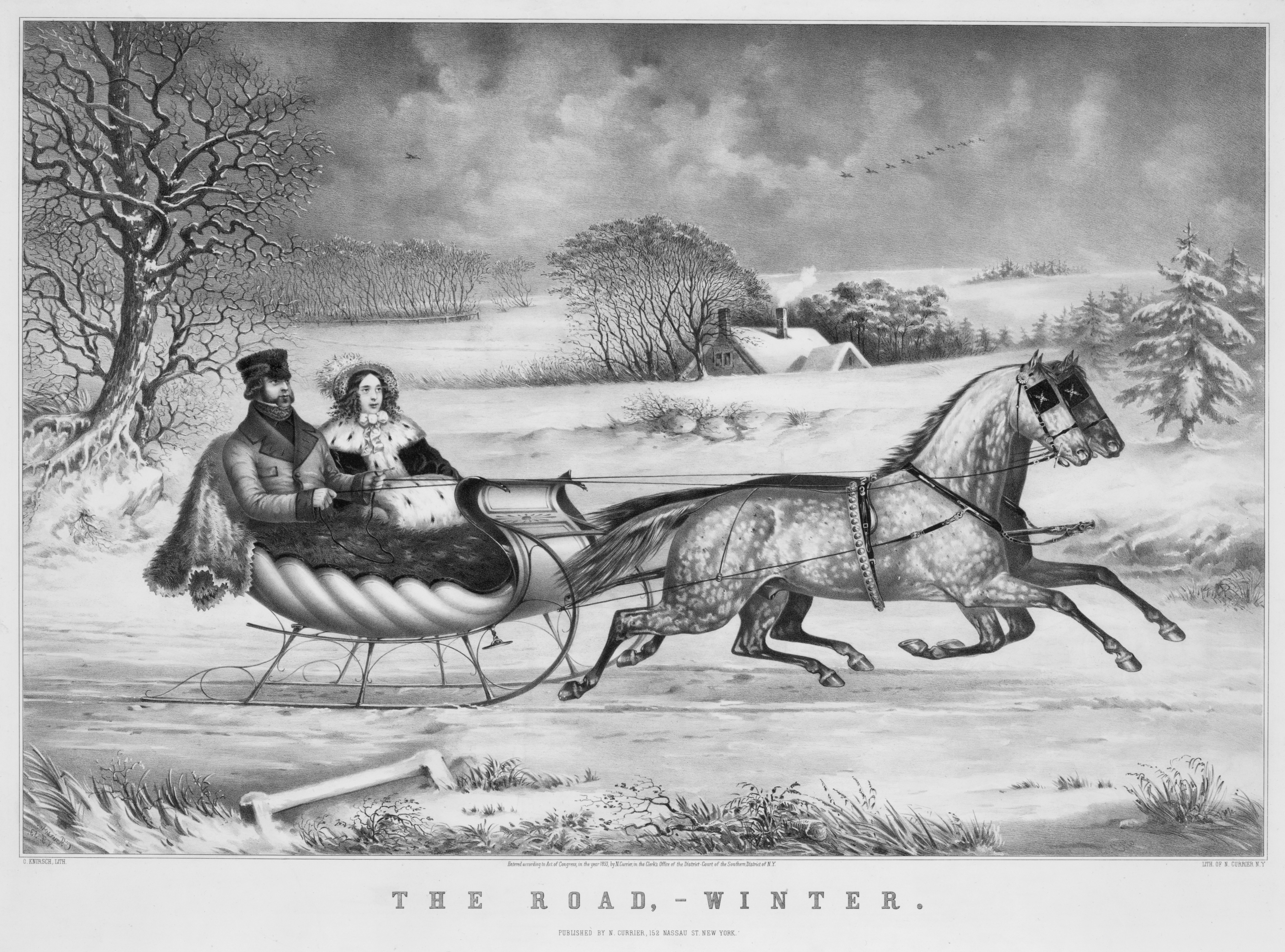
We got some snow in southeast Wisconsin over the weekend, and I’ve spent good parts of the past two days shoveling the driveway and sidewalk. (And then—of course—shoveling the driveway a second time after the city plow finally came through.) Of course, snow was a feature of Jonathan and Mary Clark’s time, too:

Currier & Ives. (1853) The road, winter / O. Knirsch, lith. United States, 1853. New York: Published by Currier & Ives. [Photograph] Retrieved from the Library of Congress, https://www.loc.gov/item/93511164/ (lightly retouched for color balance). Click to open larger image in new window.

We don’t know if the Clarks owned a sleigh while they lived in Mequon. I suspect they probably did, though their sleigh—and their clothing—may not have been quite as posh as those in this Currier & Ives lithograph from 1853.

Continue reading

Mary Turck Clark—updated

The original version of this post was the second-ever post on Clark House Historian. It represented what we knew at the time about Mary Turck, the daughter of Peter Turck and Rachael Gay, wife of Jonathan M. Clark, and mother of the eight Clark family children. The original April, 2016, post was pretty accurate, but we have learned a lot more about Mary and her Turck and Clark families in the meantime. So here is a revised version of that post with errors corrected and ambiguities clarified—where possible.

Please note that there are many more facts about Mary and her Clark and Turck families that I’ve written about in the past almost-5 years that are not linked to in this post. If you are looking for more information about Mary, I highly recommend using the blog’s SEARCH function and our new INDEX. And if you still can’t find the info you want, please ask me! Just use the Leave a Reply box, below, or the CONTACT link, above.

Mary Turck Clark: Mequon Pioneer

CLARK, Mary TURCK portrait

Mary Turck Clark. Photograph courtesy Liz Hickman. Click to open larger image in new window.

Continue reading

CHH Reader Challenge!

I’m working on some longer posts about Peter Turck, Mary Turck Clark, and other Jonathan Clark House related topics. One of those posts should be ready by Friday.

Meanwhile, here’s a Clark House Historian Reader Challenge: where you get to be the historian!

Here’s an excerpt of a document that will be part of an upcoming post. Can you read and transcribe it?

CHH Reader Challenge #1. Click to open larger image in new window.

Ignore the squiggles in the top right corner, they belong to another record on the same page.

Need a hint? Here’s the whole page that this record is taken from:

Continue reading

Monday: Map Day! – Columbia County, New York, 1829

Peter Turck’s Home

Continuing our look at Mary Turck Clark and her family, today we look at a map of Columbia County, New York, the birthplace of Mary’s father Peter Turck, most of his eight siblings, and home of Mary’s paternal grandparents—Peter Turck’s parents—Jacob A. and Anna Maria “Maritje” (Klein) Turck. For more on the Turcks and New York, you may want to read our previous posts on Peter and Rachael (Gay) Turck’s New York, 1829/32 and Mary Turck’s Greene County, New York.

Today we’ll be looking at Columbia County, one of the predominantly Dutch-American counties along the Hudson River, south of Albany, New York. Columbia County lies east of Greene county, just across the Hudson river. Here’s a detail from a map we looked at previously, showing the relationship between Greene and Columbia counties:

Burr, David H., Map of the State of New-York and the surrounding country by David H. Burr. Compiled from his large map of the State, 1832.[…] Entered according to Act of Congress Jany. 5th., 1829 by David H. Burr of the State of New York. Engd. by Rawdon, Clark & Co., Albany & Rawdon, Wright & Co., New York [detail]. Credit, David Rumsey Map Collection, David Rumsey Map Center, Stanford Libraries, non-commercial use permitted under Creative Commons license. Click image to open larger map in new window.

Our new map is from the same atlas, and shows many more details of Peter Turck’s Columbia County, circa 1829:

Continue reading

Blog Updates!

Clark House Historian blog is approaching its fifth anniversary, so I’m making some updates to the layout and content of the site. To find the new info click the highlighted links in this post, or the new permanent links in the main menu, under the blog header. Here are the details:

The ABOUT page has been lightly updated, and I’ve added a page of DISCLAIMERS, too.

The big news is that the blog now has an INDEX. With almost five years of research and writing, the blog now has over 140 posts comprising more than 125,000 words. So I’ve begun indexing the blog’s contents. Indexing will take a while—especially once I get to 2020—so please be patient. As of this morning, the index is complete for all of the posts from 2016, and most of 2017.

Continue reading

Inauguration Day

Today we celebrate the inauguration of the forty-sixth president of the United States. The inauguration of a president is traditionally a time to take stock and ponder the direction of the republic. I expect that President Biden—like many of his predecessors—will try and make the best of his opportunity. (I’m writing this before the ceremony; I don’t know if he succeeded.) For a little inspiration—for us all—let’s look back at one of the great American speeches—perhaps the most moving and inspired of all the inaugural addresses—delivered at one of the most difficult and dangerous moments in our history.

A second term, and Union victory, were not certain…

For much of 1864, president Abraham Lincoln’s prospects for reelection looked dim. Union forces had suffered notable defeats and horrifying casualties in early 1864, and many in the North were tired of the cost of the war, both in dollars and human suffering. If not for Gen. William Tecumseh Sherman’s timely capture of Atlanta on September 2, 1864, Lincoln might have lost the election to Gen. George B. McClellan. McClellan sought to end the war by negotiating an armistice with the South. Such an armistice would have ended the fighting, but would not have solved the cause of the war: the continued existence of chattel slavery in the South and in the new U.S. territories and states forming in the West. But Lincoln’s popularity soared after Sherman’s decisive victories during the Atlanta campaign—especially after the fall of Atlanta—and the incumbent president won a decisive popular and electoral college victory on November 8, 1865.

Continue reading