Even thought it’s Labor Day, the holiday celebrating the working men and women of our nation, I’ll be at work, back at our local mercantile establishment. You know, a store kind of like this one, stocked with just about anything you need for modern living:


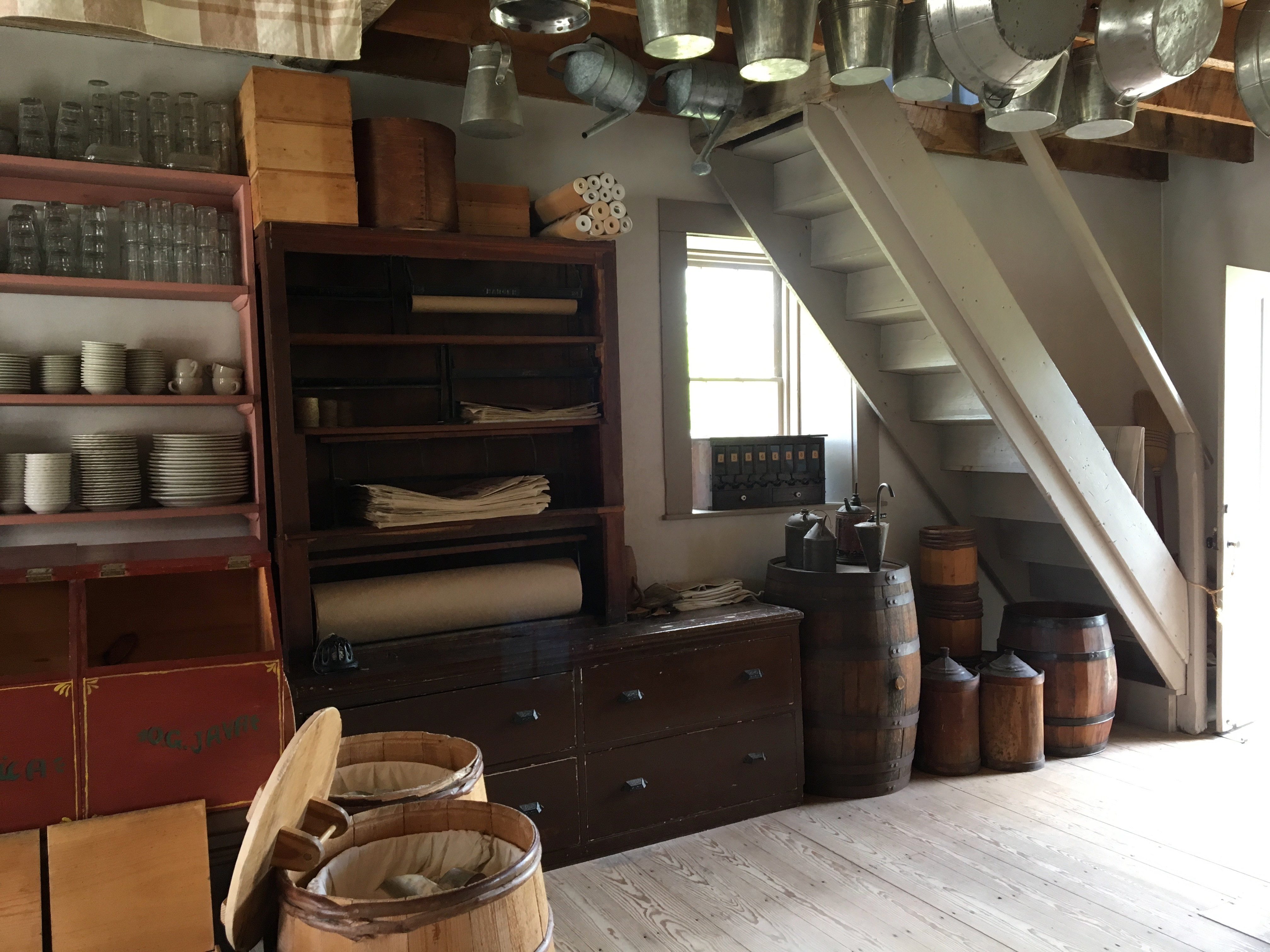
I don’t have the day off, and won’t be marching in a parade, but I’d still like to honor the holiday and salute the American worker, past and present. With that in mind, let’s revisit some of the nineteenth-century occupations we’ve talked about previously at Clark House Historian, highlighting a few of the many skills, trades, and occupations common during the Clark House era.
Since it is a holiday, I’m not going to add much commentary today. Enjoy the photos, and click the links to visit the original CHH posts with lots more information about the different skills and jobs, and for full image credits.
“Labor”
What’s the first thing you think of when you hear the word labor? Perhaps big men doing hard work with their hands, at a factory, on a job site, or in a workshop? Except for the first sawmills, grist mills, and a brewery or two, rural Mequon didn’t have much in the way of factory work in its early decades. (Fun fact, Jonathan Clark’s father-in-law Peter Turck set up the first sawmill in the county, on Pigeon Creek, in 1837 1838. See the essay on Peter Turck by Clark House young historian Spencer Holloway on pages 4-5 of our April, 2021, newsletter for more.)
And pioneer Mequon did have plenty of men that knew how to use tools to make, improve, or repair all sorts of things. Notably, the Bonniwell family was filled with skilled carpenters, shipbuilders and other tradesmen, and Jonathan Clark and many of his other neighbors had experience surveying, cutting out roads and building simple bridges and dams. Here is a gallery of some typical 1840s-1860s workers with the tools of their trade:

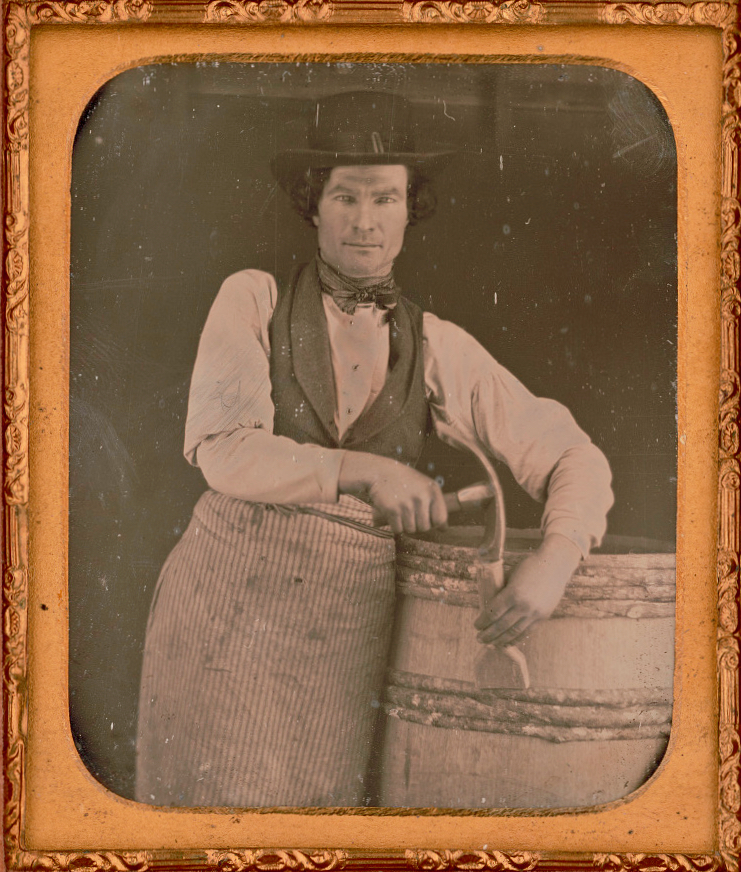

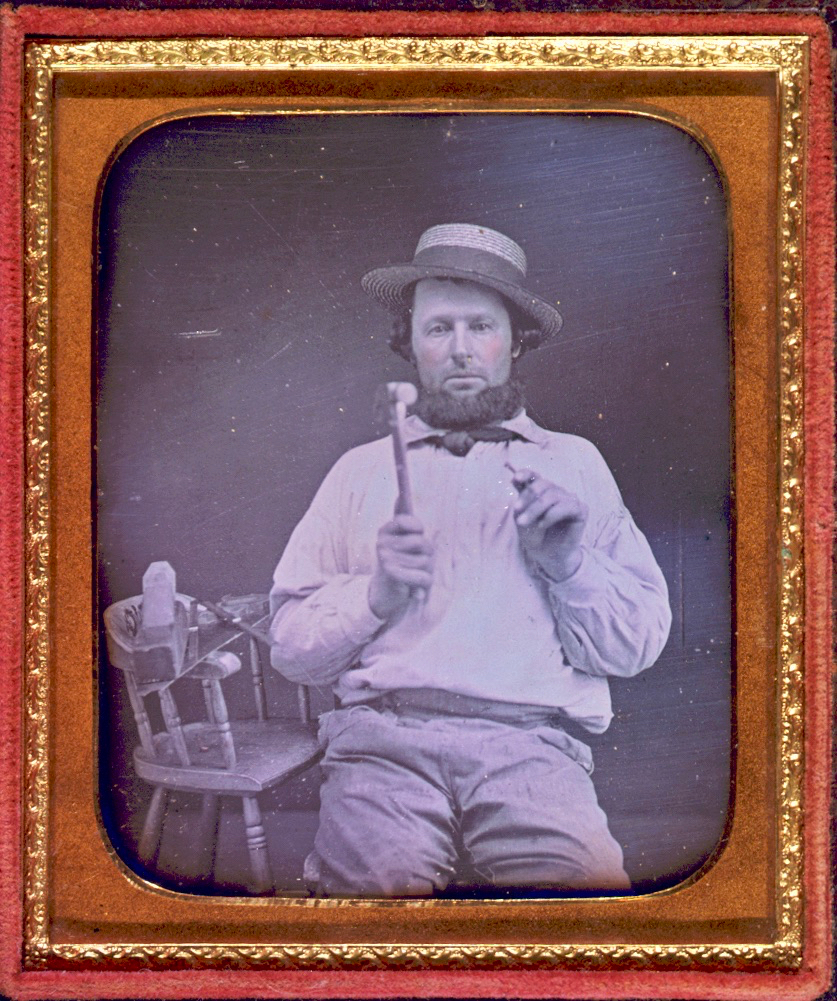

Top row: A blacksmith hammering away… and the cooper with his tools
Bottom row: Another blacksmith in the workshop…, a carpenter busy in his workshop…, and a man with a really big mallet and chisel, perhaps a timber-framing carpenter.
Farming
Some jobs are done mostly indoors, a blacksmith at the forge, a cabinet maker at his workbench, the cooper in his shop. Other jobs—like farming—are outside work, in sun, rain, or snow. In Mequon, farming was the most common occupation for many decades.
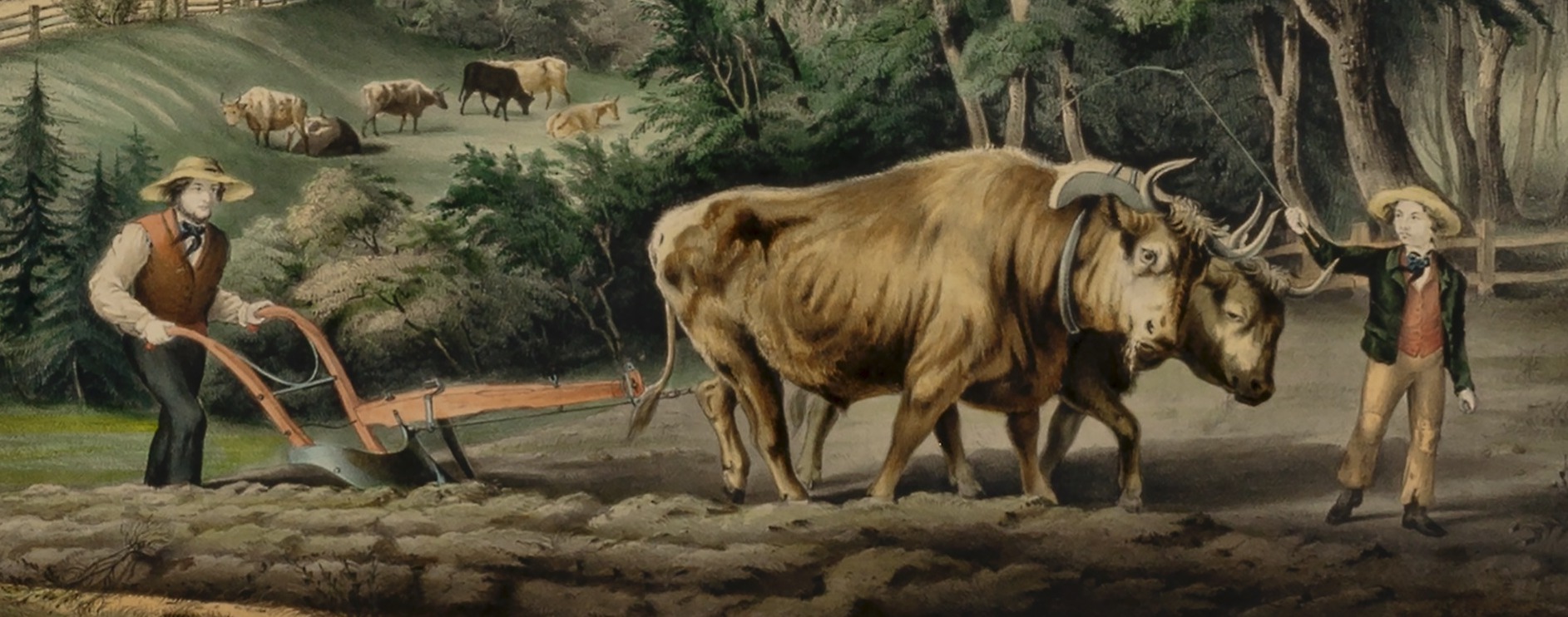
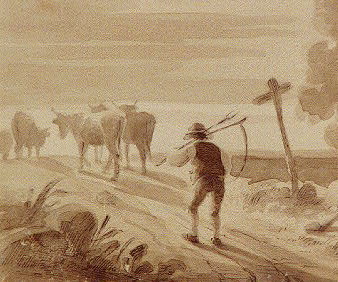

Clockwise from top: A farmer preparing for planting behind his ox-drawn plow, assisted by a young boy, much like our Jonathan Clark and son Henry may have looked in the 1850s, another farmer in his barn organizing some of his tools and supplies, and another farmer coming in from the fields, perhaps after mowing with his scythe.
Other work outdoors
Most farmers were skilled at a variety of useful trades, and many worked at them as a second occupation, especially during the winter months. And as we’ve noted, a number of local men went west to mine for Gold! during the California gold rush. Closer to home, in the 1840s and early-’50s, when Jonathan M. Clark wasn’t farming, he spent time supervising some of the surveying, marking out, and construction of new local roads.
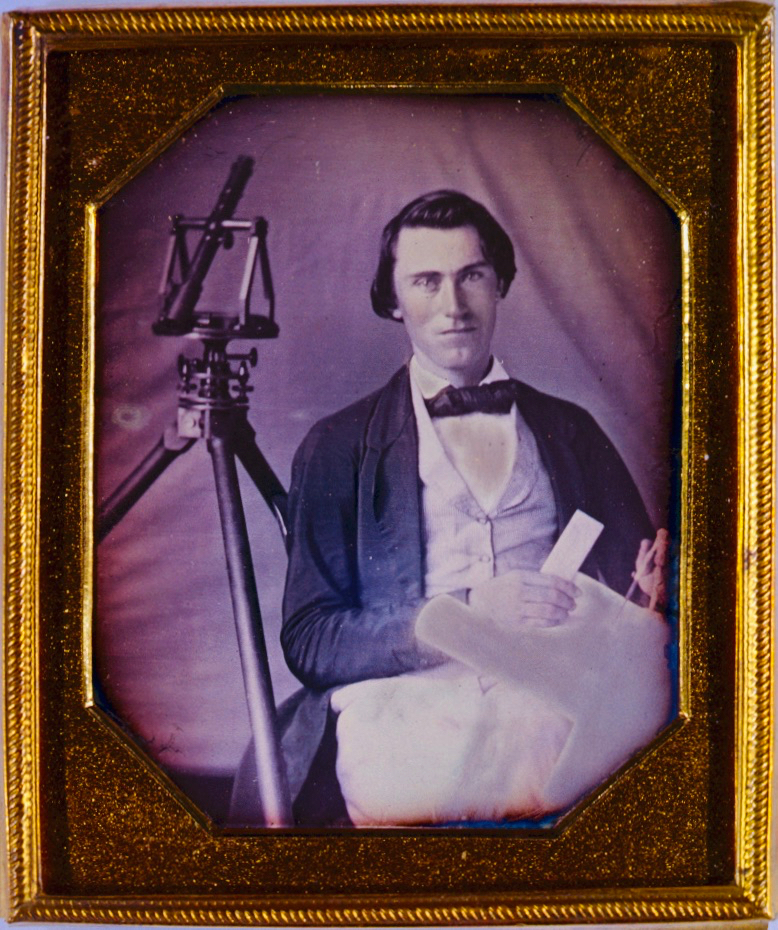


Clockwise from top left: a surveyor with a chart and his theodolite, perhaps marking out the roads like our Mequon farmers did in the 1840s, a teamster leaving the grist mill with sacks of newly milled flour, as did our own Fred Beckmann, Sr. in the 1860s, a Union Army engineer getting the lay of the land… during the Civil War, a (remarkably tidy) group of miners “working the bar” in the California gold fields, c. 1848-1853 and a stone cutter or mason chipping away… at his work (perhaps building a home like our 1848 Jonathan Clark House?).
“Women’s work”
Women in pioneer Wisconsin did just about every kind of work. In rural areas they had to be strong and capable at a wide variety of tasks, as they often kept the farm going while husbands and fathers were away, sometimes for weeks, months, or longer. (Think of the Mequon area women that were left in charge of families and farms for years while their men went prospecting in the California gold fields.)
In the cities—as on the farm—women and girls were expected to cook, clean, manage the household and educate the younger children. Some women and girls—often out of necessity—pursued trades part- or full-time outside the home, for example as domestic servants, cooks, seamstresses, tailors,milliners, and laundresses.


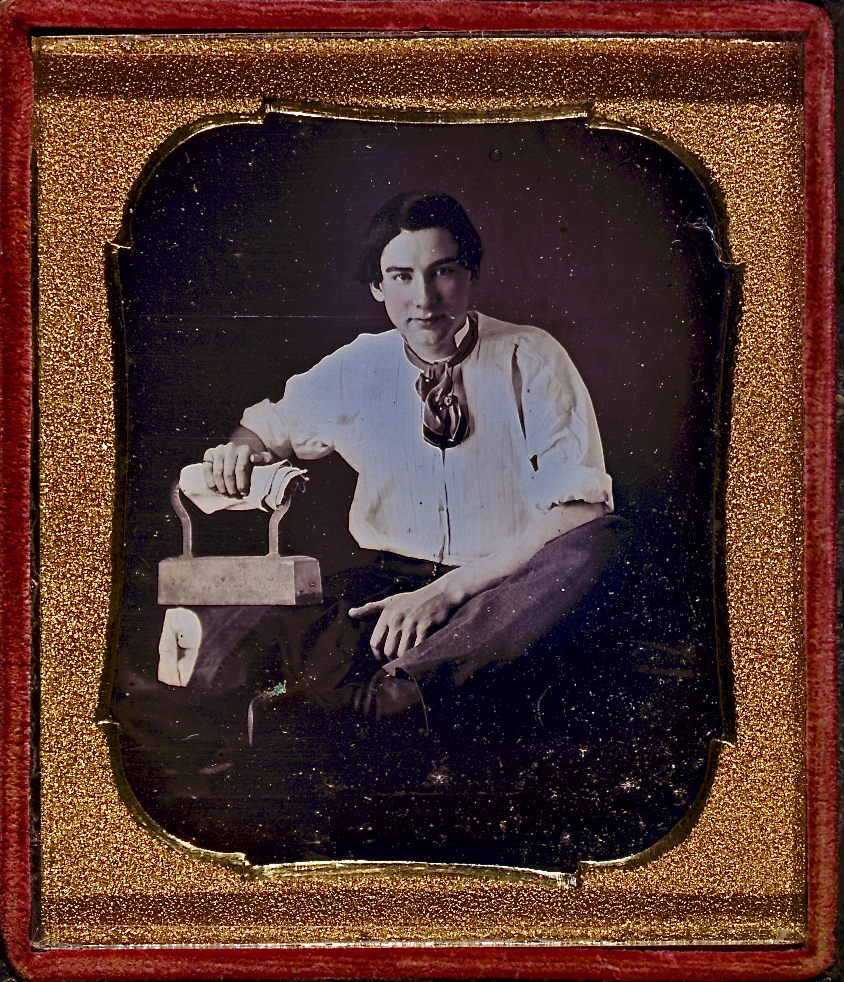


I’ve written about a few of these skills and trades already, and I have more posts sketched out for future publication. The first image, top left, is the frontispiece of Mrs. Esther Allen Howland’s invaluable New England Economical Housekeeper and Family Receipt [Recipe] Book, published in Worcester, Massachusetts, in 1845. It’s part of a unfinished series of CHH posts focused on cooking in Mary Clark’s day. I promise I’ll get that finished in a while.
The other photos (clockwise from Mrs. Howland’s frontispiece), are the outside wash area at Irish immigrant Mary Hafford’s house (1880) at Old World Wisconsin, a Milliner and Her Daughter, a woman sewing for the family—or perhaps professionally—and, to help her out, a strong lad with a heavy iron to iron out a few wrinkles…
Education
Education was vitally important to the early Washington and Ozaukee county settlers, including the Clarks, Turcks, Bonniwells, and their neighbors. I’ve written quite a bit about schooling and teachers in early Mequon and Milwaukee, and there will be more to say about that a little later. Mary (Turck) Clark and daughters Caroline, Josie, and Jennie were—for at least a short while—teachers; Caroline, Josie, and Jennie all graduated from the Normal Course at their Milwaukee high school and taught in the Milwaukee public schools. Daughter Caroline (Clark) Woodward became nationally known as a public speaker and temperance worker with the W.C.T.U., and daughter Jennie (Clark) Morrison graduated from the University of Michigan dental school and maintained an active dental practice for fifty years.
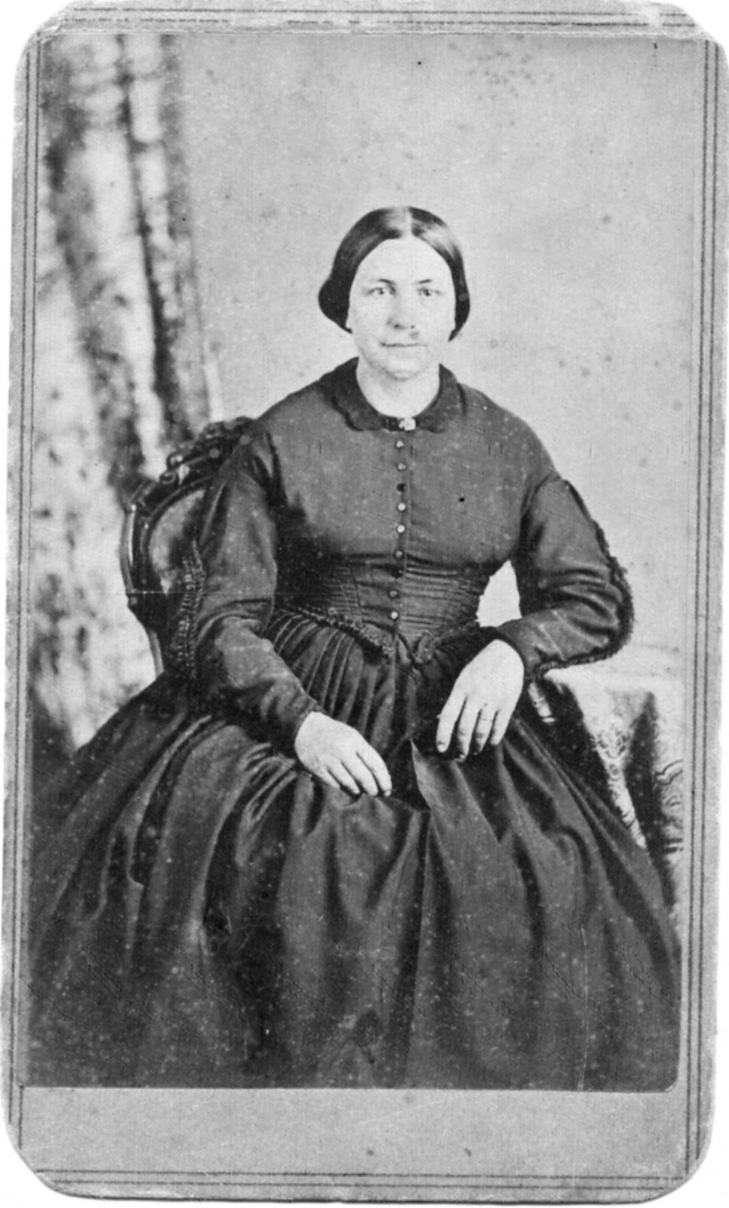


Clockwise from top left: Mequon’s very first teacher may have been a young Mary Turck, see Mary Turck Clark—updated for details; check out Back to School, 1839! for the humorous story of hiring Mequon’s first official schoolteacher, E. H. Janssen; click here for a list of posts covering some of Caroline (Clark) Woodward’s long and productive life; when Henry M. Clark registered for the Civil War draft, he was a 20-year-old “student” in Milwaukee (perhaps at a business school?); and Jennie (Clark) Morrison was the first member of the Jonathan M. Clark family to graduate from a post-secondary college or professional school.
But wait…there’s more!
Of course there’s more! History never stops; there’s always more to learn, new facts to discover, and new ways to interpret the past. I’ll be back with more of the search for Jonathan Clark’s roots in our next post.
And meanwhile, whether you buy from an attentive salesman, shop at the big store, or have goods delivered by the UPS van local peddler, be nice to the workers that are on the job, working for you, even on a national holiday.


________________________________
UPDATED, September 7, 2023, to correct the date of Peter Turck’s sawmill. Turck and family arrived in Wisconsin on August 27, 1837. He had his sawmill in operation sometime in 1838. (History of Washington and Ozaukee Counties…1881, page 487.)
 Clark House Historian
Nice piece, Reed. I so wish the Clark family left more “pictures” into their lives, but you are doing an amazing job of ferreting out information about the lives of the Clark children. Rock on!
LikeLike
Reed – Love the photos of “Old World Wisconsin”
Nina
LikeLike
Thanks, Nina!
It’s a great place to visit, and photograph.
Reed
LikeLike