Meanwhile, in California…

It’s been a while since we explored the documentary record of Mequon’s Alfred T. Bonniwell and his family and friends. Previously, we learned that the Bonniwells’ gold rush saga involved not one, but two, expeditions. The second trek westward was overland, chronicled in George Bonniwell’s gold rush diary. That trip, and the diary, began with the party’s departure from Milwaukee on April 12, 1850, continued through their arrival at the California diggings in mid-August, and closed—still searching for gold—with a final entry dated Tuesday, September 24, 1850. For more details, take another look at Gold! – The Bonniwells go west…but when? and who?

The first journey involved a smaller group, which included Alfred T. and Henry V. Bonniwell. As we discussed in A (new) Bonniwell Gold Rush timeline, that trek appears to have begun in April, 1849, with an overland wagon trip from Milwaukee to points unknown, with the party eventually arriving in New Orleans. On September 6, 1849, this first party continued West, mostly via ship: New Orleans to Chagres (Panama), by canoe and overland trail across the isthmus to Panama City, and then by steamship to San Francisco. They appear to have made it to California no later than November 4, 1849. They likely docked at San Francisco and then headed up to Sacramento, the main point of entry to the gold fields, which looked something like this:

Parsons, Charles and George Victor Cooper. Sacramento city, Ca. from the foot of J. Street, showing I., J., & K. Sts. with the Sierra Nevada in the distance / C. Parsons ; drawn Dec. 20th , 1849, by G.V. Cooper ; lith. of Wm. Endicott & Co., N. York, before March 2, 1850. Library of Congress. Click to open larger and very detailed, image in new window.

Forty-niners!

Alfred and Henry Bonniwell, together with Mequon-area neighbors P. M. Johnson, Thomas Day and Richard Taylor and perhaps one or two others, made it to the gold fields in 1849, as part of the first wave of fortune seekers. They are, therefore, bona fide “Forty-niners.” George, Charles and both William T. Bonniwells (senior and junior), and the rest of their overland party would not arrive until August, 1850. It would appear that Alfred and the rest of the Wisconsin 49ers had a lucky head start on the others. Or did they?

Continue reading
I must have drifted off…

Inman, Henry. Rip Van Winkle Awakening from his Long Sleep, 1823. National Gallery of Art, gift of William and Abigail Gerdts. Public Domain.

A long “nap”

Unlike Rip van Winkle, I haven’t been asleep the whole time since our previous post. But we are well overdue for new blog material. I’ve got a big backlog of documents and images to share with you; all I need to do is get writing. But first…

Be sure to vote today!

It’s election day today, and your vote counts. If you haven’t already done so, get out of the house, over to your polling place, and vote. Voting is your right and responsibility as a citizen, and an indispensable element of our nation since the earliest days of the Republic.

Not surprisingly, voting and public service were an important part of life in the Clark House era. From 1840 onward, Jonathan M. Clark, Peter Turck, William T. Bonniwell and many other relatives and neighbors sought, and won, appointment or election to a wide variety of local, territorial and state offices. Voting—then limited to white males only—was a priority for Mequon’s early settlers, and they never failed to turn out in large numbers for each election. Their passion for civic engagement and electoral politics was, in turn, passed to the next generation.

Continue reading

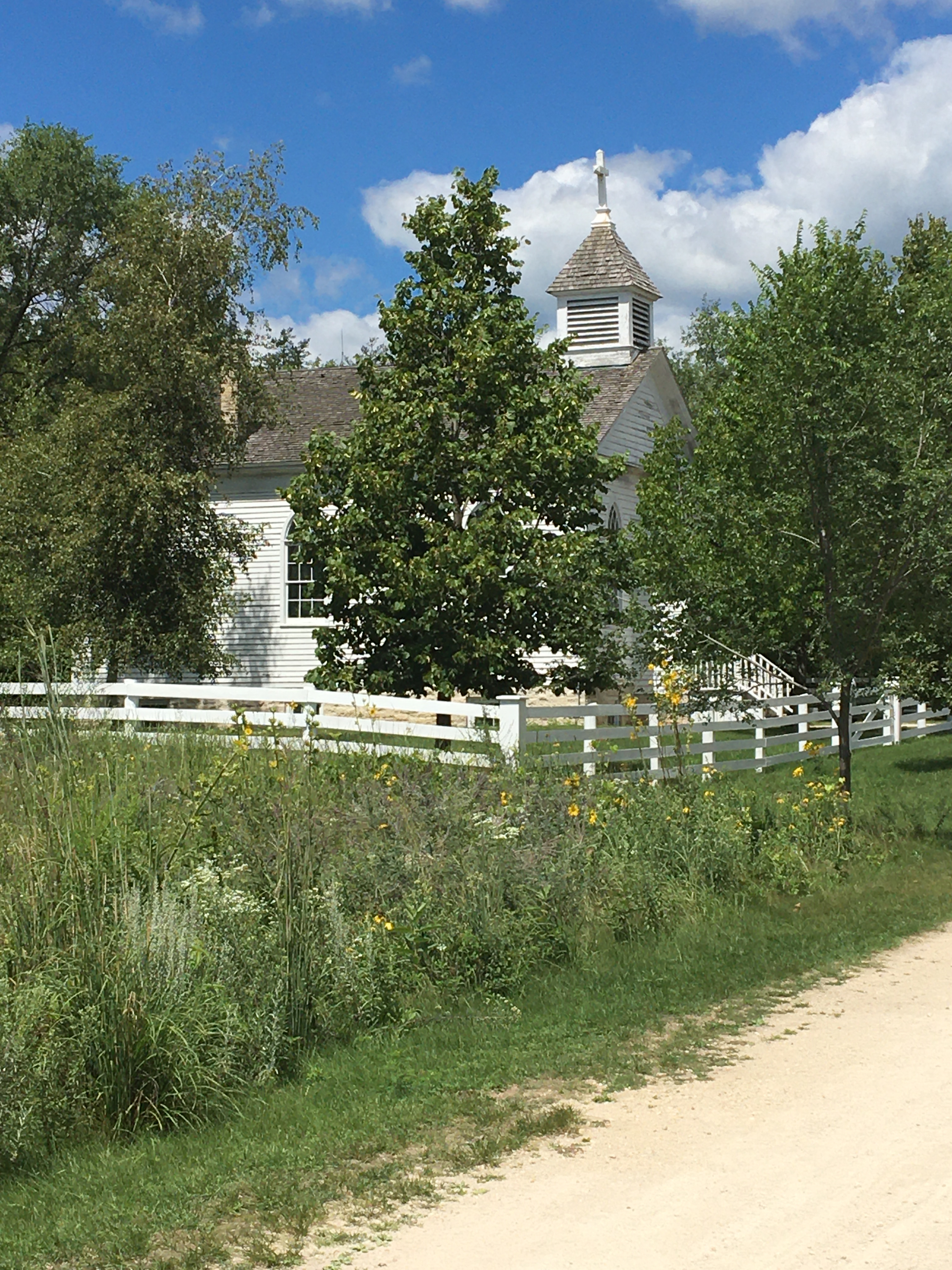
A familiar sight: St. Peter’s Church, 1839

I had a fine day last month walking through our state’s wonderful outdoor living history museum, Old World Wisconsin, where I enjoyed this familiar view:

Photo credit: Reed Perkins, 2022.

There among the trees stood Milwaukee’s old St. Peter’s Roman Catholic Church, a building that was certainly well-known—at least on the exterior—to our Clark and Turck families.

The church was built in 1839, two years after young Mary Turck arrived in Wisconsin Territory with her parents, Peter and Rachael (Gay) Turck and her six siblings, and the same year that Jonathan M. Clark and the Bonniwell family first appeared in the Milwaukee-Mequon area.

Continue reading

Owls…

I’m still busy annotating maps for upcoming Bonniwell-related blog posts. So instead of my planned Gold Rush themed Monday: Map Day! essay, I hope you enjoy this Clark-era image of a common visitor to much of North and South America—including Wisconsin—the Great Horned Owl.

Havell, Robert, jr., engraver, after John James Audubon, Great Horned Owl, 1829, plate 62 from The Birds of America (1828-1838), hand-colored engraving and aquatint on Whatman wove paper. National Gallery of Art, Gift of Mrs. Walter B. James. Public domain. Click to open larger image in new window.

Continue reading

The Bonniwell Bible comes home to Mequon

UPDATE, Nov. 30, 2022: The discussion of the William Bonniwell signatures and dates, below, is not correct. I have lined-through the incorrect paragraph and added the correct info in two new paragraphs below the original misinformation.

It may not look like much on the outside. It’s old. Not very big. Whole pages are missing, others are damaged. The binding is worn.

Bonniwell Bible, front cover. Photo credit: Kendalyne Gentile, 2022

But this modest book was—for over 300 years—the family Bible for Mequon’s pioneer Bonniwell family, their ancestors and descendants. And last month, the Bible’s most recent owner, Bonniwell descendant Kendalyne Gentile, generously gave the Bible and other Bonniwell family documents to the Jonathan Clark House Museum where they will form an important part of our permanent collection.

Continue reading

RBOH: Chewing Gum

Lately, I’ve been spending a lot of time looking through digitized historical newspapers, trying to fill in some of the missing pieces of the Clark House story. In the process, I’ve managed to discover some unique and important information about the Clarks, Turcks, Bonniwells and their neighbors. And I’ve also run into a lot of off-topic but fascinating tidbits about daily life in Wisconsin during the Clarks’ era, such as this random bit of history:

Continue reading

Summer evening…

Hello, readers! Sorry for the long blog silence. I hope you are well.

It’s been a busy summer at my house, filled with the usual demands of job, summer garden chores, lots of behind-the-scenes history research and, alas, an unexpectedly large number of mundane but unavoidable tasks, most of which are now behind me.

I have a backlog of half-written posts to finish and share with you. In the meanwhile, I hope you enjoy this photo.

Cedar Creek, looking north from the Columbia Road bridge, Cedarburg, Wisconsin. Photo credit: Reed Perkins, July, 2022.

The view looks north along Cedar Creek from near the historic Cedarburg Mill, about two miles north of the Jonathan Clark House. Turn off the electric lights, and this is a view that the Clark family would have known well.

Continue reading

Heritage Days, part 2 – July 16th!

Fun news from the Jonathan Clark House Museum:

Summer has finally settled in here in Wisconsin, and the Jonathan Clark House is ready to host you once again on Saturday, July 16, 12pm – 3pm to enjoy all the old fashioned fun in the very spirit of the season for the second installment of our summer series event Heritage Days!

In addition to our favorite features, our special attractions for July include:

Continue reading

The farm garden

I’m taking a bit of a break and have nothing new for you today. I have been doing a good bit of garden work around the house, and that reminded me of this post from April, 2021. Now we’re just finishing the first week of June, 2022, and it’s almost summertime. In southeastern Wisconsin the first spring flowers are done, and the next round of blossoms have been blooming for weeks. The tomato, bean and pepper seedlings are in the ground and doing nicely (although the rabbits have been nibbling on far too many green bean sprouts), and the roses are beginning to unfold. So even though this was originally an early-spring essay, I hope you enjoy this garden-themed repost from last year.

Planning the garden

It’s early April, and the growing season is not far off. For a farmer like Jonathan M. Clark, it’s a little early yet for plowing and sowing, but not too early to make plans and sharpen the tools. For a farmer’s wife, like Mary (Turck) Clark, it’s not too soon to think about the farm garden, its crops and layout.

I don’t know if Mary and Jonathan were regular readers of the popular and affordable farmers’ almanacs of their era; I wouldn’t be surprised if they were. There were many to chose from. Perhaps they had a copy of something like:

The Cultivator […], New Series, Vol. VII, Albany, 1850, title page. Click to open larger image in new window.

Continue reading