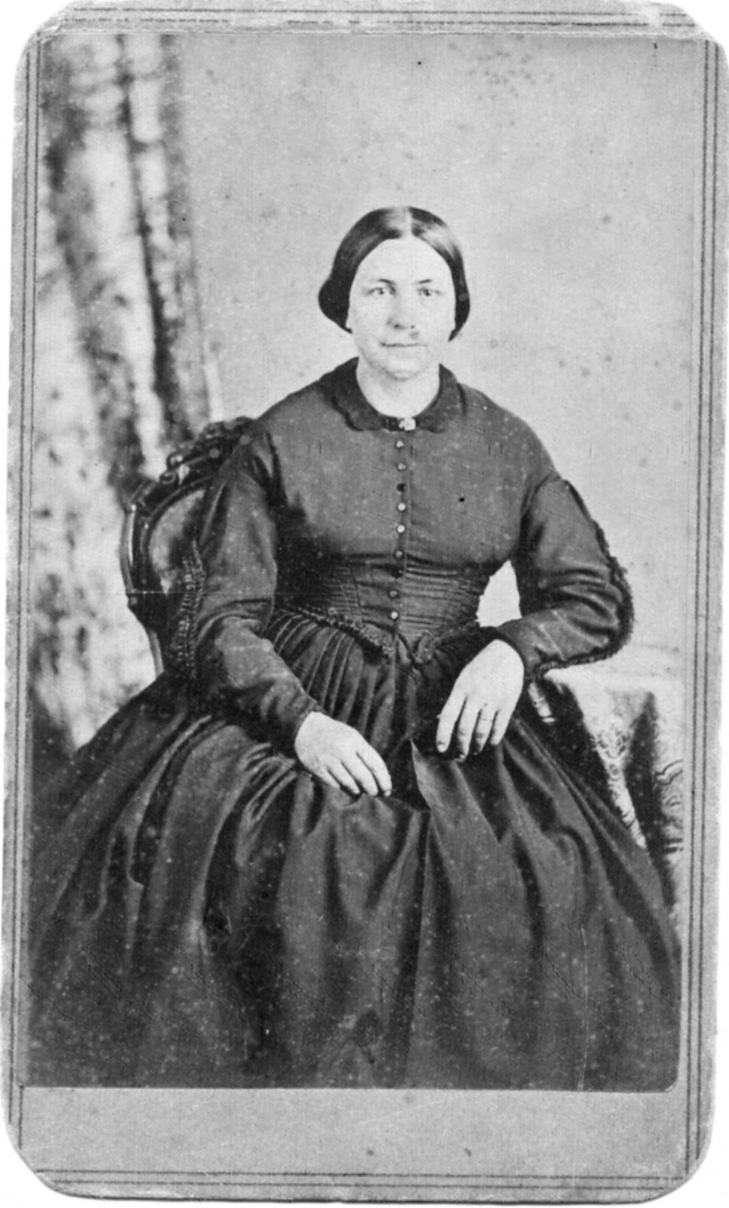
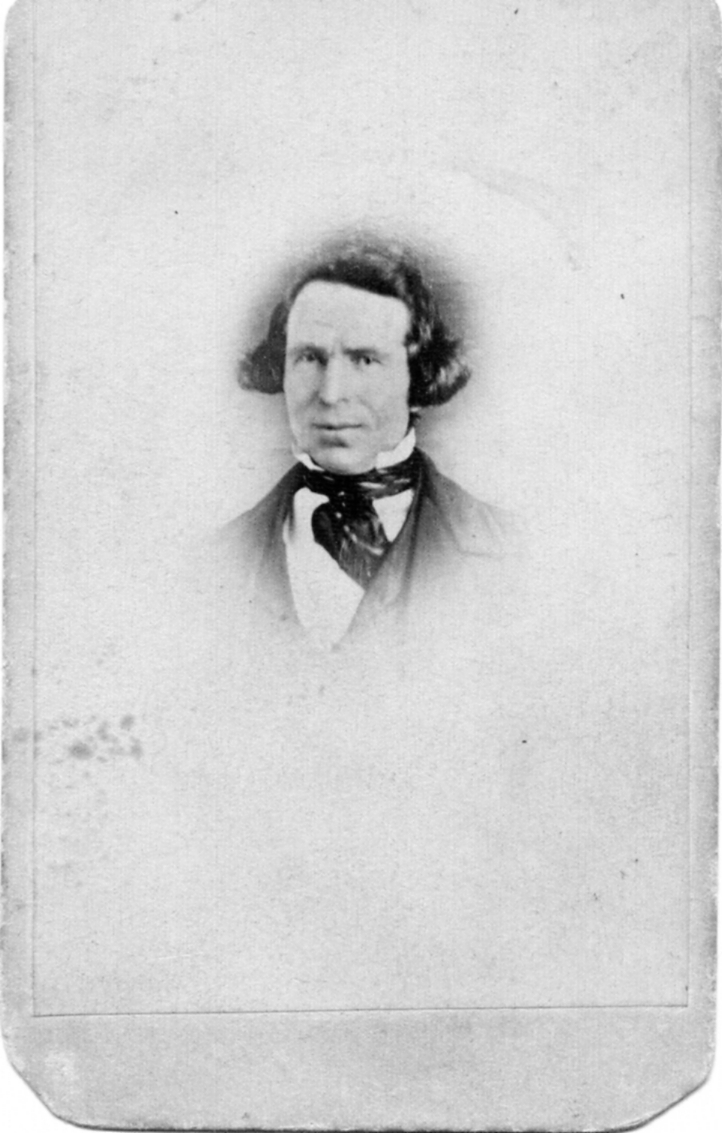
Peter Turck and Irish Relief

Today is St. Patrick’s Day, originally the religious observance of the feast day of the principal patron saint of Eire.1 In honor of the day, let’s take a look at a few aspects of Irish life in early southeast Wisconsin and the involvement of Mary (Turck) Clark’s father Peter Turck in a civic effort to relieve Irish suffering during the Great Famine.

Irish immigrants in early Wisconsin

The first white visitors to Wisconsin were seventeenth-century French-Canadian explorers, priests and fur trappers, at home along Wisconsin’s lakes and rivers. They were followed by a smattering of British and French settlers in the mid- and later-eighteenth century. Cornish lead miners arrived in the southwest corner of the territory around the turn of the nineteenth-century. And in the mid-1830s, when the federal government officially “opened” the southeast corner of Wisconsin for settlement, there was a large influx of New Englanders and New Yorkers.

There were also a substantial number immigrants from across the sea among the Wisconsin pioneers of the 1830s and ’40s, including settlers from Upper and Lower Canada, Nova Scotia, Great Britain, the Netherlands, the German-speaking lands, and Ireland. By the time of the 1850 federal decennial census, Irish men, women, and children comprised the second-largest group of foreign-born immigrants in the state, surpassed in number only by immigrants from the German-speaking lands.

Continue reading
RBOH – Walter Bonniwell’s first marriage

UPDATED: February 25, 2021. See notes, below, for details.

Introducing RBOH – Random Bits of History!

I have so much information to organize and share with fellow Clark House researchers and blog readers, and it doesn’t always fit into a one of our longer, regular blog posts. So today we begin an occasional series where I publish random bits and pieces of Mequon related history. With RBOH, I plan to write shorter posts that present new information or unknown documents, and try to solve mysteries or confirm existing, but undocumented, facts. Let me know if you have any questions, comments, suggestions or requests.

Walter Bonniwell’s first marriage documented!

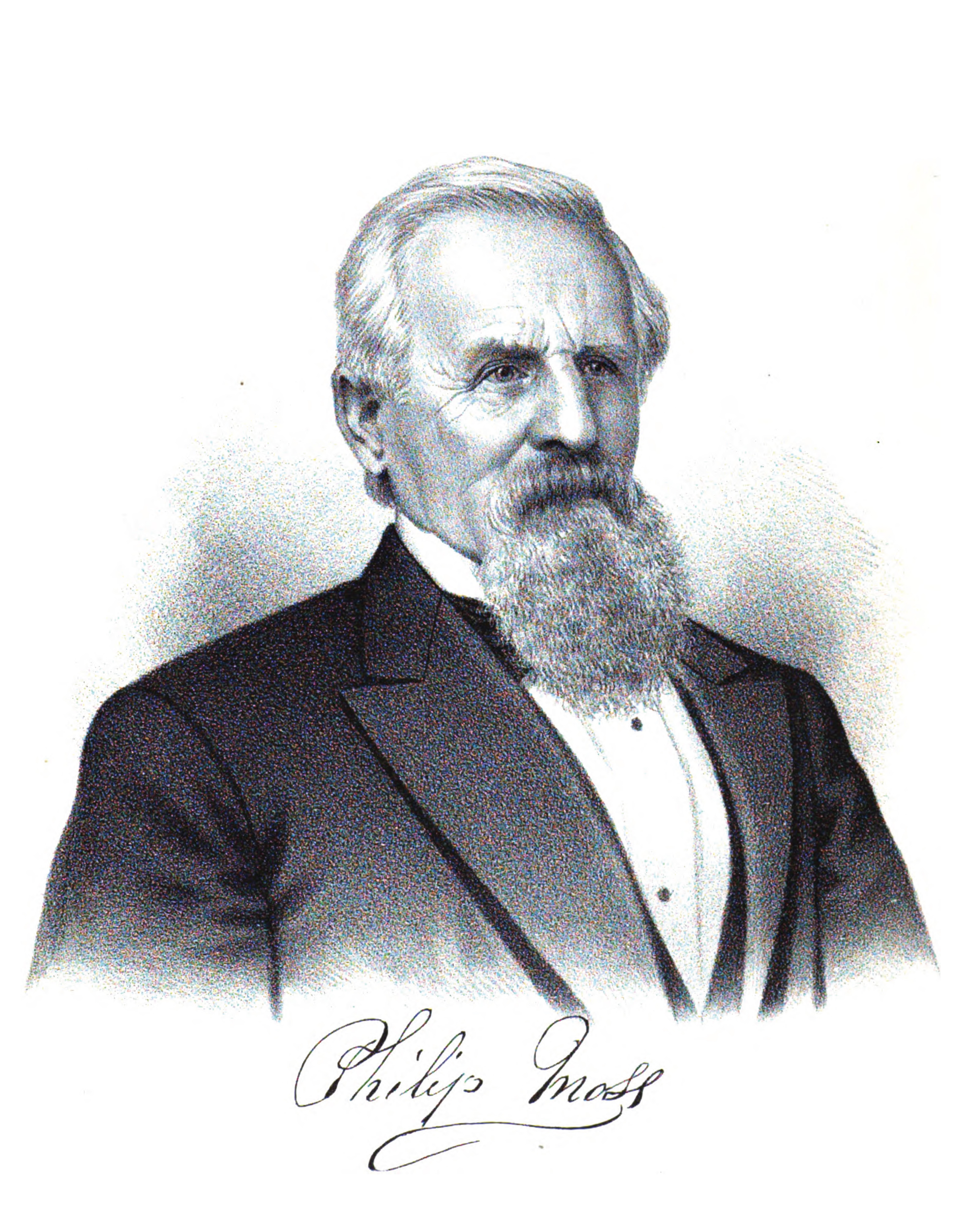
Regular readers know that I often refer to George B. Bonniwell’s excellent history of Mequon’s early and influential pioneer family—and Clark House neighbors, friends, and in-laws—the Bonniwells. Like any work of history or genealogy, George’s book, The Bonniwells: 1000 Years, printed in 1999, has a few omissions and blank spots. But research has not stopped since his book was printed, and today we present three documents that give information about one of those missing bits of history, the marriage of Walter Bonniwell (1824-1884) and his first wife, Eleanor “Ellen” Bailey (c. 1827 to ????). In the process we’ll run into another key early settler—and man of many trades—Jonathan M. Clark’s father-in-law, Peter Turck.

Marriage License – January 18, 1845

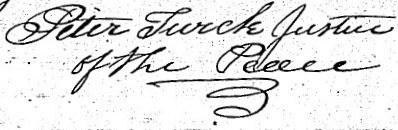
The couple’s handwritten marriage license is image number 1211 in the Milwaukee Public Library’s collection of Milwaukee County Marriage Certificates. It reads:

Territory of Wisconsin }
Washington County }
License is hereby given to

Walter Bonniwell and Ellen
Bailey to Unite in Marriage according
to Law
Given under my hand this 18th day of January. A.D. 1845
{SL} Peter Turck Justice of the Peace

Source
Continue reading

Turck, Turk…Durk?

Spelling variations in old records

Durk, Peter [Turck], baptismal record, 1798, detail. “Peter” starts the left column, father “Jacob A. Durk” is at the top of the center column (source). Click to open larger image in new window.

In a previous post, reader Laura Rexroth asked: Why did they spell Peter Turck’s name incorrectly [i.e., Durk] when he was baptized? That’s a great question, and super relevant to successful historical and genealogical research. So let’s talk about the Turck family surname and, by extension, the whole issue of spelling in earlier times and documents.

There are two main issues to keep in mind:
• variations in spelling that existed at the time the source material was created, and
• subsequent misreadings, including incorrect transcription or indexing of sources

Continue reading

Mary Turck Clark—updated

The original version of this post was the second-ever post on Clark House Historian. It represented what we knew at the time about Mary Turck, the daughter of Peter Turck and Rachael Gay, wife of Jonathan M. Clark, and mother of the eight Clark family children. The original April, 2016, post was pretty accurate, but we have learned a lot more about Mary and her Turck and Clark families in the meantime. So here is a revised version of that post with errors corrected and ambiguities clarified—where possible.

Please note that there are many more facts about Mary and her Clark and Turck families that I’ve written about in the past almost-5 years that are not linked to in this post. If you are looking for more information about Mary, I highly recommend using the blog’s SEARCH function and our new INDEX. And if you still can’t find the info you want, please ask me! Just use the Leave a Reply box, below, or the CONTACT link, above.

Mary Turck Clark: Mequon Pioneer

CLARK, Mary TURCK portrait

Mary Turck Clark. Photograph courtesy Liz Hickman. Click to open larger image in new window.

Continue reading

Monday: Map Day! – Mary Turck’s Greene County, NY, 1829

As we discussed last Monday, 2021 is the bicentennial of Mary Turck Clark’s birth. So this year I’d like to focus on Mary, her parents and her seven siblings: where they came from, how they got to Wisconsin, and where they went afterwards. Today we’ll start to get our Turck-family bearings with a look at an excellent map of Greene County, New York, an important place in the lives of Mary, her parents, and her extended family.

The Hudson River Dutch-Americans

Mary Turck’s parents and ancestors descended from Dutch-American families that had been in New York since colonial times. For more background and a fine 1829/32 map of the whole state, take a minute to re-read our previous Monday: Map Day!, Peter and Rachael (Gay) Turck’s New York, 1829/32. The initial Dutch immigrants to New Netherland landed on Manhattan Island; it wasn’t long before Dutch settlers headed inland, west and north up the Hudson River. By the time Mary Turck was born in 1821, there had been generations of Dutch-Americans living along the Hudson. The story of Mary’s extended family—the Turck, Gay, Groom, and Van Loon families and their kin—is centered around a handful of Hudson River counties. Some of the boundaries and place names changed over the centuries, but much of the story of Mary Turck’s family will be found in the documents, maps and places of Ulster and Greene counties on the west bank of the river and Dutchess and Columbia counties on the east side.

Burr, David H., Map of the State of New-York and the surrounding country by David H. Burr. Compiled from his large map of the State, 1832.[…] Entered according to Act of Congress Jany. 5th., 1829 by David H. Burr of the State of New York. Engd. by Rawdon, Clark & Co., Albany & Rawdon, Wright & Co., New York [detail]. Credit, David Rumsey Map Collection, David Rumsey Map Center, Stanford Libraries, non-commercial use permitted under Creative Commons license. Click image to open larger map in new window.

Continue reading

Santa Claus Visits Milwaukee, 1867

Christmas Eve is tomorrow night, so I thought you might enjoy another look at our previous Santa Claus posts, from December 25 and 30, 2017. I have combined the two original posts and incorporated a few revisions and updates to the text. Ho! Ho! Ho!

Christmas in early America

For many years now, Christmas has been celebrated by many Americans as an important religious and community holiday. Christians gather to worship and commemorate the birth of Jesus, and they and other Americans enjoy a break from work and gather with family to feast and exchange gifts. But it was not always this way.

But in many of the American colonies, Christmas was not observed as a religious or secular holiday. The seventeenth-century Puritan leaders of the Massachusetts Bay Colony considered Christmas to be non-biblical and pagan influenced. In Boston and other parts of New England any observance of Christmas was prohibited and, for a few years, actually illegal. The holiday was not generally accepted in many parts of the United States until after the federal government made December 25 a national holiday in 1870.

Continue reading

Monday: Map Day! – First official map of Wisconsin, 1837

Squirrel!

Some of my favorite characters in film are the dogs in Pixar’s animated feature Up. It’s clear that Pixar’s artists and writers have a deep understanding of our canine friends, especially their tendency to be distracted by, for example, a…squirrel! 1

Likewise, some of the pleasures (or hazards?) of history research are the many squirrel!-like moments where you manage to be completely distracted by cool stuff that is not at all related to the topic you are actually trying to research. Like the dogs of Up, I am easily distracted, although my attention is drawn more to old maps, books, newspaper clippings, sepia photographs and colorful lithographs.

This week, I was looking for more information about possible Clark connections in Lower Canada in the early 1800s, to add to our earlier posts, including this one, this one and this one. But what did I find? Glad you asked…

Continue reading

Happy 208th Birthday, Jonathan!

November 28, 2020, is the 208th anniversary of the birth of Jonathan M. Clark. To celebrate, I’m reposting a revised, expanded and annotated version of one of my first Clark House Historian posts. Since this was first published, on April 20, 2016, we have learned much more about the lives of Jonathan Clark, Mary Turck Clark, their family and their neighbors. Please check out the footnotes and click on the links for some of this newer, more accurate, information.

Happy Birthday, Jonathan! (and thanks to Nina Look for the timely reminder).

JMC: Man of Mystery

CLARK, Jonathan M portrait

Jonathan M. Clark. Photograph courtesy Liz Hickman.

There he is. Jonathan M. Clark, builder and first owner of the handsome stone home that is now the  Jonathan Clark House Museum in Mequon, Wisconsin. He was probably born in Vermont—or Lower Canada—probably on November 28, 1812, and he died on September 20, 1857. Before coming to Mequon, he served in the United States Army at Fort Howard from 1833 to 1836. He married Mary Turck, eldest child of Mequon pioneer Peter Turck, on March 15, 1840. They had a large family. We even have a photograph of JMC as an adult (above). In some ways, we know quite a bit about Jonathan M. Clark.

Continue reading

Early Election Returns!

While we’re all waiting for this year’s votes to be counted, here’s a revised and updated repeat of a post that first appeared here on November 8, 2016.

Really early returns, from Mequon’s—and Washington County’s— first election, 1840.

In an earlier post, I outlined some of the key moments in the settlement and changing political boundaries of early Washington/Ozaukee county. Originally attached to Milwaukee County for all civil and judicial matters, old Washington County got its civil independence by act of the Territorial Legislature on February 19, 1840. And on “the second Monday of October next,” i.e., October 12, 1840, the first election to chose county officers was held at the Mequon home of Taylor Heavilon.1, 2

Continue reading