“Rev.” Peter Turck in New York

Religion played a large role in the lives of many—but by no means all—19th-century Americans. This was certainly true for Mary (Turck) Clark’s father, Peter Turck (1798-1872). In a number of ways, Peter Turck’s changing relationship to religion is a unique, personal story, but is also a story that encompasses many strands of the religious experience of this formative period in American history.

The Dutch-American heritage

Previously, we looked at Peter’s 1798 DRC baptismal record. Most, if not all, of his siblings were baptized in the Dutch Reformed Church (DRC) in various Columbia County, New York, churches. And as far as I have been able to discover, almost all of Peter Turck’s ancestors were baptized in and members of the DRC in early New Holland and New York, all the way back to the original Turck immigrant, Paulus Jacobsz. Turk (~1635-1703), who came to New Amsterdam (later New York City) before 1660. So how did someone with such long and deep family ties to the Reformed Church—such as Peter Turck—become “an ardent preacher of the Baptist faith”?1

The Second Great Awakening

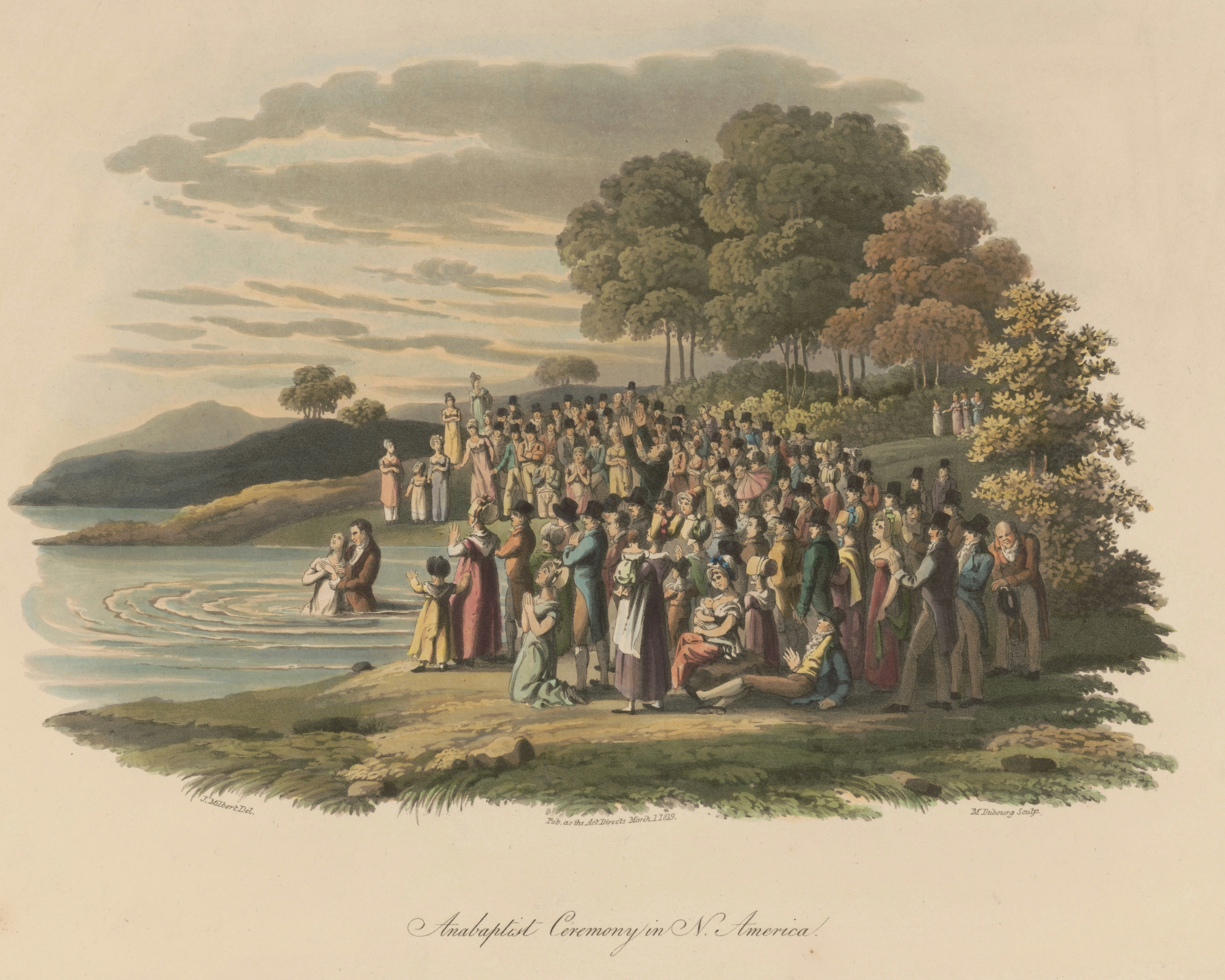
The Dutch Reformed Church was not the only Christian denomination in the Hudson River valley during Peter Turck’s early years. While a large percentage of the area’s residents were of Dutch and DRC heritage, the valley had many Anglo- and German-Americans as well. All were served by various Protestant denominations including the Baptist, Lutheran and Protestant Episcopal churches, and the Society of Friends. More significantly, Peter Turck’s youth also coincided with the Second Great Awakening of religious fervor in America.
Continue reading

The Turcks sell their Palmyra land, 1832

The Peter and Rachael (Gay) Turck family in Wayne Co. deeds (part 2)

Today’s post continues our series where we use deed records to follow the lives of the Peter and Rachael (Gay) Turck family—including young Mary Turck—from the 1820s through their emigration to Mequon in 1837. This post will make more sense if you read our previous Monday: Map Day! and The Turcks – Catskill to Palmyra, 1828.

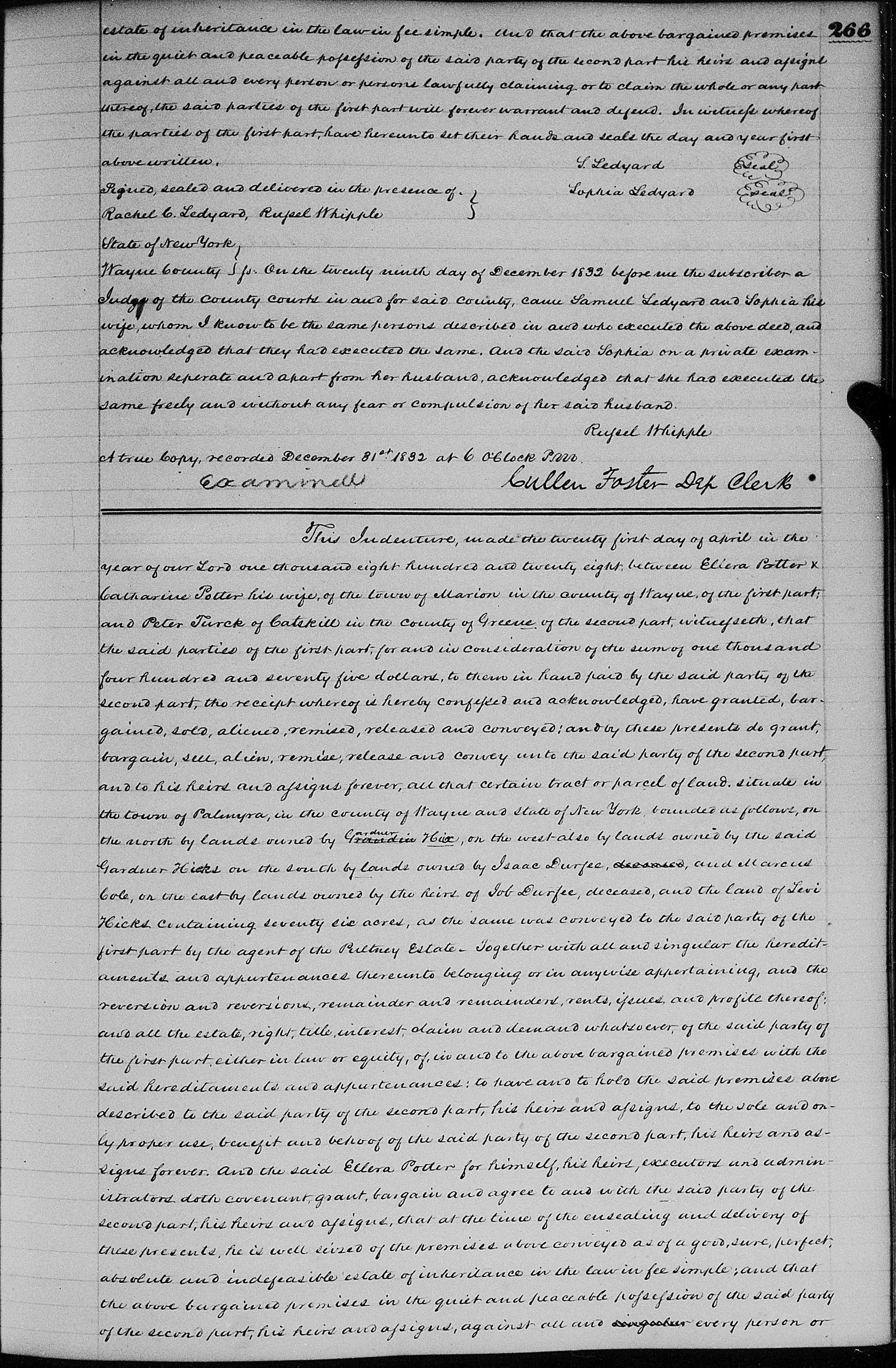
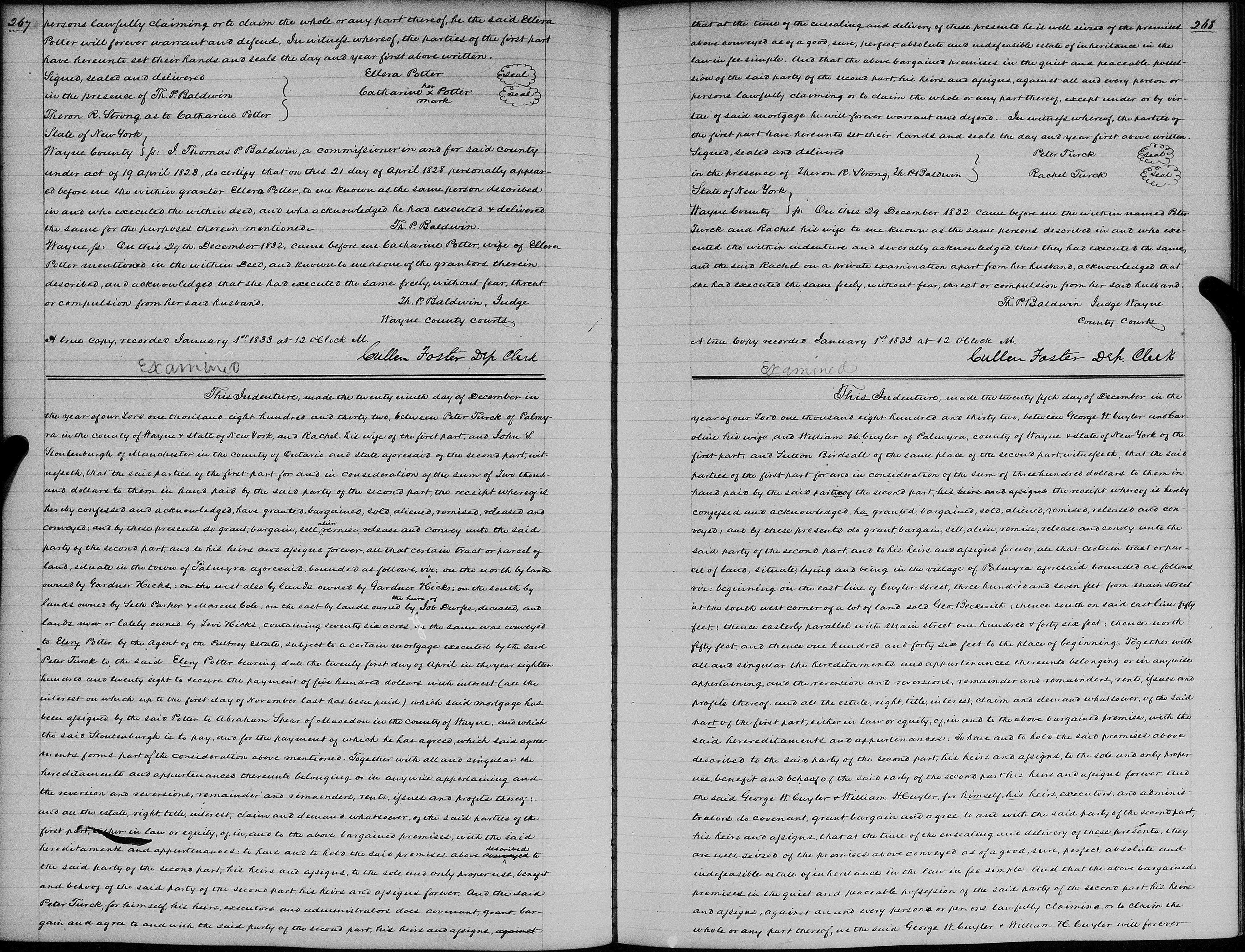
Earlier, we discovered that on April 21, 1828, Peter Turck of Catskill, Greene county, New York, bought 76 acres of land in Palmyra Township, Wayne County, New York. He paid $1,475.00 “cash in hand” to the sellers, Ellera and Catherine Potter. The record of this transaction was found on pages 266-267 of the Wayne County, New York, Deed Books, Vol. 12.

Four and a-half years later…

Today’s 1832 deed, in which Peter Turck sells the same land that he purchased in 1828, is recorded in the same deed book, immediately following the (apparently delayed) recording of his 1828 transaction. This new 1832 land sale covers parts of pages 267-268 of Vol. 12 of the Wayne County, New York, Deed Books:

Continue reading

The Turcks – Catskill to Palmyra, 1828

The Peter and Rachael (Gay) Turck family in Wayne Co. deeds (part 1)

This post will make more sense if you read our previous Monday: Map Day! post first. And then grab a hot beverage and settle in for some quality time with old legal documents

If you’ve been reading the blog for a while, you may have noticed that I usually like to gather various bits of evidence, think about them for a bit—”behind the scenes,” so to speak—and then present them to you as a coherent (I hope!) narrative that sheds light on some aspect of the history of the Clark House, its inhabitants or their community. For years, I’ve wanted to do that with the story of the Peter and Rachael (Gay) Turck family and their migration to Wayne County, New York in the late 1820s, but we have very few records of the family from this period.

In order to make an accurate timeline of the Turcks’ years near the Erie Canal, I need to—finally—wade through the few records that do exist: land deeds recorded in Vol. 12 of the Wayne County, New York, deed books. The legal prose in these deeds is often so thick and convoluted that it’s hard to just skim them and find the useful bits. So since I need to transcribe, read, and interpret a number of handwritten deeds anyway, I thought I’d share the process with you, here on the blog. Today will be the first of several posts featuring transcriptions of the old deeds. Once we’ve transcribed them, we’ll sort through each and see what we can find out about the Turcks’ lives in the eight years before they came to the Wisconsin Territory.

The Challenge

Here’s the first page of today’s deed. Peter Turck’s contract (“indenture”) to purchase land begins about a third of the way down the page, just below the horizontal double-line:

Continue reading

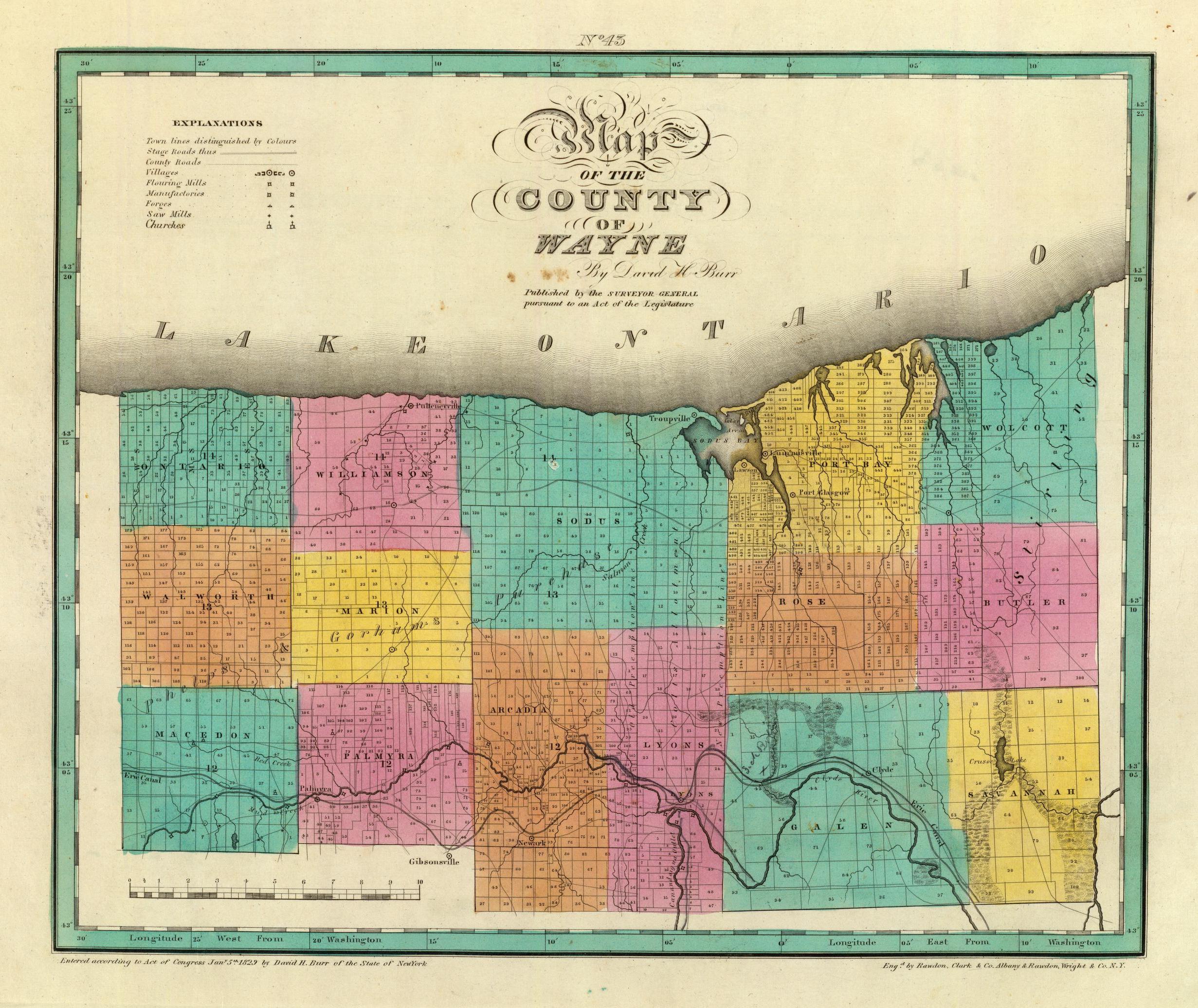
Monday: Map Day! – Wayne County, 1829

Before Mequon: finding Mary Turck’s home in upstate New York

Tracing the lives of Americans in the first decades of the 19th-century can be challenging. Whether along the expanding frontier, or in long-established and settled areas such as New York’s Hudson River valley, there are often many unhelpful gaps in the paper trail. Even the federal census—which counted, every ten years, “all persons” living in America—only recorded the name of the “head” of each (white) family, and the sex and age ranges of other members of the household.

So what do we know about the Peter and Rachael (Gay) Turck family in the years before they arrived in Mequon? As we discussed previously, we know the family had deep roots in the traditionally Dutch-American communities of the Hudson River valley’s Ulster, Greene, Dutchess and Columbia counties. We know Mary Turck was born in Athens, Greene county, in 1821, the eldest child of Peter and Rachael (Gay) Turck. By tracing the baptismal registers (where they exist) and other biographical records of her younger siblings, we know that by 1833 the family was in Palmyra, Wayne County, New York.

Wayne County: Palmyra and Macedon

Continue reading

RBOH – Walter Bonniwell’s first marriage

UPDATED: February 25, 2021. See notes, below, for details.

Introducing RBOH – Random Bits of History!

I have so much information to organize and share with fellow Clark House researchers and blog readers, and it doesn’t always fit into a one of our longer, regular blog posts. So today we begin an occasional series where I publish random bits and pieces of Mequon related history. With RBOH, I plan to write shorter posts that present new information or unknown documents, and try to solve mysteries or confirm existing, but undocumented, facts. Let me know if you have any questions, comments, suggestions or requests.

Walter Bonniwell’s first marriage documented!

Regular readers know that I often refer to George B. Bonniwell’s excellent history of Mequon’s early and influential pioneer family—and Clark House neighbors, friends, and in-laws—the Bonniwells. Like any work of history or genealogy, George’s book, The Bonniwells: 1000 Years, printed in 1999, has a few omissions and blank spots. But research has not stopped since his book was printed, and today we present three documents that give information about one of those missing bits of history, the marriage of Walter Bonniwell (1824-1884) and his first wife, Eleanor “Ellen” Bailey (c. 1827 to ????). In the process we’ll run into another key early settler—and man of many trades—Jonathan M. Clark’s father-in-law, Peter Turck.

Marriage License – January 18, 1845

The couple’s handwritten marriage license is image number 1211 in the Milwaukee Public Library’s collection of Milwaukee County Marriage Certificates. It reads:

Territory of Wisconsin }
Washington County }
License is hereby given to

Walter Bonniwell and Ellen
Bailey to Unite in Marriage according
to Law
Given under my hand this 18th day of January. A.D. 1845
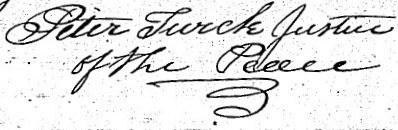
{SL} Peter Turck Justice of the Peace

Source
Continue reading

Erie Canal – the Bonniwell Family 1832-39

Inspired by our earlier looks at the influence of the Erie Canal on the early lives of both Jonathan M. Clark and the Peter and Rachael (Gay) Turck family (here and here), I thought I’d share more stories of Mequon settlers that used the canal to make their way westward to the wilds of the Wisconsin Territory in the 1830s and ’40s. Today’s focus is on the Bonniwell family.

England to Montréal to New York

Originally from Chatham, Kent Co., England, the William T. B. and Eleanor (Hills) Bonniwell family came to Lower Canada by ship, sailing across the Atlantic Ocean and up the St. Lawrence River to Montréal. Shortly after arrival in 1832, family patriarch William T. B Bonniwell died there of cholera.

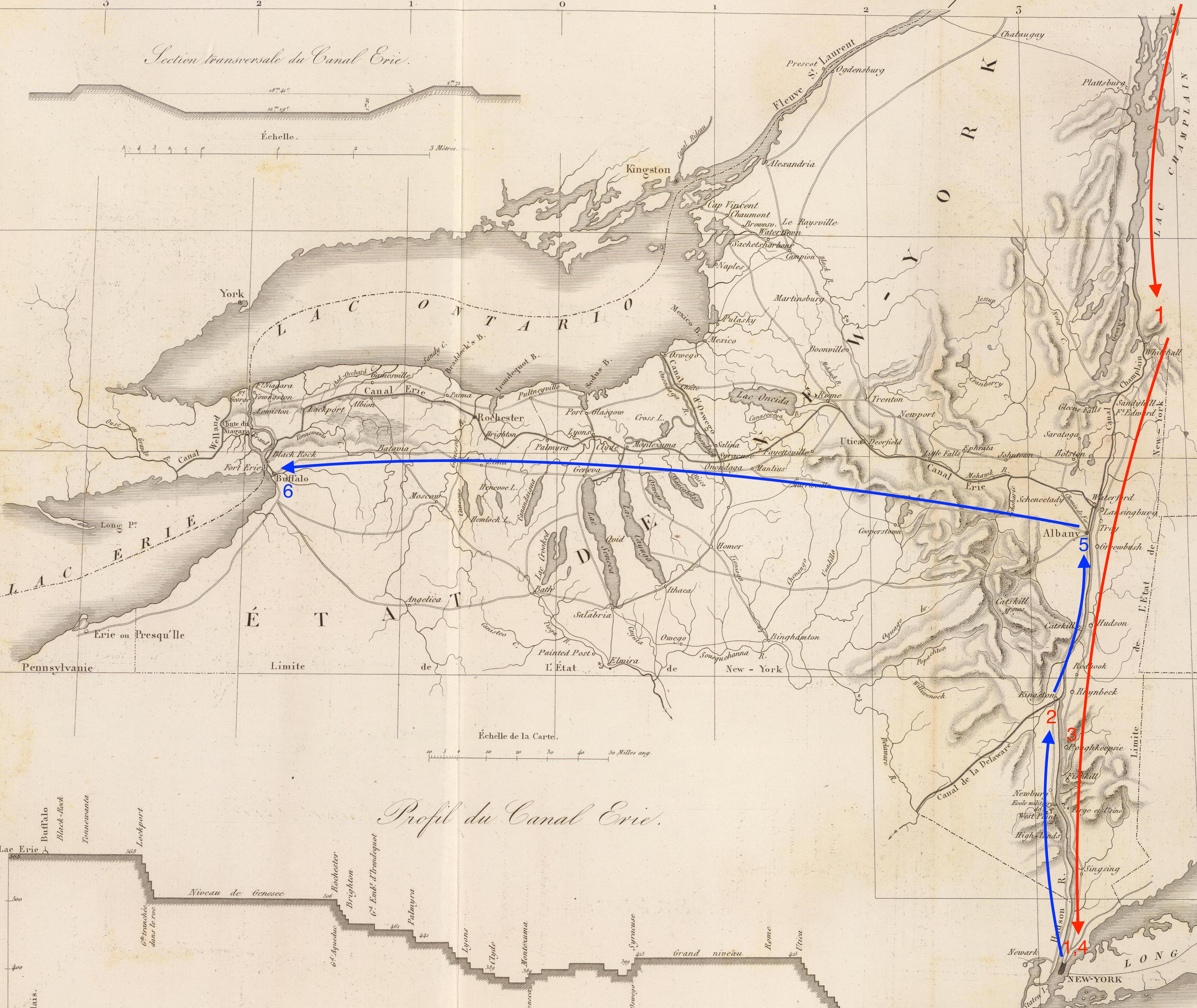
Following her husband’s untimely death, Eleanor (Hills) Bonniwell, decided to leave Montréal and take her children south to New York City, via the Richelieu River, Lake Champlain and the new Champlain Canal connecting Whitehall, New York, to the Hudson River. Two of her sons, George and William Bonniwell, had already located and found work in New York City.

After living for a bit in New York City, Eleanor moved upriver to the town of Esopus, Ulster County, on the west bank of the Hudson River. Sometime around 1835 Eleanor Bonniwell married a second time. Her new husband was a widower, Captain Christopher Hyde, of the town of Hyde Park, just across the river in Dutchess County.

Continue reading

Erie Canal – Macedon, New York

As a follow up to our look at the Erie Canal and our Turck and Clark families, I’ve been researching and writing about some other early Mequon settlers and their migrations to Mequon from Lower Canada, Nova Scotia, New England and New York. It’s taking longer than I expected.

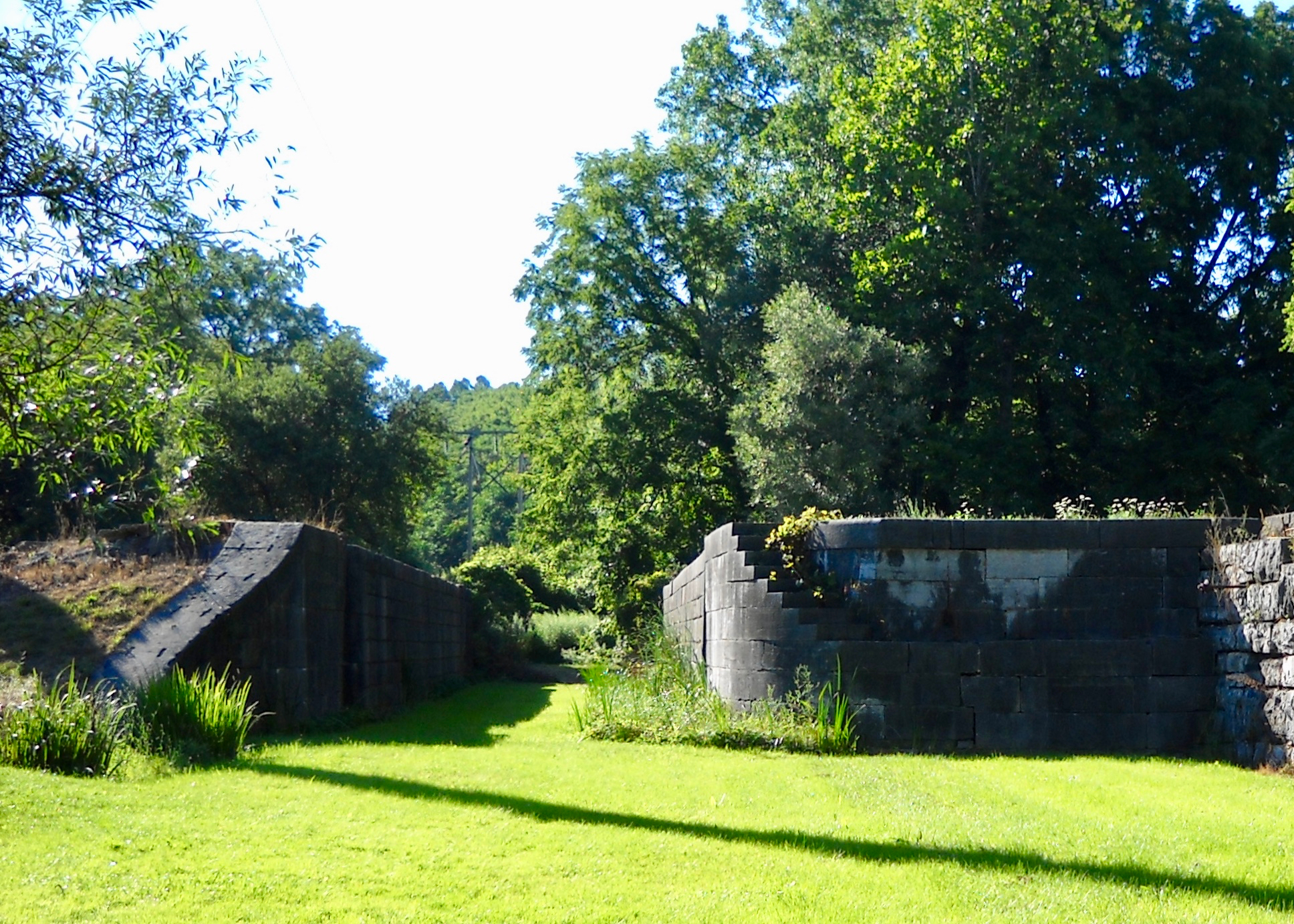
Until those posts are ready, here’s a photo of one of the historic Erie Canal locks, near Macedon, Wayne County, New York. Peter and Rachael (Gay) Turck lived nearby from sometime around 1828 until they went west to Buffalo, New York to begin their steamship journey to Milwaukee in July or August, 1837. A large number of other early Mequon immigrants, including the Bonniwell and Woodworth families, also would have passed through this lock (or its predecessor) on their way their new homes in Wisconsin.

Historic Erie Canal Lock No. 60, near Macedon, Wayne Co., New York, looking to the west. Photo by Reed Perkins, 2011. Click to open larger image in new window.

This is the expanded, second version of this lock. When it was built in 1821, as part of the original canal, it was Lock 71. As a nearby marker explains:

Continue reading

Monday: Map Day! – The Erie Canal

Turck, Gay & Clark in the early years of the Erie Canal

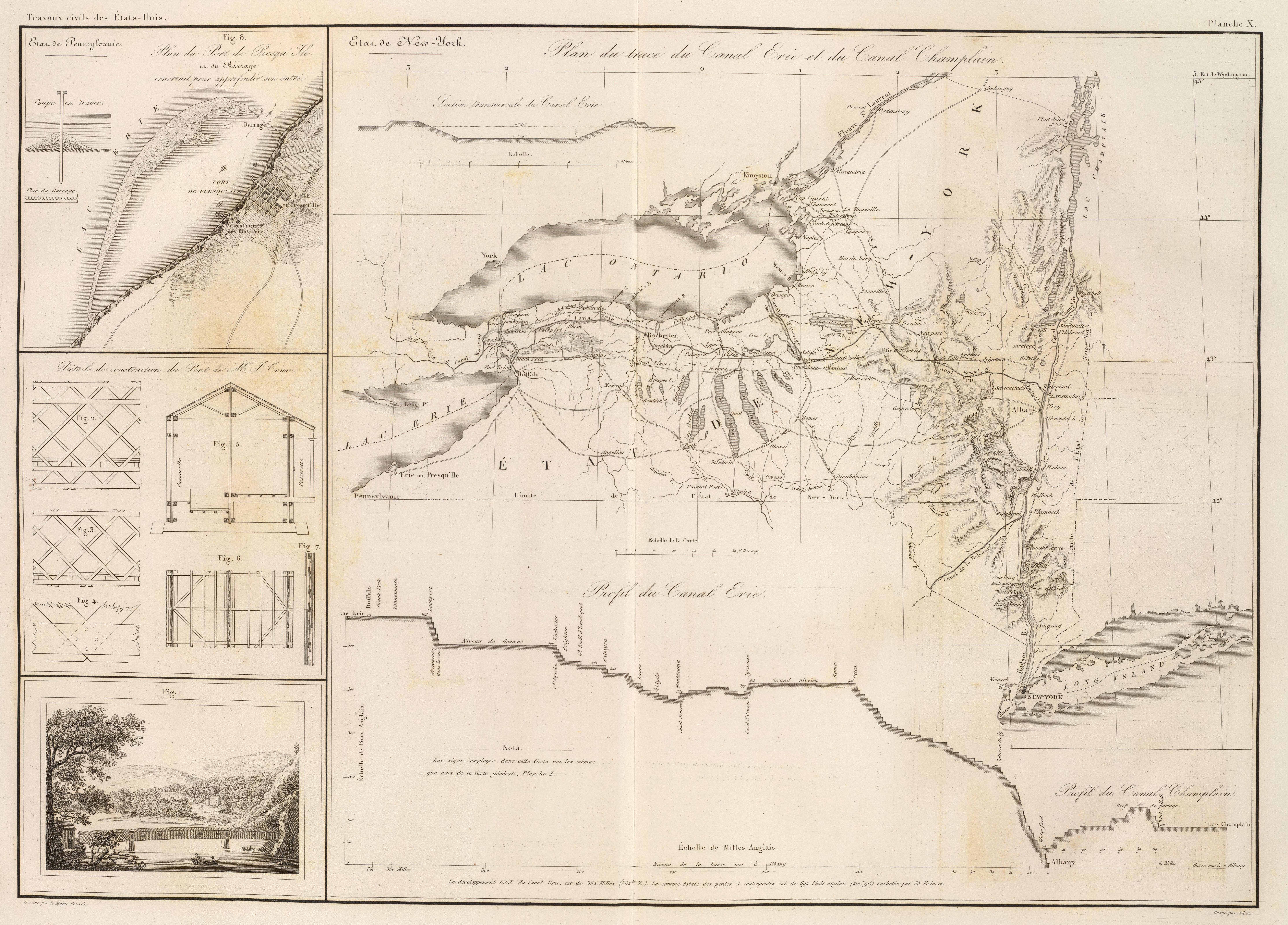
New York state’s Erie Canal was one of the wonders of the modern world when it first opened to the public in 1825. The original 362 miles of canals and locks connected the Hudson River at Albany, in the east, with Lake Erie at Buffalo, in the west. This made a faster, more economical connection between the goods and markets of the eastern states and Atlantic seaboard and the newly opened lands, crops, and timber products of the nation’s newest states and territories.

Another important part of the New York state canal system was the Champlain Canal. It was built at the same time as the Erie Canal and connected Canada and western New England—via Lake Champlain—to New York and the world. Today’s map shows the course of both the Erie Canal and the Champlain Canal, and their rise and fall, as they existed in in the early 1830s. In the 1820s and ’30s, these two canals made possible the westward migration of many of Mequon’s early settlers, including—among others—the Turck, Bonniwell, Woodworth, Strickland, and Loomer families, and the young Jonathan M. Clark. Let’s begin by looking at the whole map, and then zoom in on some particular Clark, Turck and Gay family details:

Continue reading

Turck, Turk…Durk?

Spelling variations in old records

Durk, Peter [Turck], baptismal record, 1798, detail. “Peter” starts the left column, father “Jacob A. Durk” is at the top of the center column (source). Click to open larger image in new window.

In a previous post, reader Laura Rexroth asked: Why did they spell Peter Turck’s name incorrectly [i.e., Durk] when he was baptized? That’s a great question, and super relevant to successful historical and genealogical research. So let’s talk about the Turck family surname and, by extension, the whole issue of spelling in earlier times and documents.

There are two main issues to keep in mind:
• variations in spelling that existed at the time the source material was created, and
• subsequent misreadings, including incorrect transcription or indexing of sources

Continue reading

Clark House News

The Friends of the Jonathan Clark House February newsletter is here! Many thanks to all the volunteers, donors, and Clark House board members for their continuing work “to collect, preserve and share the history of the Jonathan Clark House and the early settlers of Mequon Thiensville.”

Once again, Clark House executive director Nina Look has done a wonderful job leading the work of the museum, coordinating the volunteers, and putting together an informative and generously-illustrated newsletter. Just click on this image of the first page to open your own downloadable pdf in a new window:

Continue reading