Rabbits!

Audubon, John James, artist, and John T. Bowen, printer, Lepus Sylvaticus, Bachman, circa 1845-1848, Smithsonian Institution, Peters Prints Collection, Creative Commons CC0 license.1

There they are: Mr. & Mrs. Cottontail and one of their many offspring. The Eastern Cottontail and its relatives were a common sight in Jonathan and Mary Clark’s world, just as they are today.

We seem to have a bumper crop of rabbits in our suburban Wisconsin yard this year and, no doubt about it, the bunnies are cute and entertaining. But for the gardener, rabbits mean trouble. If you are trying to raise vegetables and fruits to feed your pioneer family, these amusing little fur balls are the enemy. They can consume huge amounts of seedlings and sprouts in just a day or two. What’s a gardener to do?

Last year—after they ate through the plastic fence around our vegetable garden and then devoured our entire crop of green been sprouts—I went to the local big box store and got a roll of metal wire rabbit fencing and some steel posts to hold it up. That worked great for us, but it made me wonder: what did Jonathan and Mary Clark use to keep the ravenous rabbits at bay? Well, I don’t have any documentation from the Clarks’ farm, but during my researches, I have noticed some popular 19th-century methods of rabbit control.

Continue reading
The Cooper

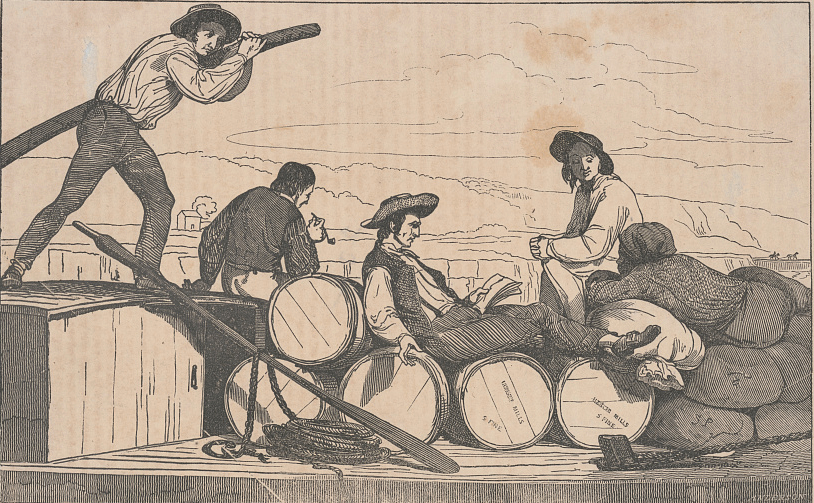
In the 1800s there were no corrugated cardboard boxes or padded shipping envelopes. If you needed to store or ship any liquid—and most dry goods—the barrel (and its larger and smaller cousins) was almost always your container of choice.

Anderson, Alexander, engraver. Five Men on a Flatboat With Barrels and Sacks; One Man Operates the Keel from Above the Boathouse, the Others Are Resting on the Freight, circa 1830-1860, Library of Congress.

And when you needed a barrel, hogshead, keg, cask or firkin, or just an oaken bucket for your well, you would get it from a cooper.

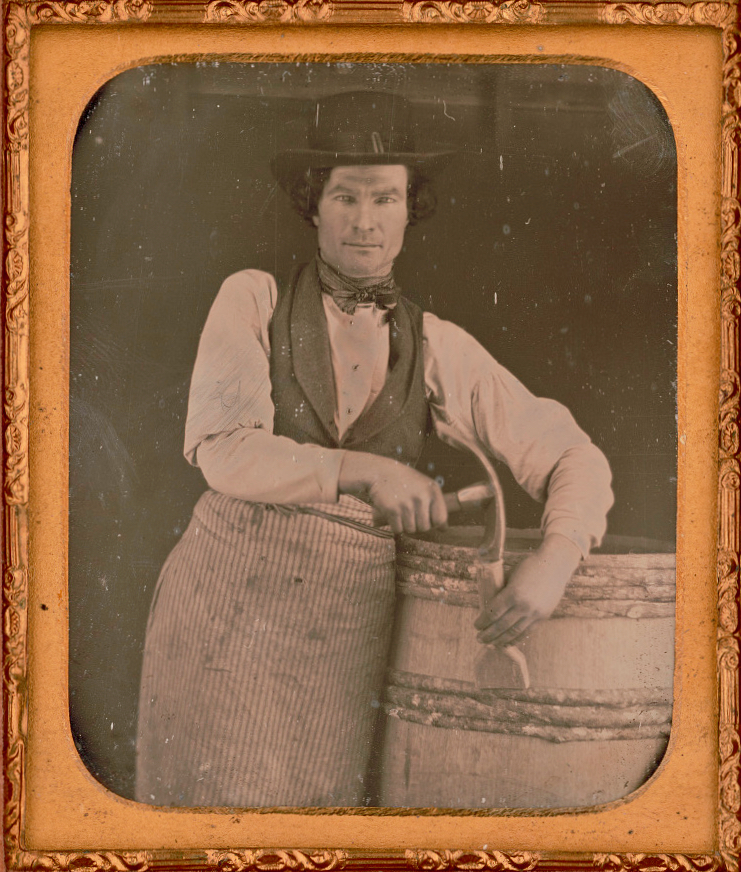
Unknown photographer. Occupational Portrait of a Cooper, Three-Quarter Length, With Barrel and Tools, circa 1840-1860, Library of Congress.

Continue reading

Peter Turck and Irish Relief

It’s St. Patrick’s Day, and to celebrate, here’s an update of my CHH post from March 17, 2021. Slàinte!

Today is St. Patrick’s Day, originally the religious observance of the feast day of the principal patron saint of Eire.1 In honor of the day, let’s take a look at a few aspects of Irish life in early southeast Wisconsin and the involvement of Mary (Turck) Clark’s father Peter Turck in a civic effort to relieve Irish suffering during the Great Famine.

Irish immigrants in early Wisconsin

The first white visitors to Wisconsin were seventeenth-century French-Canadian explorers, priests and fur trappers, at home along Wisconsin’s lakes and rivers. They were followed by a smattering of British and French settlers in the mid- and later-eighteenth century. Cornish lead miners arrived in the southwest corner of the territory around the turn of the nineteenth-century. And in the mid-1830s, when the federal government officially “opened” the southeast corner of Wisconsin for settlement, there was a large influx of New Englanders and New Yorkers.

There were also a substantial number immigrants from across the sea among the Wisconsin pioneers of the 1830s and ’40s, including settlers from Upper and Lower Canada, Nova Scotia, Great Britain, the Netherlands, the German-speaking lands, and Ireland. By the time of the 1850 federal decennial census, Irish men, women, and children comprised the second-largest group of foreign-born immigrants in the state, surpassed in number only by immigrants from the German-speaking lands.

Continue reading

Presidents’ Day, 1844

Today is Presidents’ Day, the descendant of the federal holiday originally created in 1879 to celebrate the birthday anniversary of George Washington, our first president and, arguably, the “indispensable man” in America’s fight for independence.

Presidents’ Day did not exist during the early days of Mequon settlement, but the Clarks, Turcks, Bonniwells and their neighbors—whether native-born Americans or recent immigrants—were generally patriotic folk and to one degree or another their politics were mostly free-soil, anti-slavery and pro-Union.

So in their patriotic spirit, here’s a colorful presidential salute for you from the Clarks’ era. It was published in New York in 1844 by Nathaniel Currier, whose prints were for sale, at affordable prices, even in remote locations such as the new Wisconsin Territory.

Currier, Nathaniel (American, 1813-1888). Presidents of the United States, 1844. Hand-colored lithograph on wove paper, 13 x 9in. Brooklyn Museum, Gift of Mrs. Harry Elbaum in honor of Daniel Brown, art critic. Color and exposure adjusted.

What happened to “Lincoln’s Birthday”?

I grew up in Illinois, the “Land of Lincoln,” where Old Abe’s birthday was, and remains, a state holiday. So we had holidays to honor the birthdays of both presidents: Lincoln on February 12, and Washington on February 22. How we got from those separate, specific commemorations to a generic federal holiday (and three day weekend) providing “an occasion to remember all U.S. presidents, to honor Abraham Lincoln’s and Washington’s birthdays together, or any single president of choice,” is a complicated story. Here’s the main info in a nutshell:

Continue reading

Holiday Fun in NYC, 1864

I’m still taking some time to relax and catch up on my reading. Meanwhile, I hope you enjoy this Revised! and Enhanced! holiday post that first appeared last December.
UPDATED: 28 Dec.2022 to correct a minor error about the “Bower of Beauty” illustrations.

It’s the week after Christmas. Perhaps you have family or friends visiting from out of town. If you have children, they’re home from school. How to keep them entertained? If you lived near New York City in 1864, you were in luck. Barnum’s American Museum was ready with spectacular and unique holiday exhibits for the whole family, all for the low, low, price of 25 cents for adults, 15 cents for children under age ten!

Continue reading

‘Tis the season…

Time is flying; it’s already been a week since Thanksgiving. I hope you all had time to enjoy the day.

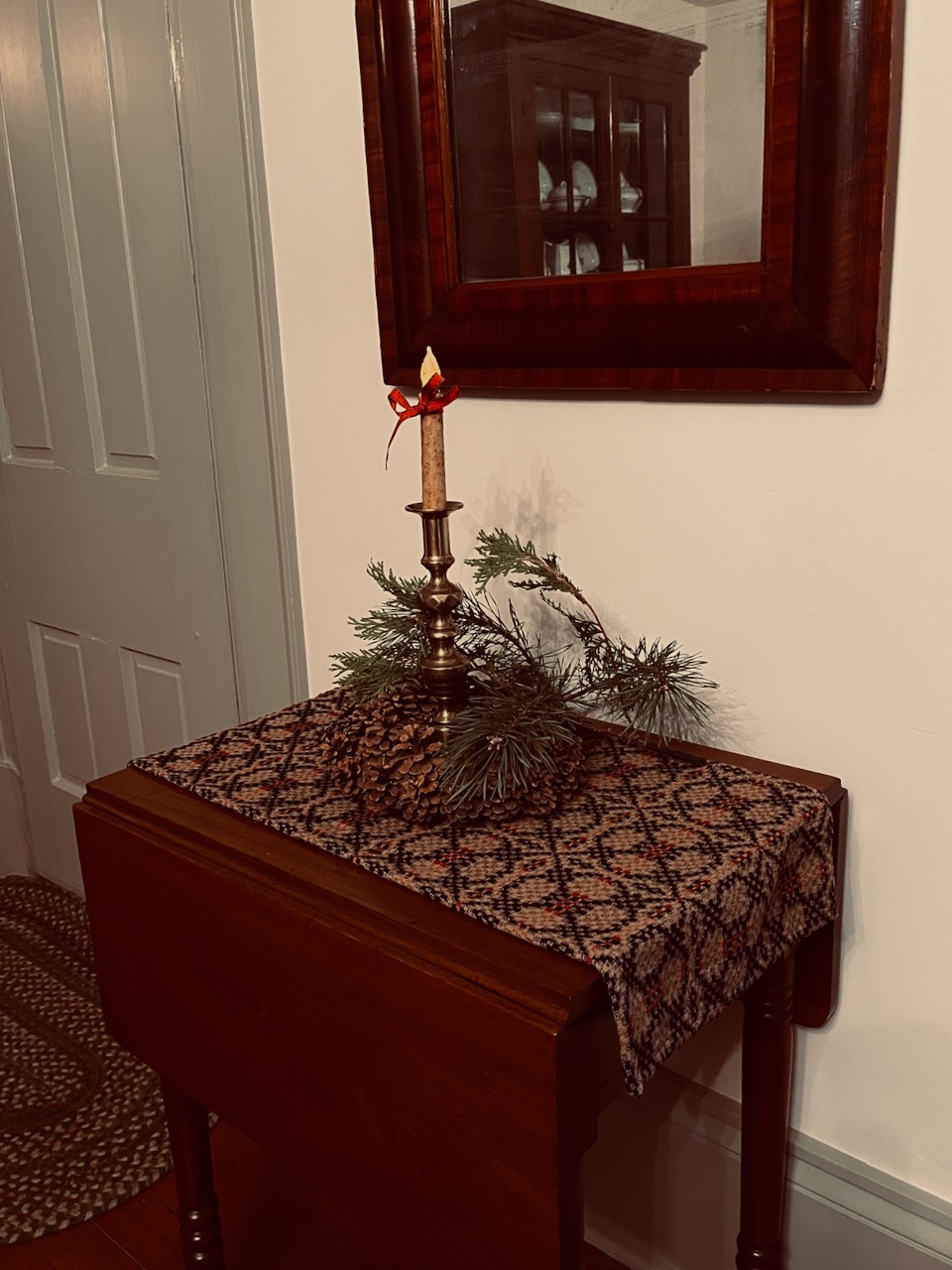
I’m in the middle of preparing several Clark House Historian posts and the writing is going slowly. But! December is here and I’m starting to feel the holiday spirit. So until I finish my current research and writing project (we’ve got to bring the Bonniwells back from the California gold rush!), how about a seasonal photo from my most recent visit to the Clark House?

Clark House front parlor with holiday candle, 2022. Photo credit: Reed Perkins.

Continue reading

Computers and such…

It’s been a hectic few days here at Clark House Historian. Some of our essential technology was getting to the end of its useful life, so we’ve spent the last few days upgrading and updating some critical—but now outdated—hardware and software.

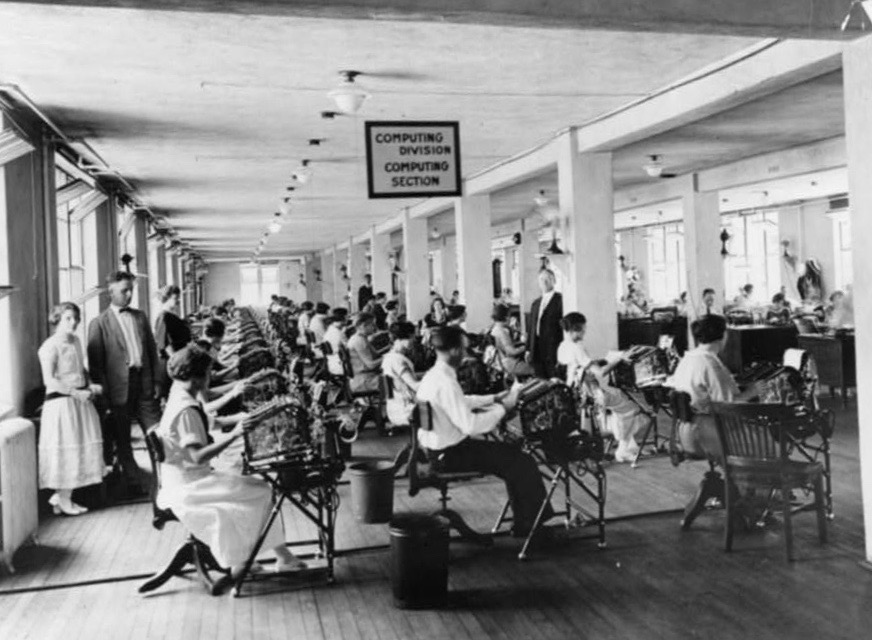
The Bonus division where the many clerks figure the amount of the bonus each veteran is entitled to / [Between 1909 and 1932] Photograph. Library of Congress.

Which reminds me, that not too long ago the word computer was a job description, and not a device.

But that’s not all

Continue reading

RBOH: Chewing Gum

Lately, I’ve been spending a lot of time looking through digitized historical newspapers, trying to fill in some of the missing pieces of the Clark House story. In the process, I’ve managed to discover some unique and important information about the Clarks, Turcks, Bonniwells and their neighbors. And I’ve also run into a lot of off-topic but fascinating tidbits about daily life in Wisconsin during the Clarks’ era, such as this random bit of history:

Continue reading