Harvest Time

No new map today. I spent a good part of my early-October weekend cleaning up the family garden after our final harvests of tomatoes and peppers. The bush beans produced their last good beans a few weeks ago; they got tough and stringy after about mid-September.

It’s just the sort of thing Mary Turck Clark and the Clark children would have done in the 1840s and ’50s at the Jonathan Clark house, though I assume the Clarks grew and “put by” a good deal more in their family garden and root cellar than we do in our suburban backyard and chest freezer.

When I finished work, I put my tools and garden supplies in the garage for the winter. The Clark family didn’t have a garage. They had this sturdy fieldstone barn:

Continue reading

Now, where were we? – the search for JMC’s roots

As I mentioned in our previous post, Monday: Map Day!, we still have some essential mysteries to solve in the JMC timeline, the most important of which are: who were JMC’s parents and where was he born and raised? As it’s been a while since we last looked at this, I thought it might be useful to repost our original O!…Canada? History Mystery! No. 3, in which I collected and organized images, transcriptions, and links to the various documents that indicate Jonathan M. Clark’s (two!) “official” birth locations: either Derby, Orleans Co., Vermont or Stanstead Co., Lower Canada [now Province of Quebec].

Smith, Jones… Clark

One of the nicer assignments a genealogist or historian can receive is to trace the history and family of someone with a unique or distinctive surname. It is so much easier to trace families with surnames like Turck, Strickland, Rix or Clow, even if there are common variant or erroneous spellings like Turk, Stickland, Ricks and Clough/Claw/Klauw. But our man Jonathan, he who built the fine stone home in Mequon in 1848, carries one of the most ubiquitous surnames in New England and English-speaking Canada: Clark.

Over the past seven years or so, researchers including Nina Look, Liz Hickman, I—and others—have been trying to find the Jonathan M. Clark “needle” in the massive New England and Lower Canada “haystack” of Clark families. I think it’s time to finally collate our results, organize and set aside the “wrong” Clark families from the search, and see if we can discover Jonathan M. Clark’s roots.

This “sorting of the Clarks” may take quite a few posts.1 We will look at many sources, many family trees, and assorted maps and books to try and find Jonathan’s family. Along the way we’ll have diversions to other topics from time to time, I’m sure. But now, let’s get things started by taking another look2 at what we currently know about Jonathan M. Clark’s birth and family:

Continue reading

Clark House Museum Update

It’s been “one of those weeks” here at the Clark House Historian’s actual house. Nothing unfortunate, but assorted “real life” tasks have kept me from finishing several more substantial posts. (Yes, there will be another photo analysis post or two featuring Cyrus Clark. And tintypes, too.)

News from Clark House Museum director Nina Look

Fortunately, Jonathan Clark House museum director Nina Look has just written and distributed the September, 2020, newsletter for the Friends of the Jonathan Clark House, and I can share it with you today. It’s filled with news and photos about the Clark House and some of our current and future projects.

If you’d like to open and/or download the complete, five-page PDF, click here. Or, if you want to catch up with your Jonathan Clark House news here on the blog, click “Continue reading” (below) and enjoy.

Continue reading

Last days of summer…

I’m taking the day off today. Feel free to catch up on our recent posts. It’s been a productive summer for research and blogging.

Meanwhile, here’s a nice view of the front (south) side of the Jonathan Clark House, looking to the east.

Photo by Reed Perkins. Click to open larger image in new window.

Enjoy your weekend.

_______________

And don’t forget, we enjoy weekends because of decades of effort by union organizers and workers. Take a moment to remember—and appreciate—labor on Labor Day weekend.

Continue reading

Busy researching…

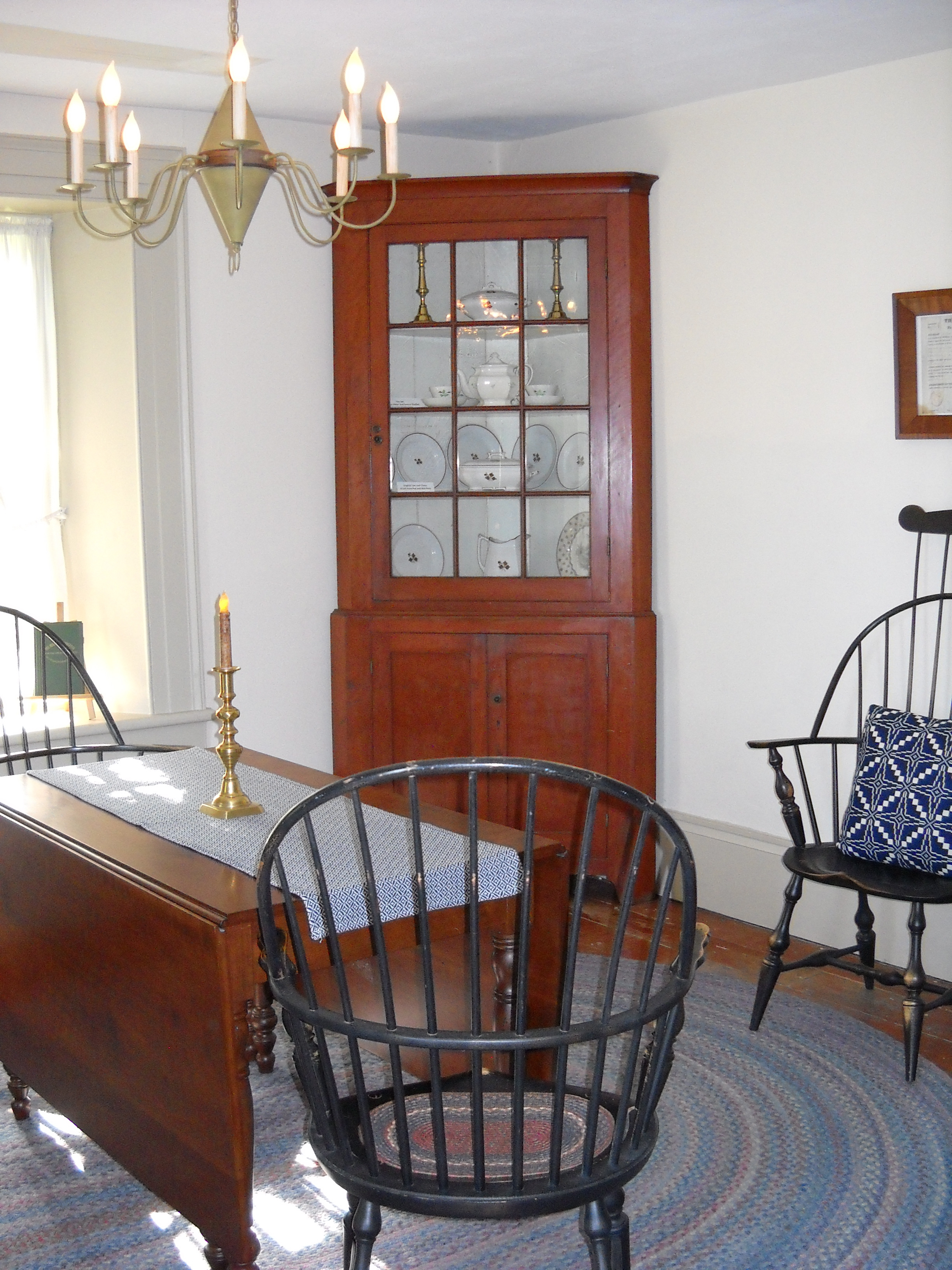
I’m in the middle researching and writing several multi-part Clark House Historian posts, so no essay today. How about a sunny photo of the Clark House parlour, instead?

Photo by Reed Perkins, 2015. Click to open larger image in new window.

The cherry gate-leg drop leaf table dates from about 1850, and is used at Jonathan Clark House Museum board meetings. The bow backed Windsor chairs are based on 1840s originals. These reproductions date from around the 1940s or so.

The cherry corner cupboard is from about 1840. The finish and most of the glass are original. The tea leaf pattern china and twig pattern tea set in the parlour cupboards were donated by local antiques collectors. And the period reproduction light fixture was made in a small shop in Vermont.

Hope you have a fine day and a lovely weekend.

Back soon with surprises!

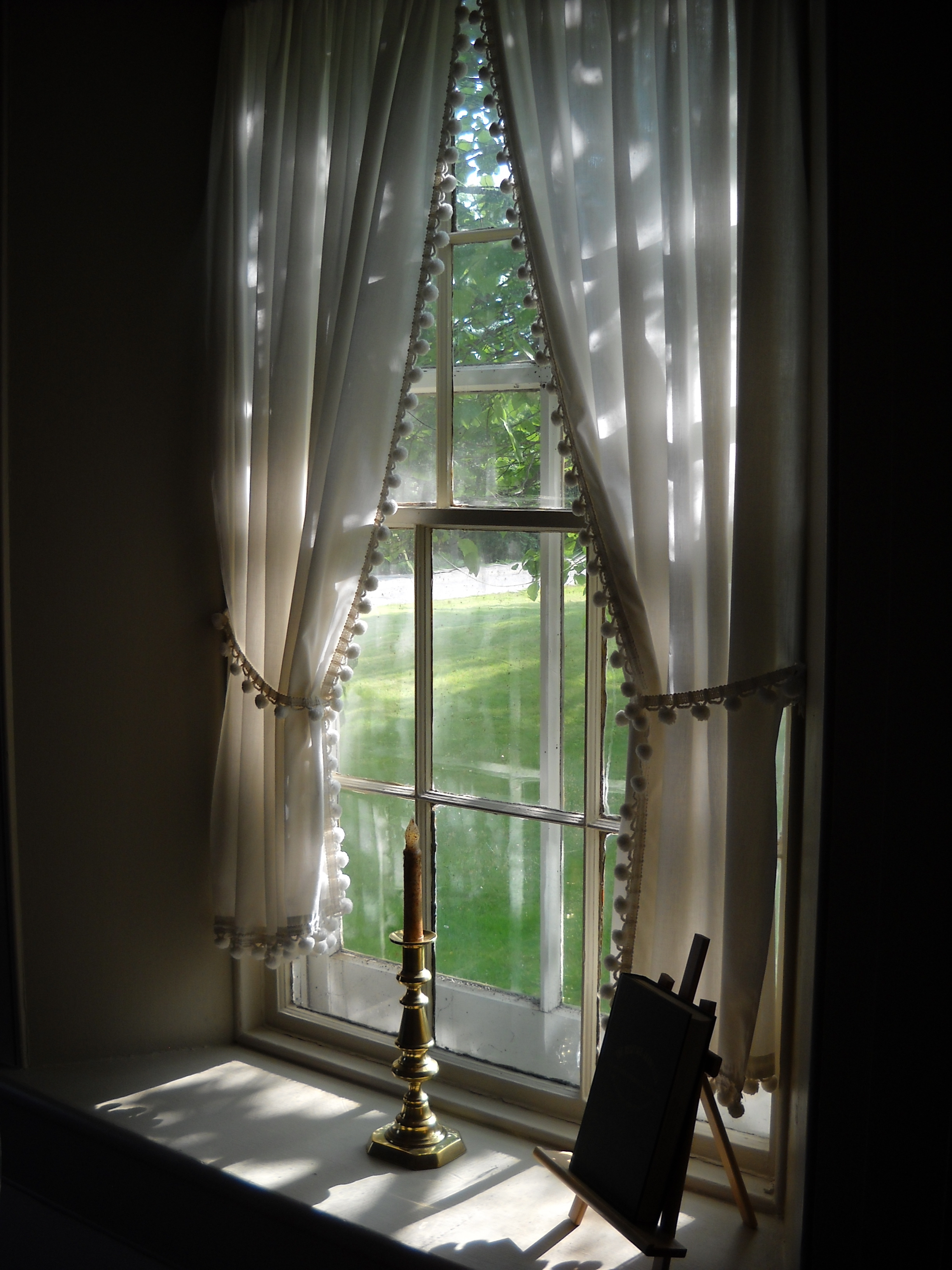
View from the window…

There’s a lot going on behind the scenes at Clark House Historian these days. I’ve got a half-dozen blog posts in various stages of completion, plus ongoing research and information-checking projects with Nina Look, Liz Hickman, and others. And, I’ve just heard from a third-great-granddaughter of two of the original Mequon settler families! How cool is that? More on those folks in an upcoming post—or two!

So let’s take a break, and enjoy a relaxing summer view from the Clark House. In this instance, a lovely July, 2015, view from the Clark’s front parlour, looking to the southwest toward present-day Bonniwell Road. According to the 1872 “Shoolmap” of Mequon, neighbors John Kurz and J. H. Townsend lived just across the street. A bit farther west down the road were—still—the farms of old friends and original Mequon settlers William Bonniwell and Jesse Hubbard.

Photo by Anna Perkins, used by permission. Click to open larger image in new window.

Monday: Map Day! – Another look at Ouisconsin Territory, 1836

UPDATED, February 11, 2024, to include a revised annotated map. But for the full update—with additional notes and corrections—please see the most recent version of this, posted on February 12, 2024.

As a kind of postscript to our look at the early Wisconsin territorial, state and federal censuses, today’s Monday: Map Day! revisits an interesting map that we first discussed on October 29, 2017. Today’s post includes a few updates and corrections based on new information. 

It’s 1836. Where’s…Wisconsin?

In September, 1836, Sgt. Jonathan M. Clark was discharged from the U.S. Army at “Camp Hamilton,” Wisconsin Territory. after serving his three-year term of service with Co. K, Fifth Regiment of Infantry.1  One year later, in the autumn of 1837, Jonathan’s future wife Mary Turck would make the long trip from Palmyra, New York, to Milwaukee and finally Mequon, Washington County, Wisconsin, with her parents Peter and Rachael Turck and six younger siblings. By the end of 1840 Jonathan and Mary would be married and starting their family in Mequon.

That seems simple enough, until you take a moment to wonder how much Jonathan—or especially Mary and her family—knew about this new Wisconsin Territory.  Jonathan had been in the territory since October, 1833, mostly on post at Ft. Howard. In the last year or so of his service he was busy cutting trees and building bridges for the military road along the Fox River waterway from Ft. Howard (Green Bay) towards Ft. Winnebago (near modern Portage). As a road-building soldier, Jonathan might have done some surveying and seen—or helped draw—a variety of maps of the military road and its vicinity. But for a better overview of this new territory, Jonathan or Mary might have sought out a map such as this2:

Continue reading