Labor Day

Observed the first Monday in September, Labor Day is an annual celebration of the social and economic achievements of American workers. The holiday is rooted in the late nineteenth century, when labor activists pushed for a federal holiday to recognize the many contributions workers have made to America’s strength, prosperity, and well-being.

U.S. Dept. of Labor

Labor Day is often celebrated with parades and festive “end of summer” get-togethers in parks or at the beach. This year, with the continuing rise in Covid-19 cases, I think I’ll avoid the large gatherings. But a peaceful picnic with the family might be just the thing:

Tracey, John M. [Untitled—Picnic Scene], circa 1870. Smithsonian American Art Museum, Gift of Mary Glancy Bragg, CC0. Click to open larger image in new window.

Continue reading

CHH Reader Challenge – results!

At the end of last month, while working on some longer posts about the Turcks and Clarks, I had some fun creating the first Clark House Historian Reader Challenge: where you get to be the historian!, and today we have the results. The original challenge went something like this:

Here’s an excerpt of a document that will be part of an upcoming post. Can you read and transcribe it? (Ignore the squiggles in the top right corner, they belong to another record on the same page.)

The original CHH Reader Challenge #1. Click to open larger image in new window.

And I gave y’all a hint, the full page from which this record was excerpted. And as a second hint, I suggested that a look at my discussion of Kurrent handwriting might be helpful.

So what is this a record of, and what does it say?

Continue reading

Snow!

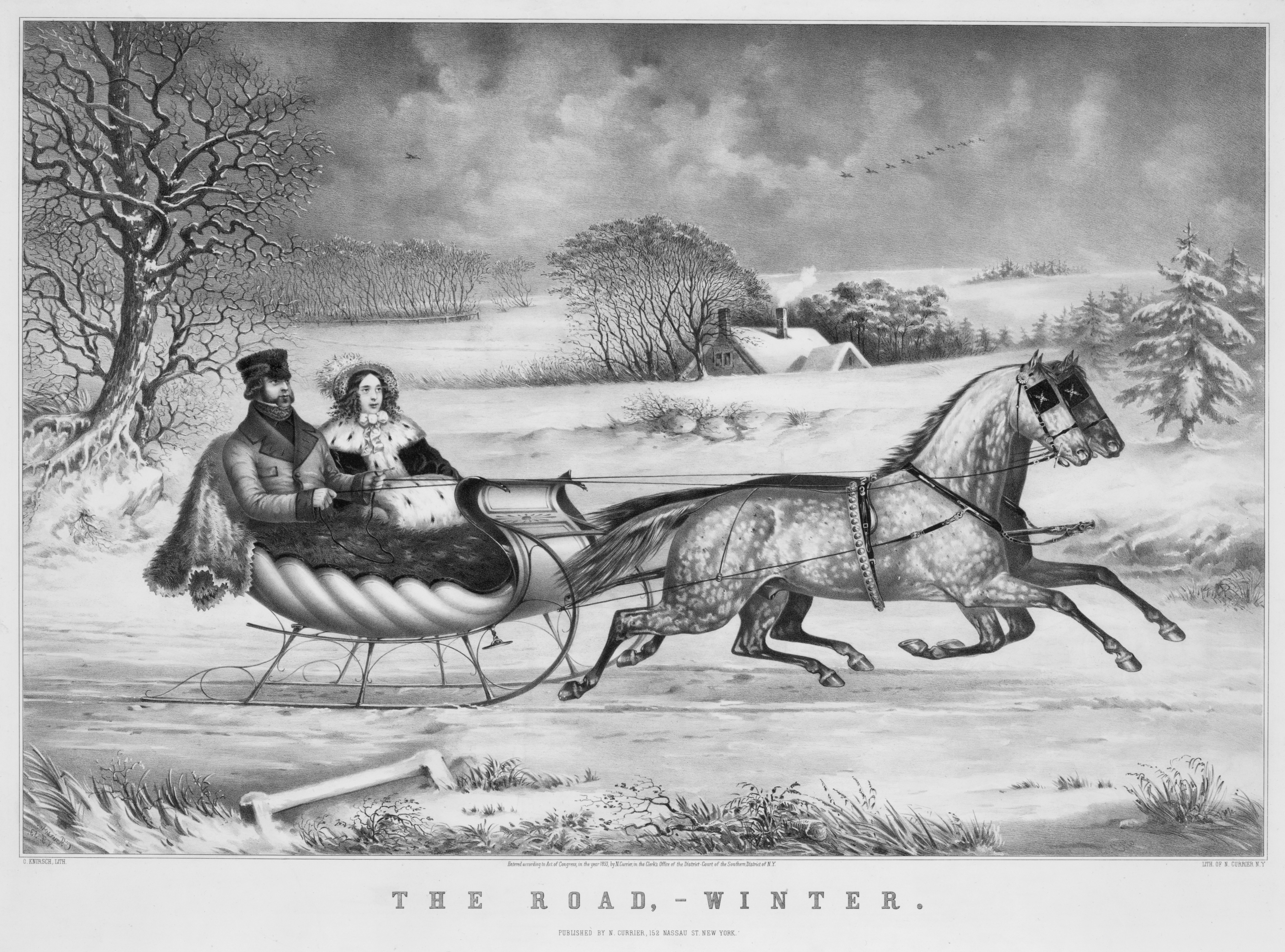
We got some snow in southeast Wisconsin over the weekend, and I’ve spent good parts of the past two days shoveling the driveway and sidewalk. (And then—of course—shoveling the driveway a second time after the city plow finally came through.) Of course, snow was a feature of Jonathan and Mary Clark’s time, too:

Currier & Ives. (1853) The road, winter / O. Knirsch, lith. United States, 1853. New York: Published by Currier & Ives. [Photograph] Retrieved from the Library of Congress, https://www.loc.gov/item/93511164/ (lightly retouched for color balance). Click to open larger image in new window.

We don’t know if the Clarks owned a sleigh while they lived in Mequon. I suspect they probably did, though their sleigh—and their clothing—may not have been quite as posh as those in this Currier & Ives lithograph from 1853.

Continue reading

CHH Reader Challenge!

I’m working on some longer posts about Peter Turck, Mary Turck Clark, and other Jonathan Clark House related topics. One of those posts should be ready by Friday.

Meanwhile, here’s a Clark House Historian Reader Challenge: where you get to be the historian!

Here’s an excerpt of a document that will be part of an upcoming post. Can you read and transcribe it?

CHH Reader Challenge #1. Click to open larger image in new window.

Ignore the squiggles in the top right corner, they belong to another record on the same page.

Need a hint? Here’s the whole page that this record is taken from:

Continue reading

Hail, Smiling morn!

A spot of Spofforth to ring in the New Year…

Happy New Year to all, and best wishes that 2021 will be an improvement on the past year. I’m almost done with my research on the second half of the 1843 concert by the Milwaukie Beethoven Society. (If you missed our earlier posts on that concert, links are here and here.) But it’s New Year’s Day, and I’m not quite done writing about “Part Second.” So let’s have another festive musical selection, this one drawn from that second part of the Beethoven Society’s premiere concert:

Milwaukee Weekly Sentinel March 15 1843, page 2. Click to open larger image in new window.

We’ll start the year with “Hail Smiling morn” by the English composer Reginald Spofforth (1769-1827). Spofforth was a man of many talents, but was particularly known for his glees. A glee is a kind of convivial part-song, typically for three or more voices and usually—but not always—sung without accompaniment. I’ll have more to say about this particular composer and piece later, but for now, it’s well enough to know that “Hail Smiling morn” is—according to musicologist Nicholas Temperly—”possibly the most popular glee in the entire repertory,” and that’s saying something!

“Hail Smiling morn” remains a popular pub song in parts of England and—as you’ll soon see—in many other venues around the world, both secular and sacred. “Hail Smiling morn” is frequently sung by church choirs as a Christmas or Easter carol. I think it works wonderfully for New Year’s Day, too. Below are three spirited modern performances of the piece. Just click the image to open a new YouTube window for each video. (The piece is only about 3 minutes long; enjoy all three performances!)

The first video is from a Sunday pub sing at The Royal, in Dungworth—near Sheffield—England. In many ways this is the modern equivalent of the friendly and well-lubricated singing at the glee and catch clubs of 18th-century England:

Click image or this YouTube link to open video in new window. Photo: screenshot of performance.

Continue reading

Monday Musicale!

The Beethoven Society, part 2

UPDATED, December 27, 2020: I managed to mix together my notes on the two works by Haydn—adapted by William Gardiner as “his” pasticcio oratorio “Judah”—that appeared on this first concert of the Milwaukie Beethoven Society. I have updated this post to correct the information and links about piece no. 2, from “Part First” of the performance, “Now elevate the sign of Judah.” The information about the chorus “Lo he cometh”—the 8th item on “Part Second”—has been moved to its correct place in our upcoming post about the second part of the concert, scheduled for Monday, December 28, 2020. Sorry for the confusion. —R.P.

In Friday’s post we introduced what is commonly believed to be Milwaukee’s first concert society, the Milwaukie Beethoven Society. If you missed it, please take a moment to read that post for background on the group and its place in early Milwaukee’s cultural life. They gave their first performance on Thursday, March 23rd, 1843, at the Milwaukee Court House. The advertised program was:

Milwaukee Weekly Sentinel March 15 1843, page 2. Click to open larger image in new window.

The program for the evening was typical for the era, featuring solo songs (“song,” “air,” “ballad”), vocal duets, trios and quartets, and choruses for the full ensemble. (It’s also possible that the duets, trios and quartets may have been sung one-on-a-part, or with the full chorus divided into two, three or four parts to cover the “solo” lines.) On this initial performance, the Beethoven Society did not play any strictly orchestral works.  This suggests that the the newly-formed ensemble may have understood itself to be more of an “oratorio society”—focused on vocal and choral repertoire with instrumental accompaniment—rather than a “symphony orchestra” with an affiliated chorus.

Oratorio Societies

Even as early as 1843, it’s not surprising that the citizens of Milwaukee could form a performing ensemble of some 35 singers and instrumentalists. Oratorio societies were very popular throughout 19th- and early-20th century America for aesthetic and practical reasons. From a practical point of view—and my own more recent experience—it was probably much easier to assemble a reasonably capable group of men and women to form a decent mixed-voice, SATB, chorus. As we discussed last week, many 19th-century Americans were taught the rudiments of music and singing in school, in church, and at home. In the 19th-century, singing in harmony was a common part of worship, education, and home life.  And you don’t need to invest in expensive instruments and years of regular lessons to become a contributing member of a good amateur chorus. Then as now, the talent pool for a good community chorus is usually deeper than for a full amateur orchestra.

Artistically, choral repertoire fulfilled a need for individual and community music-making and aesthetic and spiritual uplift. In today’s post you’ll see that many of the works on the concert—whether originally sacred or secular—were adapted from their original texts and purposes and fitted out with new, English language, Bible-based or liturgical texts. And if not sacred, the texts of the other pieces—with one or two exceptions—tended to be either somewhat sentimental or deeply maudlin. (It was the Victorian era, after all.)

The orchestra

Continue reading