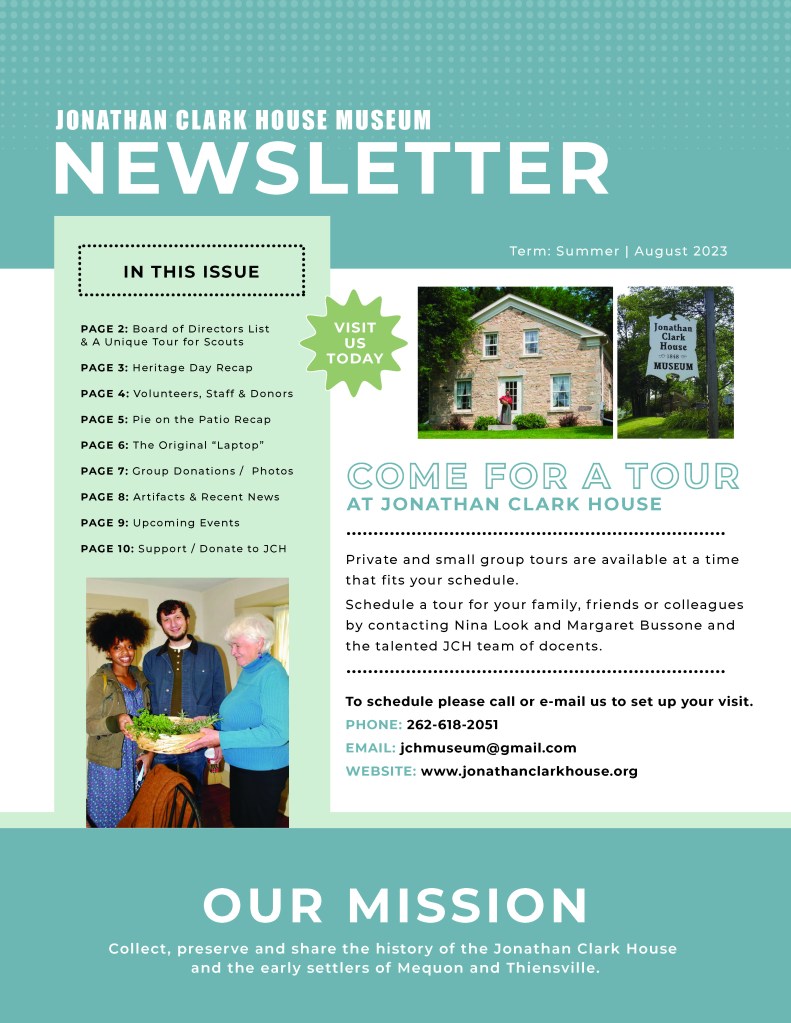
Here’s the Summer | August, 2023 edition of the Jonathan Clark House Museum newsletter. It’s filled with Clark House news, notices of upcoming events, and recaps and photos of a variety of summer happenings. Click the image below to view and/or download your own PDF copy of the complete newsletter.
Thanks to all involved in producing a summer full of Jonathan Clark House activities, especially museum director Nina J. Look and our wonderful crew of docents, volunteers and board members. And a tip of the hat to Nina (and our savvy graphic designer, Shayla Krantz) for this latest edition of the newsletter.
Today I’d like to share two rare and unusual official documents, and note how there are early 19th-century Bonniwell family genealogical clues hidden in each.
The Bonniwells and related families in Kent, 1667-1832
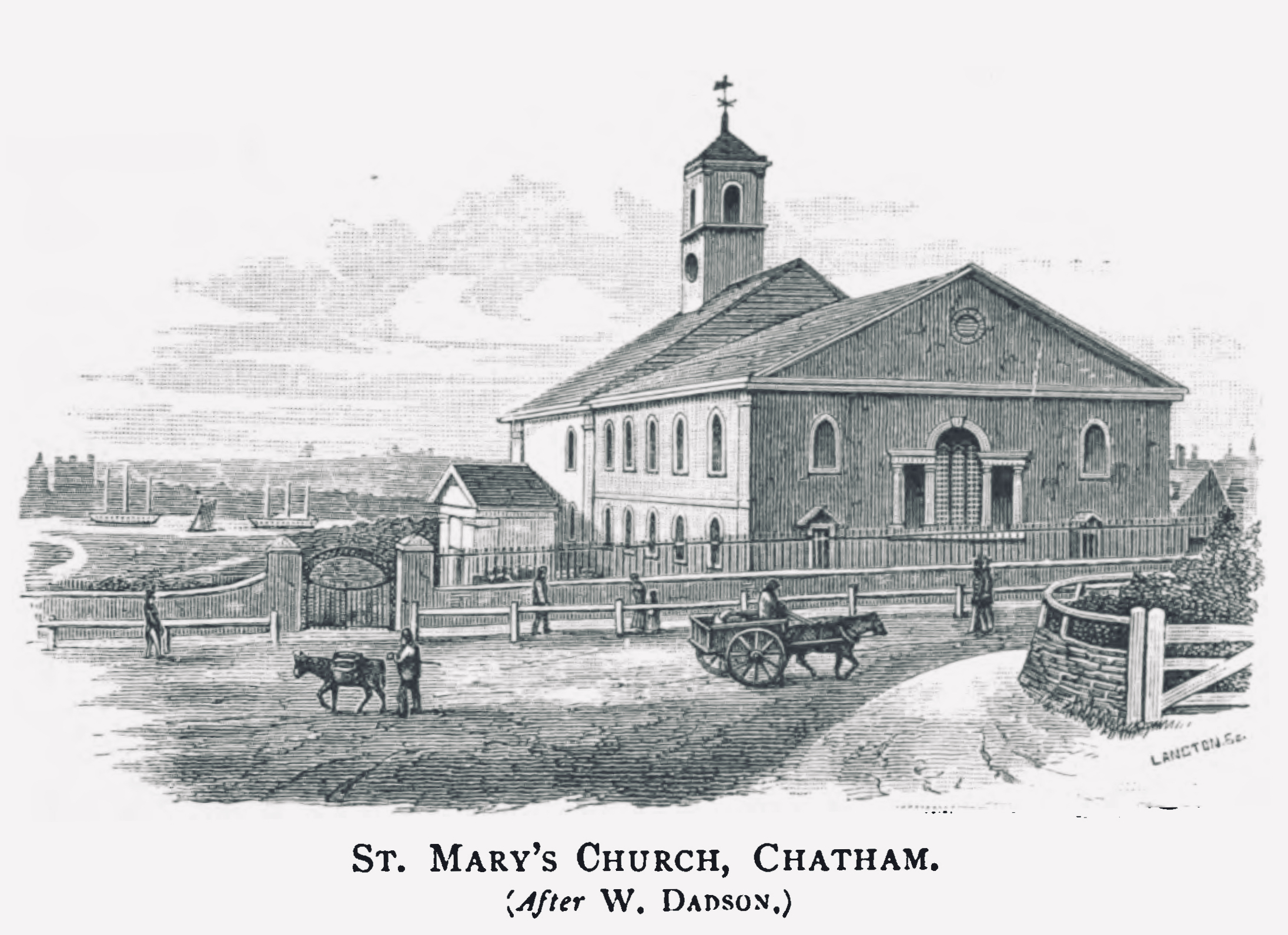
The image below is of St. Mary’s Church, Chatham, much as it looked at the time of Alfred T. Bonniwell’s christening there in 1826. It’s likely that the Bonniwells regularly attended services here during their years in Chatham. St. Mary’s has had a long and eventful history as a parish church, and has been reconstructed several times.1
Engraving based on original art by W. Dadson, in Robert Langton’s The Childhood and Youth of Charles Dickens, Manchester, 1883, page 72. GoogleBooks, accessed 1 Aug. 2023.
A surprising number of our early Mequon immigrants had ancestors in southeast England’s venerable Kent county. Early Mequon settlers (and their spouses) from the Ashby, Bonniwell, Dunning, Eastree, Hills, Long, Moss, Munn, Smith and Whitehead families all had roots in Kent, many of them in or around the town of Chatham. For an introductory overview of this, see Monday: Map Day! – the Bonniwells in Kent, featuring a very cool map of the county from 1665, with added annotations that indicate many of the of the family’s various Kent residences, christenings, marriages, and burials over the subsequent decades.2
Family history before the census of 1841
The first modern, “all name,” census of England was enumerated in 1840 and published in 1841 and, as with every succeeding decennial census, the 1841 Census of England and Wales is full of useful information for historians and genealogists. But the Bonniwells left England for North America in 1832, almost a decade before the 1841 census was enumerated. How do we reconstruct and understand family relationships and local history, especially on the female branches of the family tree, before 1841? Today we’ll look at two obscure bureaucratic reports that may offer some useful clues.
OK, this “Monday: Map Day!” is a few days late (and has been updated since posting, see notes 7 & 8). But I needed a bit more time to edit this beautiful and historic map of the County of Kent for you. Kent was home to Mequon’s pioneering Bonniwell family and their kin for almost 150 years, and taking a close look at its geography may prove helpful for understanding the family and its history, including some of the earlier inscriptions in the Bonniwell family Bible.
Cantivm Vernacule Kent, 1665
Let’s begin with a view of the complete, original map. It was made in 1665, just before James Bonniwell (1636-1709) moved his family from Sutton-Courtney, Berkshire, in south-central England, to Kent, in the southeast.1 As always, I encourage you to click the images to view higher-resolution versions of each map in a new window. Take some time to zoom in and out and scroll around. There’s a lot to see, so I’m going to keep the commentary to a minimum.2
This 1665 map, titled Cantivm Vernacule Kent [Cantium, in the vernacular, Kent], is part of a much larger work, Joan Blaeu’s magnificent Atlas Maior Sive Cosmographia Blaviana, published in Amsterdam between 1662-1672. This is another amazing map made available online by the David Rumsey Map Collection, whose staff provided this commentary:
I’m still thinning out my backlog of Bonniwell-related documents that currently crowd my computer desktop. Today’s post includes some multimedia links, too. I hope you enjoy them.
A long, narrow, disagreeable, ill-built town…
Unlike the glowing prose of the description of Chatham we discussed earlier in Bonniwell background: Chatham, Kent 1832, not everyone was impressed by the Bonniwell’s home town, at least not in the late-1700s. For example, Edward Hasted (1732-1812), in his monumental History and Topographical Survey of the County of Kent (second edition, vol. 4, Canterbury, 1798, pp. 191-226) had this to say:
THE TOWN OF CHATHAM, the greatest part of which has been built since the reign of queen Elizabeth, adjoins to that of Rochester, which, with Stroud [sic, Strood], makes one long street of more than two miles in length, of which Chatham is one, being commonly called the Three Towns, through which the high road leads from London to Dover, as above mentioned.
It is situated close to the bank of the Medway for about half a mile, after which the river leaving the town flows north-north east. It is like most sea ports, a long, narrow, disagreeable, ill-built town, the houses in general occupied by those trades adapted to the commerce of the shipping and seafaring persons, the Victualling-office, and the two breweries, and one or two more houses, being the only tolerable built houses in it.
The 12 volumes of the second edition of Hasted’s complete magnum opus have been digitized and made available at British History Online. The quoted bits above are a brief excerpt from Hasted’s almost 9,000 words devoted to the parish history of Chatham. Click the link for online access, or download a PDF copy here.
I discovered Hasted’s sour appraisal of 1798 Chatham while watching an interesting YouTube video devoted to the history of two major disasters that befell the town—and our Bonniwell and Hills families—in the early 1800s:
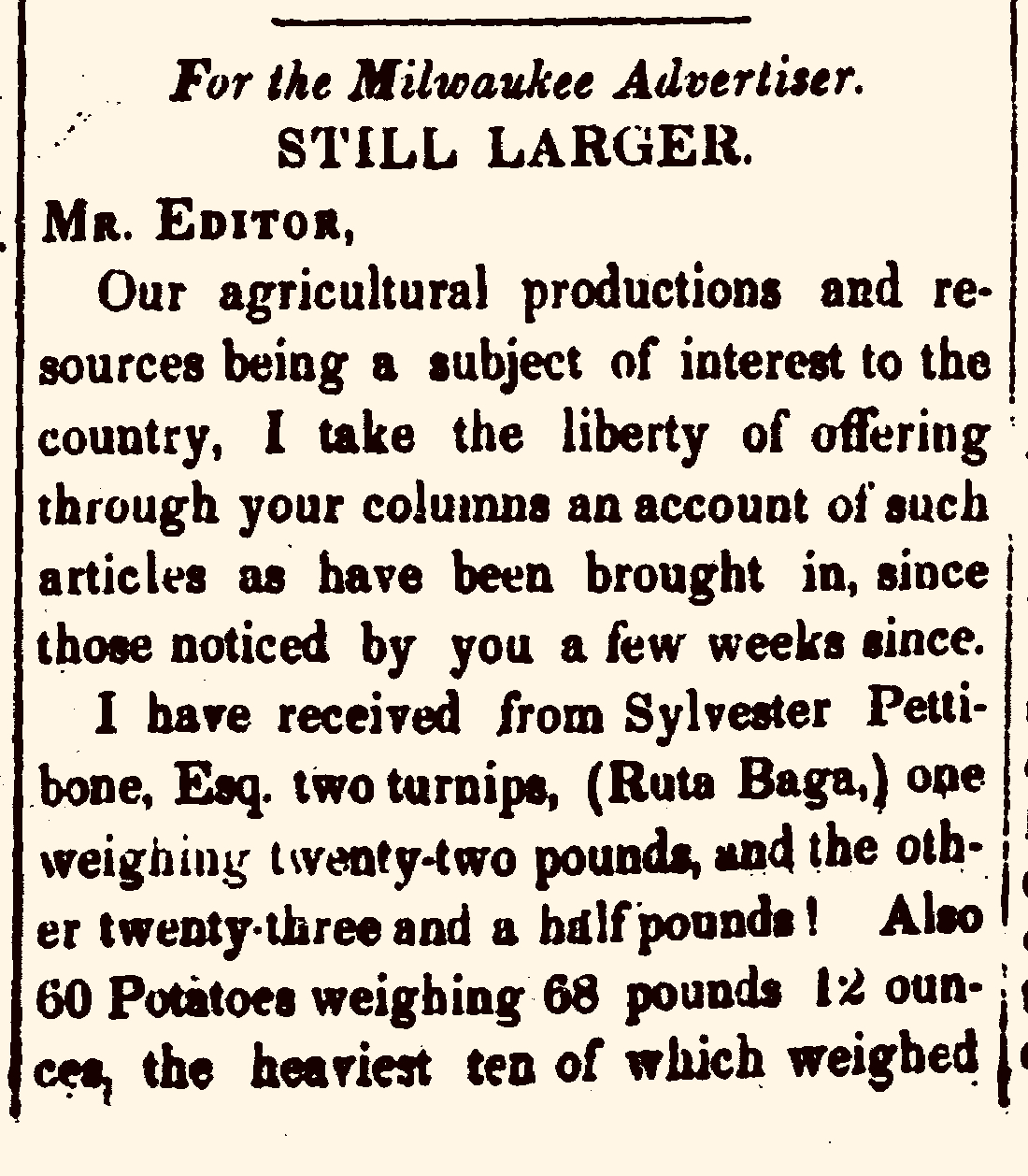
While researching the life of one of Mequon’s first white settlers, Isham Day, I ran across the following breathless bit of regional puffery and promotion, penned by Milwaukee co-founder Byron Kilbourn. It’s from page 2 of the November 17, 1836, edition of the Milwaukee Advertiser:
Lawyer Pettibone has, indeed, grown some astounding turnips (“Ruta Baga”), ‘taters, and carrots in the fertile soil of Milwaukee. Likewise Mr. Douglass with his enormous radishes and “common English” turnips. Have others done anything comparable? Indeed they have, and Mr. Kilbourn has the details…
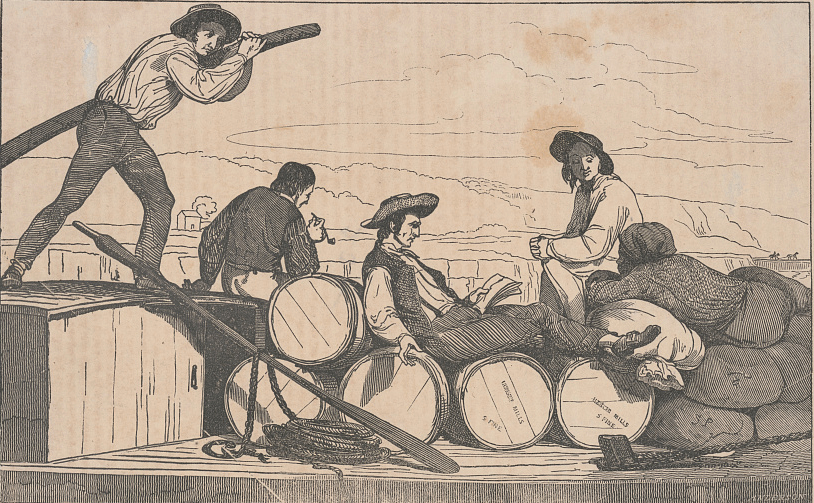
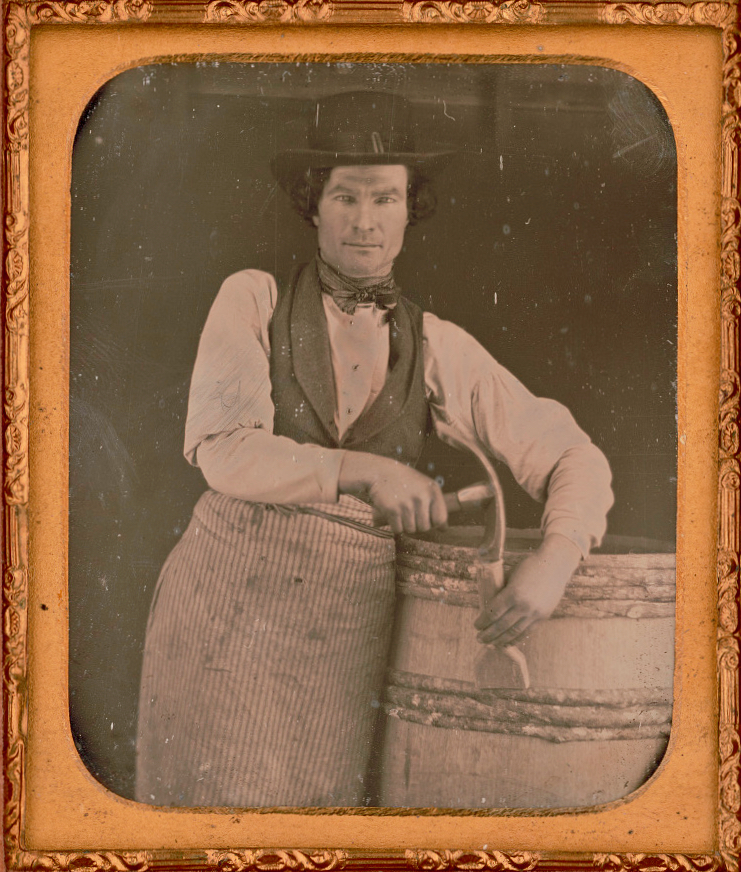
In the 1800s there were no corrugated cardboard boxes or padded shipping envelopes. If you needed to store or ship any liquid—and most dry goods—the barrel (and its larger and smaller cousins) was almost always your container of choice.
Anderson, Alexander, engraver. Five Men on a Flatboat With Barrels and Sacks; One Man Operates the Keel from Above the Boathouse, the Others Are Resting on the Freight, circa 1830-1860, Library of Congress.
And when you needed a barrel, hogshead, keg, cask or firkin, or just an oaken bucket for your well, you would get it from a cooper.
Unknown photographer. Occupational Portrait of a Cooper, Three-Quarter Length, With Barrel and Tools, circa 1840-1860, Library of Congress.
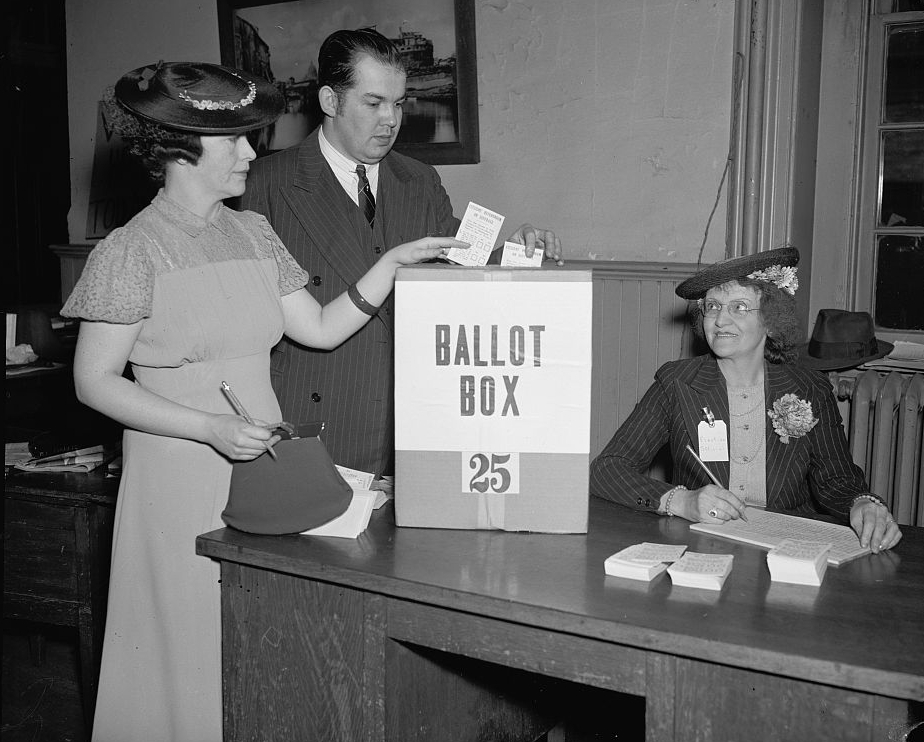
It’s not too late to cast your ballot in the reader’s poll from our previous post, asking how I should archive the contents of my April 22 Cedarburg History Museum talk here at Clark House Historian. Should I publish the words and images as a series of usual-format CHH blog posts, or as one or more YouTube videos, featuring all the original PowerPoint slides, accompanied by my re-recorded narration?
The polls are still open, and the lines are short. Just scroll down to the Leave a Reply box, below, and where it says “Enter your comment here…” leave your vote for “Blog posts” or “YouTube videos.” Questions? For the full story, just click this link and read the second part of Monday’s post, beginning at “That was fun!”
In the words of the late, great, Mayor Richard J. Daley, “vote early and vote often!”
[Editor], daguerreotype with added color highlights c.1855 (slightly cropped, and color adjusted), Smithsonian American Art Museum, Gift of Charles Isaacs, (link), Creative Commons CC0 license. Click to open larger image in new window.
Hey! It’s almost been a month since my last post. Sorry about that. I haven’t gone this long between posts in several years, I think, and now I’ve got (the digital equivalent of) a towering pile of half-written posts to finish and topics to discuss. That said, I have been busy…
I’m finishing up a few longer posts focused on new discoveries about the Bonniwells and other Mequon-area families and the 1850 federal census. More on that shortly.
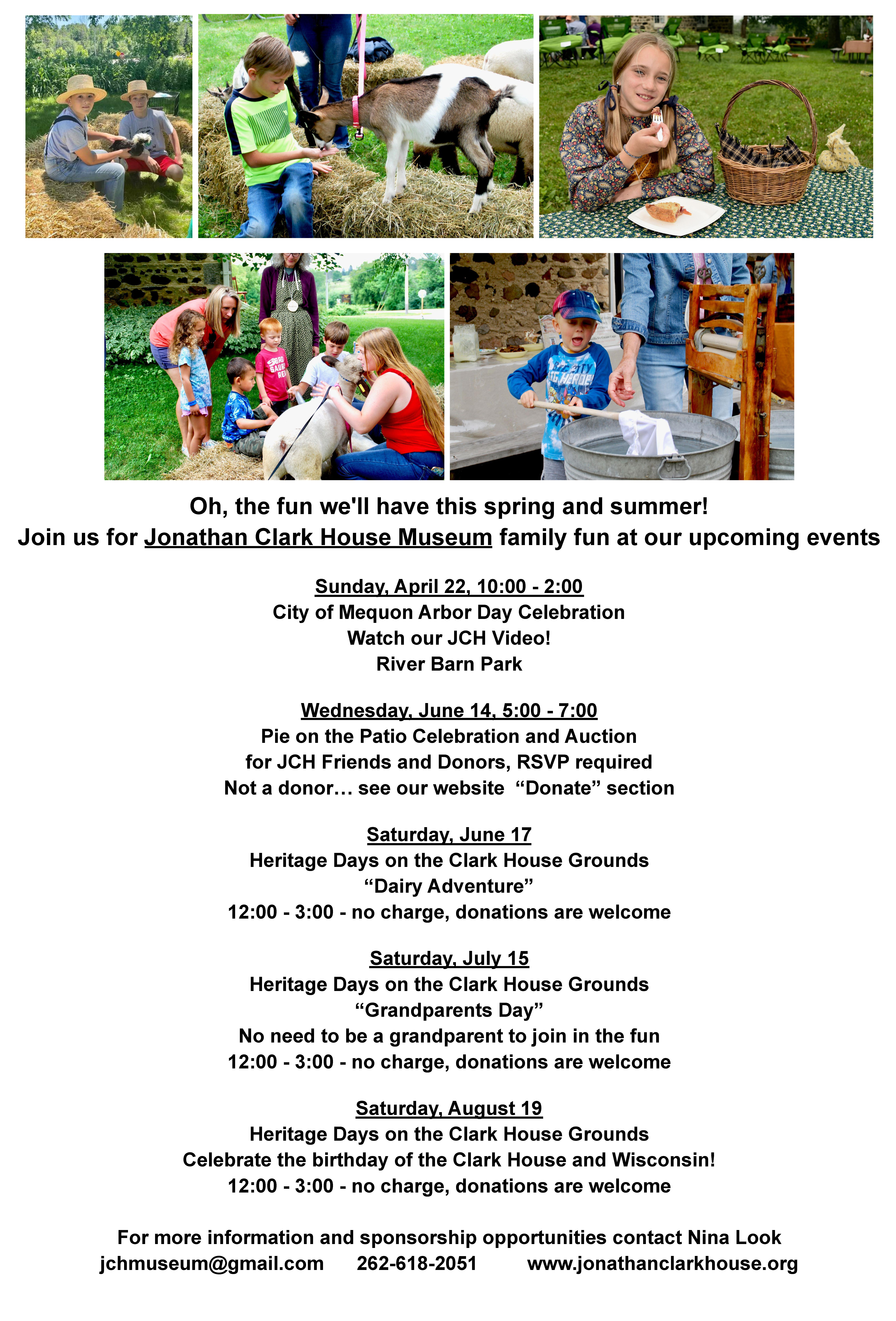
Save the dates!
Meanwhile, I’ve received some news about upcoming Jonathan Clark House Museum activities for spring and summer, 2023:
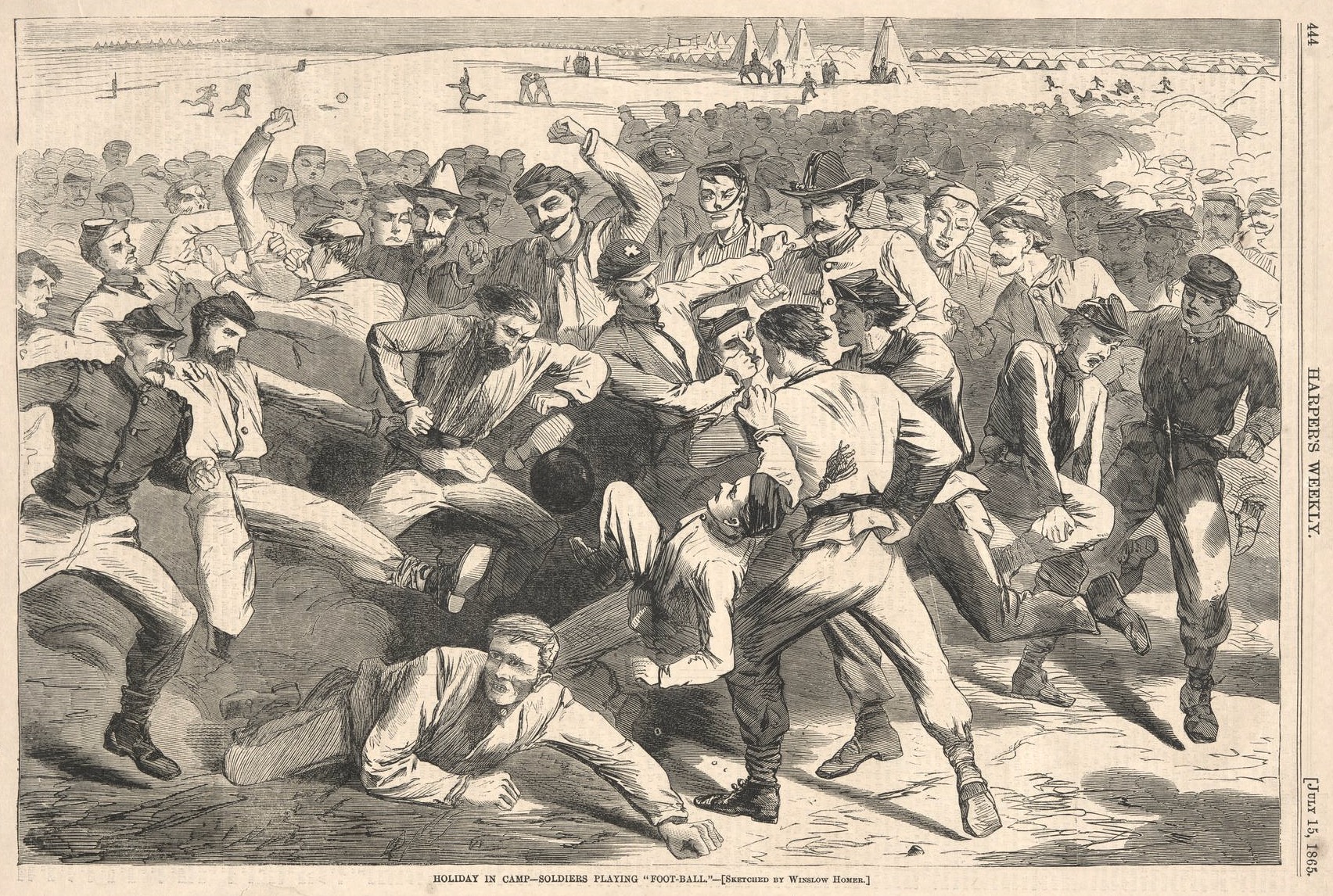
I hear there’s some sort of big sporting event today. Something called…”football.”
Homer, Winslow, Holiday in Camp – Soldiers Playing “Foot-Ball,” from Harper’s Weekly, July 15, 1865, Yale University Art Gallery, Gift of Allen Evarts Foster, B.A. 1906.




 Clark House Historian