Labor Day – a photo essay

Today is Labor Day, the holiday celebrating the working men and women of our nation, and I thought I’d commemorate the day with a lightly-revised re-post of this piece from 2023.

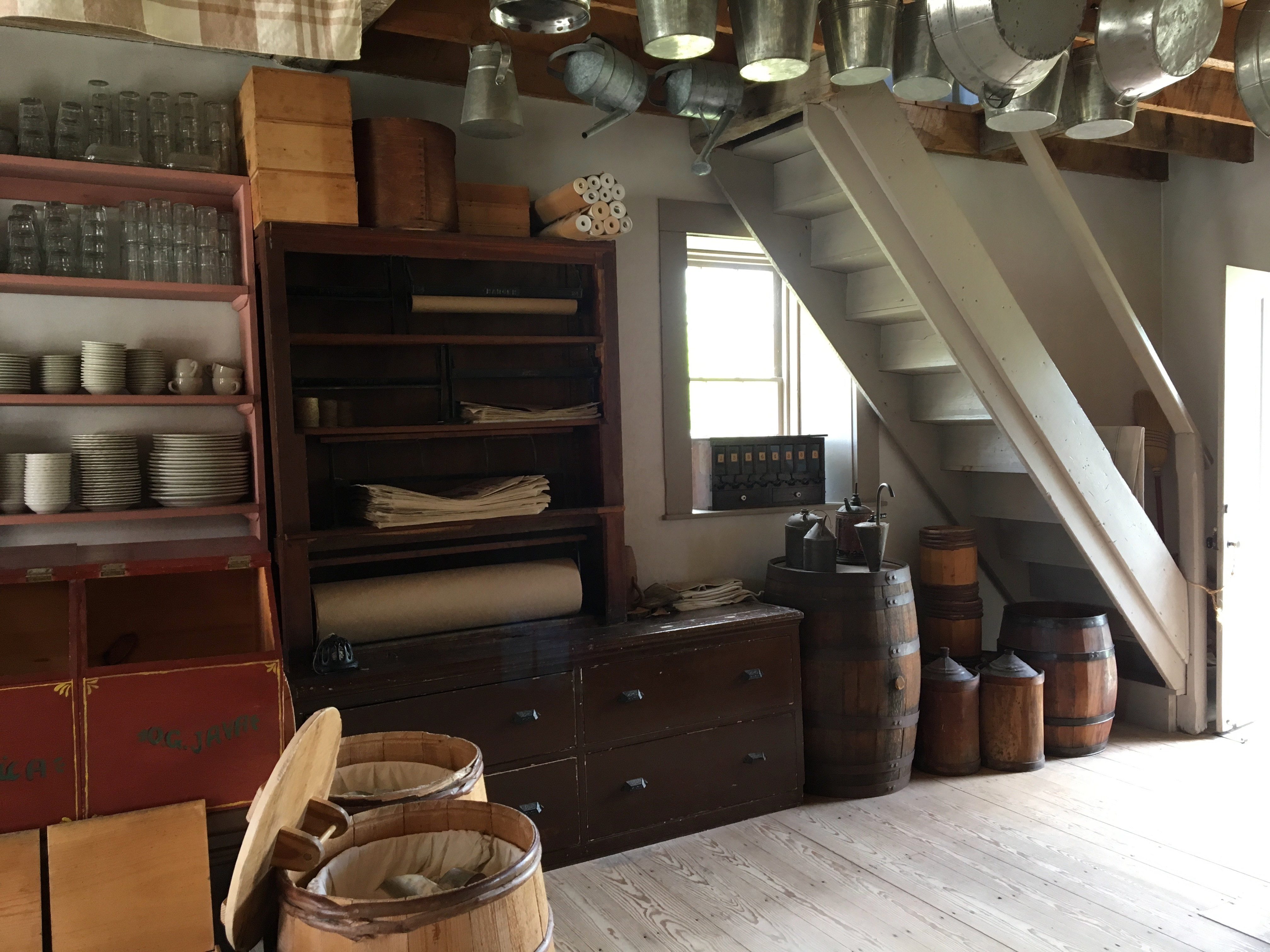
This Labor Day, I’ll be at home, working on my upcoming lectures for the state DAR and the Cedarburg History Museum. Last year, I had to work at our local mercantile establishment. You know, a store kind of like this one, only much bigger, stocked with just about anything you need for modern living:

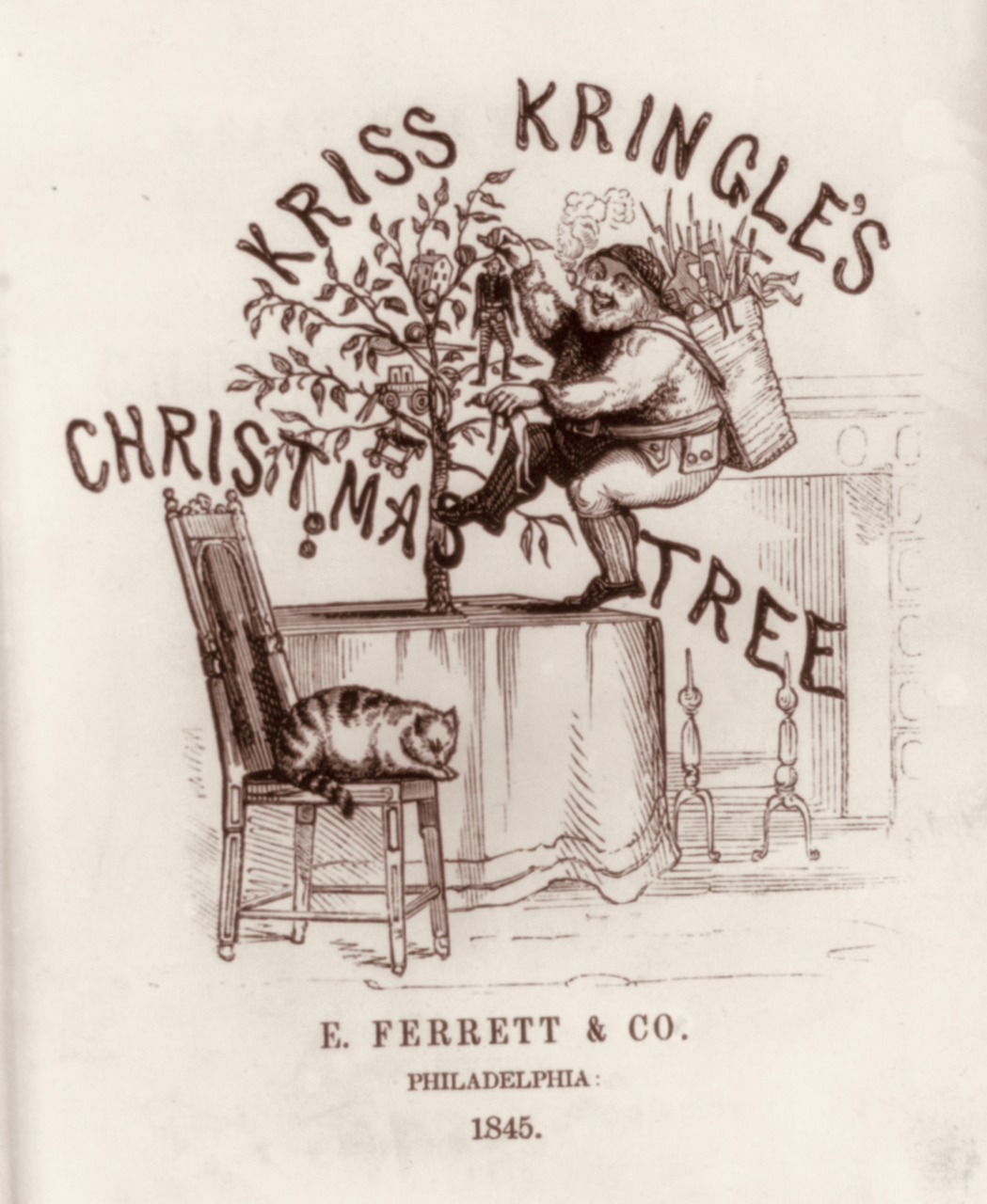
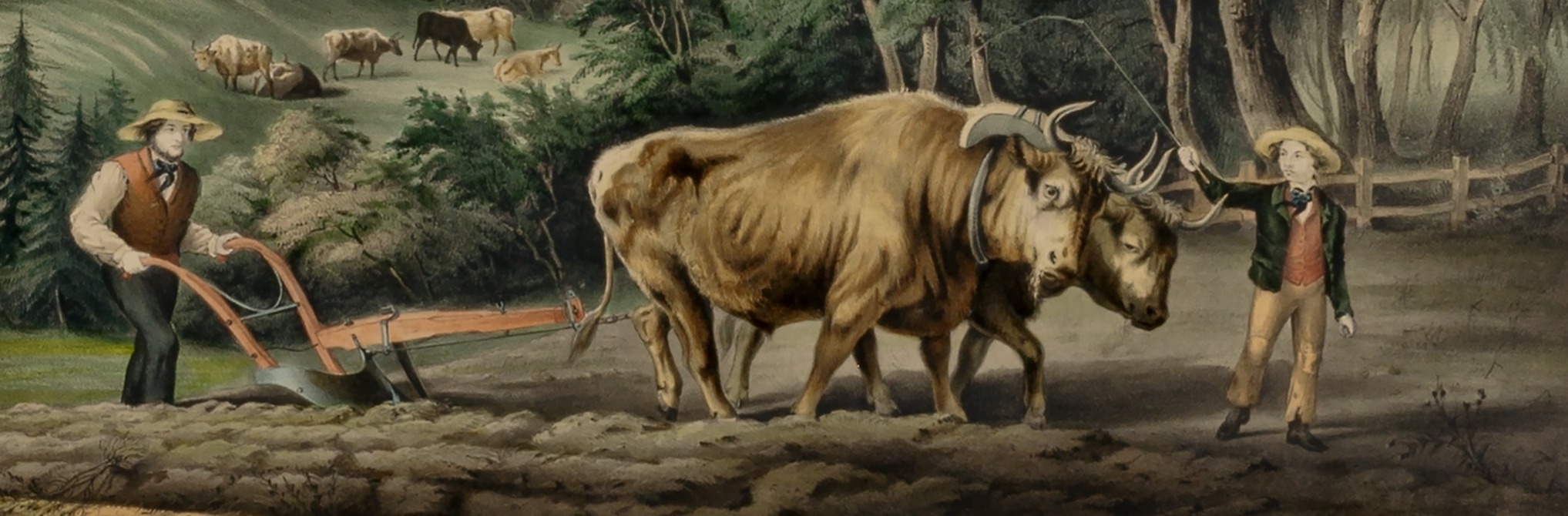
I don’t really have the day “off” today—too much writing to do—and won’t be marching in a parade, but I’d still like to honor the holiday and salute the American worker, past and present. With that in mind, let’s revisit some of the nineteenth-century occupations we’ve talked about previously at Clark House Historian, highlighting a few of the many skills, trades, and occupations common during the Clark House era.

Since it is a holiday, I’m not going to add long commentaries to each photo. Enjoy the photo galleries, and click each gallery to open larger versions of each image. And click the highlighted links to visit the original CHH posts, filled with lots more information about the different skills, tools, and jobs, and the full image credits.

Continue reading

JMC: The missing years, 1836-1839

I’m still on the search for Jonathan M. Clark’s parents and other kin somewhere in the early-19th-century wilderness of northern Vermont and southern Québec. I hope to publish more about that here in the near future.

As part of that project, I’ve spent quite a bit of time over the past few months organizing and re-examining the many research materials that I’ve gathered about JMC and his world, and I’ve constructed a whole bunch of genealogies for early Vermont, New Hampshire, and Lower Canada families named Clark that turn out—alas!—not to be related to our Jonathan M. Clark.

More mysteries…

Along with the mystery of JMC’s still-unknown family and childhood, Clark House museum director Nina Look and I have been trying to chase down some rumors that suggest Jonathan Clark may have spent his three years between mustering out of the U.S. Army (in 1836), and purchasing land at the land office in Milwaukee (in late 1839), as a surveyor in or near the area around Fort Winnebago, Columbia County, Wisconsin Territory. At the moment, that story remains a mystery, too. I’ll let you know if we find out more.

Anyway, with all these facts, rumors and mysteries—and many, many others—rolling around in my head, I thought it might be useful to outline JMC’s life in a handy, chronological timeline. Here’s a draft of that timeline, including what we do—and don’t—know about Jonathan M. Clark’s whereabouts and activities during his lifetime, as of July 1, 2024. I’ve included links to some relevant Clark House Historian posts where possible; please click on them for more information.

Childhood & Youth

November 28, 1812, (possibly, 1811) born to unknown parents, in or near Derby, VT, or Stanstead, Lower Canada

• Late-1812 to early-1831: JMC’s childhood whereabouts and activities unknown for 18+ years, with one possible exception:

Continue reading

Memorial Day, 2024

Lest We Forget

Our annual Memorial Day post, first published in 2020. Updated for 2024 with new information about the Civil War service of Isham and Emily (Bigelow) Day’s eldest child, Cpl. James Lemon Day (1834-1863).

Graves of Unknown Union Soldiers, Memphis National Cemetery, photo by Clayton B. Fraser, (Library of Congress), public domain. Memphis National Cemetery is the final resting place of Mequon’s Watson Peter Woodworth, and almost 14,000 of his Union Army comrades.

Today is the day our nation officially observes Memorial Day. For many Americans, Memorial Day represents “the first day of summer,” and is traditionally celebrated with trips to the lake, picnics, parades, and sales on cars, appliances, and other consumer goods.

But for many of us, Memorial Day remains rooted in its origins as Decoration Day. The first national observance was in 1868, when retired general John A. Logan, commander and chief of the Grand Army of the Republic—the Union veterans’ organization—issued his General Order Number 11, designating May 30 as a memorial day “for the purpose of strewing with flowers or otherwise decorating the graves of comrades who died in defense of their country during the late rebellion, and whose bodies now lie in almost every city, village, and hamlet churchyard in the land.”

On this Memorial Day, let’s take a moment to remember what this day truly represents.

Continue reading

Labor Day – a photo essay

Even thought it’s Labor Day, the holiday celebrating the working men and women of our nation, I’ll be at work, back at our local mercantile establishment. You know, a store kind of like this one, stocked with just about anything you need for modern living:

I don’t have the day off, and won’t be marching in a parade, but I’d still like to honor the holiday and salute the American worker, past and present. With that in mind, let’s revisit some of the nineteenth-century occupations we’ve talked about previously at Clark House Historian, highlighting a few of the many skills, trades, and occupations common during the Clark House era.

Since it is a holiday, I’m not going to add much commentary today. Enjoy the photos, and click the links to visit the original CHH posts with lots more information about the different skills and jobs, and for full image credits.

Continue reading

At my desk, writing…

Sorry for the lack of blog posts lately. My week began with several days devoted to an unexpected and very stressful issue that has now been resolved (or, at least, much improved) and I am researching and writing once again.

I’ll have more history for you here presently, and I have a brief but interesting piece coming up shortly in the next Jonathan Clark House newsletter. What’s that about? Let’s just say that something in today’s portrait of a rather posh Philadelphia silversmith is more relevant to the Clarks’ era—and the Jonathan Clark House Museum collection—than you might think.

Thanks for reading and see you soon!

Continue reading

Bad Handwriting: not just a problem from the past

I hope you enjoyed Monday’s post Help the Historian — what’s Nellie’s last name? and that you’re now working on your best guess for Nellie’s almost-illegible surname.

A historical handwriting puzzle like this is fun when the stakes are low and you don’t have any pressure to get the job done quickly. But did you know that there are several hundred federal employees in Salt Lake City who decipher thousands and thousands of bad or damaged printed and handwritten addresses every day? Let’s let YouTube’s excellent experience-it-yourself man, Tom Scott, show us how it’s done:

How the U.S. Postal Service reads terrible handwriting

It’s an amazing system, when you think of it. To begin with, the speed and accuracy of optical character recognition (OCR) technology has improved dramatically over the years. But when the writing is really bad, or smudged? Then the mail is viewed by the men and women of the USPS Remote Encoding Center in Salt Lake City process, and they read and key in 1.2 billion (that’s billion with a B) images of mail every year. My hat’s off to the USPS employees that can do this fast-paced detective work so efficiently, day after day. Meanwhile, how about you and your deciphering skills?

Continue reading

Help the Historian — what’s Nellie’s last name?

Today was supposed to be a lavishly illustrated “Monday: Map Day!” post, to accompany our recent posts on the Bonniwell family’s roots in Chatham, Kent, England. But, of course, I ran into some interesting—although pretty much off-topic and confusing—Bonniwell documents. These records added a previously unknown1 second marriage to the story of early Mequon pioneer, Jonathan Clark House neighbor, and Washington/Ozaukee county mover-and-shaker William T. Bonniwell.

It’s a complicated story. A second marriage for him, a second marriage for her, and there is a seven-year-old child named Nellie (of somewhat obscure parentage) living with them. So, of course, I dropped what I was doing and dug in to try and solve these new mysteries. I’m now close to understanding what happened with W. T. Bonniwell’s short-lived second marriage, but I have a problem.

Cn u rd ths?

Can you read this?

As always, click the images to open higher-resolution versions of each.

I read a lot of handwritten documents, mostly from about 1600 to the present day. I’m pretty good at deciphering most English and German writing styles from those years, but every now and then I’m stumped.

This is an 1870 document in the hand of young Nellie’s trustee, one Jedd P. C. Cottrill (sp?), acknowledging the receipt of her share of the estate of her deceased foster father, Nelson Webster. Nellie’s name is inside the red rectangle: Nellie J. [hmm?]. What do you think Nellie’s surname is supposed to be? Is the first letter an F or a T or something else? And after that? Is it ?urck, ?urch, ?inck, ?inch? I’m leaning toward Finch or, maybe, Finck. But I’m not sure. Perhaps if we compared other examples of Nellie’s surname from the same probate file…

Continue reading

Thomas Day: farmer, prospector, preacher

I’m still collating information about how and when the members of the Bonniwell gold rush expedition(s) returned to Wisconsin. I hope to have the full list posted here, shortly. In the meanwhile, I thought you might be interested in learning more about Clark family neighbor Thomas Day. He was a member of the Bonniwell 1849 by-land-and-sea expedition to the California gold fields and was a friend and colleague to Clark House neighbor and Methodist evangelist William W. Woodworth. Thomas Day’s life story sheds light on the early Washington/Ozaukee county settler experience, and illuminates various aspects of immigration, religion, and family life in pioneer days.

As we begin, be sure to note that our subject, Thomas Day, immigrated to Wisconsin from England in 1846, and is not directly related to the Tennessee-born, 1836 Mequon pioneer Isham Day.

Rev. Thomas Day, 1809 – 1901

Let’s start at the end, with the longer of two versions of Thomas Day’s obituary, as published on page 3 of the Indianapolis News, Sunday, April 21, 1901:

Continue reading

Memorial Day, 2023

Lest We Forget

Our annual Memorial Day post, first published in 2020. Updated for 2023 with new information about Evander B. Bonniwell’s service.

Graves of Unknown Union Soldiers, Memphis National Cemetery, photo by Clayton B. Fraser, (Library of Congress), public domain. Memphis National Cemetery is the final resting place of Mequon’s Watson Peter Woodworth, and almost 14,000 of his Union Army comrades.

Today is the day our nation officially observes Memorial Day. For many Americans, Memorial Day represents “the first day of summer,” and is traditionally celebrated with trips to the lake, picnics, parades, and sales on cars, appliances, and other consumer goods.

But for many of us, Memorial Day remains rooted in its origins as Decoration Day. The first national observance was in 1868, when retired general John A. Logan, commander and chief of the Grand Army of the Republic—the Union veterans’ organization—issued his General Order Number 11, designating May 30 as a memorial day “for the purpose of strewing with flowers or otherwise decorating the graves of comrades who died in defense of their country during the late rebellion, and whose bodies now lie in almost every city, village, and hamlet churchyard in the land.”

On this Memorial Day, let’s take a moment to remember what this day truly represents.

Continue reading

Rabbits!

Audubon, John James, artist, and John T. Bowen, printer, Lepus Sylvaticus, Bachman, circa 1845-1848, Smithsonian Institution, Peters Prints Collection, Creative Commons CC0 license.1

There they are: Mr. & Mrs. Cottontail and one of their many offspring. The Eastern Cottontail and its relatives were a common sight in Jonathan and Mary Clark’s world, just as they are today.

We seem to have a bumper crop of rabbits in our suburban Wisconsin yard this year and, no doubt about it, the bunnies are cute and entertaining. But for the gardener, rabbits mean trouble. If you are trying to raise vegetables and fruits to feed your pioneer family, these amusing little fur balls are the enemy. They can consume huge amounts of seedlings and sprouts in just a day or two. What’s a gardener to do?

Last year—after they ate through the plastic fence around our vegetable garden and then devoured our entire crop of green been sprouts—I went to the local big box store and got a roll of metal wire rabbit fencing and some steel posts to hold it up. That worked great for us, but it made me wonder: what did Jonathan and Mary Clark use to keep the ravenous rabbits at bay? Well, I don’t have any documentation from the Clarks’ farm, but during my researches, I have noticed some popular 19th-century methods of rabbit control.

Continue reading