Memorial Day 2020

Lest We Forget

Graves of Unknown Union Soldiers, Memphis National Cemetery, 
https://www.loc.gov/pictures/item/tn0320.photos.578083p/

In spite of the worst pandemic in a century, a quick glance at the news will show that many Americans are celebrating this Memorial Day in our now usual way, as “the first day of summer.” Beaches and parks are open, stores entice customers with deals and sales, and people are crowding shoulder to shoulder in swimming pools and along ocean boardwalks.

But for many of us, Memorial Day remains rooted in its origins as Decoration Day. The first national observance was in 1868, when retired general John A. Logan, commander and chief of the Grand Army of the Republic—the Union veterans’ organization—issued his General Order Number 11, designating May 30 as a memorial day “for the purpose of strewing with flowers or otherwise decorating the graves of comrades who died in defense of their country during the late rebellion, and whose bodies now lie in almost every city, village, and hamlet churchyard in the land.”

This Memorial Day, let’s remember those Clark House family, friends and Mequon neighbors who served in the Civil War, and what they fought—and died—for. The History of Washington and Ozaukee Counties of 1881 lists these 65 volunteers from Mequon:

Continue reading

Think Like a Historian…

To all my blog readers, I hope this finds you well and staying safe at home.

I just received a message from Jonathan Clark House director Nina Look and I thought I’d share it with you:

Dear Friends-

As you might imagine, the Clark House is closed at this time, but we continue to think about the history of our early settlers and how important it is to share that history with our children. I prepared the attached guide with the help of JCH Education Coordinator Margaret Bussone and JCH Curator Fred Derr.

Feel free to pass it on to a young person who may want to “Think like a historian.”

Nina Look, Director

CLARK HOUSE Think Like a Historian image

Click this link to open the CLARK HOUSE Guide for Young Visitors

Continue reading

History Mystery! No. 2

The Clark Family Record: What is it? Who created it?

Welcome to our second installment of the Clark House Historian’s History Mystery! in which you, the reader, are invited to Help the Historian and solve one of the many persistent mysteries surrounding Jonathan M. Clark, his family, and related unknowns of local history. In a previous post, we got to Meet the Children of the Clark family. One of the sources for that post is an image that I received from Clark descendant Liz Hickman (thanks, Liz!) of what looks like a single page removed from an old family bible. The page lists birth dates for Jonathan M. Clark, Mary Turck Clark, and their children, and death dates for Jonathan and his only son, Henry. It’s a key document for Clark family research and yet there is much we don’t know about it.  History Mystery! No. 2 seeks to answer: What is the Clark “Family Record,” who created it, and how accurate is it?

Here’s a copy of the image from our files: Continue reading

Santa Claus Visits, 1867: Reviewed

I hope you enjoyed our previous post: Santa Claus Visits Milwaukee, 1867, based on the diary of J. W. Woodworth.

Rev. Woodworth’s book is a unique and often entertaining source, but it’s always nice to back up personal recollections with additional contemporary documents. So I did a quick search of online Milwaukee area newspapers from the 1840s through about 1870 and found many mentions of Santa Claus and related traditions beginning in the late 1840s. And on page five of the Wednesday, December 25, 1867 edition of the Daily Milwaukee News I found this news item which adds a few piquant details in support of Rev. Woodworth’s diary entry: Continue reading

Santa Claus Visits Milwaukee, 1867 (updated)

Christmas is celebrated as an important religious and community holiday by many Americans. Christians worship and commemorate the birth of Jesus, and they and many other Americans enjoy a break from work and gather with family to feast and exchange gifts. But it was not always this way.

In many of the American colonies, Christmas was not observed as a religious or secular holiday. The seventeenth-century Puritan leaders of the Massachusetts Bay Colony considered Christmas to be non-biblical and pagan influenced, and in Boston and other parts of New England any observance of Christmas was prohibited and, for a few years, illegal. The holiday was not generally accepted in many parts of the United States until after the federal government made December 25 a national holiday in 1870. Continue reading

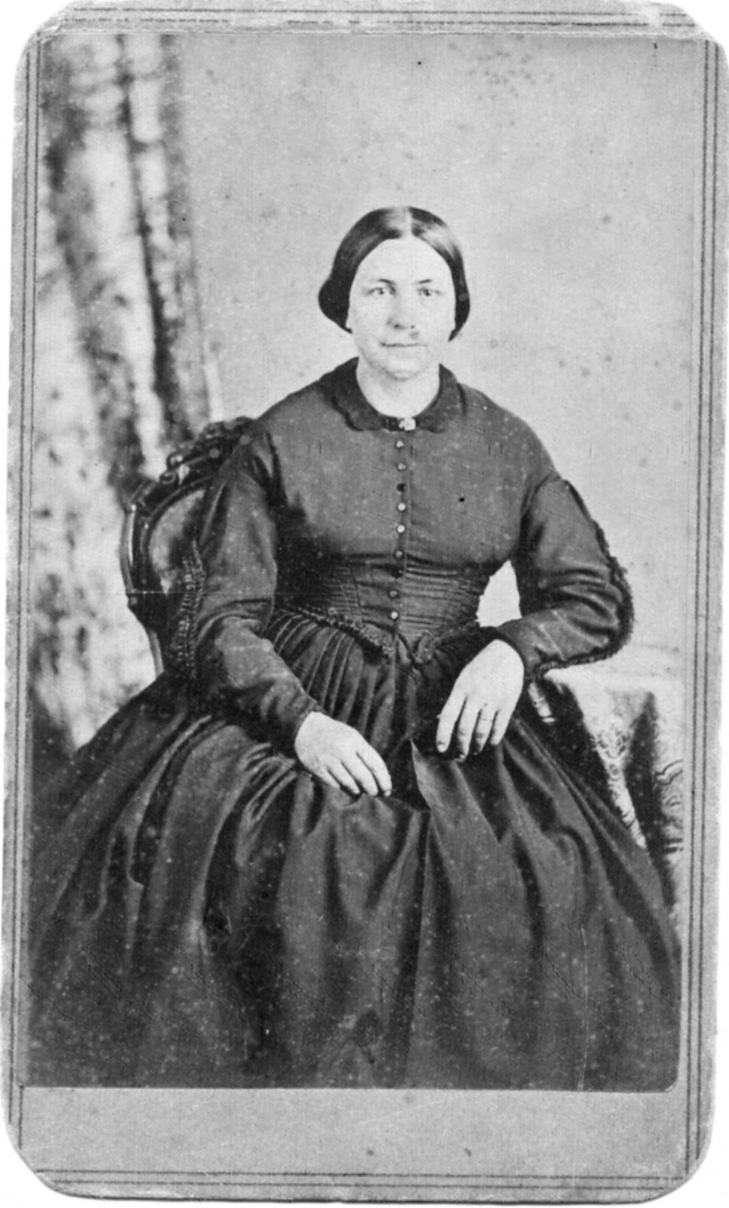
Mary Turck Clark

UPDATE, January 30, 2021: this post was the second-ever post on Clark House Historian. It represented what we knew at the time about Mary Turck, the daughter of Peter Turck and Rachael Gay, wife of Jonathan M. Clark, and mother of the eight Clark family children. This original post was pretty accurate, and I’m leaving it here for reference. But we have learned a lot more about Mary and her Turck and Clark families in the intervening almost-5 years. For the most up-to-date info on Mary Turck Clark, please go the the revised version of this biographical sketch. Thanks for reading!

CLARK, Mary TURCK portrait

Mary Turck Clark. Photograph courtesy Liz Hickman.

It is a commonplace of genealogical and historical research that women and their stories are the “forgotten fifty percent.” In most North American societies it was, and in many places remains, the custom that upon marriage the woman took her husband’s surname. Some documents that recorded marriages, births and deaths might include a place for the woman’s surname, and sometimes the names of her parents, but this information was often left blank. After a generation or two, the woman’s name and those of her parents and grandparents would be completely forgotten, even by her closest descendants.

Continue reading