Wintertime

…and I’m still “snowed under” with research and writing.

So here’s another seasonal image from 19th-century America’s favorite printmakers, Currier and Ives:
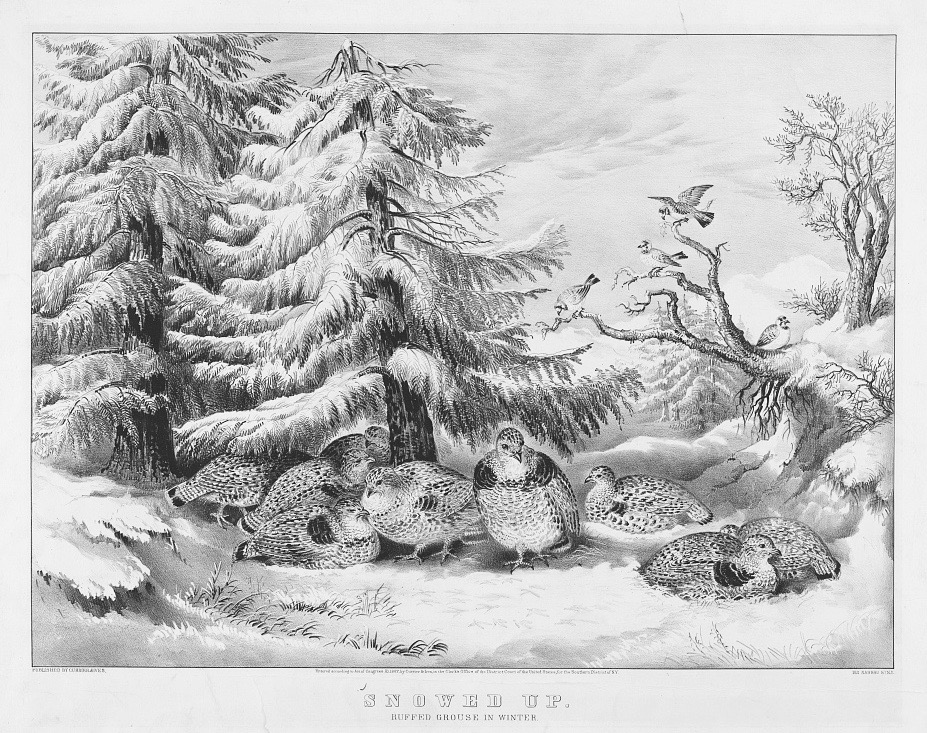
Currier & Ives. Snowed Up: Ruffed Grouse in Winter. , ca. 1867. New York: Published by Currier & Ives. Photograph. https://www.loc.gov/item/2001706217/ (cropped and edited for better color). Click to open larger image in a new window.

It’s a covey of ruffed grouse, sheltering under snow-covered firs. A scene like this would have been familiar to Peter Turck and his growing family in New York’s Hudson River valley, young Jonathan M. Clark in Vermont or Lower Canada, and the settlers in Mequon and points farther north and west.

Continue reading
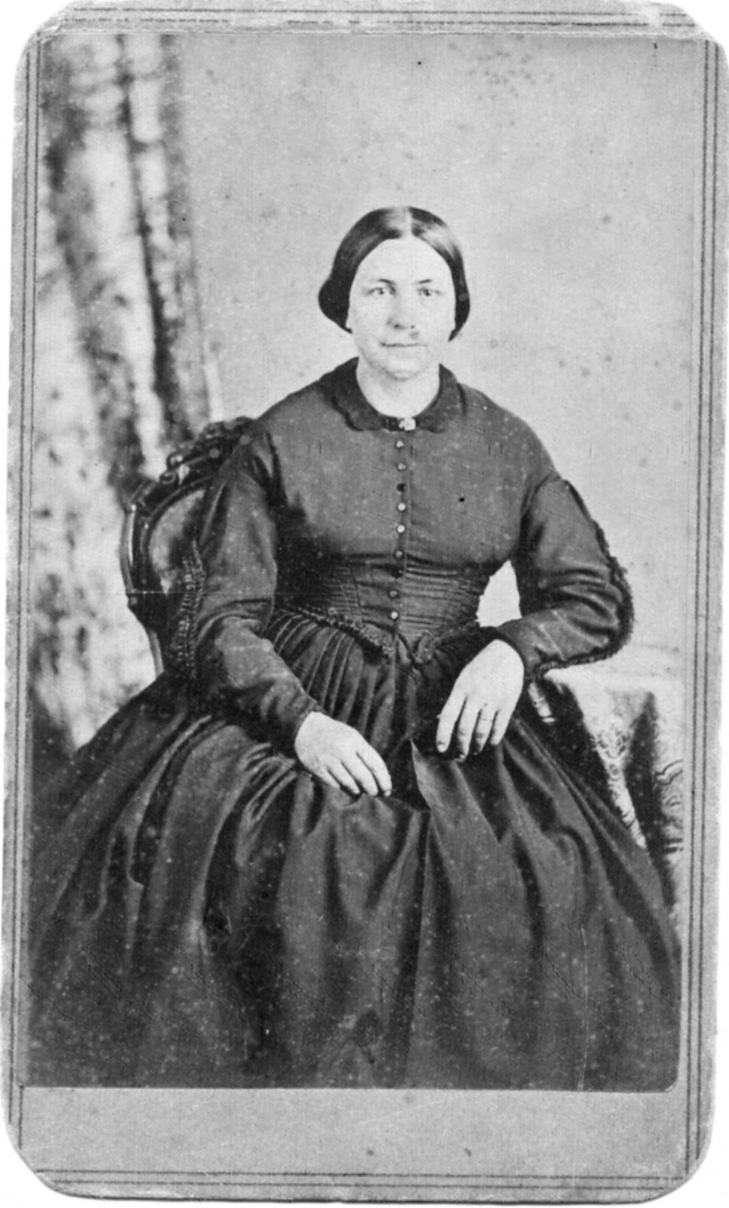
Mary Turck Clark—updated

The original version of this post was the second-ever post on Clark House Historian. It represented what we knew at the time about Mary Turck, the daughter of Peter Turck and Rachael Gay, wife of Jonathan M. Clark, and mother of the eight Clark family children. The original April, 2016, post was pretty accurate, but we have learned a lot more about Mary and her Turck and Clark families in the meantime. So here is a revised version of that post with errors corrected and ambiguities clarified—where possible.

Please note that there are many more facts about Mary and her Clark and Turck families that I’ve written about in the past almost-5 years that are not linked to in this post. If you are looking for more information about Mary, I highly recommend using the blog’s SEARCH function and our new INDEX. And if you still can’t find the info you want, please ask me! Just use the Leave a Reply box, below, or the CONTACT link, above.

Mary Turck Clark: Mequon Pioneer

CLARK, Mary TURCK portrait

Mary Turck Clark. Photograph courtesy Liz Hickman. Click to open larger image in new window.

Continue reading

Inauguration Day

Today we celebrate the inauguration of the forty-sixth president of the United States. The inauguration of a president is traditionally a time to take stock and ponder the direction of the republic. I expect that President Biden—like many of his predecessors—will try and make the best of his opportunity. (I’m writing this before the ceremony; I don’t know if he succeeded.) For a little inspiration—for us all—let’s look back at one of the great American speeches—perhaps the most moving and inspired of all the inaugural addresses—delivered at one of the most difficult and dangerous moments in our history.

A second term, and Union victory, were not certain…

For much of 1864, president Abraham Lincoln’s prospects for reelection looked dim. Union forces had suffered notable defeats and horrifying casualties in early 1864, and many in the North were tired of the cost of the war, both in dollars and human suffering. If not for Gen. William Tecumseh Sherman’s timely capture of Atlanta on September 2, 1864, Lincoln might have lost the election to Gen. George B. McClellan. McClellan sought to end the war by negotiating an armistice with the South. Such an armistice would have ended the fighting, but would not have solved the cause of the war: the continued existence of chattel slavery in the South and in the new U.S. territories and states forming in the West. But Lincoln’s popularity soared after Sherman’s decisive victories during the Atlanta campaign—especially after the fall of Atlanta—and the incumbent president won a decisive popular and electoral college victory on November 8, 1865.

Continue reading

When was Mary Turck born?

Just when you think you know the answer…

A few days ago, Clark House museum director Nina Look asked me a simple question: when, exactly, was Mary Turck Clark born? So I looked in my database and I came up with…two answers: Mary Turck Clark was born on either May 4th, 1820 or May 3, 1821. So I reviewed my dates and sources, and today’s post is about what I (re-)discovered, and what I still have to investigate.

Haven’t we been over this before?

Why, yes, we have. Here are links to earlier posts on essential sources of Mary Turck Clark birth date and birth year information, starting with my second Clark House Historian post, this now-outdated post about Mary from 2016. Other, more recent, posts have gone into detail examining Mary, her family, and their likely birth dates as found on the U.S. federal decennial censuses:

I’ve not yet blogged about Mary’s 1870 or 1880 federal censuses—both enumerated in Milwaukee—but I’ve seen them and used them in my research. More on these in a moment.

Continue reading

Santa Claus Visits Milwaukee, 1867

Christmas Eve is tomorrow night, so I thought you might enjoy another look at our previous Santa Claus posts, from December 25 and 30, 2017. I have combined the two original posts and incorporated a few revisions and updates to the text. Ho! Ho! Ho!

Christmas in early America

For many years now, Christmas has been celebrated by many Americans as an important religious and community holiday. Christians gather to worship and commemorate the birth of Jesus, and they and other Americans enjoy a break from work and gather with family to feast and exchange gifts. But it was not always this way.

But in many of the American colonies, Christmas was not observed as a religious or secular holiday. The seventeenth-century Puritan leaders of the Massachusetts Bay Colony considered Christmas to be non-biblical and pagan influenced. In Boston and other parts of New England any observance of Christmas was prohibited and, for a few years, actually illegal. The holiday was not generally accepted in many parts of the United States until after the federal government made December 25 a national holiday in 1870.

Continue reading

Happy 208th Birthday, Jonathan!

November 28, 2020, is the 208th anniversary of the birth of Jonathan M. Clark. To celebrate, I’m reposting a revised, expanded and annotated version of one of my first Clark House Historian posts. Since this was first published, on April 20, 2016, we have learned much more about the lives of Jonathan Clark, Mary Turck Clark, their family and their neighbors. Please check out the footnotes and click on the links for some of this newer, more accurate, information.

Happy Birthday, Jonathan! (and thanks to Nina Look for the timely reminder).

JMC: Man of Mystery

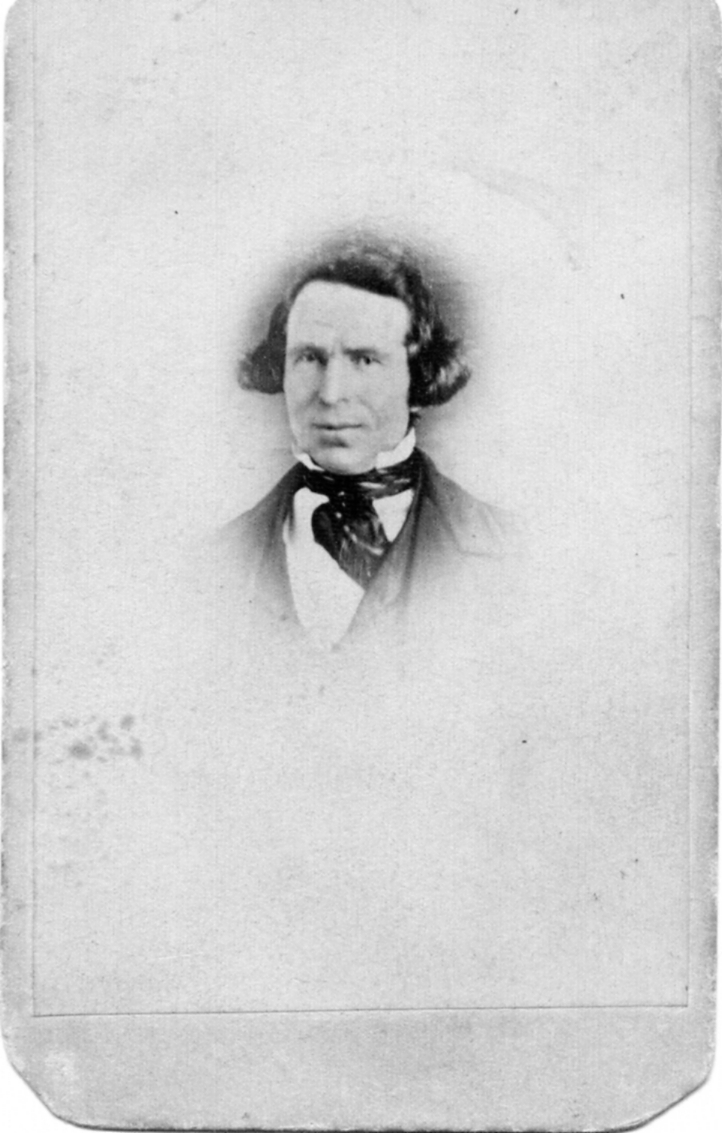
CLARK, Jonathan M portrait

Jonathan M. Clark. Photograph courtesy Liz Hickman.

There he is. Jonathan M. Clark, builder and first owner of the handsome stone home that is now the  Jonathan Clark House Museum in Mequon, Wisconsin. He was probably born in Vermont—or Lower Canada—probably on November 28, 1812, and he died on September 20, 1857. Before coming to Mequon, he served in the United States Army at Fort Howard from 1833 to 1836. He married Mary Turck, eldest child of Mequon pioneer Peter Turck, on March 15, 1840. They had a large family. We even have a photograph of JMC as an adult (above). In some ways, we know quite a bit about Jonathan M. Clark.

Continue reading

Presidential Elections — the early years…

Well, the big day is just a week away. Here at Clark House Historian I try and remain officially non-partisan. But as a researcher and writer, and as an American with long, deep, roots in this country, I have a passionate interest in our nation and its history, and a life-long desire to see us live up to our highest ideals and aspirations. (Of course, human nature being what it is, we have not always lived up to those ideals.)

So with the election approaching, today’s post takes a look at the political leanings of early Washington County and—after its establishment in 1853—Ozaukee County, with an emphasis on presidential elections from 1848 to 1880. Our main source today is the invaluable History of Washington and Ozaukee counties, Wisconsin […], published in Chicago in 1881. Let’s begin with some of the earliest results, following statehood in early 1848:

Continue reading

Harvest Time: 1850, part 1

What did the Clarks grow on their farm?

Today’s and Friday’s posts are inspired by a question about Monday’s Harvest Time post. Reader Laura Rexroth asked: Any records of what they did grow? Animals? How much land did they have? A fine question, and the answer is yes, there are records.

How big was the farm?

We know the size of the Clark farm from information in their land records, including their two federal land patents, a variety of maps from the mid-1800s through the 20th-century, and the Abstract of Title for the Clark property that was prepared by the Ozaukee County Abstract of Title Company, now in the collection of the Jonathan Clark House museum. For most of their time in Mequon, about 1840-1860/61, Jonathan and Mary Clark owned 160 acres of land. Much of this land was originally forested, and I assume that the Clarks cleared and farmed more and more of their 160 acres over time. How much was under cultivation in 1850? For that we need to see:

Continue reading

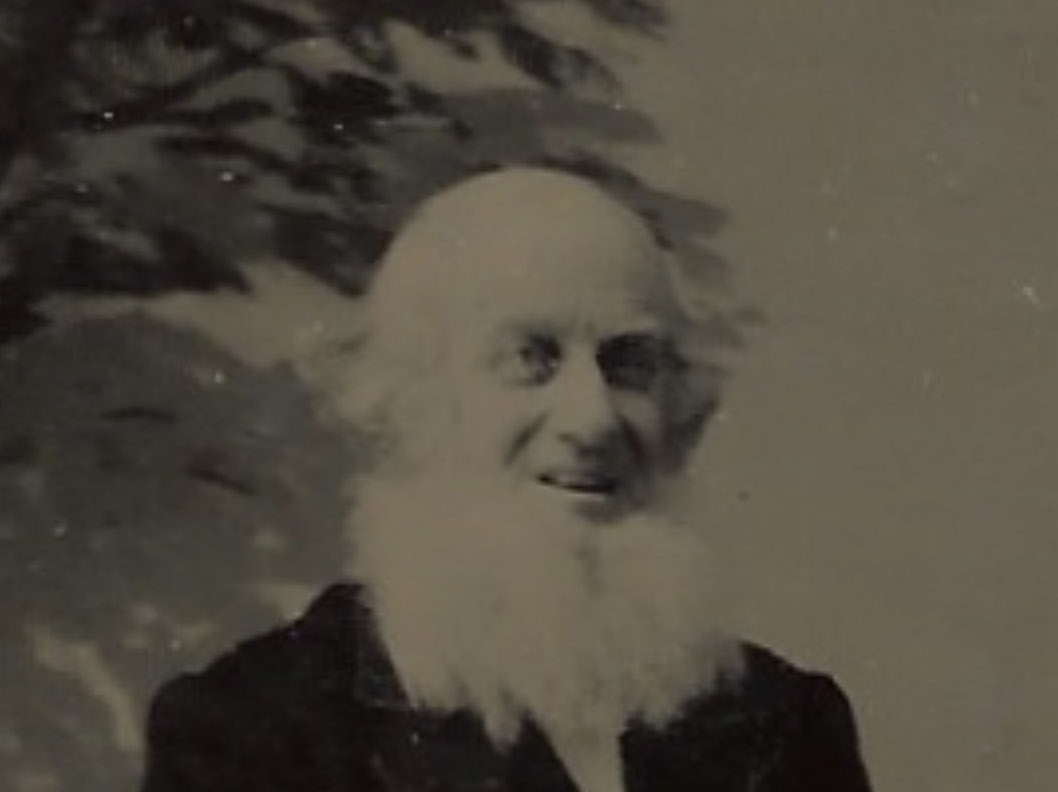
Why is Cyrus smiling? Tintypes!

Cyrus Clark (tintype, detail). Photo courtesy Steven Clark Van Slyke. Click to open image in new window.

Dating and interpreting old photographs, part 3 of 4

For our next to last look at photographs from the family of early Mequon settlers Cyrus and Sarah (Strickland) Clark we’ll start to take a closer look at three images made with another popular photographic process from the era, the tintype. We will examine the clothing, props, backgrounds and other aspects of the photographs, learn more about the tintype process, and try and determine when the photos were taken1. Once again, thanks to Clark and Strickland descendants Steven Clark Van Slyke and Lynnette Thompson for the photos and family history assistance.

If you’re new to the discussion, I recommend you read our previous post, Cyrus Clark’s Cabinet Card, and click the links there for additional background on the family and the other Clark portraits. To begin, let’s take a quick look at all three of our Cyrus Clark tintypes:

Continue reading

Cyrus Clark’s Cabinet Card

Dating and interpreting old photographs, part 2

Today we take another dive into photo research and dating, as part of our look into the lives of Cyrus Clark and Sarah Strickland Clark (here, here, here, here and here). Thanks again to Clark and Strickland descendants Steven Clark Van Slyke and Lynnette Thompson. Without further ado, here is part two of our initial Clark House Historian attempt at analyzing historic photos1.

Let’s start with the photo of Cyrus that we’ve used on our previous Cyrus and Sarah posts. Here’s the front:

Continue reading