Still digging…

I’m still digging in the archives, trying to wrap up our ongoing exploration of the Bonniwell family adventures in the California gold fields, bring (almost) everyone back to Mequon, and finish our (unexpectedly long and thorough) look at the life of Jonathan and Mary Clark’s brother-in-law, Alfred T. Bonniwell.

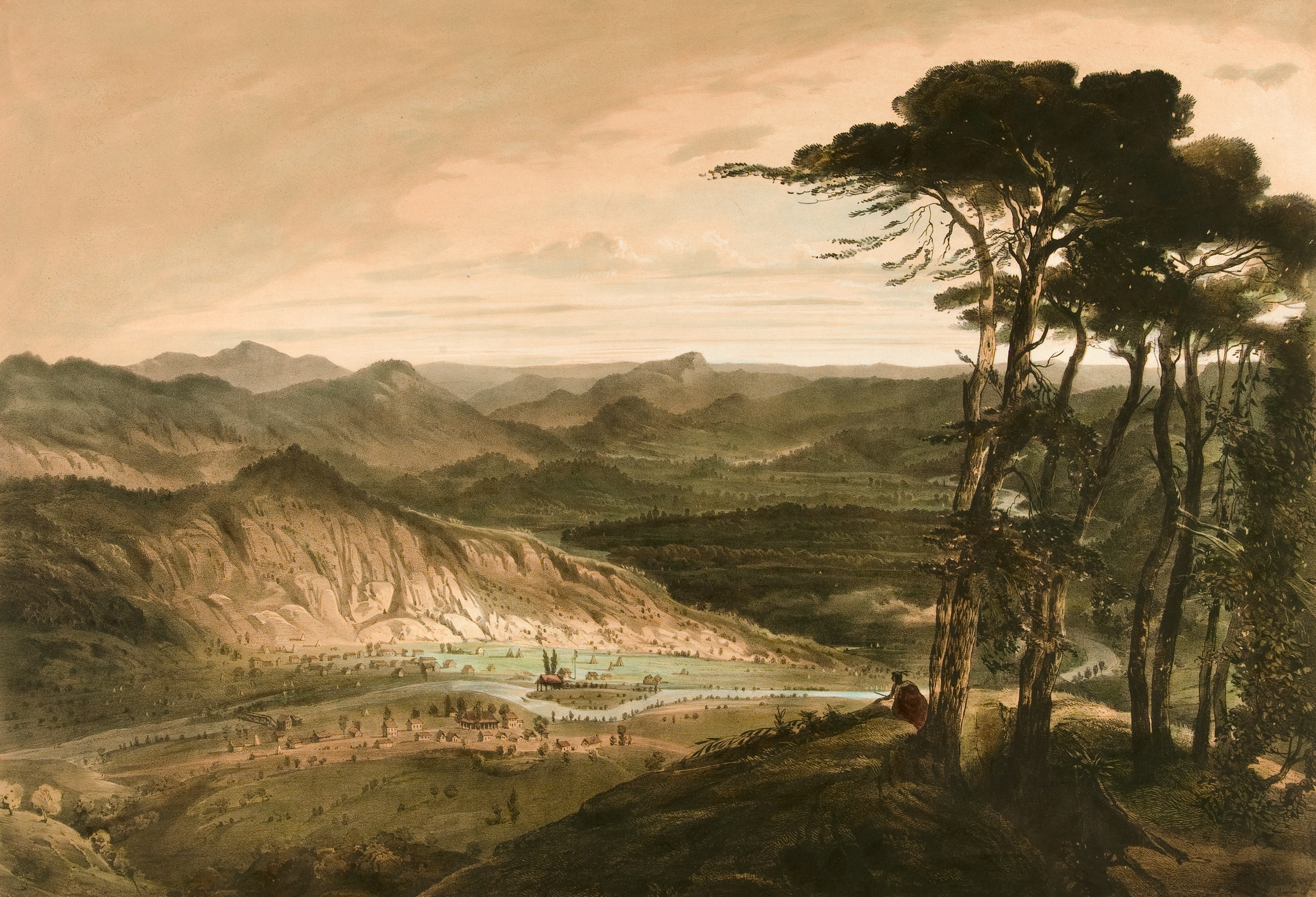
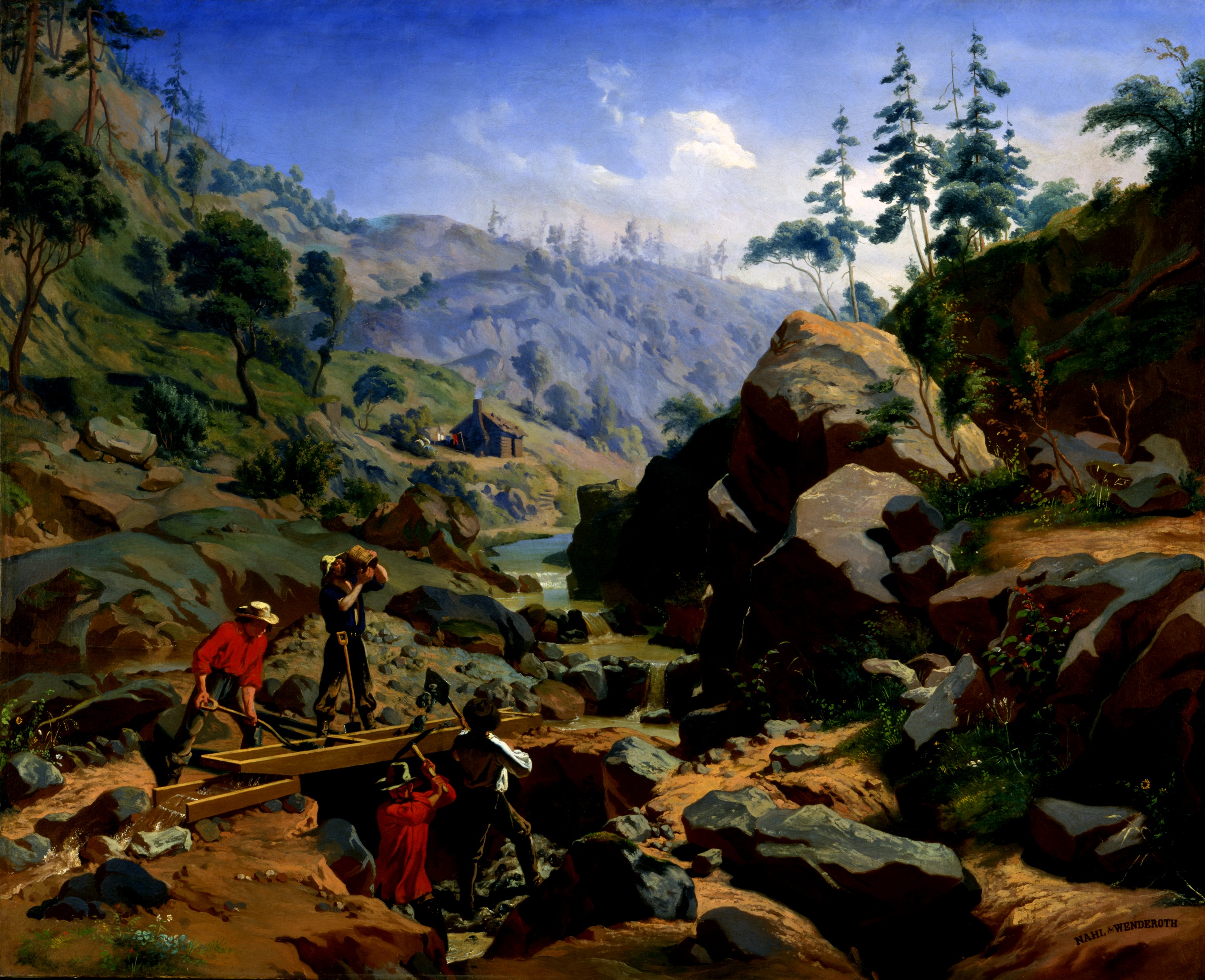
I’m currently mining a rich vein of 1850 and ’52 census documents for California and Wisconsin, as well as contemporary ships’ passenger manifests and published newspaper announcements of maritime comings and goings. Once again, I have a large pile of raw material to sift through and write about, and it’s taking more time than expected. I hope to have things organized for you next week. In the meanwhile, I thought you might enjoy this painting, made in California at the same time as the Bonniwell expedition, Miners in the Sierra:

As always, be sure to click the image to open a larger, higher-resolution image in a new window.

Continue reading

Monday: Map Day! — the Bonniwells & Co. and the 1850 census (part 2)

UPDATED, Jan. 9, 2023, to correct a few minor errors.

Our December 15, 2022 post, The Bonniwells & Co. and the 1850 census (part 1), ended with a cliffhanger:

So the members of the overland Bonniwell overland expedition were not enumerated on the decennial census while on the trail [in Nebraska] in the summer of 1850. According to George Bonniwell’s diary, the party did not arrive in the gold country until August 8th, eight months after the disastrous California floods of January, 1850. […] Would the census still be in progress in the hills and valleys of the mining district? Would any members of either Bonniwell party have a chance to be enumerated in California? Recording the census in the frenzy and wilderness of gold rush California must have been a daunting task. Could the government’s enumerators get up into the scattered high-country mining camps? Did they enumerate all the miners and merchants and other California settlers? Would the paper census forms survive the wilderness, weather—and wild times—of 1850 California?1

Today we’ll see if we can answer those questions.

Gold rush counties, c. 1850

Since the federal decennial census is always enumerated by counties, let’s get our bearings by looking at this contemporary map of the California gold region, showing the various county boundaries at that time:

Continue reading

Snow!

The Holidays are upon us, and I’m taking time to celebrate and enjoy some time with family, That means I won’t have much new for you for the next week or so. (Don’t worry, we will wrap up the Alfred T. Bonniwell story in the very near future. I promise!) But in case you need a little Clark House history for fireside reading this week, I’m going to re-post several seasonal CHH favorites from past years. And since much of the Midwest is currently under a blizzard warning, I thought we should begin with this essay, which originally appeared in early 2021, was revised last February, and has been updated with an additional Currier & Ives lithograph for today’s post.

Snow, and often lots of it, was a feature of Jonathan and Mary Clark’s life in Wisconsin. And if you wanted to go to town or church or visit your neighbors during the snowy Wisconsin winter—or just enjoy a pleasant winter ride in the country—you’d need a sleigh.

Currier, Nathaniel (1813-1888), The road, winter / O. Knirsch, lith., 1853. New York: Published by Currier & Ives. Yale University Art Museum, Whitney Collections of Sporting Art, given in memory of Harry Payne Whitney (B.A. 1894) and Payne Whitney (B.A. 1898) by Francis P. Garvan (B.A. 1897) June 2, 1932. Public domain. Click to open larger image in new window.1

We don’t know if the Clarks owned a sleigh while they lived in Mequon. I suspect they did, though their sleigh—and their clothing—may not have been quite as posh as those in this Currier & Ives lithograph from 1853.

Continue reading

The Bonniwells & Co. and the 1850 census (part 1)

The seventh decennial federal population census was officially enumerated for all persons living in the United States on June 1, 1850. For the first time, all (free) persons were to be listed in the census schedules by their full names.1 But as we discussed previously2, while the actual enumeration of the 1850 census should have begun in every enumeration district on June 1, 1850, it didn’t always do so. And it often took weeks—or even months—to complete the enumeration of most districts. Yet according to Census Bureau rules, whenever the government enumerator did show up at your abode, the census forms were supposed to record the location and personal information for each free person in every household as of June 1, 1850.

So where were the members of the two Bonniwell Gold rush expeditions on June 1, 1850, and where were they enumerated? Or were they enumerated at all? Well, we know that on June 1, 1850, the second expedition, taking the overland route, was camped here:

Highsmith, Carol M, photographer. The iconic Chimney Rock, now a U.S. national monument, stands out in the distance in Morrill County, Nebraska. United States Nebraska Morrill County, 2022-01-02. Library of Congress (public domain).

Continue reading

‘Tis the season…

Time is flying; it’s already been a week since Thanksgiving. I hope you all had time to enjoy the day.

I’m in the middle of preparing several Clark House Historian posts and the writing is going slowly. But! December is here and I’m starting to feel the holiday spirit. So until I finish my current research and writing project (we’ve got to bring the Bonniwells back from the California gold rush!), how about a seasonal photo from my most recent visit to the Clark House?

Clark House front parlor with holiday candle, 2022. Photo credit: Reed Perkins.

Continue reading

Meanwhile, in California…

It’s been a while since we explored the documentary record of Mequon’s Alfred T. Bonniwell and his family and friends. Previously, we learned that the Bonniwells’ gold rush saga involved not one, but two, expeditions. The second trek westward was overland, chronicled in George Bonniwell’s gold rush diary. That trip, and the diary, began with the party’s departure from Milwaukee on April 12, 1850, continued through their arrival at the California diggings in mid-August, and closed—still searching for gold—with a final entry dated Tuesday, September 24, 1850. For more details, take another look at Gold! – The Bonniwells go west…but when? and who?

The first journey involved a smaller group, which included Alfred T. and Henry V. Bonniwell. As we discussed in A (new) Bonniwell Gold Rush timeline, that trek appears to have begun in April, 1849, with an overland wagon trip from Milwaukee to points unknown, with the party eventually arriving in New Orleans. On September 6, 1849, this first party continued West, mostly via ship: New Orleans to Chagres (Panama), by canoe and overland trail across the isthmus to Panama City, and then by steamship to San Francisco. They appear to have made it to California no later than November 4, 1849. They likely docked at San Francisco and then headed up to Sacramento, the main point of entry to the gold fields, which looked something like this:

Parsons, Charles and George Victor Cooper. Sacramento city, Ca. from the foot of J. Street, showing I., J., & K. Sts. with the Sierra Nevada in the distance / C. Parsons ; drawn Dec. 20th , 1849, by G.V. Cooper ; lith. of Wm. Endicott & Co., N. York, before March 2, 1850. Library of Congress. Click to open larger and very detailed, image in new window.

Forty-niners!

Alfred and Henry Bonniwell, together with Mequon-area neighbors P. M. Johnson, Thomas Day and Richard Taylor and perhaps one or two others, made it to the gold fields in 1849, as part of the first wave of fortune seekers. They are, therefore, bona fide “Forty-niners.” George, Charles and both William T. Bonniwells (senior and junior), and the rest of their overland party would not arrive until August, 1850. It would appear that Alfred and the rest of the Wisconsin 49ers had a lucky head start on the others. Or did they?

Continue reading

I must have drifted off…

Inman, Henry. Rip Van Winkle Awakening from his Long Sleep, 1823. National Gallery of Art, gift of William and Abigail Gerdts. Public Domain.

A long “nap”

Unlike Rip van Winkle, I haven’t been asleep the whole time since our previous post. But we are well overdue for new blog material. I’ve got a big backlog of documents and images to share with you; all I need to do is get writing. But first…

Be sure to vote today!

It’s election day today, and your vote counts. If you haven’t already done so, get out of the house, over to your polling place, and vote. Voting is your right and responsibility as a citizen, and an indispensable element of our nation since the earliest days of the Republic.

Not surprisingly, voting and public service were an important part of life in the Clark House era. From 1840 onward, Jonathan M. Clark, Peter Turck, William T. Bonniwell and many other relatives and neighbors sought, and won, appointment or election to a wide variety of local, territorial and state offices. Voting—then limited to white males only—was a priority for Mequon’s early settlers, and they never failed to turn out in large numbers for each election. Their passion for civic engagement and electoral politics was, in turn, passed to the next generation.

Continue reading

A familiar sight: St. Peter’s Church, 1839

I had a fine day last month walking through our state’s wonderful outdoor living history museum, Old World Wisconsin, where I enjoyed this familiar view:

Photo credit: Reed Perkins, 2022.

There among the trees stood Milwaukee’s old St. Peter’s Roman Catholic Church, a building that was certainly well-known—at least on the exterior—to our Clark and Turck families.

The church was built in 1839, two years after young Mary Turck arrived in Wisconsin Territory with her parents, Peter and Rachael (Gay) Turck and her six siblings, and the same year that Jonathan M. Clark and the Bonniwell family first appeared in the Milwaukee-Mequon area.

Continue reading

Owls…

I’m still busy annotating maps for upcoming Bonniwell-related blog posts. So instead of my planned Gold Rush themed Monday: Map Day! essay, I hope you enjoy this Clark-era image of a common visitor to much of North and South America—including Wisconsin—the Great Horned Owl.

Havell, Robert, jr., engraver, after John James Audubon, Great Horned Owl, 1829, plate 62 from The Birds of America (1828-1838), hand-colored engraving and aquatint on Whatman wove paper. National Gallery of Art, Gift of Mrs. Walter B. James. Public domain. Click to open larger image in new window.

Continue reading

The Bonniwell Bible comes home to Mequon

UPDATE, Nov. 30, 2022: The discussion of the William Bonniwell signatures and dates, below, is not correct. I have lined-through the incorrect paragraph and added the correct info in two new paragraphs below the original misinformation.

It may not look like much on the outside. It’s old. Not very big. Whole pages are missing, others are damaged. The binding is worn.

Bonniwell Bible, front cover. Photo credit: Kendalyne Gentile, 2022

But this modest book was—for over 300 years—the family Bible for Mequon’s pioneer Bonniwell family, their ancestors and descendants. And last month, the Bible’s most recent owner, Bonniwell descendant Kendalyne Gentile, generously gave the Bible and other Bonniwell family documents to the Jonathan Clark House Museum where they will form an important part of our permanent collection.

Continue reading