1850 census: more neighbors “in Wisconsin”– while prospecting in California

Recently, we took a closer look at the 1850 census for old Washington county1 and noticed that six men from the neighboring Bonniwell families—men that we know from other records were actually half a continent away, prospecting for gold in California—were officially enumerated as members of their Wisconsin families in census schedules for Mequon and Grafton. In addition, we now know that those six Bonniwell men were not the only members of their expedition to be enumerated with the families they left behind in old Washington county.

Persons “whose usual place of abode…”

In the months since my original attempt to identify and list all the members of the Bonniwell 1849 and 1850 expeditions in Gold! – The Bonniwells go west…but when? and who?, I have been able to identify—with varying degrees of confidence—several other members of their California expeditions. I have more details to share about the lives of these men later, when time permits. For today, I’d like to briefly introduce each of them and make note of their presence on the 1850 census schedules for old Washington Co., Wisconsin, even though all were still seeking fortunes in California at the time they were enumerated.

Phineas Miller “P.M.” Johnson (1808-1876)

P. M. Johnson was, with William T. Bonniwell, one of the co-organizers of the Bonniwell 1849 and 1850 expeditions to the California gold region. We know that he was still in California in 1849-1850, but he was enumerated on lines 37-42, page 229a of the 1850 census for Grafton, Washington Co., Wisconsin with his wife, Orra Ann (Collins) Johnson and his four eldest children: Ransom W., Samuel C., William H., and George.2

The P.M Johnson family’s 1850 enumeration concludes on the reverse of this schedule, lines 1-4, page 229b, with the information for their youngest four offspring, Anna, Edwin, Julia, and four-month-old Harriet.

Continue reading
JMC & the neighbors petition Congress, 1849

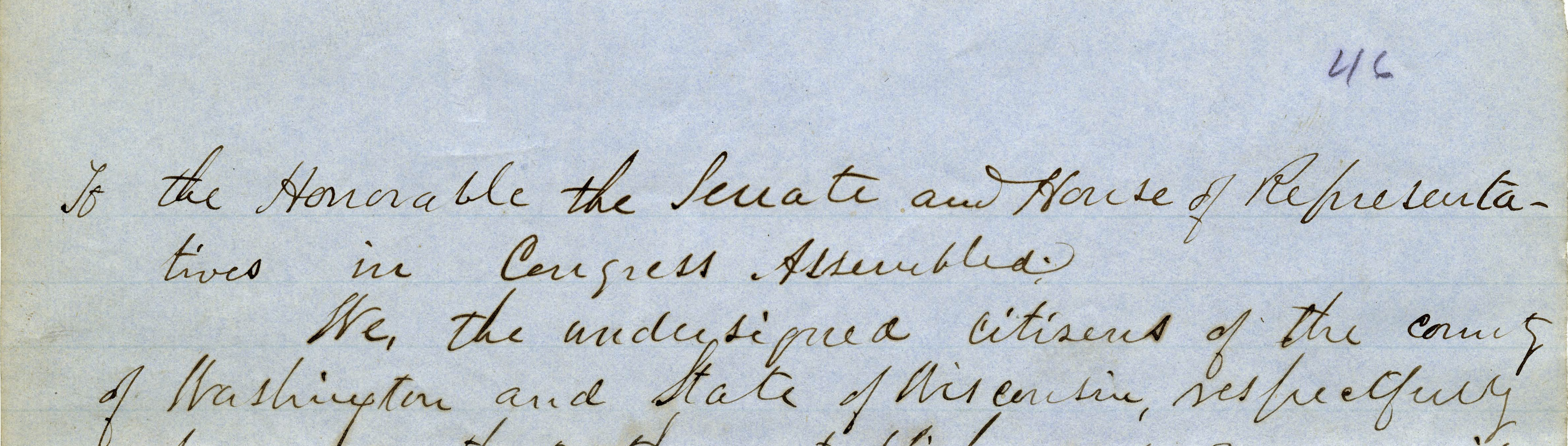
Today we have a surprise addition to our survey of Alfred T. Bonniwell documents. It’s a recent discovery, a very cool 1849 petition to Congress asking for a new postal road from Grafton to Waukesha, via Mequon. It’s signed by many of old Washington county’s most civic-minded men, including Grafton postmaster P.M. Johnson, Jonathan M. Clark, Peter Turck, and almost all of the Bonniwell men. It’s of interest to us, in part as an example of the citizen petition process in the early days of Wisconsin statehood, and more specifically as a record of “who was here?” in Washington county in a non-census year.

A growing county needs a new mail route

Petition of Phineas M. Johnson and others to U.S. Congress. [1849-02-06]. /documents/D275080, page 1, detail, salutation, The Papers of Abraham Lincoln Digital Library. Public domain.1, 5

Citizen petitions have been a part of American governance since early days. Check out our 2021 RBOH: Wisconsin Citizen Petitions for more information on a newly digitized collection of early Wisconsin territorial and state petitions, including a searchable database of petition images. Citizens could also petition the federal government for assistance; our petition is addressed To the Honorable the Senate and House of Representatives in Congress Assembled, and looks like this:

Continue reading

Peter Turck and Irish Relief

It’s St. Patrick’s Day, and to celebrate, here’s an update of my CHH post from March 17, 2021. Slàinte!

Today is St. Patrick’s Day, originally the religious observance of the feast day of the principal patron saint of Eire.1 In honor of the day, let’s take a look at a few aspects of Irish life in early southeast Wisconsin and the involvement of Mary (Turck) Clark’s father Peter Turck in a civic effort to relieve Irish suffering during the Great Famine.

Irish immigrants in early Wisconsin

The first white visitors to Wisconsin were seventeenth-century French-Canadian explorers, priests and fur trappers, at home along Wisconsin’s lakes and rivers. They were followed by a smattering of British and French settlers in the mid- and later-eighteenth century. Cornish lead miners arrived in the southwest corner of the territory around the turn of the nineteenth-century. And in the mid-1830s, when the federal government officially “opened” the southeast corner of Wisconsin for settlement, there was a large influx of New Englanders and New Yorkers.

There were also a substantial number immigrants from across the sea among the Wisconsin pioneers of the 1830s and ’40s, including settlers from Upper and Lower Canada, Nova Scotia, Great Britain, the Netherlands, the German-speaking lands, and Ireland. By the time of the 1850 federal decennial census, Irish men, women, and children comprised the second-largest group of foreign-born immigrants in the state, surpassed in number only by immigrants from the German-speaking lands.

Continue reading

The Bonniwells & Co. and the 1850 census–part 4: “in” Wisconsin!

In our last post, we discovered that none of our Bonniwell gold rush expedition members could be found on the surviving population schedules for the 1850 federal census in California.1 Does that mean they were not to be found anywhere on the national 1850 enumeration? Well, no. It turns out that while the Bonniwell men and their companions were physically present in California, they managed to be enumerated in…Wisconsin?

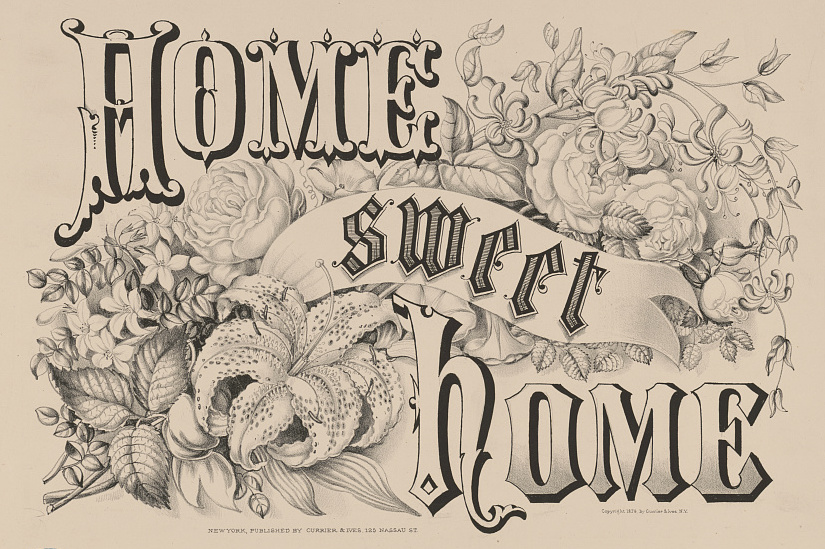
Currier & Ives. Home Sweet Home, c. 1874. New York: Published by Currier & Ives. Library of Congress.

There’s no place like home

You might think that once every ten years, when the census enumerator came to call, he or she would simply speak to a responsible adult at each address and write down the information for all of the “inhabitants” of each household. And that is pretty much how it was done.2

Naturally, there could be complications. What if some members of the household were away, perhaps working the fields, or at the mill? Maybe someone had to go to town, or farther away, on business. What about a child that is out of town at school or college? Or… what if the head of household had gone prospecting in the wilds of California’s gold district?

Continue reading

The Bonniwells & Co. and the 1850 (and ’52) census – part 3

Our previous post1 left us with two important, unanswered questions: Could the Bonniwells and their companions have been recorded on the 1850 federal population census in California? And if they could be counted, were they? After all, travel through the gold camps in the high mountains could be pretty difficult in the best of times:

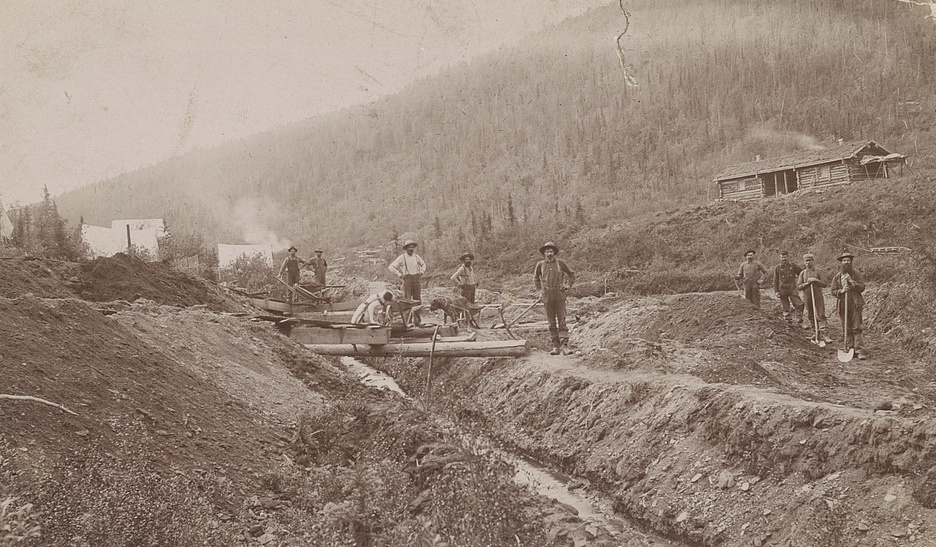
Gold miners, El Dorado, California, ca. 1848, before 1853. Library of Congress.

Add the rain and snow of a typical fall and winter in California’s gold region and the enumerator’s task must have been very difficult. But the answer is yes, it was possible that our Mequon prospectors could have been counted in the 1850 census in California. The enumeration of the gold mining counties began well after the official enumeration date of June 1st, 1850, and the process continued in some gold region counties until the last weeks of December, many months after the arrival of the overland contingent of the Bonniwell expedition.

Continue reading

Presidents’ Day, 1844

Today is Presidents’ Day, the descendant of the federal holiday originally created in 1879 to celebrate the birthday anniversary of George Washington, our first president and, arguably, the “indispensable man” in America’s fight for independence.

Presidents’ Day did not exist during the early days of Mequon settlement, but the Clarks, Turcks, Bonniwells and their neighbors—whether native-born Americans or recent immigrants—were generally patriotic folk and to one degree or another their politics were mostly free-soil, anti-slavery and pro-Union.

So in their patriotic spirit, here’s a colorful presidential salute for you from the Clarks’ era. It was published in New York in 1844 by Nathaniel Currier, whose prints were for sale, at affordable prices, even in remote locations such as the new Wisconsin Territory.

Currier, Nathaniel (American, 1813-1888). Presidents of the United States, 1844. Hand-colored lithograph on wove paper, 13 x 9in. Brooklyn Museum, Gift of Mrs. Harry Elbaum in honor of Daniel Brown, art critic. Color and exposure adjusted.

What happened to “Lincoln’s Birthday”?

I grew up in Illinois, the “Land of Lincoln,” where Old Abe’s birthday was, and remains, a state holiday. So we had holidays to honor the birthdays of both presidents: Lincoln on February 12, and Washington on February 22. How we got from those separate, specific commemorations to a generic federal holiday (and three day weekend) providing “an occasion to remember all U.S. presidents, to honor Abraham Lincoln’s and Washington’s birthdays together, or any single president of choice,” is a complicated story. Here’s the main info in a nutshell:

Continue reading

Monday: Map Day! — the Bonniwells & Co. and the 1850 census (part 2)

UPDATED, Jan. 9, 2023, to correct a few minor errors.

Our December 15, 2022 post, The Bonniwells & Co. and the 1850 census (part 1), ended with a cliffhanger:

So the members of the overland Bonniwell overland expedition were not enumerated on the decennial census while on the trail [in Nebraska] in the summer of 1850. According to George Bonniwell’s diary, the party did not arrive in the gold country until August 8th, eight months after the disastrous California floods of January, 1850. […] Would the census still be in progress in the hills and valleys of the mining district? Would any members of either Bonniwell party have a chance to be enumerated in California? Recording the census in the frenzy and wilderness of gold rush California must have been a daunting task. Could the government’s enumerators get up into the scattered high-country mining camps? Did they enumerate all the miners and merchants and other California settlers? Would the paper census forms survive the wilderness, weather—and wild times—of 1850 California?1

Today we’ll see if we can answer those questions.

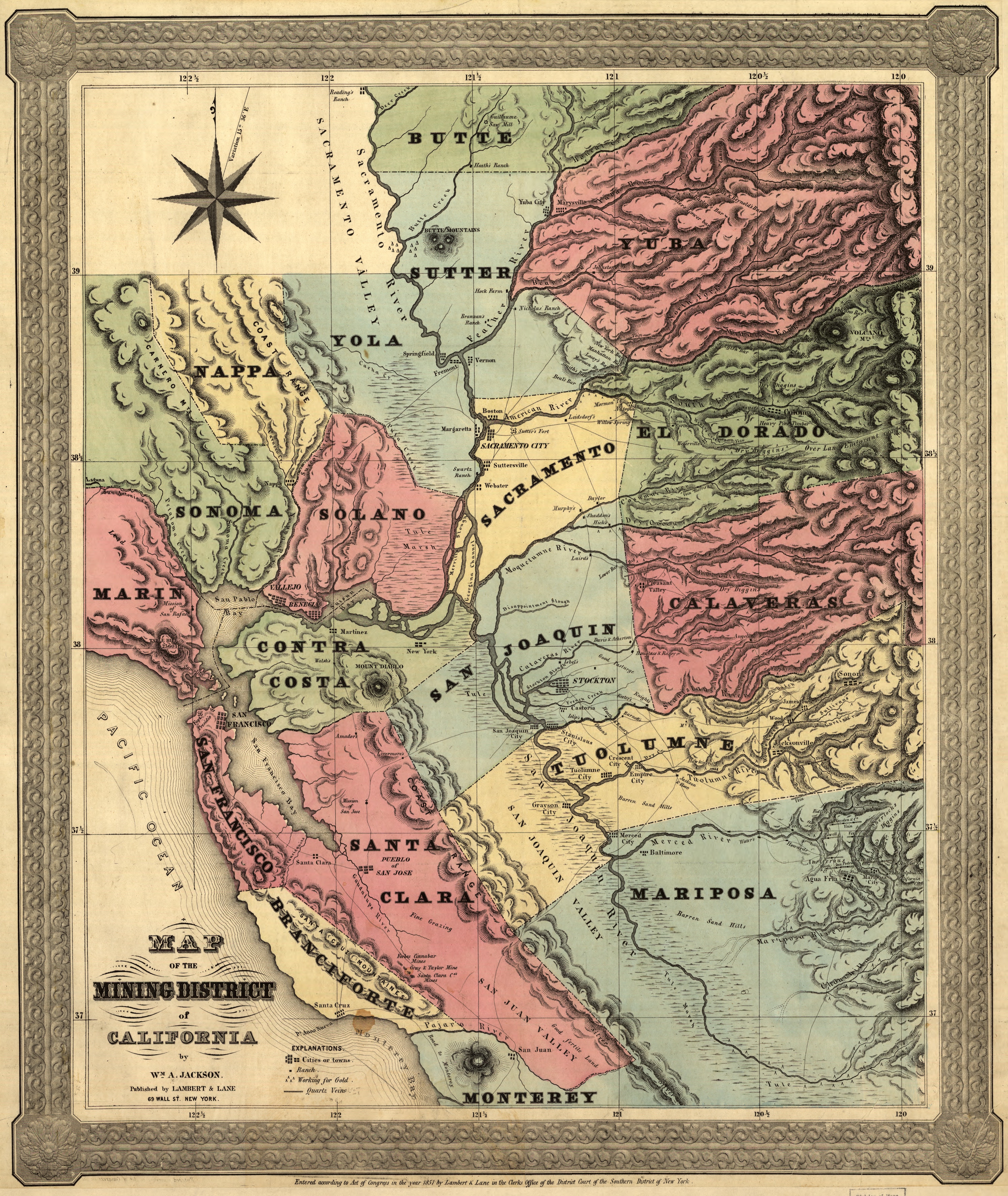
Gold rush counties, c. 1850

Since the federal decennial census is always enumerated by counties, let’s get our bearings by looking at this contemporary map of the California gold region, showing the various county boundaries at that time:

Continue reading

‘Tis the season…

Time is flying; it’s already been a week since Thanksgiving. I hope you all had time to enjoy the day.

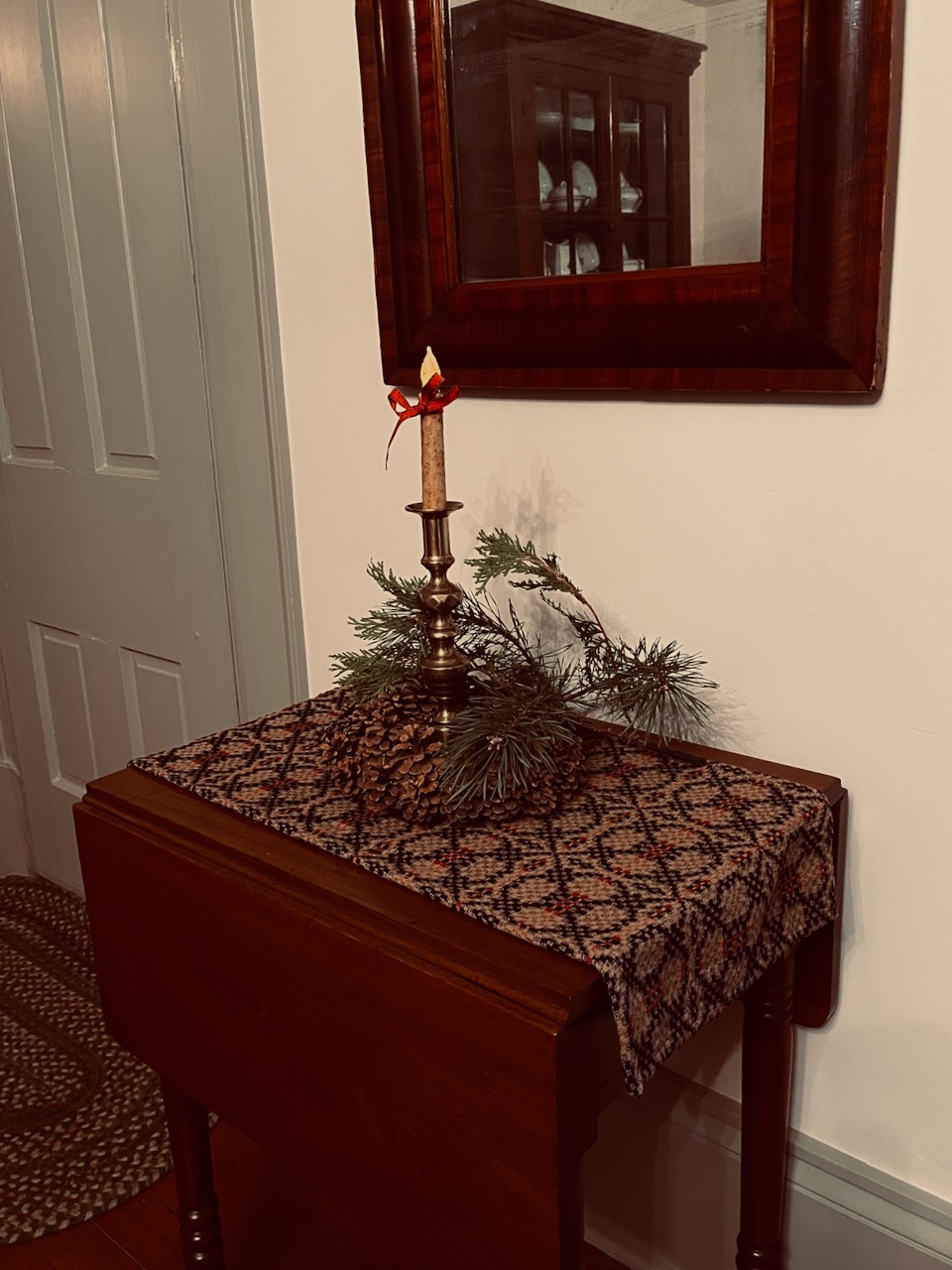
I’m in the middle of preparing several Clark House Historian posts and the writing is going slowly. But! December is here and I’m starting to feel the holiday spirit. So until I finish my current research and writing project (we’ve got to bring the Bonniwells back from the California gold rush!), how about a seasonal photo from my most recent visit to the Clark House?

Clark House front parlor with holiday candle, 2022. Photo credit: Reed Perkins.

Continue reading