Monday: Map Day! – First official map of Wisconsin, 1837

Squirrel!

Some of my favorite characters in film are the dogs in Pixar’s animated feature Up. It’s clear that Pixar’s artists and writers have a deep understanding of our canine friends, especially their tendency to be distracted by, for example, a…squirrel! 1

Likewise, some of the pleasures (or hazards?) of history research are the many squirrel!-like moments where you manage to be completely distracted by cool stuff that is not at all related to the topic you are actually trying to research. Like the dogs of Up, I am easily distracted, although my attention is drawn more to old maps, books, newspaper clippings, sepia photographs and colorful lithographs.

This week, I was looking for more information about possible Clark connections in Lower Canada in the early 1800s, to add to our earlier posts, including this one, this one and this one. But what did I find? Glad you asked…

Continue reading

Happy 208th Birthday, Jonathan!

November 28, 2020, is the 208th anniversary of the birth of Jonathan M. Clark. To celebrate, I’m reposting a revised, expanded and annotated version of one of my first Clark House Historian posts. Since this was first published, on April 20, 2016, we have learned much more about the lives of Jonathan Clark, Mary Turck Clark, their family and their neighbors. Please check out the footnotes and click on the links for some of this newer, more accurate, information.

Happy Birthday, Jonathan! (and thanks to Nina Look for the timely reminder).

JMC: Man of Mystery

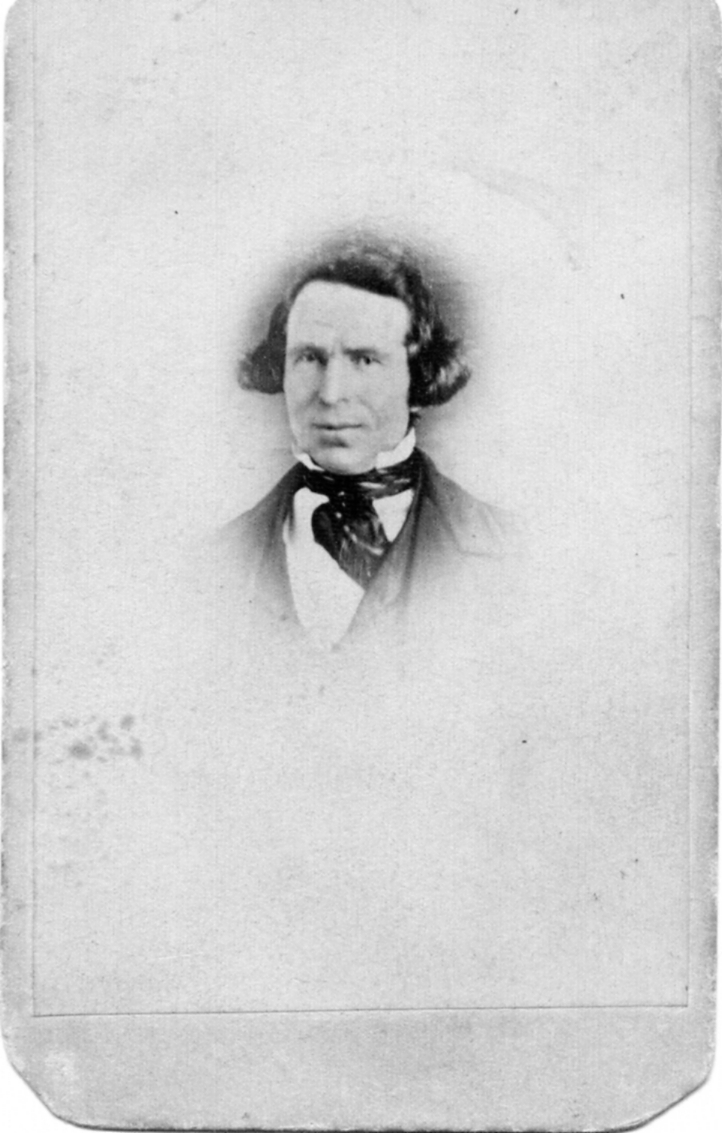
CLARK, Jonathan M portrait

Jonathan M. Clark. Photograph courtesy Liz Hickman.

There he is. Jonathan M. Clark, builder and first owner of the handsome stone home that is now the  Jonathan Clark House Museum in Mequon, Wisconsin. He was probably born in Vermont—or Lower Canada—probably on November 28, 1812, and he died on September 20, 1857. Before coming to Mequon, he served in the United States Army at Fort Howard from 1833 to 1836. He married Mary Turck, eldest child of Mequon pioneer Peter Turck, on March 15, 1840. They had a large family. We even have a photograph of JMC as an adult (above). In some ways, we know quite a bit about Jonathan M. Clark.

Continue reading

Stanstead, 1815 — a portrait in words

In our previous post we looked at a charming lithograph of Kilborn’s Mills, Stanstead, Lower Canada, as seen from Derby, Vermont, based on an 1827 watercolor by Lt. Col. Joseph Bouchette, the surveyor general of Lower Canada. This was a place and a view that Jonathan M. Clark would have easily recognized as a teenaged lad of 15 or 16 years of age.

I first saw a version of that image as a black and white engraving in Bouchette’s book The British Dominions of North America […], Vol. 1, published in London in 1831. I’ll have more to say about The British Dominions in future posts.

Bouchette’s earlier book

Bouchette also wrote an earlier book—focused on Lower Canada—entitled A Topographical Description of the Province of Lower Canada, with Remarks upon Upper Canada, and on the relative connexion of both provinces with the United States of America, published in London in 1815. Here’s the title page of that earlier book:

Continue reading

A view of Stanstead, Lower Canada, 1827

I’m working on some longer posts, so I thought you might enjoy this image of a hand-colored lithograph from 1827. It’s a view the village of Kilborn’s Mills, Stanstead, Lower Canada, as seen from the south side of the international border, near Derby Line, Vermont. It’s very likely that the 15- or 16-year-old Jonathan M. Clark would have known this scenery, village, bridge, and border crossing:

Continue reading

Now, where were we? – the search for JMC’s roots

As I mentioned in our previous post, Monday: Map Day!, we still have some essential mysteries to solve in the JMC timeline, the most important of which are: who were JMC’s parents and where was he born and raised? As it’s been a while since we last looked at this, I thought it might be useful to repost our original O!…Canada? History Mystery! No. 3, in which I collected and organized images, transcriptions, and links to the various documents that indicate Jonathan M. Clark’s (two!) “official” birth locations: either Derby, Orleans Co., Vermont or Stanstead Co., Lower Canada [now Province of Quebec].

Smith, Jones… Clark

One of the nicer assignments a genealogist or historian can receive is to trace the history and family of someone with a unique or distinctive surname. It is so much easier to trace families with surnames like Turck, Strickland, Rix or Clow, even if there are common variant or erroneous spellings like Turk, Stickland, Ricks and Clough/Claw/Klauw. But our man Jonathan, he who built the fine stone home in Mequon in 1848, carries one of the most ubiquitous surnames in New England and English-speaking Canada: Clark.

Over the past seven years or so, researchers including Nina Look, Liz Hickman, I—and others—have been trying to find the Jonathan M. Clark “needle” in the massive New England and Lower Canada “haystack” of Clark families. I think it’s time to finally collate our results, organize and set aside the “wrong” Clark families from the search, and see if we can discover Jonathan M. Clark’s roots.

This “sorting of the Clarks” may take quite a few posts.1 We will look at many sources, many family trees, and assorted maps and books to try and find Jonathan’s family. Along the way we’ll have diversions to other topics from time to time, I’m sure. But now, let’s get things started by taking another look2 at what we currently know about Jonathan M. Clark’s birth and family:

Continue reading

Back to School, 1839!

Daniel Strickland hires “the first teacher

There are a number of conflicting claims to the title of “first teacher” in Mequon. One of the first was Mary Turck Clark. She led classes for her siblings and four neighbor children in the loft of her father’s cabin in the summer of 1839.

The History of Washington and Ozaukee Counties, relates a number of other “firsts” for area schools and teachers. Among them is the story of how the school committee1 hired its first teacher, led by Daniel Strickland (father of Sarah A. Strickland Clark).

In the sprit of our previous Back To School salute to education, here is that tale:

Continue reading

Meet the Neighbors: Cyrus Clark and Sarah A. Strickland

This is the second in what was originally planned to be a three-part1 series on early Mequon settlers Cyrus Clark and Sarah A. Strickland Clark. If you missed it, click here for part one. Also, I suggest you read this post to view maps that will prove useful in following today’s discussion.

The Jonathan Clark House Museum, and my work as Clark House Historian, is not just about Jonathan M. Clark, Mary Turck Clark and their family. The mission of the museum—and this blog—is to:

Collect, preserve and share the history of the Jonathan Clark House and the early settlers of Mequon and Thiensville.

Jonathan Clark House Museum mission statement

So with that in mind, I like to explore the stories of the Clark’s friends and neighbors in order to develop a more comprehensive picture of early Washington/Ozaukee county and it’s settlers. This week—thanks to an unexpected contact from blog reader Lynette Thompson—we will be focusing on not one, but two of Mequon and old Washington/Ozaukee county’s earliest settlers, Sarah Allise Strickland and her husband, Cyrus Clark. Why them? Just look at what I got in my inbox:

Continue reading

Monday: Map Day! – Another look at Ouisconsin Territory, 1836

UPDATED, February 11, 2024, to include a revised annotated map. But for the full update—with additional notes and corrections—please see the most recent version of this, posted on February 12, 2024.

As a kind of postscript to our look at the early Wisconsin territorial, state and federal censuses, today’s Monday: Map Day! revisits an interesting map that we first discussed on October 29, 2017. Today’s post includes a few updates and corrections based on new information. 

It’s 1836. Where’s…Wisconsin?

In September, 1836, Sgt. Jonathan M. Clark was discharged from the U.S. Army at “Camp Hamilton,” Wisconsin Territory. after serving his three-year term of service with Co. K, Fifth Regiment of Infantry.1  One year later, in the autumn of 1837, Jonathan’s future wife Mary Turck would make the long trip from Palmyra, New York, to Milwaukee and finally Mequon, Washington County, Wisconsin, with her parents Peter and Rachael Turck and six younger siblings. By the end of 1840 Jonathan and Mary would be married and starting their family in Mequon.

That seems simple enough, until you take a moment to wonder how much Jonathan—or especially Mary and her family—knew about this new Wisconsin Territory.  Jonathan had been in the territory since October, 1833, mostly on post at Ft. Howard. In the last year or so of his service he was busy cutting trees and building bridges for the military road along the Fox River waterway from Ft. Howard (Green Bay) towards Ft. Winnebago (near modern Portage). As a road-building soldier, Jonathan might have done some surveying and seen—or helped draw—a variety of maps of the military road and its vicinity. But for a better overview of this new territory, Jonathan or Mary might have sought out a map such as this2:

Continue reading

Census Records for the In-Between Years: 1838

UPDATED, July 24, 2021 with another spelling and additional info on early settler S. McEvony-McEvery-McEvany.

The Second Wisconsin Territorial Census

The second Wisconsin territorial census, taken in 1838, is the only Wisconsin territorial census we have not yet discussed here at Clark House Historian. If you need to catch up, at the end of this post is a list of our previous discussions of Jonathan Clark, Mary Turck, and their family on the federal, territorial and state censuses enumerated between 1836 to 1855.

By early 1838, several new counties—Dodge, Jefferson and Washington—had been created from the original, larger, Milwaukee and Brown counties, although the new counties were still “attached” to Milwaukee county for judicial purposes.1 This means that the 1838 territorial census of the newly-created Jefferson, Dodge and Washington counties was the responsibility of the Milwaukee county enumerator, Sheriff Own (sic) Aldrich.

The filmed images for the second Wisconsin territorial census, enumerated in 1838, are available online as FHL film no.1,293,919 , aka DGS film 7,897,817 (Item 2, following the 1836 census. The 1838 census begins at image 118 of 532). Here’s the first page of the Milwaukee county census (including the attached counties of Jefferson, Dodge and Washington):

Continue reading

Census Records for the In-Between Years: 1836

Where’s Jonathan Clark?

Wisconsin’s first territorial census was enumerated in the summer of 1836. Our previous Monday: Map Day! post discussed the extent of the Wisconsin Territory in 1836, and outlined the few—very large and lightly populated—counties that were enumerated on that first census. If you missed it, you might want to read that post first.

Today’s post was originally planned to be a quick few paragraphs outlining the 1836 territorial census procedures and explaining how Jonathan M. Clark was, alas, probably not enumerated on this census; and if he had been, then we’d never find him; why that might have been; how this was not unusual for its era; and so forth. But! It turns out that we can find the “family” that Jonathan was enumerated with, though it’s kind of complicated, so bear with me.

The Wisconsin Territorial Census of 1836

The 1836 Wisconsin territorial census was typical for its time and purpose. The sheriff of each county was charged with enumerating four categories of white persons in his area:

  • Number of males under 21 years
  • Number of females under 21 years
  • Number of males over 21 years
  • Number of females over 21 years

There were no pre-printed forms; each sheriff used blank paper, a pen and a ruler to record the data. If you look at the actual returns (available online as FHL film no.1,293,919 , aka DGS film 7,897,817), you’ll find that the enumerators often recorded additional information not required by the authorizing legislation. (The Crawford county sheriff was particularly enthusiastic, subdividing his information into 13 age-groups for white males, 13 age-groups for white females, 6 age-groups for enslaved males and 4 age-groups for enslaved females.) The Brown county sheriff, as you can see (below), remained closer to his legislated mandate, and chose to enumerate five categories of white settlers:

Continue reading