Happy 208th Birthday, Jonathan!

November 28, 2020, is the 208th anniversary of the birth of Jonathan M. Clark. To celebrate, I’m reposting a revised, expanded and annotated version of one of my first Clark House Historian posts. Since this was first published, on April 20, 2016, we have learned much more about the lives of Jonathan Clark, Mary Turck Clark, their family and their neighbors. Please check out the footnotes and click on the links for some of this newer, more accurate, information.

Happy Birthday, Jonathan! (and thanks to Nina Look for the timely reminder).

JMC: Man of Mystery
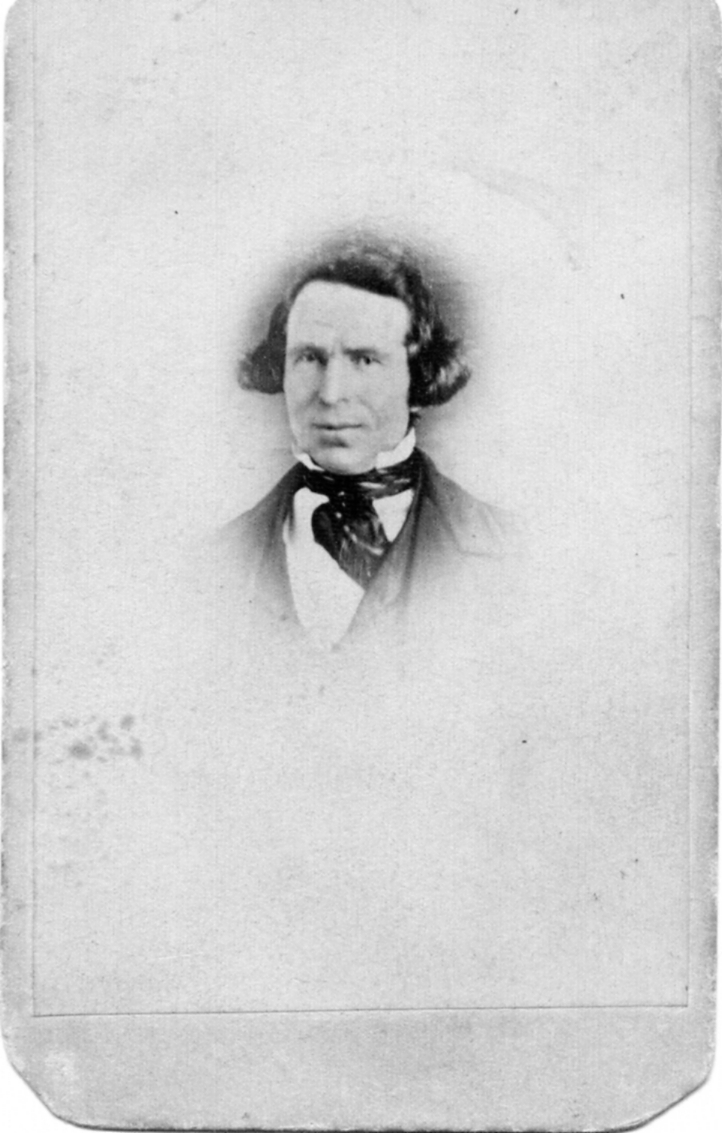
CLARK, Jonathan M portrait

Jonathan M. Clark. Photograph courtesy Liz Hickman.

There he is. Jonathan M. Clark, builder and first owner of the handsome stone home that is now the  Jonathan Clark House Museum in Mequon, Wisconsin. He was probably born in Vermont—or Lower Canada—probably on November 28, 1812, and he died on September 20, 1857. Before coming to Mequon, he served in the United States Army at Fort Howard from 1833 to 1836. He married Mary Turck, eldest child of Mequon pioneer Peter Turck, on March 15, 1840. They had a large family. We even have a photograph of JMC as an adult (above). In some ways, we know quite a bit about Jonathan M. Clark.

Continue reading
“Distressing sickness” – 1811, Lower Canada, edition

Among the unavoidable trials of life in the 1800s were the recurring waves of infectious diseases that frequently troubled cities, towns, and rural settlements. These epidemics and pandemics were made even more disturbing due to the general scientific ignorance of the times.

And although inoculation for the prevention of smallpox1 was practiced in Europe and North America at various times during the eighteenth century, the concept of “germ theory” would not gain widespread acceptance until the second half of the nineteenth century, and routine vaccination to prevent common illnesses would not be in general use until the decades after World War II. Disease was an omnipresent part of life in early America.

Fever ravages Stanstead

In the winter of 1811, a particularly virulent outbreak occurred in the vicinity of Stanstead, Lower Canada, as reported on page 3 of the Bridgeport, Connecticut, Republican Farmer of Wednesday, February 27, 1811:

Continue reading

Monday: Map Day! – Lower Canada ranges and lots

Finding our way on Bouchette’s 1815 Topographical Map

Last Monday—as part of our ongoing search for Jonathan M. Clark’s roots in northern Vermont and Lower Canada—we introduced Joseph Bouchette’s huge and minutely detailed Topographical map of the Province of Lower Canada, published in London in 1815. Today’s post picks up where we left off last week, so if you missed that introduction, I recommend you click here and read it first.

For easy reference, here’s the complete, original map again:

Continue reading

Monday: Map Day! – Lower Canada, 1815

I found Bouchette’s 1815 Topographical Map of Lower Canada

In our previous post, we looked at a verbal description of Stanstead, Lower Canada, excerpted from A Topographical Description of the Province of Lower Canada, with Remarks upon Upper Canada, and on the relative connexion of both provinces with the United States of America, written by Joseph Bouchette, surveyor general of Lower Canada, and published in London in 1815. 

To accompany his 1815 book, Bouchette published a map of the province, and it’s an amazing map, with an extravagant title:

To His Royal Highness George Augustus Frederick … This Topographical map of the Province of Lower Canada, shewing its division into Districts, Counties, Seigniories, & Townships … Is … Most gratefully dedicated by…  Joseph Bouchette, His Majesty’s Surveyor General of the Province & Lieutt. Colonel C.M. … Published by W. Faden, Charing Cross, Augst. 12th. 1815. Engraved by J. Walker & Sons, 47 Bernard Street, Russell Square, London. J. Walker sculp.

Rumsey Collection

For simplicity’s sake, I’ll refer to it as Bouchette’s Topographical map of the Province of Lower Canada, 1815. The original is held in the vast David Rumsey Map Collection at Stanford University. And in the words of their curators,

[t]he large ten sheet map is extraordinary – it is over ten feet long when joined and almost five feet tall. It has five views and three large inset maps of Montreal, Quebec, and Three Rivers. The detail and graphic elegance of the large map is the equal (or perhaps the superior) of any of the contemporary maps that we have seen (and none of which are on such a large scale – the only potential candidate would be Eddy’s Map of the Country Thirty Miles Round the City of New York). Of course the engraving was done by the Walker firm in London, whose resources were up to the New York and Philadelphia engravers, or better, so a comparison with American produced maps is not entirely fair. Bouchette’s work as Surveyor General must have instilled in him an obsession with the accuracy and fineness of detail that one sees in these maps.

Rumsey Collection

So enough fanfare. Let’s look at the map:

Continue reading

Stanstead, 1815 — a portrait in words

In our previous post we looked at a charming lithograph of Kilborn’s Mills, Stanstead, Lower Canada, as seen from Derby, Vermont, based on an 1827 watercolor by Lt. Col. Joseph Bouchette, the surveyor general of Lower Canada. This was a place and a view that Jonathan M. Clark would have easily recognized as a teenaged lad of 15 or 16 years of age.

I first saw a version of that image as a black and white engraving in Bouchette’s book The British Dominions of North America […], Vol. 1, published in London in 1831. I’ll have more to say about The British Dominions in future posts.

Bouchette’s earlier book

Bouchette also wrote an earlier book—focused on Lower Canada—entitled A Topographical Description of the Province of Lower Canada, with Remarks upon Upper Canada, and on the relative connexion of both provinces with the United States of America, published in London in 1815. Here’s the title page of that earlier book:

Continue reading

History Mystery! No. 2

The Clark Family Record: What is it? Who created it?

Welcome to our second installment of the Clark House Historian’s History Mystery! in which you, the reader, are invited to Help the Historian and solve one of the many persistent mysteries surrounding Jonathan M. Clark, his family, and related unknowns of local history. In a previous post, we got to Meet the Children of the Clark family. One of the sources for that post is an image that I received from Clark descendant Liz Hickman (thanks, Liz!) of what looks like a single page removed from an old family bible. The page lists birth dates for Jonathan M. Clark, Mary Turck Clark, and their children, and death dates for Jonathan and his only son, Henry. It’s a key document for Clark family research and yet there is much we don’t know about it.  History Mystery! No. 2 seeks to answer: What is the Clark “Family Record,” who created it, and how accurate is it?

Here’s a copy of the image from our files: Continue reading

JMC Joins the Army: A Closer Look

I love primary sources. Not only can you learn interesting information—that may include actual, accurate, facts (with allowances for misspellings and such)—but primary sources often convey a flavor or sense of the moment and suggest additional lines of inquiry. With that in mind, let’s take a closer look at Jonathan M. Clark’s 1833 U. S. Army enlistment paper as featured in our earlier post “Jonathan Joins the Army” and see what we can infer from the information there.

First of all, how do we know this Utica, New York, enlistment belongs to “our” Jonathan M. Clark? Census and other records show that there are plenty of Clarks from New England, born about the same time as our JMC, some of whom served in the army, and some of whom came to the Michigan/Wisconsin Territory in the early 1830s. My research shows there may even have been a second, unrelated, “Jonathan M. Clark” in the Territory at about the same time. So how do we connect our JMC with this 1833 army recruit?

Continue reading

Where are we?

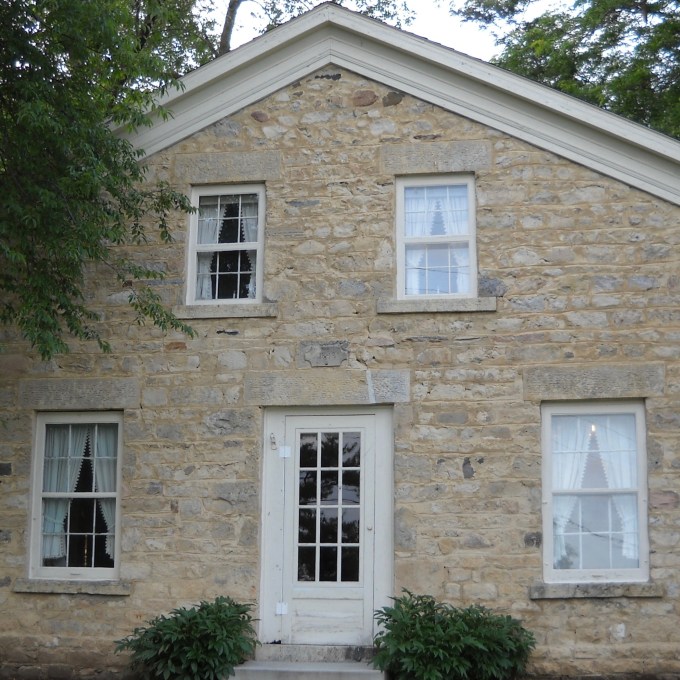
CLARK, Jonathan house square crop  July,  2015

Jonathan Clark House, Mequon, Wisconsin, July, 2015. Photograph by Reed Perkins

Where are we? Well, if you’re looking at this handsome stone house in real life, you’re standing by the front door of the Jonathan Clark House Museum, looking northward. On a modern map you can find it at 13615 N. Cedarburg Road—on the intersection with Bonniwell Road—Mequon, Wisconsin. If you’d like to visit the museum, click here for more info.

But “Where are we?” is never a simple question when it comes to historic places, because the answer often changes over time. Along with “Where are we?” we need to ask “When are we?” The answer to “Where are we?” is surprisingly varied—and useful for further research—throughout the lives of Jonathan and Mary Clark.

Continue reading

JMC: Man of Mystery

NOTE: this 2016 post has been re-posted and updated on November 28, 2020, as Happy 208th Birthday, Jonathan! Please click the link to read the updated version. There are many corrections and additions to the original post that you don’t want to miss.

CLARK, Jonathan M portrait

Jonathan M. Clark. Photograph courtesy Liz Hickman.

There he is. Jonathan M. Clark, builder and first owner of the handsome stone home that is now the  Jonathan Clark House Museum in Mequon, Wisconsin. He was probably born in Vermont, possibly on November 28, 1812, and he died in September, 1857. Before coming to Mequon, he served in the United States Army at Fort Howard from 1833 to 1836. He married Mary Turck, eldest child of Mequon pioneer Peter Turck, on March 15, 1840. They had a large family. We even have a photograph of JMC as an adult. In some ways, we know quite a bit about Jonathan M. Clark.

Continue reading