Veterans Day, 2021

Veterans Day is today. I’m preparing a new post on one of our Clark House veterans, Mary (Turck) Clark’s youngest sibling, Benjamin Turck (1839-1926), but it’s not quite ready yet. For a wider perspective on the day—and our early Mequon veterans—here’s a post originally published at Clark House Historian on November 11, 2016, and revised, expanded and republished on November 11, 2020. I’ve also incorporated a list of Mequon’s Civil War soldiers, originally published here on May 24, 2020.

Armistice Day

One hundred and three years ago, on the eleventh day, of the eleventh month, at the eleventh hour—Paris time—the Armistice of Compiègne took effect, officially ending the fighting on the Western Front and marking the end of World War I, the optimistically named “War to End All Wars.”

In the United States, the commemoration of the war dead and the Allied victory began in 1919 as Armistice Day, by proclamation of President Woodrow Wilson. Congress created Armistice Day as a legal holiday in 1938. Starting in 1945, a World War II veteran named Raymond Weeks proposed that the commemorations of November 11 be expanded to celebrate all veterans, living and dead. In 1954 Congress and President Eisenhower made that idea official, and this is what we commemorate today. There are many veterans with a connection to the Jonathan Clark house. We honor a few of them in this post.

Jonathan Clark, Henry Clark, and the U.S. Army

Jonathan M. Clark (1812-1857) enlisted as a Private in Company K, Fifth Regiment of the U. S. Army, and served at Ft. Howard, Michigan (later Wisconsin) Territory, from 1833 until mustering out, as Sargent Jonathan M. Clark, in 1836. In the 1830s, Fort Howard was on the nation’s northwestern frontier. JMC’s Co. K spent much of the summers of 1835 and 1836 cutting the military road across Wisconsin, from Ft. Howard toward Ft. Winnebago, near modern Portage, Wisconsin.

Fort Howard, Wisconsin Territory, circa 1855, from Marryat, Frederick, and State Historical Society Of Wisconsin. “An English officer’s description of Wisconsin in 1837.” Madison: Democrat Printing Company, State Printers, 1898. Library of Congress. Click to open larger image in new window.

Continue reading
Turck, Turk…Durk?

Spelling variations in old records

Durk, Peter [Turck], baptismal record, 1798, detail. “Peter” starts the left column, father “Jacob A. Durk” is at the top of the center column (source). Click to open larger image in new window.

In a previous post, reader Laura Rexroth asked: Why did they spell Peter Turck’s name incorrectly [i.e., Durk] when he was baptized? That’s a great question, and super relevant to successful historical and genealogical research. So let’s talk about the Turck family surname and, by extension, the whole issue of spelling in earlier times and documents.

There are two main issues to keep in mind:
• variations in spelling that existed at the time the source material was created, and
• subsequent misreadings, including incorrect transcription or indexing of sources

Continue reading

CHH Reader Challenge – results!

At the end of last month, while working on some longer posts about the Turcks and Clarks, I had some fun creating the first Clark House Historian Reader Challenge: where you get to be the historian!, and today we have the results. The original challenge went something like this:

Here’s an excerpt of a document that will be part of an upcoming post. Can you read and transcribe it? (Ignore the squiggles in the top right corner, they belong to another record on the same page.)

The original CHH Reader Challenge #1. Click to open larger image in new window.

And I gave y’all a hint, the full page from which this record was excerpted. And as a second hint, I suggested that a look at my discussion of Kurrent handwriting might be helpful.

So what is this a record of, and what does it say?

Continue reading

Mary Turck Clark—updated

The original version of this post was the second-ever post on Clark House Historian. It represented what we knew at the time about Mary Turck, the daughter of Peter Turck and Rachael Gay, wife of Jonathan M. Clark, and mother of the eight Clark family children. The original April, 2016, post was pretty accurate, but we have learned a lot more about Mary and her Turck and Clark families in the meantime. So here is a revised version of that post with errors corrected and ambiguities clarified—where possible.

Please note that there are many more facts about Mary and her Clark and Turck families that I’ve written about in the past almost-5 years that are not linked to in this post. If you are looking for more information about Mary, I highly recommend using the blog’s SEARCH function and our new INDEX. And if you still can’t find the info you want, please ask me! Just use the Leave a Reply box, below, or the CONTACT link, above.

Mary Turck Clark: Mequon Pioneer

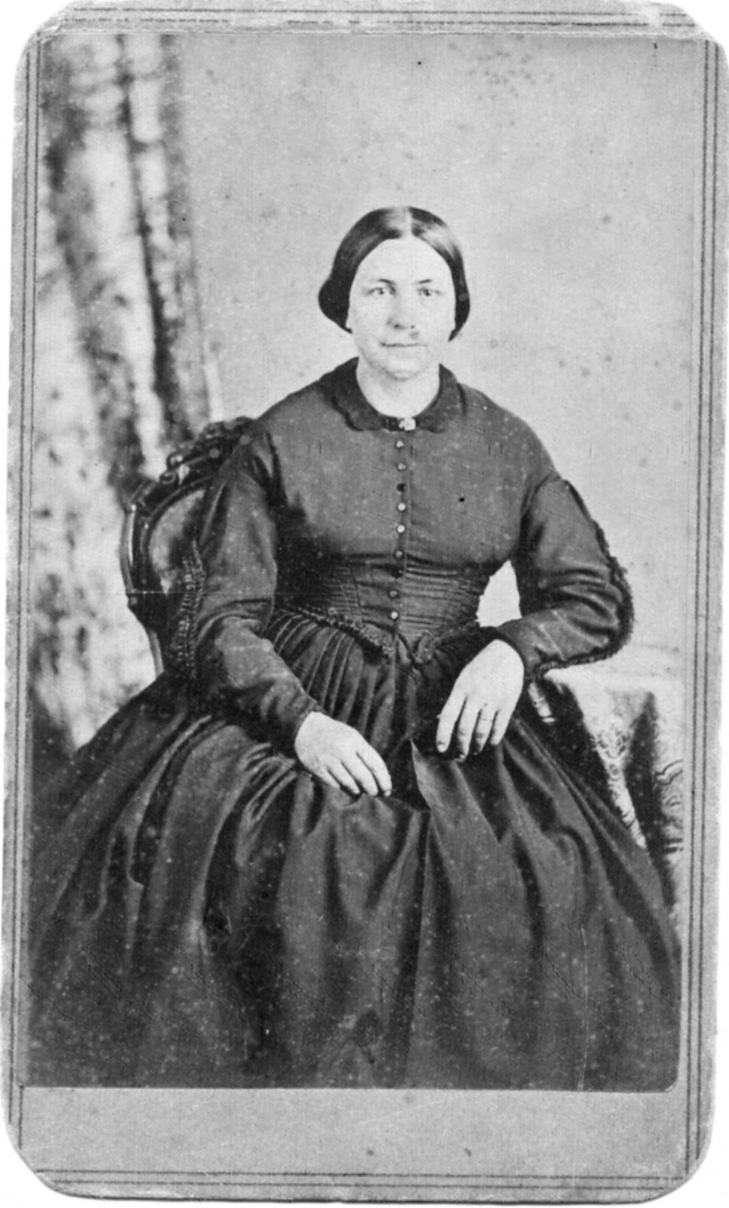
CLARK, Mary TURCK portrait

Mary Turck Clark. Photograph courtesy Liz Hickman. Click to open larger image in new window.

Continue reading

Monday: Map Day! – Mary Turck’s Greene County, NY, 1829

As we discussed last Monday, 2021 is the bicentennial of Mary Turck Clark’s birth. So this year I’d like to focus on Mary, her parents and her seven siblings: where they came from, how they got to Wisconsin, and where they went afterwards. Today we’ll start to get our Turck-family bearings with a look at an excellent map of Greene County, New York, an important place in the lives of Mary, her parents, and her extended family.

The Hudson River Dutch-Americans

Mary Turck’s parents and ancestors descended from Dutch-American families that had been in New York since colonial times. For more background and a fine 1829/32 map of the whole state, take a minute to re-read our previous Monday: Map Day!, Peter and Rachael (Gay) Turck’s New York, 1829/32. The initial Dutch immigrants to New Netherland landed on Manhattan Island; it wasn’t long before Dutch settlers headed inland, west and north up the Hudson River. By the time Mary Turck was born in 1821, there had been generations of Dutch-Americans living along the Hudson. The story of Mary’s extended family—the Turck, Gay, Groom, and Van Loon families and their kin—is centered around a handful of Hudson River counties. Some of the boundaries and place names changed over the centuries, but much of the story of Mary Turck’s family will be found in the documents, maps and places of Ulster and Greene counties on the west bank of the river and Dutchess and Columbia counties on the east side.

Burr, David H., Map of the State of New-York and the surrounding country by David H. Burr. Compiled from his large map of the State, 1832.[…] Entered according to Act of Congress Jany. 5th., 1829 by David H. Burr of the State of New York. Engd. by Rawdon, Clark & Co., Albany & Rawdon, Wright & Co., New York [detail]. Credit, David Rumsey Map Collection, David Rumsey Map Center, Stanford Libraries, non-commercial use permitted under Creative Commons license. Click image to open larger map in new window.

Continue reading

Hail, Smiling morn!

A spot of Spofforth to ring in the New Year…

Happy New Year to all, and best wishes that 2021 will be an improvement on the past year. I’m almost done with my research on the second half of the 1843 concert by the Milwaukie Beethoven Society. (If you missed our earlier posts on that concert, links are here and here.) But it’s New Year’s Day, and I’m not quite done writing about “Part Second.” So let’s have another festive musical selection, this one drawn from that second part of the Beethoven Society’s premiere concert:

Milwaukee Weekly Sentinel March 15 1843, page 2. Click to open larger image in new window.

We’ll start the year with “Hail Smiling morn” by the English composer Reginald Spofforth (1769-1827). Spofforth was a man of many talents, but was particularly known for his glees. A glee is a kind of convivial part-song, typically for three or more voices and usually—but not always—sung without accompaniment. I’ll have more to say about this particular composer and piece later, but for now, it’s well enough to know that “Hail Smiling morn” is—according to musicologist Nicholas Temperly—”possibly the most popular glee in the entire repertory,” and that’s saying something!

“Hail Smiling morn” remains a popular pub song in parts of England and—as you’ll soon see—in many other venues around the world, both secular and sacred. “Hail Smiling morn” is frequently sung by church choirs as a Christmas or Easter carol. I think it works wonderfully for New Year’s Day, too. Below are three spirited modern performances of the piece. Just click the image to open a new YouTube window for each video. (The piece is only about 3 minutes long; enjoy all three performances!)

The first video is from a Sunday pub sing at The Royal, in Dungworth—near Sheffield—England. In many ways this is the modern equivalent of the friendly and well-lubricated singing at the glee and catch clubs of 18th-century England:

Click image or this YouTube link to open video in new window. Photo: screenshot of performance.

Continue reading

Monday Musicale!

The Beethoven Society, part 2

UPDATED, December 27, 2020: I managed to mix together my notes on the two works by Haydn—adapted by William Gardiner as “his” pasticcio oratorio “Judah”—that appeared on this first concert of the Milwaukie Beethoven Society. I have updated this post to correct the information and links about piece no. 2, from “Part First” of the performance, “Now elevate the sign of Judah.” The information about the chorus “Lo he cometh”—the 8th item on “Part Second”—has been moved to its correct place in our upcoming post about the second part of the concert, scheduled for Monday, December 28, 2020. Sorry for the confusion. —R.P.

In Friday’s post we introduced what is commonly believed to be Milwaukee’s first concert society, the Milwaukie Beethoven Society. If you missed it, please take a moment to read that post for background on the group and its place in early Milwaukee’s cultural life. They gave their first performance on Thursday, March 23rd, 1843, at the Milwaukee Court House. The advertised program was:

Milwaukee Weekly Sentinel March 15 1843, page 2. Click to open larger image in new window.

The program for the evening was typical for the era, featuring solo songs (“song,” “air,” “ballad”), vocal duets, trios and quartets, and choruses for the full ensemble. (It’s also possible that the duets, trios and quartets may have been sung one-on-a-part, or with the full chorus divided into two, three or four parts to cover the “solo” lines.) On this initial performance, the Beethoven Society did not play any strictly orchestral works.  This suggests that the the newly-formed ensemble may have understood itself to be more of an “oratorio society”—focused on vocal and choral repertoire with instrumental accompaniment—rather than a “symphony orchestra” with an affiliated chorus.

Oratorio Societies

Even as early as 1843, it’s not surprising that the citizens of Milwaukee could form a performing ensemble of some 35 singers and instrumentalists. Oratorio societies were very popular throughout 19th- and early-20th century America for aesthetic and practical reasons. From a practical point of view—and my own more recent experience—it was probably much easier to assemble a reasonably capable group of men and women to form a decent mixed-voice, SATB, chorus. As we discussed last week, many 19th-century Americans were taught the rudiments of music and singing in school, in church, and at home. In the 19th-century, singing in harmony was a common part of worship, education, and home life.  And you don’t need to invest in expensive instruments and years of regular lessons to become a contributing member of a good amateur chorus. Then as now, the talent pool for a good community chorus is usually deeper than for a full amateur orchestra.

Artistically, choral repertoire fulfilled a need for individual and community music-making and aesthetic and spiritual uplift. In today’s post you’ll see that many of the works on the concert—whether originally sacred or secular—were adapted from their original texts and purposes and fitted out with new, English language, Bible-based or liturgical texts. And if not sacred, the texts of the other pieces—with one or two exceptions—tended to be either somewhat sentimental or deeply maudlin. (It was the Victorian era, after all.)

The orchestra

Continue reading

Happy Birthday, part 2: Cake!

It was Jonathan M. Clark’s birthday!

Note: this post has been updated twice on November 30, 2020, see below.

This past Saturday was the 208th anniversary of the birth of Jonathan M. Clark. If you missed our special birthday post, click here and catch up on all the new and updated information about Jonathan that we’ve discovered and published here at Clark House Historian since 2016.

One of the highlights of Saturday’s post was this photo of Jonathan’s excellent 200th Birthday cake from 2012, courtesy of Anne Bridges:

Click to open larger image in new window. Photo credit Nina Look.

No doubt about it, that is one fine birthday cake. (Thanks, Anne!) But what if you wanted to bake a cake that Jonathan or Mary Clark, or one of their early Mequon neighbors, might recognize? That calls for another look into the first cook book written and published by an American:

Continue reading

How to stuff and roast a turkey – 1796 style

For today’s post I was hoping to have the beginnings of an annotated map of some of the early settlers in Stanstead, perhaps including the locations of some Clark families. But I’m still wading through pages and pages of images of Lower Canada land documents and experimenting with the right approach to making maps that are easy to read and easy to keep up to date.

So, in the spirit of our upcoming national holiday, I thought I’d help you all with your Thanksgiving preparations:

Continue reading

“Distressing sickness” – 1811, Lower Canada, edition

Among the unavoidable trials of life in the 1800s were the recurring waves of infectious diseases that frequently troubled cities, towns, and rural settlements. These epidemics and pandemics were made even more disturbing due to the general scientific ignorance of the times.

And although inoculation for the prevention of smallpox1 was practiced in Europe and North America at various times during the eighteenth century, the concept of “germ theory” would not gain widespread acceptance until the second half of the nineteenth century, and routine vaccination to prevent common illnesses would not be in general use until the decades after World War II. Disease was an omnipresent part of life in early America.

Fever ravages Stanstead

In the winter of 1811, a particularly virulent outbreak occurred in the vicinity of Stanstead, Lower Canada, as reported on page 3 of the Bridgeport, Connecticut, Republican Farmer of Wednesday, February 27, 1811:

Continue reading