Monday: Map Day! – Lower Canada’s Eastern Townships in 1842

The Search for JMC’s roots continues!1 For the last few months, I’ve spent hour after hour reading through hundreds of digitized pages of the various manuscript land petitions and related documents that form the Land Petitions of Lower Canada, 1764-1841 database at Library and Archives of Canada (LAC).2

The good news is that I have found a lot of information about various early Clark (or Clarke) surname immigrants that petitioned for land—and actually settled on it—in Lower Canada during the relevant years of circa 1791-1840. Many of the documents that I’ve found contain information about these Clark immigrants, their families, and from whence they come. This is important, as we need to sort the Patriot, Vermont-related Clark families from other Clark immigrants from New York and New England (including American Loyalists), and the various Anglo-Canadian Clark families that sought land in the Eastern Townships at the same time. So, you know what that means…

We need another map!

Now that we have all this data, we need a way to organize and present it. And since so many of our rejected candidates earn their “Nope, not our Clark family” status because they settled far away from Stanstead, I thought it was time to make a big map of where these various Clark petitioners for Lower Canada land actually ended up. Then, in theory, we can eliminate the Clark families that settled “too far” from Stanstead (and adjacent Derby, Vermont), and focus on the Clarks that settled in or near Stanstead itself.

It’s going to take a while to assemble and present all the data. So we need a big, easy to read map created around the time of Jonathan Clark’s childhood and/or youth, from about 1812 until his arrival in New York state in 1831. (The latter date is flexible, as long as we find a map that predates the reorganization of the townships into larger counties in 1847.) We’ve presented some great Lower Canada maps here at CHH but, as is typical of that era, if they are accurate and detailed, they also tend to be visually “busy” and hard to read. But, dear readers, I finally found just the thing…

Continue reading

“Point-and-shoot” camera – Civil War style

Technology keeps evolving. Today, if you want to record an image of something interesting, all you have to do is reach in your pocket, whip out your phone, and click. In a instant, you can have a high-resolution, full-color photograph and share it with the world via the internet. Making photographs has never been faster or easier. This was not always the case.

In the earliest days of photography, from about 1839-1860, the predominant technology was the Daguerreotype. It was a brilliant development, but required a good supply of natural light as well as special techniques, cameras, chemicals, and long, motionless poses by the photographer’s subjects. With all those requirements, most photographers made their Daguerreotypes indoors, in improvised or designed-for-purpose studios.

But by the time of the American Civil War, 1861-1865, there were other photographic techniques, including albumen silver prints and tintype photographs that were less expensive and permitted the use of shorter exposure times and lighter and “more portable” equipment, such as this:

Continue reading

July 4th – Independence Day

Just a reminder…

248 years ago today, representatives of all thirteen of Britain’s American colonies, gathered “in congress” in Philadelphia, and publicly declared our independence from “George the Third, by the Grace of God, King of Great Britain, France, and Ireland, Defender of the Faith, and so forth,” and his distant and unresponsive legislature. The Americans proposed to separate—forever—from their Divinely appointed King, and form a new and independent nation, the “united States of America.” This decision was bold, completely unprecedented in a world dominated by autocratic monarchs, and potentially fatal for anyone that supported this Declaration of Independence. From the King’s point of view, the authors, his subjects, were committing treason.

After a public reading of the Declaration of Independence at Bowling Green, on July 9, 1776, New Yorkers pulled down the statue of King George III.

The authors of the Declaration were clear-eyed about the stakes, yet unwavering in their desire to separate from the King. They closed their—our—Declaration of Independence with their unanimous avowal that, […] for the support of this Declaration, with a firm reliance on the protection of divine Providence, we mutually pledge to each other our Lives, our Fortunes and our sacred Honor.

The Declaration of Independence is our pivotal foundational document. People risked their lives and fortunes by creating and signing it. Thousands of Patriots died in the subsequent War of Independence in order to make the “united States of America” a reality. A large number of British-Americans, still loyal to their monarch, fled the 13 colonies and migrated to the King’s remaining possessions to the north, including Nova Scotia and the Province of Quebec.

Through it all, the ideals expressed in the Declaration inspired generation after generation of Americans, including Jonathan Clark and his ancestors, as attested in this excerpt from daughter Caroline (Clark) Woodward’s 1893 biographical sketch:

[…] Jonathan M. Clark, was a Vermonter of English descent, who, born in 1812, of Revolutionary parentage, inherited an intense American patriotism.

Jonathan Clark and his Mequon neighbors—including native-born “Americans,” as well as more recent immigrants from Ireland, the German lands, the United Kingdom, Nova Scotia, and elsewhere—knew the Declaration, read it aloud at patriotic events (in English and German!), and shared its anti-monarchical sentiments.

This July 4th, before you head to the beach or light the barbecue, why not refresh your memory and read the document that created our nation, and forever declared our freedom from the “absolute Despotism” of kings?

In Congress, July 4, 1776.

The unanimous Declaration of the thirteen united States of America,

When in the Course of human events, it becomes necessary for one people to dissolve the political bands which have connected them with another, and to assume among the powers of the earth, the separate and equal station to which the Laws of Nature and of Nature’s God entitle them, a decent respect to the opinions of mankind requires that they should declare the causes which impel them to the separation.

Continue reading

Searching for JMC’s roots: Daily life in the Stanstead area, 1784-1817

A recent CHH comment from reader Meredith Johanson brought an interesting local history newspaper article to my attention. It’s from page 8 of the Sherbrooke [Québec] Daily Record of May 13, 1911, now available as a digital image at BAnQ.

The article was compiled by H. I Bullock, of Beebe Junction, Stanstead county, Québec. The compiler was a descendant of one of the earliest white settler families in the Eastern Townships of Lower Canada, the Ruiter family and, as of 1911, s/he possessed a number of historic Ruiter family documents.

The contents of several of these documents are presented in detail in the article, and include discussions of Ruiter family settlement in the Stanstead area, how farms and homes were created in the heavily-timbered forests of the “New Townships,” various local trades and supplies and their respective wages and costs, and early military affairs, with local militia rosters from 1809 and 1817.

The article is focused on Ruiter family documents, but many other early settlers are mentioned by name, including one William Clark, and several men with the surname Merrill. As far as we know—at the moment—none of these men are directly related to our Jonathan Morrell/Merrill Clark. But the information in this 1911 article does give a hint of what life was like for the first Stanstead-area settlers—such as Jonathan M. Clark’s still-unknown parents—in the early 1800s.

Bartlett, W. H, artist, A First Settlement, drawing, brown wash on wove paper, c. 1840, National Gallery of Canada, public domain.

I have made no cuts to the article, and since the original is long, I have not included extra commentary. I have added more white space between paragraphs for ease of reading, made a few clarifications and citations in the Notes that follow, and added an illustration not found in the original. Here’s the complete transcription. I hope you find it interesting:

Continue reading

JMC: The missing years, 1836-1839

I’m still on the search for Jonathan M. Clark’s parents and other kin somewhere in the early-19th-century wilderness of northern Vermont and southern Québec. I hope to publish more about that here in the near future.

As part of that project, I’ve spent quite a bit of time over the past few months organizing and re-examining the many research materials that I’ve gathered about JMC and his world, and I’ve constructed a whole bunch of genealogies for early Vermont, New Hampshire, and Lower Canada families named Clark that turn out—alas!—not to be related to our Jonathan M. Clark.

More mysteries…

Along with the mystery of JMC’s still-unknown family and childhood, Clark House museum director Nina Look and I have been trying to chase down some rumors that suggest Jonathan Clark may have spent his three years between mustering out of the U.S. Army (in 1836), and purchasing land at the land office in Milwaukee (in late 1839), as a surveyor in or near the area around Fort Winnebago, Columbia County, Wisconsin Territory. At the moment, that story remains a mystery, too. I’ll let you know if we find out more.

Anyway, with all these facts, rumors and mysteries—and many, many others—rolling around in my head, I thought it might be useful to outline JMC’s life in a handy, chronological timeline. Here’s a draft of that timeline, including what we do—and don’t—know about Jonathan M. Clark’s whereabouts and activities during his lifetime, as of July 1, 2024. I’ve included links to some relevant Clark House Historian posts where possible; please click on them for more information.

Childhood & Youth

November 28, 1812, (possibly, 1811) born to unknown parents, in or near Derby, VT, or Stanstead, Lower Canada

• Late-1812 to early-1831: JMC’s childhood whereabouts and activities unknown for 18+ years, with one possible exception:

Continue reading

Nope, not our Clark family – Ft. Winnebago edition

Here’s another addition to our list of various Clark-surnamed people that show up in our search for Jonathan M. Clark’s kin, but we now know (with reasonable certainty) were not JMC’s parents or other relatives.

Today’s “Clark” subjects are connected to the history of the U.S. Army’s Fort Winnebago, and the surrounding area of Columbia County, Wisconsin Territory, during the decade of the 1830s.

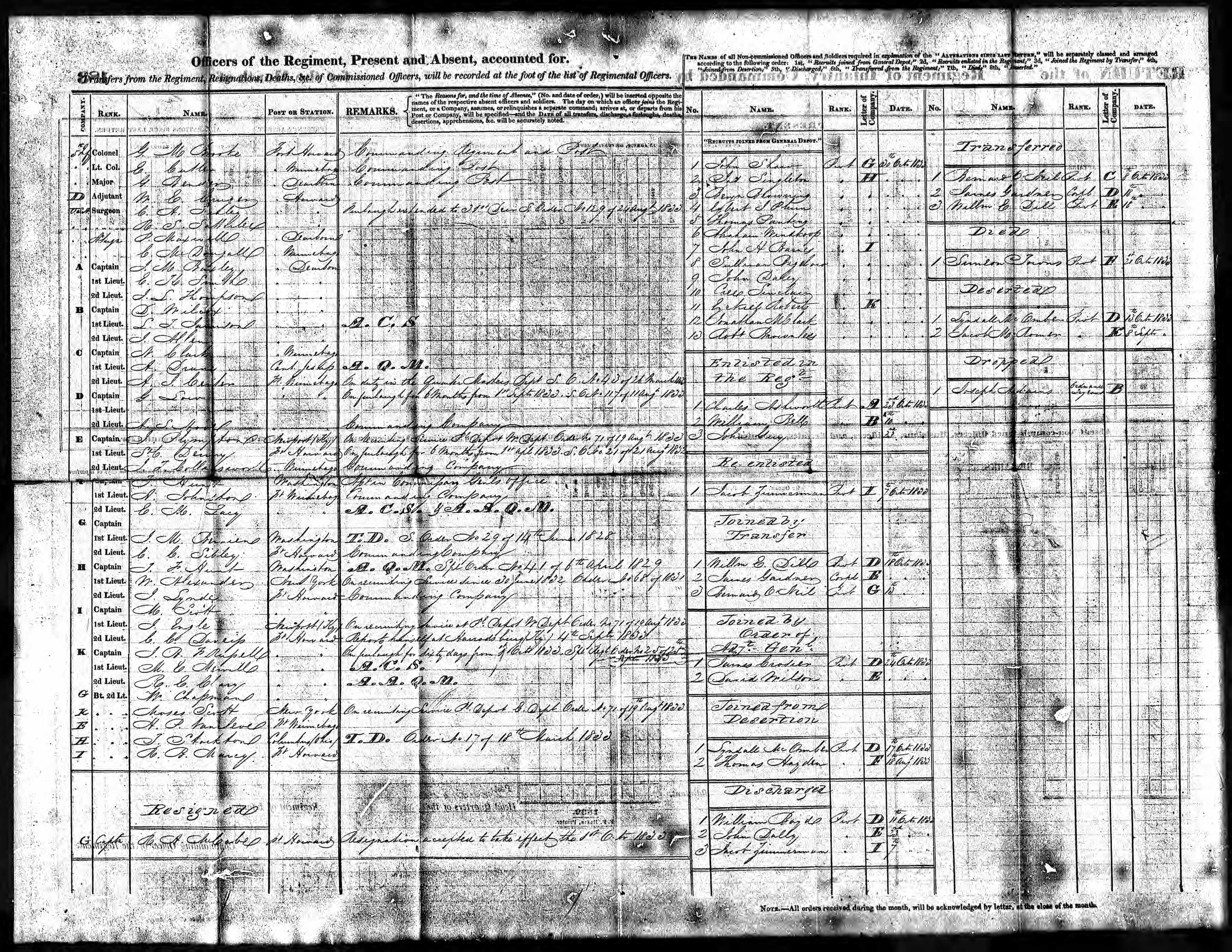
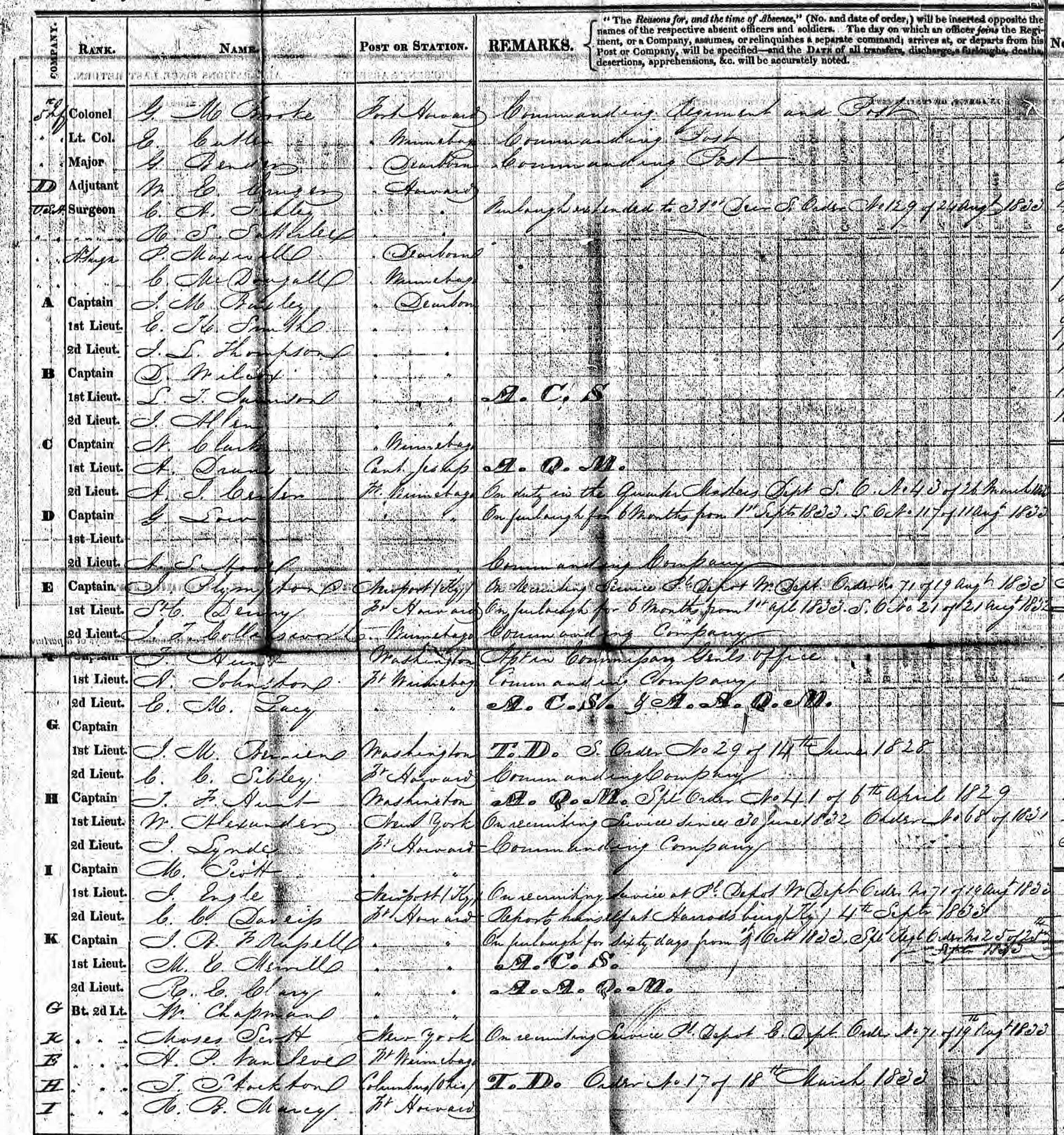
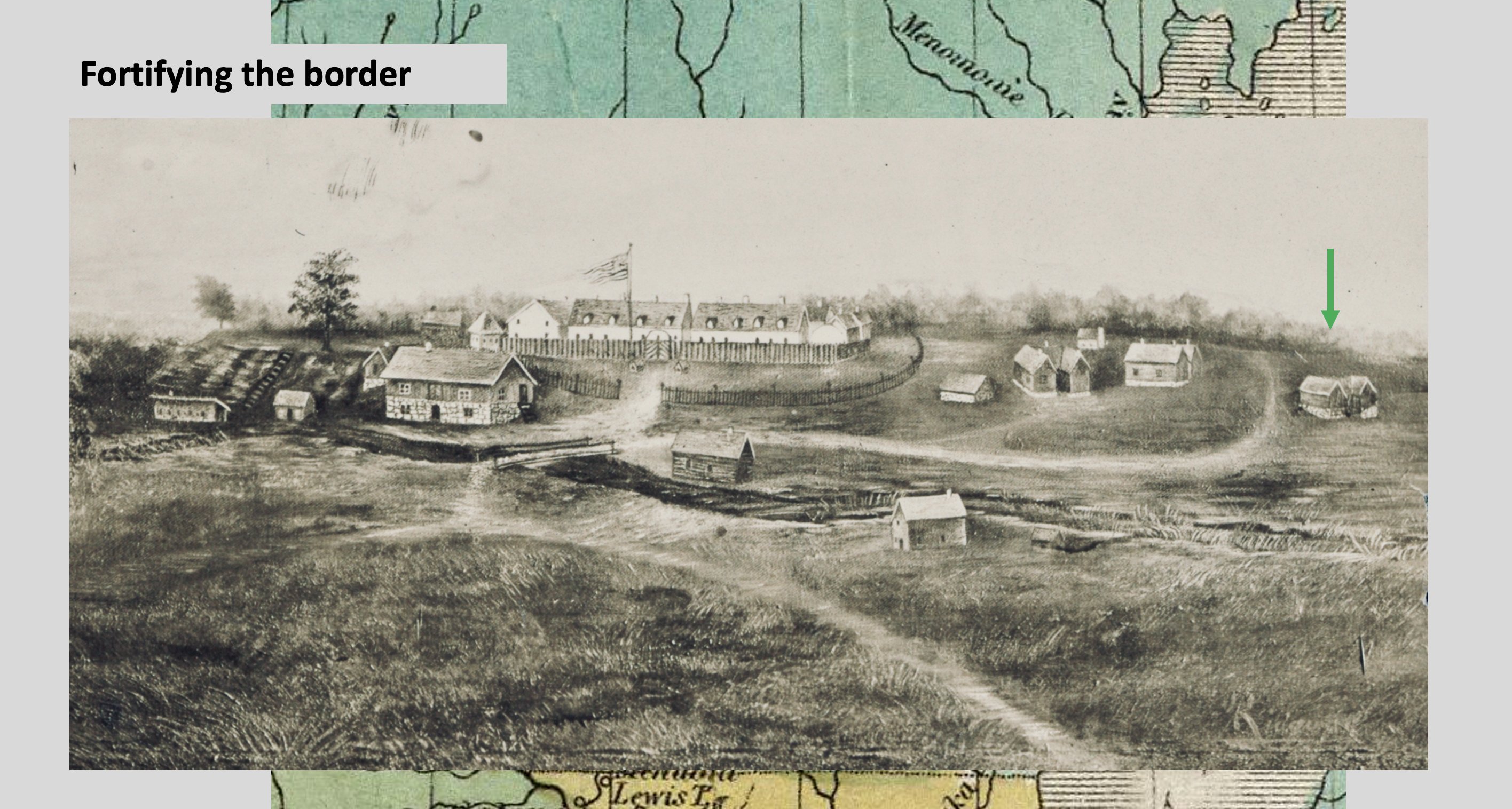
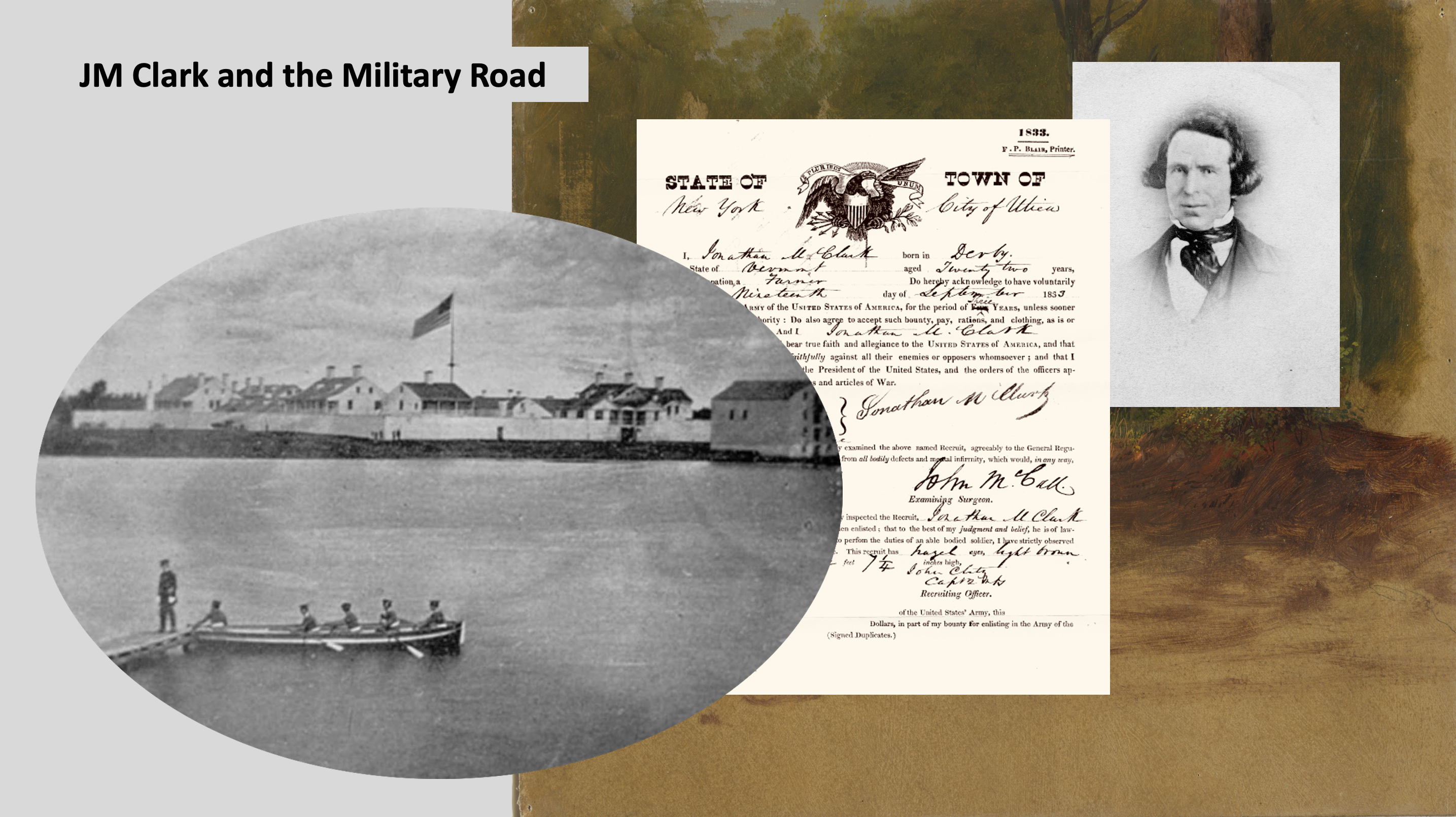
Fort Winnebago was one of several posts in the upper Midwest garrisoned by the army’s Fifth Regiment of Infantry during Jonathan M. Clark’s three-year term in the army at Fort Howard (1833-1836). From about 1835-1836, the soldiers of the 5th regiment were responsible for cutting Wisconsin’s original east-west Military Road from Ft. Howard at Green Bay, to Ft. Winnebago at the portage between the Fox and Wisconsin Rivers, and thence to Ft. Crawford at Prairie du Chien. In the 1830s, in addition to recent recruit Jonathan M. Clark, at least two other men with the Clark surname held positions with the 5th regiment in Wisconsin. Neither of these notable Clark men—it turns out—is related to JMC.

I’m not going into great detail for each subject, but I’ll try and give enough info to make clear whom we are talking about, and why they are being added to the “Nope, not our Clark family…” list. Leading today’s installment is one of the 5th regiment’s senior officers and members of his pioneering family:

Continue reading

How do you…? A Clark-era handbook

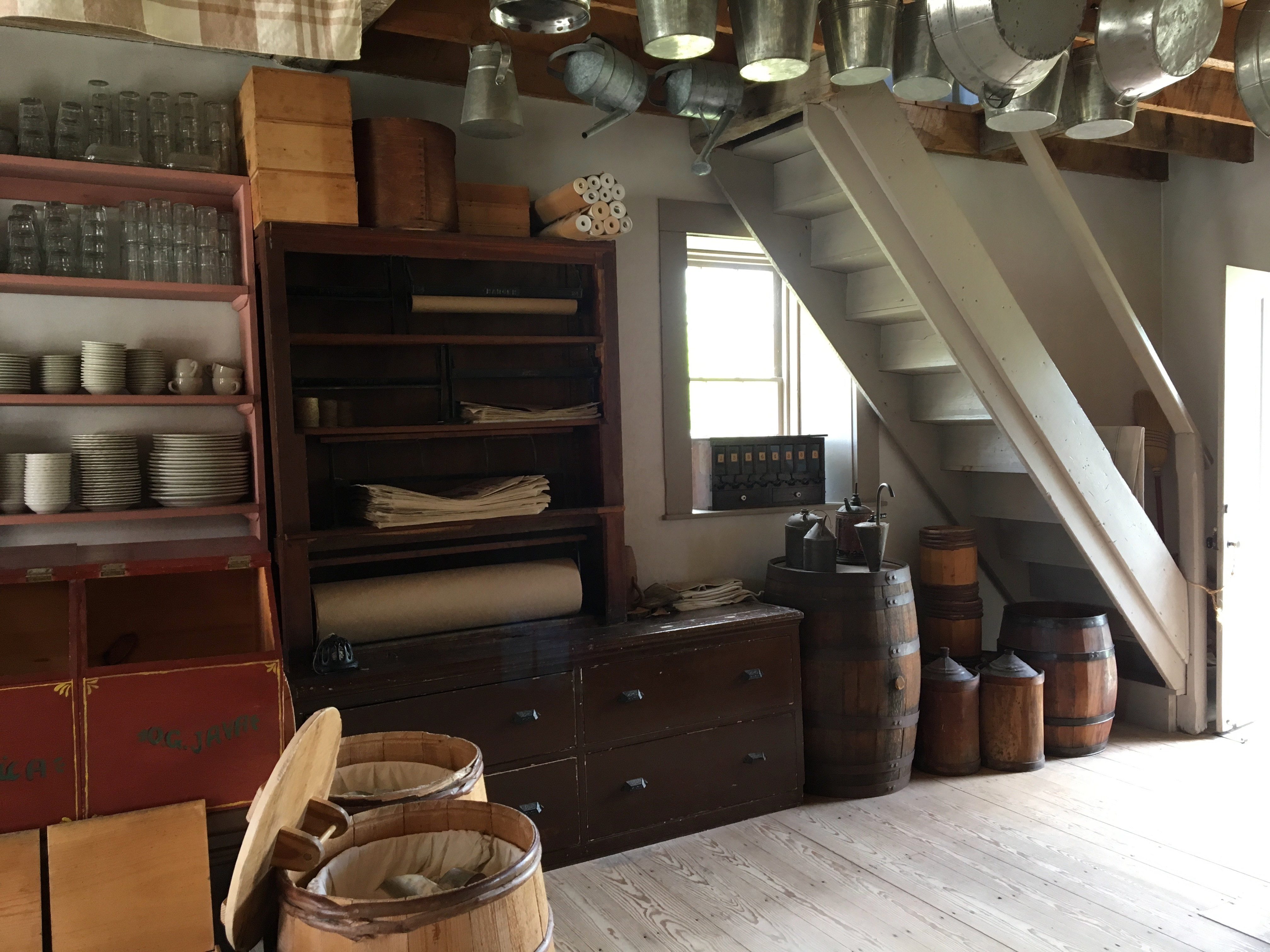
Recently, reader and Jonathan Clark House friend Ed Foster mentioned that he wanted to know more about how various JCH tools were used and necessary supplies were made, for example, how were lye soap or candles made? These are excellent questions, as they help us understand the day-to-day world of the Clarks and their neighbors in a more vivid and detailed way.

So, how did Jonathan and Mary Clark make candles or soap or perform many of the other home- and farm-related tasks that occupied so much of their time? Living in their pre-internet, pre-YouTube era, if they did not learn these skills from a parent or other mentor, how did they master such skills on their own? Fortunately for them, the 19th-century was a golden era of what we would call “How To” books.

The “Endless Variety” of books, circa 1837

Jonathan M. Clark mustered out of the U.S. Army at the end of his three-year’s service with Co. K, 5th Regiment Infantry, in September, 1836. While in service, he may have learned or refined a number of useful skills, especially those related to surveying and road construction. The army thought highly enough of his character and aptitude that he rose from private soldier in September, 1833, to Sergeant in 1836. He was, by several accounts, an intelligent and well-read man.

But even an intelligent, experienced man can’t know everything. For that, there were books and stores that sold them. If Jonathan, after he left the army, needed more information on the “practical arts,” he could stop by a shop such as White & Gallup’s “Variety Store” in Green Bay, and probably find the information he needed:

“Books,” advertisement from the [Green Bay] Wisconsin Democrat, 13 Jan 1838, page 1. First published 12 Dec 1837.

One of these advertised volumes caught my eye, just like it may have attracted the eye of Jonathan Clark and many other settlers in the wilds of the Wisconsin Territory in the 1830s…

Continue reading

Clark House News – June, 2024

There’s a lot going on at the Jonathan Clark House this summer! Here’s a quick look at two upcoming June celebrations, as well as information about our other 2024 summer events. Be sure to click Continue reading (below) to see all the details.

Pie on the Patio 2024

As a reminder, Pie on the Patio, our annual salute to donors and Friends of the Jonathan Clark House will be held at the museum this Wednesday, June 12, from 5:00-7:00 p.m. There is limited space for the event and RSVPs were due June 5. But if you have questions or last-minute changes in plans, please contact executive director Nina Look via email at jchmuseum@gmail.com or call 262-618-2051.

And if you don’t want to miss next year’s Pie on the Patio, become a Clark House donor, today! Just click this link to our JCH donor page, or scan the QR code, below, and scroll down to the Donate Online info. And thank you for your support!

This Saturday! – Heritage Day 2024

Put away the electronics and experience life in Mequon-Thiensville as it was in the 1850s. On Saturday, June 15, from Noon to 3:00 p.m., the Jonathan Clark House Museum hosts its annual Heritage Day, where everyone steps back in time to learn more about early settler life. Each event features hands-on activities and fun for all ages. Admission is free and open to the public. Come see us at the corner of Cedarburg and Bonniwell Roads in Mequon!

Continue reading

Memorial Day, 2024

Lest We Forget

Our annual Memorial Day post, first published in 2020. Updated for 2024 with new information about the Civil War service of Isham and Emily (Bigelow) Day’s eldest child, Cpl. James Lemon Day (1834-1863).

Graves of Unknown Union Soldiers, Memphis National Cemetery, photo by Clayton B. Fraser, (Library of Congress), public domain. Memphis National Cemetery is the final resting place of Mequon’s Watson Peter Woodworth, and almost 14,000 of his Union Army comrades.

Today is the day our nation officially observes Memorial Day. For many Americans, Memorial Day represents “the first day of summer,” and is traditionally celebrated with trips to the lake, picnics, parades, and sales on cars, appliances, and other consumer goods.

But for many of us, Memorial Day remains rooted in its origins as Decoration Day. The first national observance was in 1868, when retired general John A. Logan, commander and chief of the Grand Army of the Republic—the Union veterans’ organization—issued his General Order Number 11, designating May 30 as a memorial day “for the purpose of strewing with flowers or otherwise decorating the graves of comrades who died in defense of their country during the late rebellion, and whose bodies now lie in almost every city, village, and hamlet churchyard in the land.”

On this Memorial Day, let’s take a moment to remember what this day truly represents.

Continue reading

Trouble with the wireless

Sorry for the “radio silence” lately. I’ve been occupied with a number of tasks on- and off-line and then, early last morning, we had a big thunderstorm, and it seems that one or more of the storm’s lightning strikes managed to fry our family’s wi-fi modem-router. Imagine that. No internet! How does a blogger cope?

The cold realization of an off-line Monday was followed by the prospect of what lay ahead: going to my day job (meh), and then, after work, needing to choose and purchase a new modem-router (not too bad, perhaps) and then having to spend hours trying to follow the inevitable—and laughably & misleadingly-labeled—”few easy steps” to set up the new Wi-Fi hub and connect it to our existing internet service and other devices (I’ve done this before and, frankly, I’d rather visit the dentist).

What to do?

Continue reading