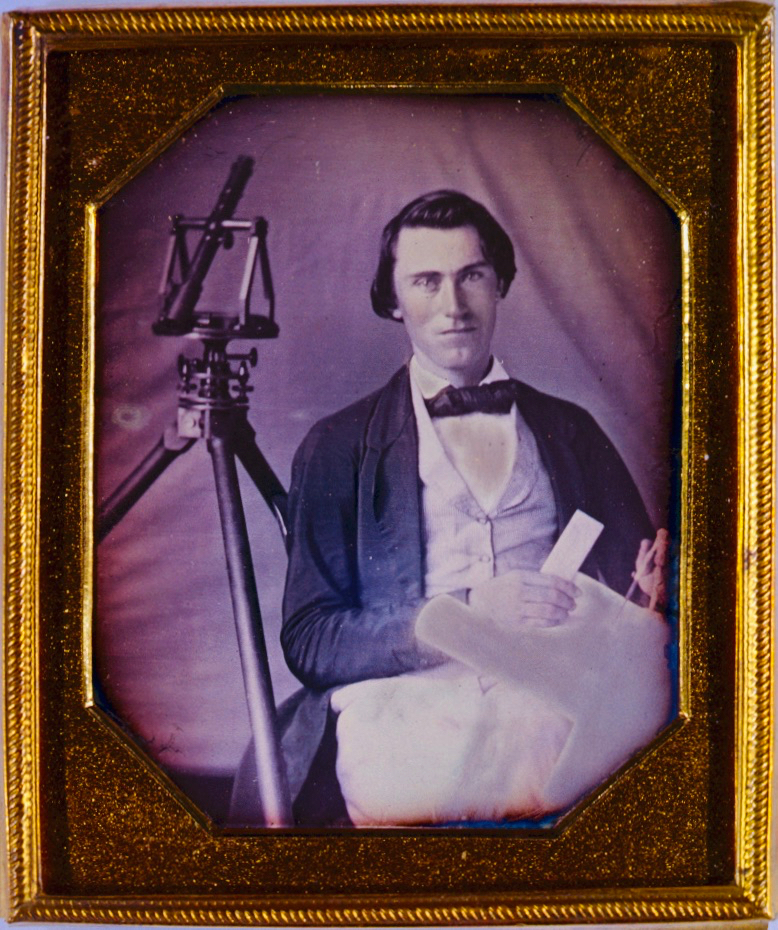
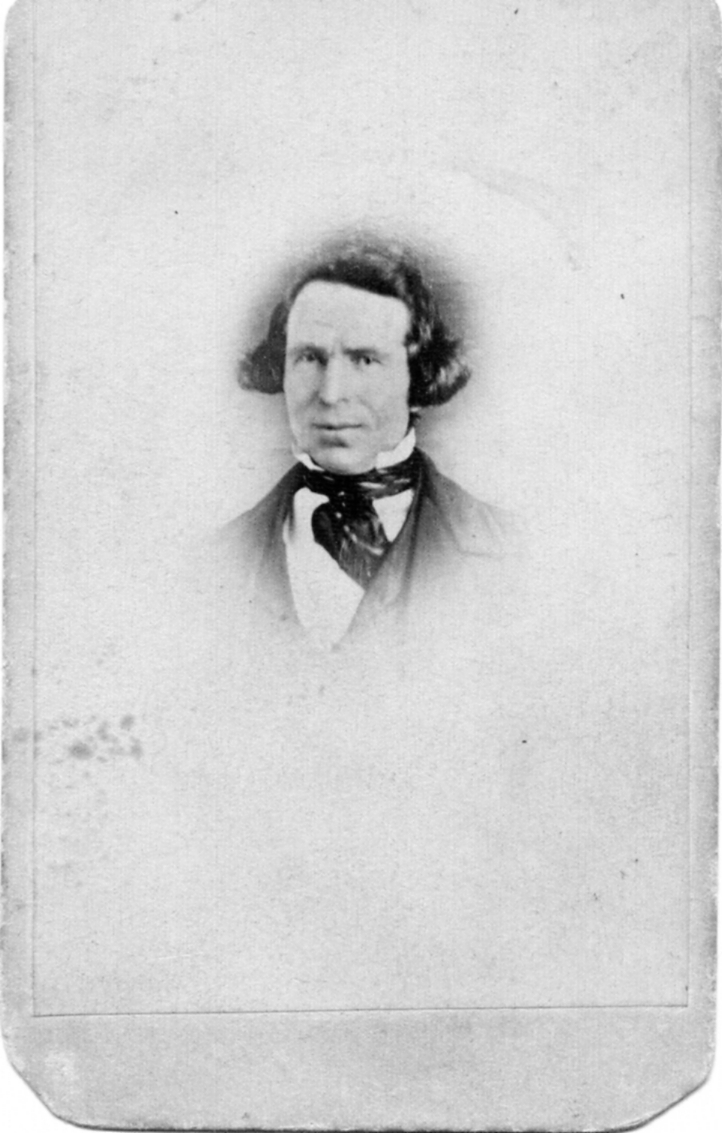
Henry Clark – Civil War draftee

What we do — and don’t — know about the Clarks’ only son (part 3)

This is the third in a series of posts examining what we do — and don’t — know about Henry Clark, his life, and his possible military service. If you missed them, you may want to look at:
• Part 1: Meet the Children: Henry M. Clark
• Part 2: Henry Clark and the Civil War draft
• and a related tidbit: Avoiding the draft, 1862 style

Henry Clark and the 1863 draft
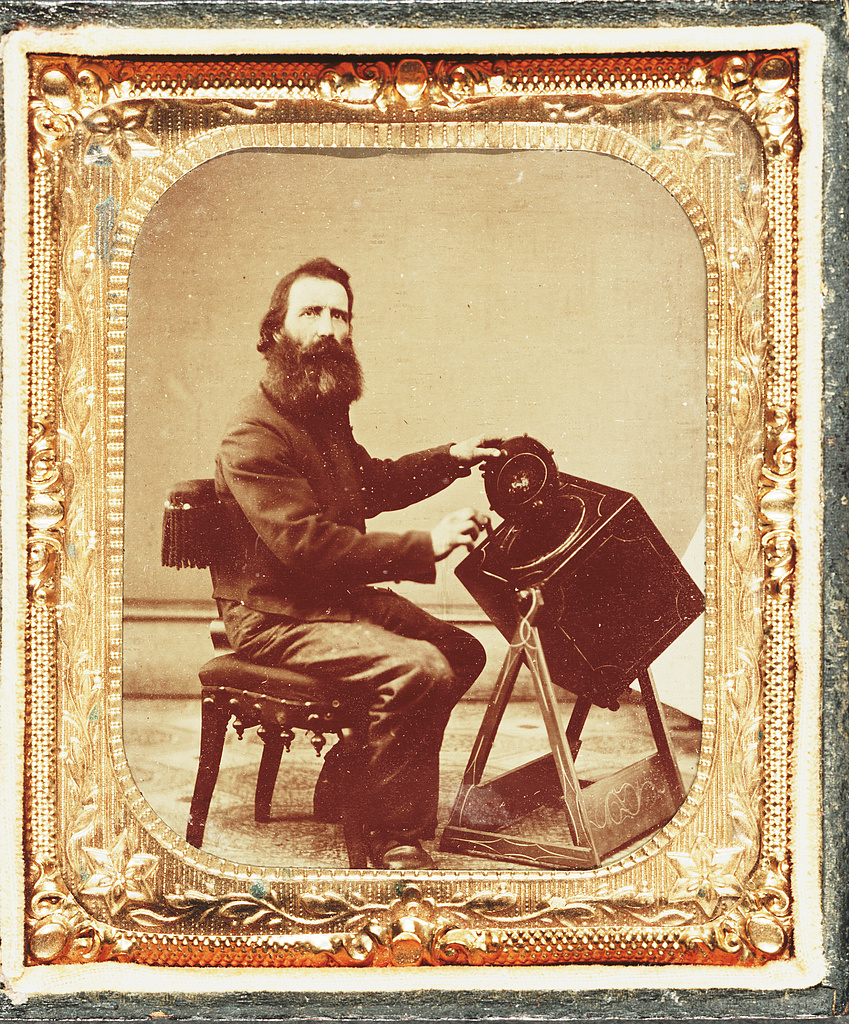
[Civil War induction officer with lottery box.] United States, ca. 1863. Photograph. Library of Congress. Click to open larger image in new window. The draft officials in Milwaukee used a similar box or wheel to draw names in the 1863 draft. (The Wisconsin Historical Society has a wheel-shaped draft drum, circa 1863-1865, in its collections. It’s possible that the WHS lottery wheel may be the exact wheel used during Henry Clark’s November, 1863, draft event. Click here for a photo and accompanying information.)

Our previous post included an image of Henry Clark’s June, 1863, registration for the upcoming military draft. The Milwaukee draft of November, 1863, lasted for several days. The names of draftees from each Milwaukee city ward or county town were written on paper slips and placed in a round wooden “wheel.” The container was spun about to mix the names, and then the draft official would reach in, pull out one slip of paper, read the name aloud, and the clerk (and the press) would record the names as drawn. Once each ward, town, or village reached its quota of draftees, the box would be emptied and a new set of names from another location would be placed in the drum, and the process repeated.

Continue reading
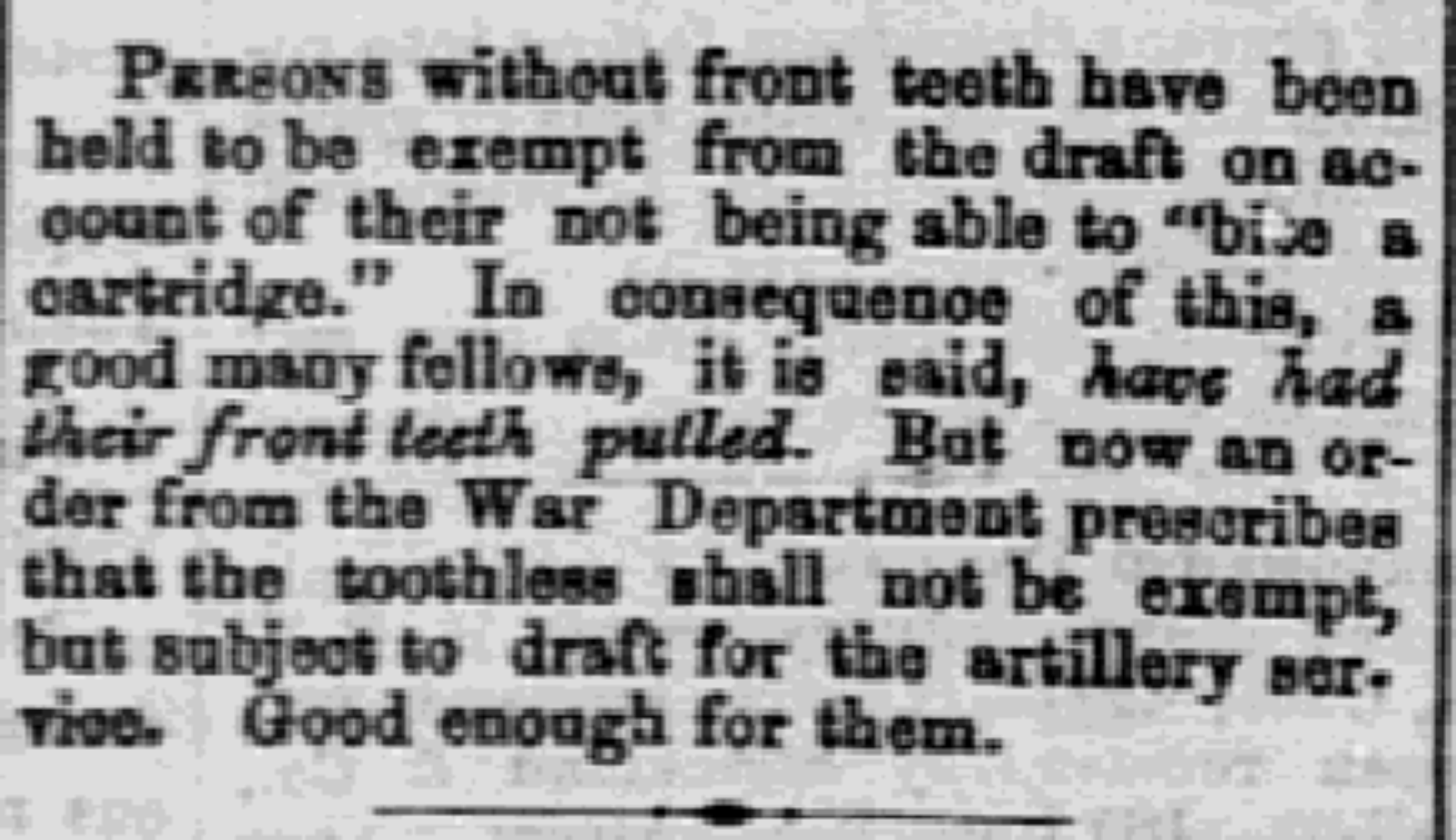
Henry Clark and the Civil War draft

What we do — and don’t — know about the Clarks’ only son (part 2)

This is the second in a series of posts examining what we do — and don’t — know about Henry Clark, his life, and his possible military service. If you missed it, you might want to start with part 1: Meet the Children: Henry M. Clark

Reading, Mass. Selectmen. The union must be preserved! The citizens of Reading are hereby invited to meet at Lyceum Hall to-morrow, Thursday, at 6 o’clock. P.M., to make such arrangements as may seem necessary to raise our proportion of volunteers … Selectmen of Reading. Boston, 1862. Library of Congress Meetings such as this were held all over the North—including Wisconsin—before and after the passage of the Militia Act of 1862. Click to open larger image in a new window.

Continue reading

Meet the Children: Henry M. Clark

UPDATED with correction, June 18, 2021: The Peter Turck house at 474 Jefferson was (and is?) in Milwaukee’s seventh ward. Why I said “second ward” when the map clearly shows “VII” or seventh ward is a mystery. So please note the correction to the headline and content of the relevant paragraph “The Seventh Ward,” below.

What we do — and don’t — know about the Clarks’ only son (part 1)

Jonathan M. and Mary (Turck) Clark had eight children: seven daughters and one son, Henry M. Clark (1843-1866). The Clark children were born between 1840 and 1857. All lived to adulthood, some longer than others. For a general overview of the Clark children, including birth and death dates, start with our earlier posts Meet the Children (part 1) and History Mystery! No. 2 – The Clark “Family Record.”

Although we know quite a bit about most of the Clark children, our recent Memorial Day 2021 post reminds us that we know very little about several important aspects of Henry Clark’s life, in particular: did he serve in the Civil War? I’ve been working on this question, off and on, for a number of years, and I think it’s time to pull the sources together and see what really we do — and don’t — know about Henry Clark, his life, and his possible military service.

There is a lot of information to sort through and interpret, so this post will be the first of several about Henry and the events of his life. Today we focus on what we know of Henry’s life before the Civil War.

——— 1840s ———

1843 (?)

The first documentary mention of Henry Clark may possibly be this report of his birth on February, 21, 1843, written at an unknown date in the Clark “Family Record”:

Continue reading

Memorial Day, 2021

This is a revised and updated version of a post that originally appeared here on May 25, 2020. Please be sure to read the Notes & Updates, below, for new information.

Lest We Forget

Graves of Unknown Union Soldiers, Memphis National Cemetery, photo by Clayton B. Fraser, (Library of Congress), public domain. Memphis National Cemetery is the final resting place of Mequon’s Watson Peter Woodworth, and almost 14,000 of his Union Army comrades.

As we begin to recover1 from the worst pandemic in a century, a quick glance at the news will show that many Americans are celebrating this “Memorial Day Weekend” in our now usual way, as “the first day of summer.” Beaches and parks are open, stores entice customers with deals and sales, and people are crowding shoulder to shoulder in swimming pools and along ocean boardwalks.

But for many of us, Memorial Day remains rooted in its origins as Decoration Day. The first national observance was in 1868, when retired general John A. Logan, commander and chief of the Grand Army of the Republic—the Union veterans’ organization—issued his General Order Number 11, designating May 30 as a memorial day “for the purpose of strewing with flowers or otherwise decorating the graves of comrades who died in defense of their country during the late rebellion, and whose bodies now lie in almost every city, village, and hamlet churchyard in the land.”

This Memorial Day, let’s remember those Clark House family, friends, and Mequon neighbors who served in the Civil War, and what they fought—and died—for. The History of Washington and Ozaukee Counties (1881) lists these 65 volunteers from Mequon:

Continue reading

Marking out the roads

Infrastructure Week Fortnight Month continues…

It’s been a busy few weeks here at the Historian’s (actual) house, and I’m (very) slowly transcribing handwritten documents and making maps to illustrate the work of Jonathan M. Clark and his fellow road supervisors as they mapped and built old Washington County’s first roads in early 1841. While you’re waiting for those posts, check out our previous installments in this series — County Government – Early Records and Monday: Map Day! — for some interesting background, maps, and first-hand records.

Jonathan Clark – surveyor?

What did Jonathan Clark know about surveying and road building? Probably quite a bit. Like most farmers—then and now—Jonathan would not have been successful without a good understanding of maps, distances, land boundaries and how to best use and navigate the fields, forests and wetlands of his property.

If you recall our earlier posts detailing JMC’s military service (starting with Fort Howard, October 1833 (part 1) and including Ouisconsin Territory, 1836), you’ll remember that his unit, the U.S. Army’s 5th infantry regiment, was responsible for laying out and cutting the new military road that would ultimately connect Ft. Howard in Green Bay, Ft. Winnebago near Portage, and Ft. Crawford at Prairie du Chien. Jonathan’s Co. K was involved in this work for the better part of his final two years of service (1835-1836). This assignment would give him hands-on experience in surveying, map-making, grubbing out roads and building serviceable bridges with the materials at hand. By the time he arrived in Mequon, in late 1839, it’s possible that Jonathan Clark was the most experienced road builder (and one of the better surveyors) in early Washington/Ozaukee county.

A surveyor and his tools…

Continue reading

Jonathan got the vaccine…

There were a lot of deadly, infectious diseases in 19th-century North America. When Jonathan M. Clark was young, the causes and cures for most of these illnesses were a mystery. Germ theory was unknown, and for many people hygiene was, at best, a hit-or-miss affair. But even in that era, we can be certain Jonathan M. Clark was inoculated against one of the worst recurring plagues of all time: smallpox.

General Regulations of the U.S. Army, 1821, Art. 73, no. 90

As a new recruit to the U.S. Army, Jonathan M. Clark was subject to the army’s regulations, including article 73, number 90:

Click to open larger image in new window. Original via Internet Archive

Continue reading

RBOH – Social Calls by Canoe, 1833

Another in our occasional series of Random Bits of History, illustrating life as experienced by the early Mequon settlers and their contemporaries. Today’s RBOH is an example of how strong early Wisconsin women could be, and how they used that strength to maintain community and social relationships across the vast distances between military posts.

Jonathan M Clark served with the U.S. Army’s 5th Regiment of Infantry at Fort Howard, Green Bay, Wisconsin Territory, from 1833-1836. The Fifth Regiment was responsible for four major outposts in the Old Northwest: Ft. Dearborn (Chicago), Ft. Howard (Green Bay), Ft. Winnebago (at the Fox and Wisconsin river portage) and Ft. Crawford (at Prairie du Chien).

We expect a soldier’s life on the frontier to be spartan and difficult, and in many ways is was. Generally speaking, enlisted men like JMC were unmarried and lived in together in the post’s barracks. But quite a few of the regiment’s officers were married, and brought their spouses—and children—to live with them on post or, occasionally, in homes in the adjacent village. As “officer’s ladies,” these women often lived separate lives from the civilian women of nearby settlements, such as Green Bay. So they formed their own bonds to provide mutual aid, comfort, society and entertainment while living in some of the army’s most isolated outposts.

And they did not let their social bonds break, even when friends were transferred to other forts. Here are some examples from about 1833:

Continue reading

Monday: Map Day! – First official map of Wisconsin, 1837

Squirrel!

Some of my favorite characters in film are the dogs in Pixar’s animated feature Up. It’s clear that Pixar’s artists and writers have a deep understanding of our canine friends, especially their tendency to be distracted by, for example, a…squirrel! 1

Likewise, some of the pleasures (or hazards?) of history research are the many squirrel!-like moments where you manage to be completely distracted by cool stuff that is not at all related to the topic you are actually trying to research. Like the dogs of Up, I am easily distracted, although my attention is drawn more to old maps, books, newspaper clippings, sepia photographs and colorful lithographs.

This week, I was looking for more information about possible Clark connections in Lower Canada in the early 1800s, to add to our earlier posts, including this one, this one and this one. But what did I find? Glad you asked…

Continue reading

Happy 208th Birthday, Jonathan!

November 28, 2020, is the 208th anniversary of the birth of Jonathan M. Clark. To celebrate, I’m reposting a revised, expanded and annotated version of one of my first Clark House Historian posts. Since this was first published, on April 20, 2016, we have learned much more about the lives of Jonathan Clark, Mary Turck Clark, their family and their neighbors. Please check out the footnotes and click on the links for some of this newer, more accurate, information.

Happy Birthday, Jonathan! (and thanks to Nina Look for the timely reminder).

JMC: Man of Mystery

CLARK, Jonathan M portrait

Jonathan M. Clark. Photograph courtesy Liz Hickman.

There he is. Jonathan M. Clark, builder and first owner of the handsome stone home that is now the  Jonathan Clark House Museum in Mequon, Wisconsin. He was probably born in Vermont—or Lower Canada—probably on November 28, 1812, and he died on September 20, 1857. Before coming to Mequon, he served in the United States Army at Fort Howard from 1833 to 1836. He married Mary Turck, eldest child of Mequon pioneer Peter Turck, on March 15, 1840. They had a large family. We even have a photograph of JMC as an adult (above). In some ways, we know quite a bit about Jonathan M. Clark.

Continue reading