At the end of last month, while working on some longer posts about the Turcks and Clarks, I had some fun creating the first Clark House Historian Reader Challenge: where you get to be the historian!, and today we have the results. The original challenge went something like this:
Here’s an excerpt of a document that will be part of an upcoming post. Can you read and transcribe it? (Ignore the squiggles in the top right corner, they belong to another record on the same page.)
The original CHH Reader Challenge #1. Click to open larger image in new window.
And I gave y’all a hint, the full page from which this record was excerpted. And as a second hint, I suggested that a look at my discussion of Kurrenthandwriting might be helpful.
So what is this a record of, and what does it say?
The original version of this post was the second-ever post on Clark House Historian. It represented what we knew at the time about Mary Turck, the daughter of Peter Turck and Rachael Gay, wife of Jonathan M. Clark, and mother of the eight Clark family children. The original April, 2016, post was pretty accurate, but we have learned a lot more about Mary and her Turck and Clark families in the meantime. So here is a revised version of that post with errors corrected and ambiguities clarified—where possible.
Please note that there are many more facts about Mary and her Clark and Turck families that I’ve written about in the past almost-5 years that are not linked to in this post. If you are looking for more information about Mary, I highly recommend using the blog’s SEARCH function and our new INDEX. And if you still can’t find the info you want, please ask me! Just use the Leave a Replybox, below, or the CONTACTlink, above.
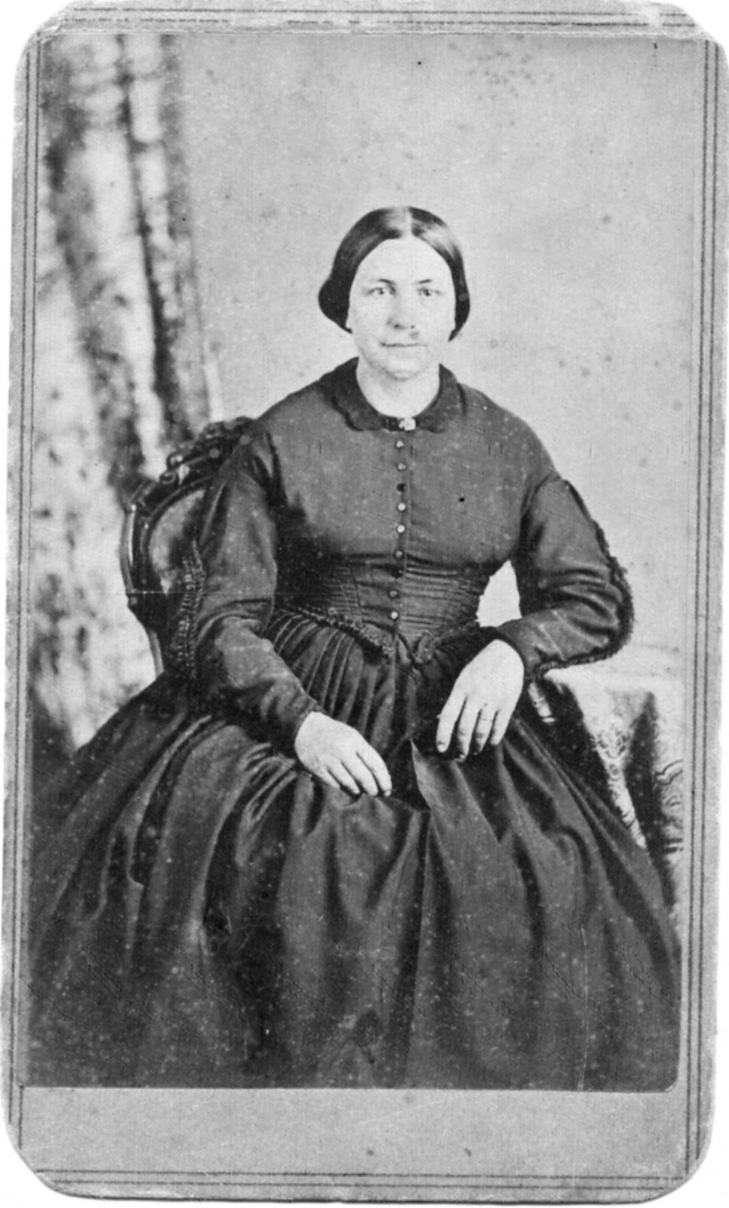
Mary Turck Clark: Mequon Pioneer
Mary Turck Clark. Photograph courtesy Liz Hickman. Click to open larger image in new window.
Continuing our look at Mary Turck Clark and her family, today we look at a map of Columbia County, New York, the birthplace of Mary’s father Peter Turck, most of his eight siblings, and home of Mary’s paternal grandparents—Peter Turck’s parents—Jacob A. and Anna Maria “Maritje” (Klein) Turck. For more on the Turcks and New York, you may want to read our previous posts on Peter and Rachael (Gay) Turck’s New York, 1829/32 and Mary Turck’s Greene County, New York.
Today we’ll be looking at Columbia County, one of the predominantly Dutch-American counties along the Hudson River, south of Albany, New York. Columbia County lies east of Greene county, just across the Hudson river. Here’s a detail from a map we looked at previously, showing the relationship between Greene and Columbia counties:
Burr, David H., Map of the State of New-York and the surrounding country by David H. Burr. Compiled from his large map of the State, 1832.[…] Entered according to Act of Congress Jany. 5th., 1829 by David H. Burr of the State of New York. Engd. by Rawdon, Clark & Co., Albany & Rawdon, Wright & Co., New York [detail]. Credit, David Rumsey Map Collection, David Rumsey Map Center, Stanford Libraries, non-commercial use permitted under Creative Commons license. Click image to open larger map in new window.
Our new map is from the same atlas, and shows many more details of Peter Turck’s Columbia County, circa 1829:
As we discussed last Monday, 2021 is the bicentennial of Mary Turck Clark’s birth. So this year I’d like to focus on Mary, her parents and her seven siblings: where they came from, how they got to Wisconsin, and where they went afterwards. Today we’ll start to get our Turck-family bearings with a look at an excellent map of Greene County, New York, an important place in the lives of Mary, her parents, and her extended family.
The Hudson River Dutch-Americans
Mary Turck’s parents and ancestors descended from Dutch-American families that had been in New York since colonial times. For more background and a fine 1829/32 map of the whole state, take a minute to re-read our previous Monday: Map Day!, Peter and Rachael (Gay) Turck’s New York, 1829/32. The initial Dutch immigrants to New Netherland landed on Manhattan Island; it wasn’t long before Dutch settlers headed inland, west and north up the Hudson River. By the time Mary Turck was born in 1821, there had been generations of Dutch-Americans living along the Hudson. The story of Mary’s extended family—the Turck, Gay, Groom, and Van Loon families and their kin—is centered around a handful of Hudson River counties. Some of the boundaries and place names changed over the centuries, but much of the story of Mary Turck’s family will be found in the documents, maps and places of Ulster and Greene counties on the west bank of the river and Dutchess and Columbia counties on the east side.
Burr, David H., Map of the State of New-York and the surrounding country by David H. Burr. Compiled from his large map of the State, 1832.[…] Entered according to Act of Congress Jany. 5th., 1829 by David H. Burr of the State of New York. Engd. by Rawdon, Clark & Co., Albany & Rawdon, Wright & Co., New York [detail]. Credit, David Rumsey Map Collection, David Rumsey Map Center, Stanford Libraries, non-commercial use permitted under Creative Commons license. Click image to open larger map in new window.
A few days ago, Clark House museum director Nina Look asked me a simple question: when, exactly, was Mary Turck Clark born? So I looked in my database and I came up with…two answers: Mary Turck Clark was born on either May 4th, 1820 or May 3, 1821. So I reviewed my dates and sources, and today’s post is about what I (re-)discovered, and what I still have to investigate.
Haven’t we been over this before?
Why, yes, we have. Here are links to earlier posts on essential sources of Mary Turck Clark birth date and birth year information, starting with my second Clark House Historian post, this now-outdated post about Mary from 2016. Other, more recent, posts have gone into detail examining Mary, her family, and their likely birth dates as found on the U.S. federal decennial censuses:
I’ve not yet blogged about Mary’s 1870 or 1880 federal censuses—both enumerated in Milwaukee—but I’ve seen them and used them in my research. More on these in a moment.
One of the useful things about studying history—if you pay attention—is that it can give you a bit of perspective on life and current events. This year, 2020, has been an objectively awful year, no doubt about it. A previously unknown virus has killed hundreds of thousands, infected millions, and brought economic misery to even more. Our communities and our political system have undergone stresses they have not seen since the mid-19th century.
Social distancing and mask wearing have become necessary to protect our health and our neighbors. Many of us are frustrated and sad that we will must spend our holidays apart from family and friends. It’s a tough ending for a rough year.
So this Christmas, I wanted to share something with you from my family collection. It’s a reminder that—when push comes to shove—we can work together and get through difficult times—like 2020—and even find ways to celebrate the spirit of the season in spite of difficult circumstances.
November 28, 2020, is the 208th anniversary of the birth of Jonathan M. Clark. To celebrate, I’m reposting a revised, expanded and annotated version of one of my first Clark House Historian posts. Since this was first published, on April 20, 2016, we have learned much more about the lives of Jonathan Clark, Mary Turck Clark, their family and their neighbors. Please check out the footnotes and click on the links for some of this newer, more accurate, information.
Happy Birthday, Jonathan! (and thanks to Nina Look for the timely reminder).
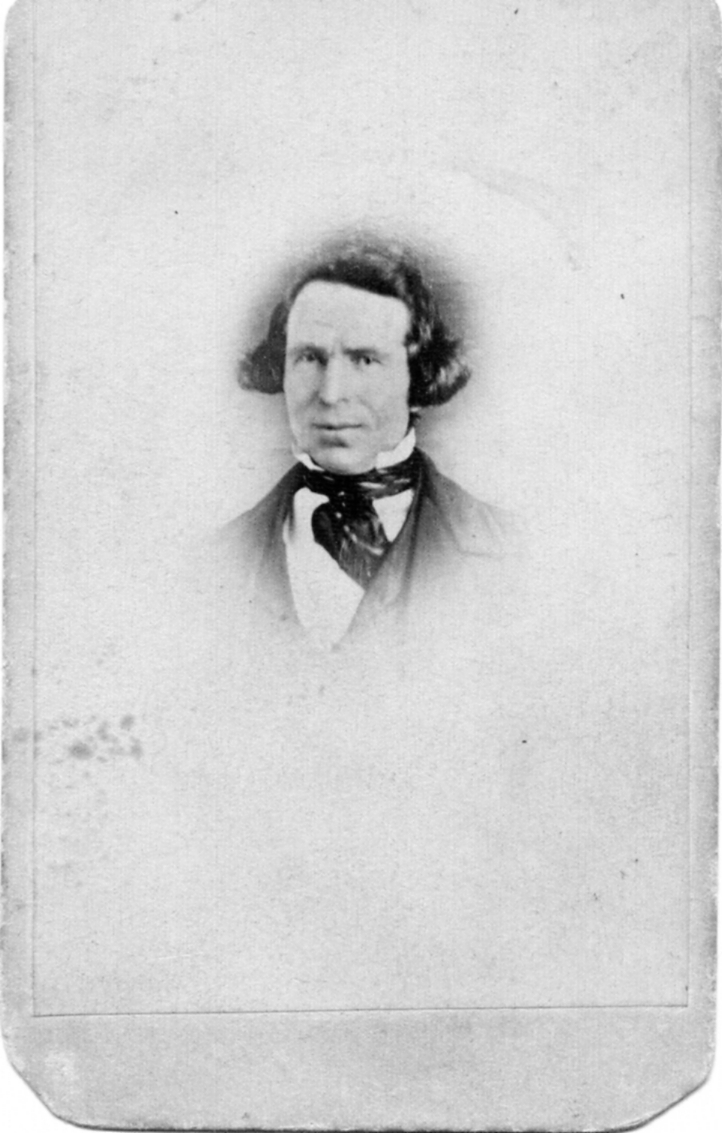
JMC: Man of Mystery
Jonathan M. Clark. Photograph courtesy Liz Hickman.
This is a revised, updated, and expanded version of a post originally published at Clark House Historian on November 11, 2016.
One hundred and two years ago, on the eleventh day, of the eleventh month, at the eleventh hour—Paris time—the Armistice of Compiègne took effect, officially ending the fighting on the Western Front and marking the end of the optimistically named “War to End All Wars.”
In the United States, the commemoration of the war dead and the Allied victory began as Armistice Day in 1919, by proclamation of President Woodrow Wilson. Congress created Armistice Day as a legal holiday in 1938. Starting in 1945, a World War II veteran named Raymond Weeks proposed that the commemorations of November 11 be expanded to celebrate all veterans, living and dead. In 1954 Congress and President Eisenhower made that idea official, and this is what we commemorate today. There are many veterans with a connection to the Jonathan Clark house. We honor a few of them in this post.
I’m working with one of our young Clark House Museum volunteers to examine the life of early Mequon settler Peter Turck and his large family. Peter Turck was a man of many talents and trades, which we will look into in more depth in future posts. He was also Mary (Turck) Clark’s father and Jonathan M. Clark’s father-in-law.1
The Turk/Turck family is an old Dutch-American family that first came to the New World in the 1660s, settling on the island of Manhattan, then known as New Amsterdam, part of the Dutch colony of New Netherland. The Turk/Turck family maintained a presence in Manhattan well into the twentieth-century.2 Some Turk/Turck descendants migrated to the Hudson River valley in the 1700s and stayed for many generations.
For our purposes, I thought it would be useful to have a map that gave an overview of the places that Peter Turck and Rachael Gay lived before coming to Wisconsin Territory in 1837:
While we’re all waiting for this year’s votes to be counted, here’s a revised and updated repeat of a post that first appeared here on November 8, 2016.
Really early returns, from Mequon’s—and Washington County’s— first election, 1840.
In an earlier post, I outlined some of the key moments in the settlement and changing political boundaries of early Washington/Ozaukee county. Originally attached to Milwaukee County for all civil and judicial matters, old Washington County got its civil independence by act of the Territorial Legislature on February 19, 1840. And on “the second Monday of October next,” i.e., October 12, 1840, the first election to chose county officers was held at the Mequon home of Taylor Heavilon.1, 2



 Clark House Historian