Earlier this summer, while putting together the post How’d they get here? – early Erie Canal images, I came across a tidily-drawn print that helps illustrate the story of the Peter and Rachael (Gay) Turck family’s life before coming to Mequon. It’s downtown Palmyra, Wayne county, New York, in 1825:
Unknown artist, Eastern view in Main-street, Palmyra., in Cadwallader Colden, et. al., Memoir…at the Completion of the New York Canals, New York, 1825. Image from “extra-illustrated” edition in New York Public Library Digital Collections, scanned copy of standard edition of book available via GoogleBooks. Click to open larger image in new window.
UPDATED August 12, 2021 (twice), with more information on Orange Dibble’s derrick, illustrated below. See my reply to the question from reader Chester T. Hartwell in Comments, below.
UPDATED July 29, 2021, to include some new general information and details about several of the images sent by reader Robert Randall, second vice-president of the Camillus Canal Society. For Mr. Randall’s full message, see Comments, below. For more on the society’s Camillus Erie Canal Park, click here.
How the early settlers came to Mequon, c. 1835-1850 (part 3)
Our series of “How’d they get here?” posts is written—in part—to help our education team put together a Clark House Museum educational activity. The idea is to illustrate the nuts and bolts of how our early Mequon pioneers travelled from their original homes or ports of arrival in North America, to the newly opened federal lands in Wisconsin Territory, circa 1835-1850. (If you missed ’em, the previous parts are here and here, with a bonus image, here.)
Erie Canal images – 1825!
Finally!! For years, I’ve been searching for images of the unique, low-draft, narrow-sided, low-height, lock-length boats designed for and used in the earliest years of the Erie and Champlain canals (c. 1825-1840). And year after year, I had no luck finding such images…until this week.
You might be thinking, “hasn’t Clark House Historian already spent quite a bit of time on the Erie Canal?,” and you’d be correct. But it’s hard to overstate the national and international importance of the Erie Canal on world trade and American westward expansion in the decades after its opening in 1825. And while we have used maps to illustrate the migration routes of some Mequon settlers (such as the Turck, Gay, Bonniwell, and Woodworthfamilies), I wasn’t able to adequately illustrate the details of how they travelled in the early days of the canal era. Until now.
Today’s treasure trove of early canal images is from Cadwalleder Colden, et. al., Memoir…at the Completion of the New York Canals, New York, 1825. Many of these images are from the “extra-illustrated” edition in New York Public Library Digital Collections; you can download and enjoy a scanned copy of the standard edition of the book via GoogleBooks. Yes, these images are a bit early for our generally 1835-1850 “How’d they get there?” timeframe. But these are, by far, the best visual representations of early New York canal travel that I have seen. Even though Jonathan M. Clark, and the Woodworth and Bonniwell families and other Mequon settlers did not travel on the canals until the 1830s, these images depict scenes they would have experienced along the Champlain and Erie canals.
Please take a close look at each image for the “big picture,” then click on each and zoom in on the details. All the images can be clicked on to open as a larger, downloadable, image in a new window. All images are believed to be in the public domain, and I encourage you to enjoy, download, save, share and use them as you see fit.
Canal Boats
Here is an excellent view of a group of the new canal boats, loading freight and soliciting business at the North [i.e., Hudson] River docks, New York City, before heading up the Hudson to Albany and the canals:
Canal boats on the north river, New York, in Cadwallader Colden, et. al., Memoir…at the Completion of the New York Canals, New York, 1825. Image from “extra-illustrated” edition in New York Public Library Digital Collections, scanned copy of standard edition of book via GoogleBooks.
How the early settlers came to Mequon, c. 1835-1850 (part 2)
This is part 2 of a series focused on how our Mequon pioneers traveled to southeast Wisconsin in the early days of white settlement, between roughly 1835 and 1850. If you missed part 1, it’s here at Monday: Map Day! – How’d they get here?, plus a short post with bonus image at Steamboat’s coming!
From the late 1820s until about 1850, if you wanted to get from the settled American northeast to the open frontiers of the West, the fastest, safest, and cheapest way to get there was by water. Thousands of New Yorkers, New Englanders, Canadians, and overseas immigrants that had come from Europe to America’s eastern ports, found the Great Lakes route—west on the Erie Canal to Buffalo, and then by water through the Lakes to Chicago and Milwaukee—was their preferred route to new homes on the western frontier. And many of those settlers traveled on the newest, fastest craft afloat: the steamboat.
View of Detroit…1837
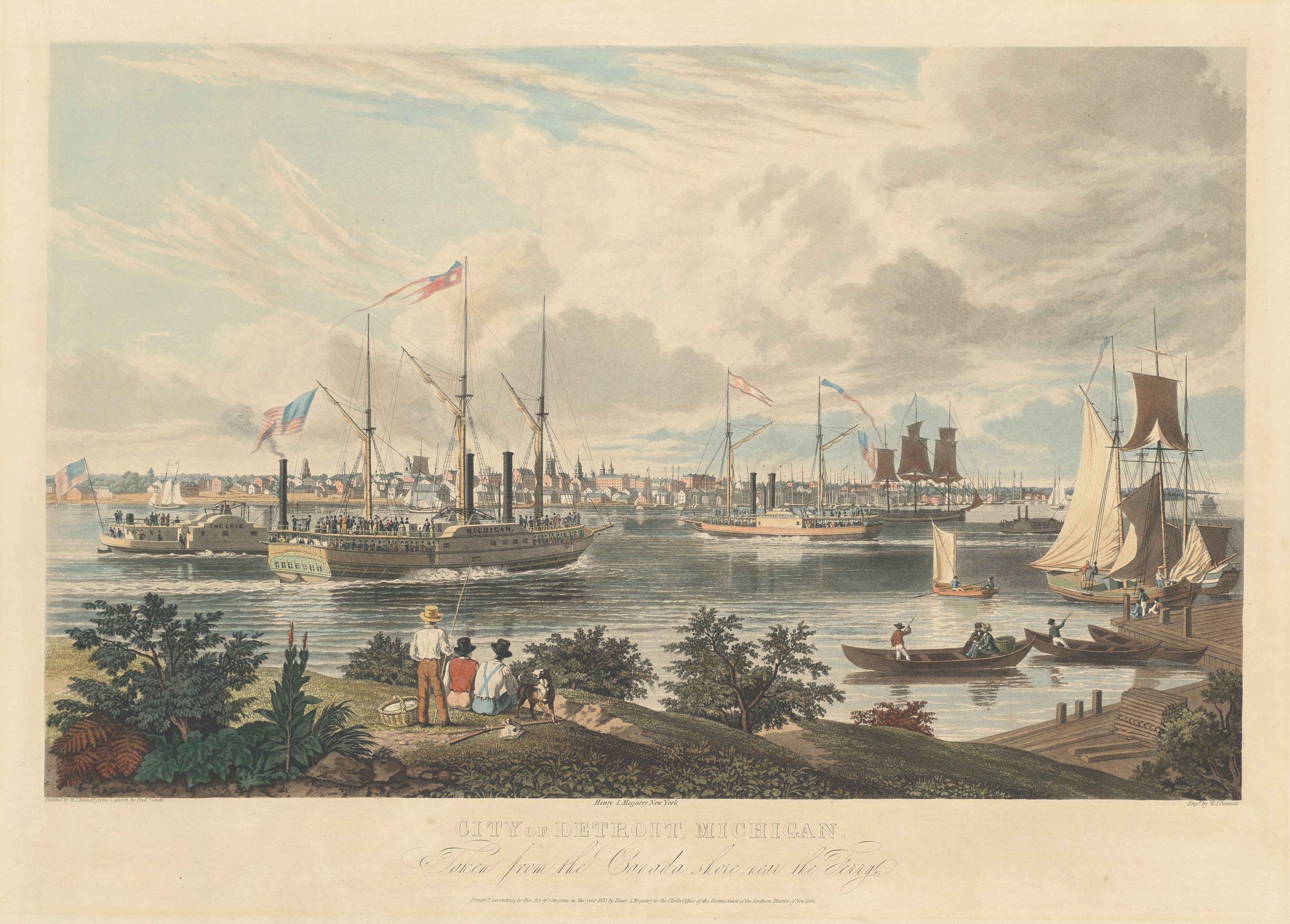
Here’s something really special for Clark House history lovers, a detailed drawing of the various kinds of sailing ships and steamboats as they passed by Detroit, Michigan on a sunny day in 1837, as seen from the Canadian side of the Detroit River. Take a close look; this is the view Peter Turck and his family—including daughter Mary, the future spouse of Jonathan M. Clark—would have seen as they traveled to Milwaukee in August of the same year1:
Bennett, William J., after a sketch by Frederick K. Grain, City of Detroit, Michigan. Taken from the Canada shore near the Ferry., hand-colored aquatint on engraving, ca. 1837. National Gallery of Art, Collection of Mr. and Mrs. Paul Mellon. Public Domain. Click to open larger image in new window.
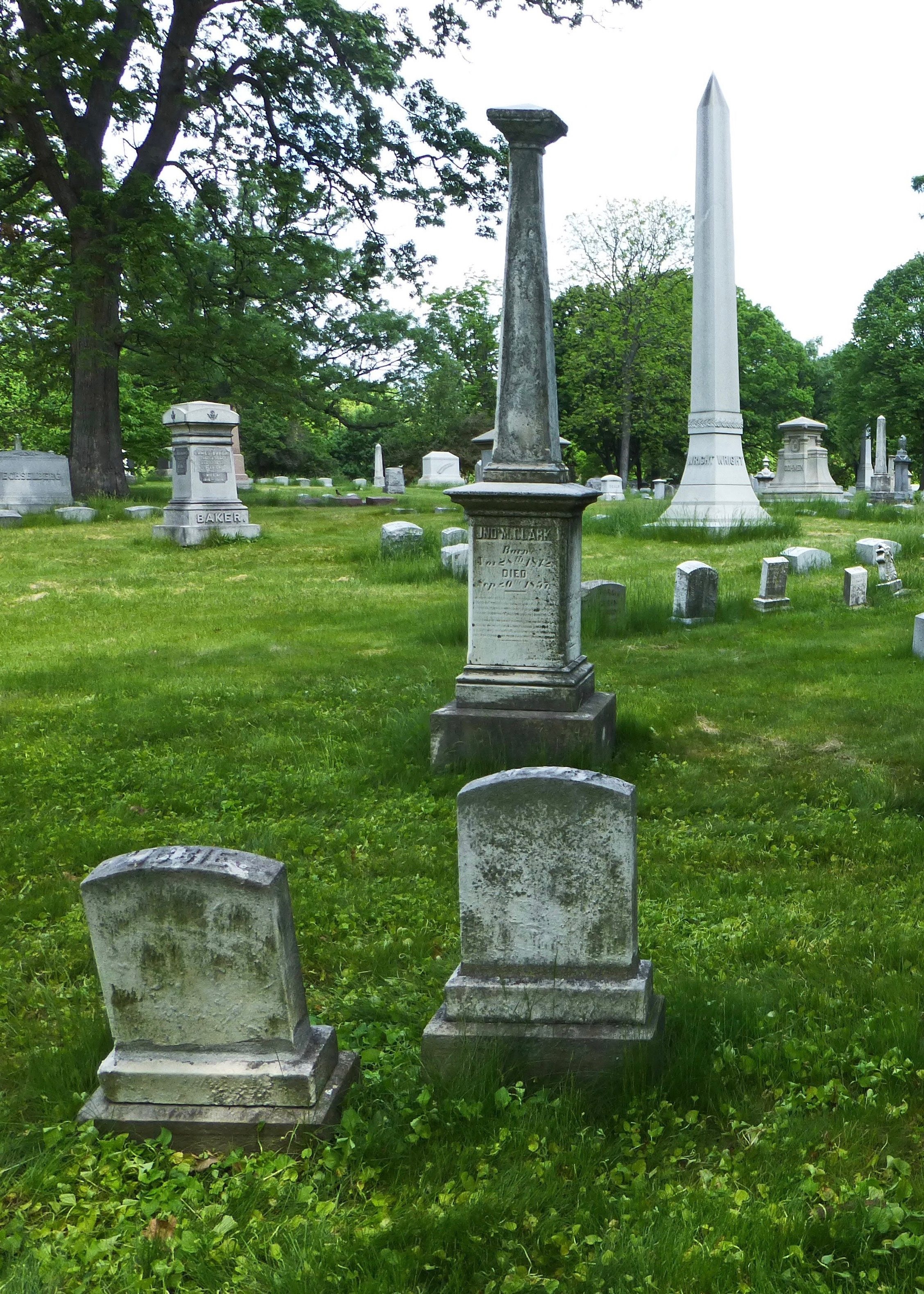
As we learned in our previous post, Henry Clark—only son of Jonathan M. and Mary (Turck) Clark—was buried “in Cedarburg” on Monday, April 23, 1866. But if you seek Henry’s final resting place, you’ll find him next to his father, mother, and sister Josie in the Clark family lot at historic Forest Home Cemetery in Milwaukee. How this came to be, and what this tells us about Clark family history, is the subject of today’s post.
Clark family graves, lot 3, block 44, section 10, Forest Home Cemetery, Milwaukee, Wisconsin. Photo courtesy Liz Hickman, 2016. Click to open new image in larger window.
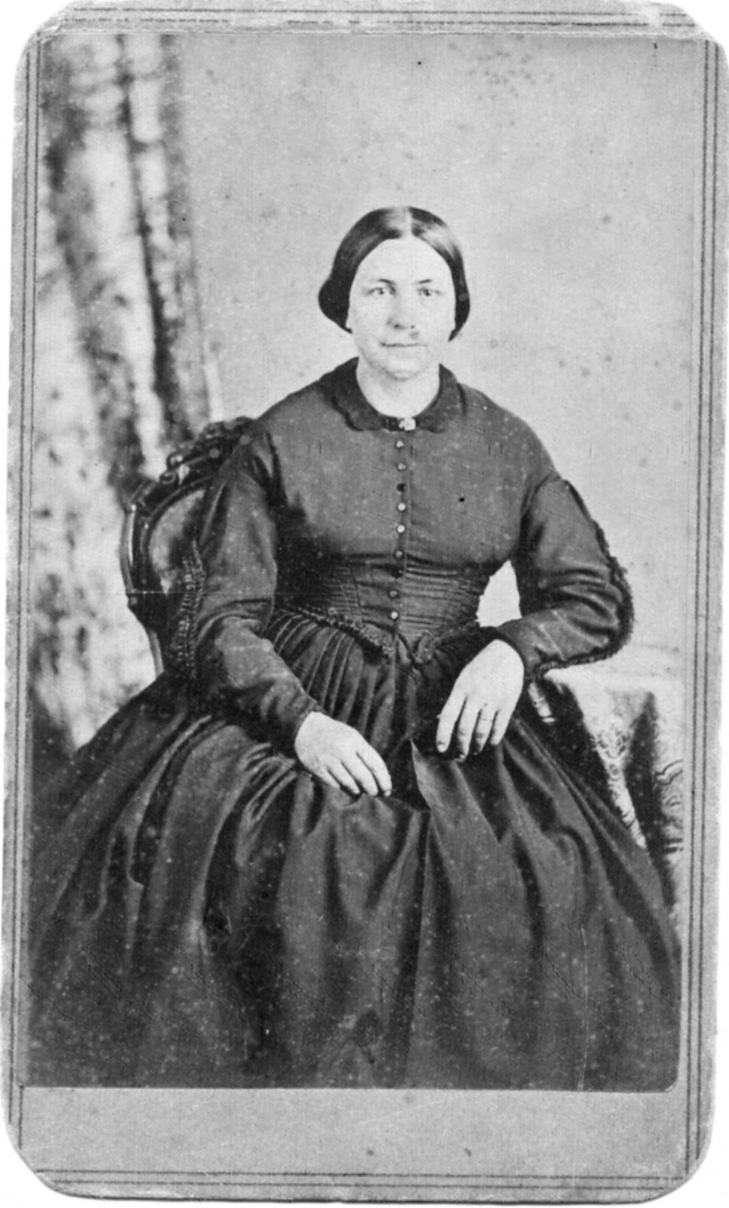
Today, May 3, 2021, marks the 200th birthday anniversary of Mary Turck, the eldest child of Peter Turck and Rachael (Gay) Turck, and future spouse of Jonathan M. Clark. Mary and Jonathan were married in old Washington county on March 15, 1840, and began to farm their Mequon land the same year. They went on to build their handsome stone house—now the Jonathan Clark House Museum—in 1848.
Today’s map is another unique and wonderful map from the University of Wisconsin–Milwaukee, American Geographical Society Digital Map Collection. It is map of Washington and Ozaukee Counties from 1874, and it is packed with information and unique details.
Map of Washington and Ozaukee Counties, Wisconsin 1873-4 / drawn, compiled and published by G.V. Nash & M.G. Tucker ; engraved & printed by J. Knauber & Co. ; colored and mounted by E.M. Harney. University of Wisconsin-Milwaukee, American Geographical Society Digital Map Collection. Full copyright notice here, presented in this post as a public domain item and/or under fair use provisions of U.S. copyright law. Click map to go to the UWM collection and open larger image in new window.
It’s early April, and the growing season is not far off. For a farmer like Jonathan M. Clark, it’s a little early yet for plowing and sowing, but not too early to make plans and sharpen the tools. For a farmer’s wife, like Mary (Turck) Clark, it’s not too soon to think about the farm garden, its crops and layout.
I don’t know if Mary and Jonathan were regular readers of the popular and affordable farmers’ almanacs of their era; I wouldn’t be surprised if they were. There were many to chose from. Perhaps they had a copy of something like:
The Cultivator […], New Series, Vol. VII, Albany, 1850, title page. Click to open larger image in new window.
Today is St. Patrick’s Day, originally the religious observance of the feast day of the principal patron saint of Eire.1 In honor of the day, let’s take a look at a few aspects of Irish life in early southeast Wisconsin and the involvement of Mary (Turck) Clark’s father Peter Turck in a civic effort to relieve Irish suffering during the Great Famine.
Irish immigrants in early Wisconsin
The first white visitors to Wisconsin were seventeenth-century French-Canadian explorers, priests and fur trappers, at home along Wisconsin’s lakes and rivers. They were followed by a smattering of British and French settlers in the mid- and later-eighteenth century. Cornish lead miners arrived in the southwest corner of the territory around the turn of the nineteenth-century. And in the mid-1830s, when the federal government officially “opened” the southeast corner of Wisconsin for settlement, there was a large influx of New Englanders and New Yorkers.
There were also a substantial number immigrants from across the sea among the Wisconsin pioneers of the 1830s and ’40s, including settlers from Upper and Lower Canada, Nova Scotia, Great Britain, the Netherlands, the German-speaking lands, and Ireland. By the time of the 1850 federal decennial census, Irish men, women, and children comprised the second-largest group of foreign-born immigrants in the state, surpassed in number only by immigrants from the German-speaking lands.
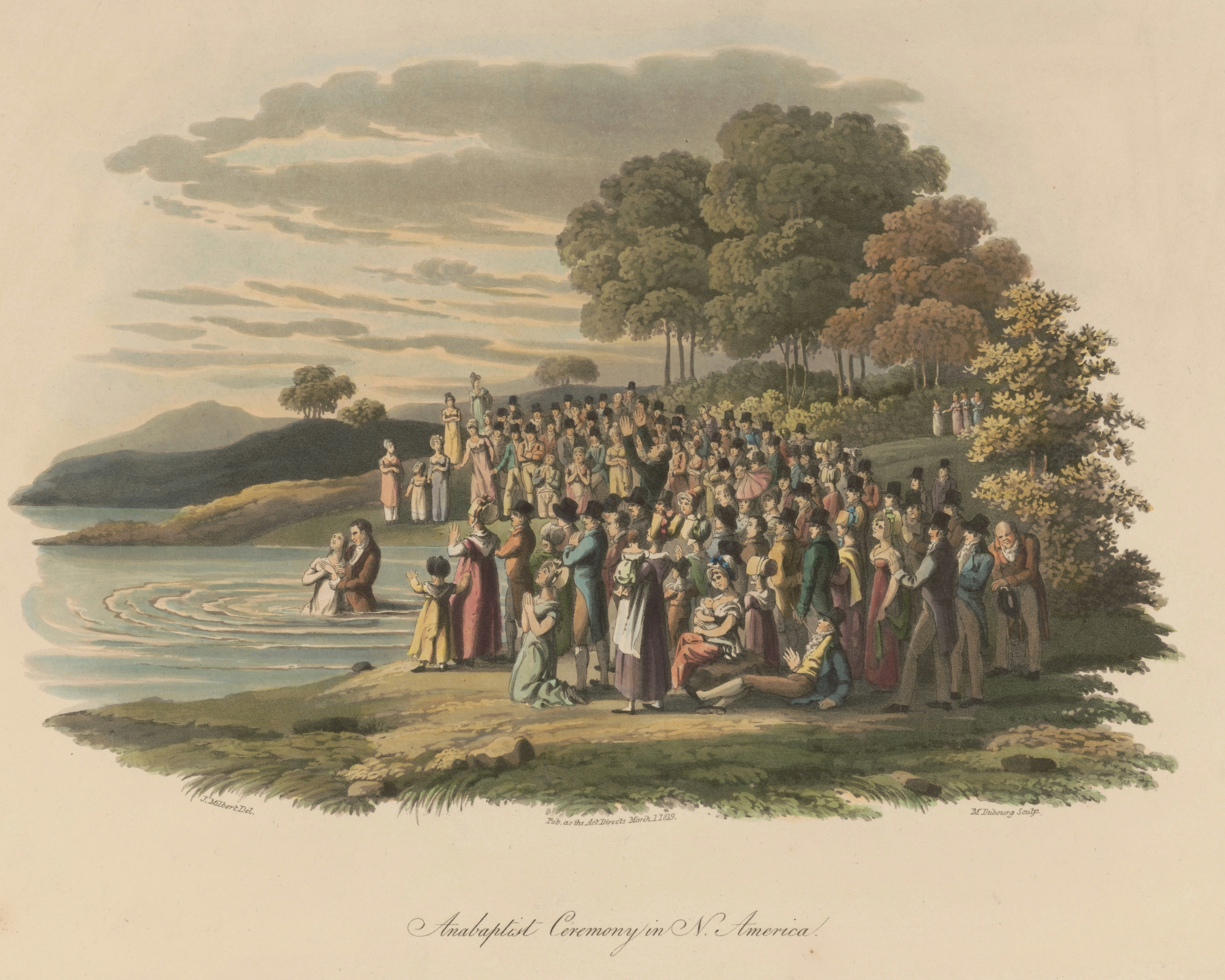
Religion played a large role in the lives of many—but by no means all—19th-century Americans. This was certainly true for Mary (Turck) Clark’s father, Peter Turck (1798-1872). In a number of ways, Peter Turck’s changing relationship to religion is a unique, personal story, but is also a story that encompasses many strands of the religious experience of this formative period in American history.
The Dutch-American heritage
Previously, we looked at Peter’s 1798 DRC baptismal record. Most, if not all, of his siblings were baptized in the Dutch Reformed Church (DRC) in various Columbia County, New York, churches. And as far as I have been able to discover, almost all of Peter Turck’s ancestors were baptized in and members of the DRC in early New Holland and New York, all the way back to the original Turck immigrant, Paulus Jacobsz. Turk (~1635-1703), who came to New Amsterdam (later New York City) before 1660. So how did someone with such long and deep family ties to the Reformed Church—such as Peter Turck—become “an ardent preacher of the Baptist faith”?1
The Second Great Awakening
The Dutch Reformed Church was not the only Christian denomination in the Hudson River valley during Peter Turck’s early years. While a large percentage of the area’s residents were of Dutch and DRC heritage, the valley had many Anglo- and German-Americans as well. All were served by various Protestant denominations including the Baptist, Lutheran and Protestant Episcopal churches, and the Society of Friends. More significantly, Peter Turck’s youth also coincided with the Second Great Awakening of religious fervor in America.
The Peter and Rachael (Gay) Turck family in Wayne Co. deeds (part 2)
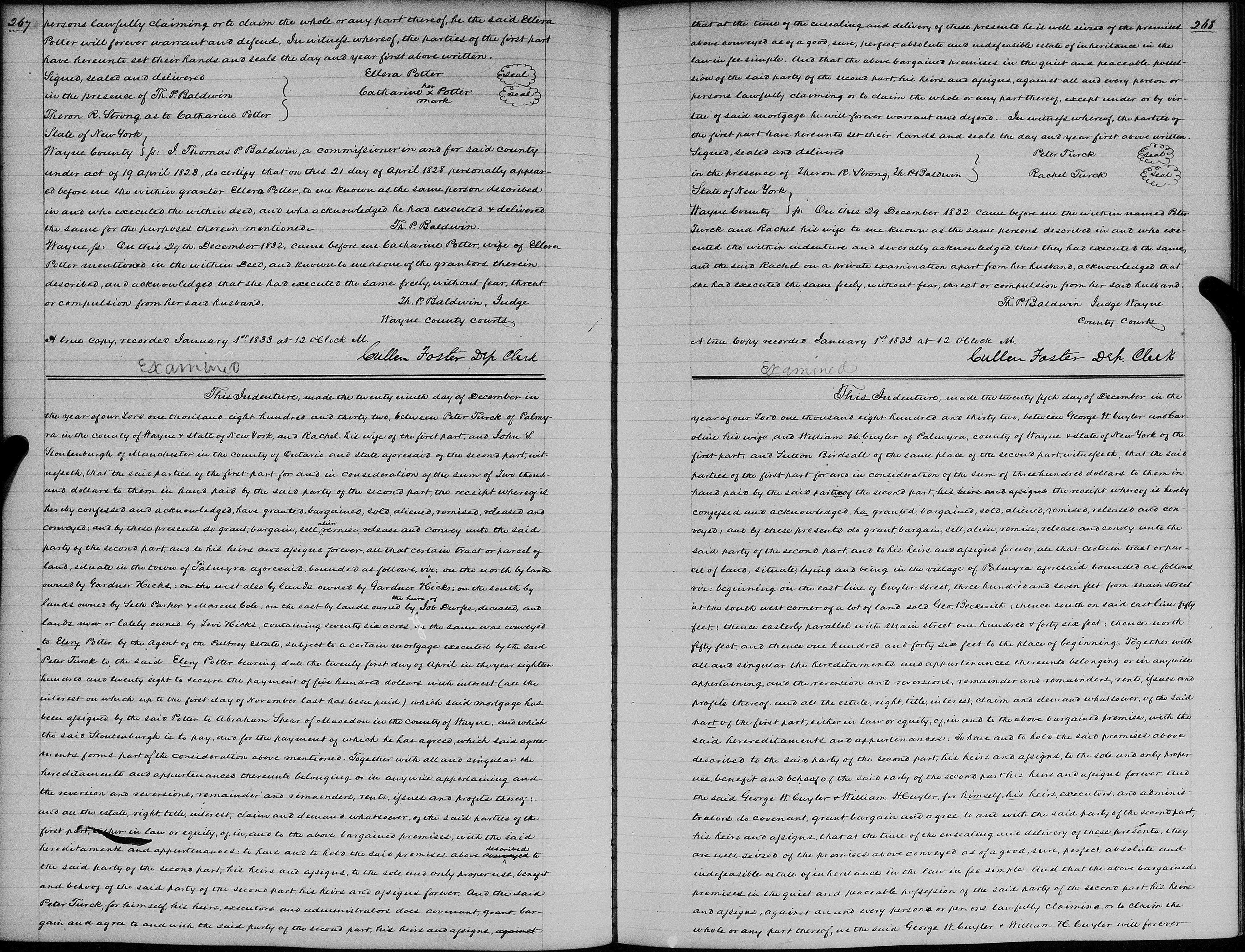
Today’s post continues our series where we use deed records to follow the lives of the Peter and Rachael (Gay) Turck family—including young Mary Turck—from the 1820s through their emigration to Mequon in 1837. This post will make more sense if you read our previous Monday: Map Day! and The Turcks – Catskill to Palmyra, 1828.
Earlier, we discovered that on April 21, 1828, Peter Turck of Catskill, Greene county, New York, bought 76 acres of land in Palmyra Township, Wayne County, New York. He paid $1,475.00 “cash in hand” to the sellers, Ellera and Catherine Potter. The record of this transaction was found on pages 266-267 of the Wayne County, New York, Deed Books, Vol. 12.
Four and a-half years later…
Today’s 1832 deed, in which Peter Turck sells the same land that he purchased in 1828, is recorded in the same deed book, immediately following the (apparently delayed) recording of his 1828 transaction. This new 1832 land sale covers parts of pages 267-268 of Vol. 12 of the Wayne County, New York, Deed Books:




 Clark House Historian