New Orleans

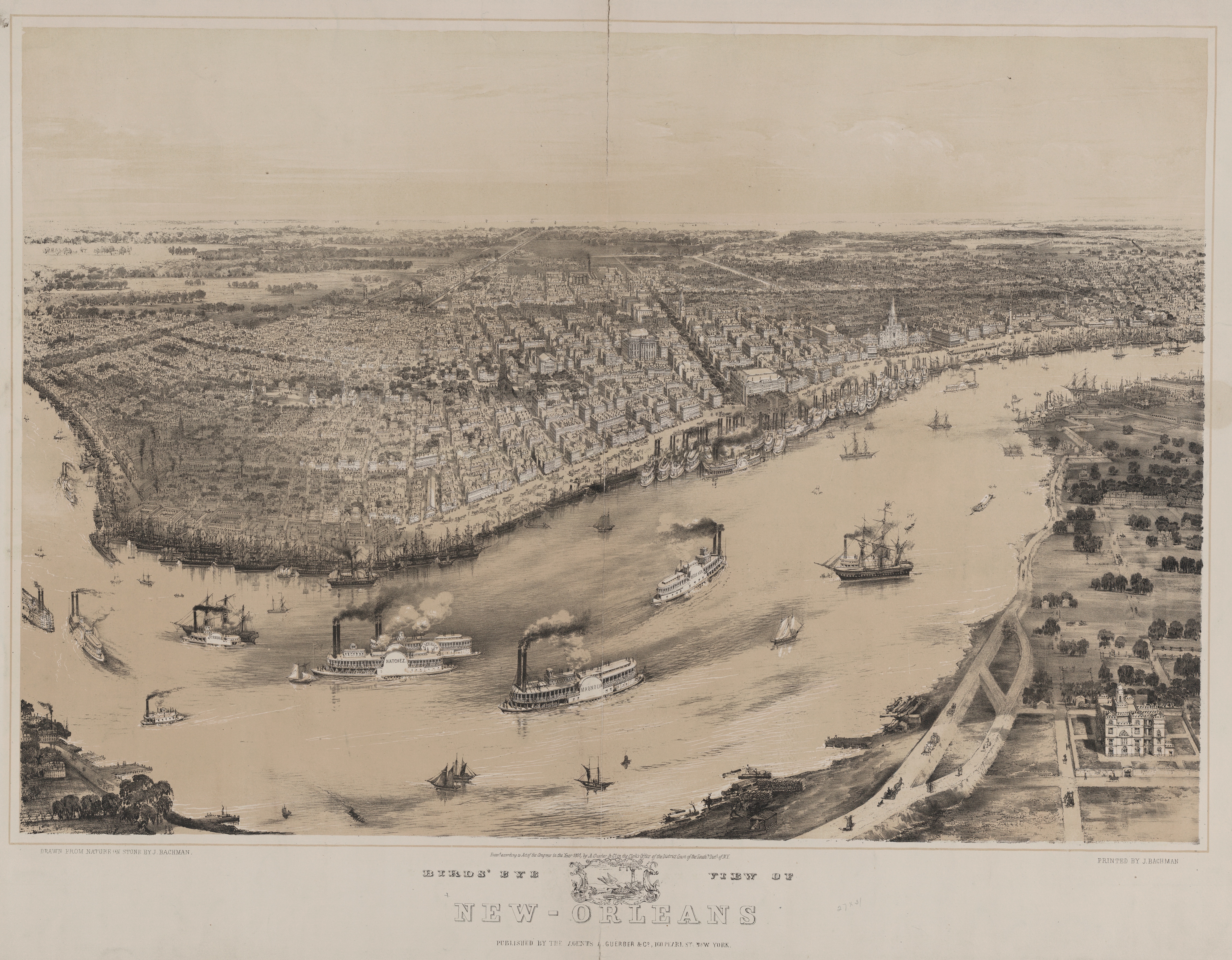
Once again, several states along and north of the Gulf of Mexico face the force of a major hurricane. As I type this, New Orleans, one of the most historic cities in the United States, is without power, and hundreds of thousands of citizens—and large parts of the the area’s industries and environment—remain threatened as Hurricane Ida makes its way inland. I’ll let other, more knowledgable sources report the news. For now, I encourage you to remember and support our compatriots as they endure and recover from this major natural disaster.

Bachmann, John, Birds’ eye view of New-Orleans / drawn from nature on stone by J. Bachman, [i.e., Bachmann], ca. 1851. New York: Published by the agents A. Guerber & Co., Printed by J. Bachman. Library of Congress. Click to open larger image in new window.

Continue reading

Happy Birthday, Dad!

I don’t usually post on Saturdays, but today is a special day. It’s the 100th anniversary of my Dad’s birth, and I thought it deserved at least a short CHH mention.

John H. Perkins, 1921 – 2004

My dad lived a long and eventful life, too much to cover in a single blog post. But since our recent Clark House Historian posts have been focused on historic boats and other Clark-era modes of transportation, I thought I’d share a few choice photos of Dad on the go—on water and on land—with a few biographical remarks to set the scene.

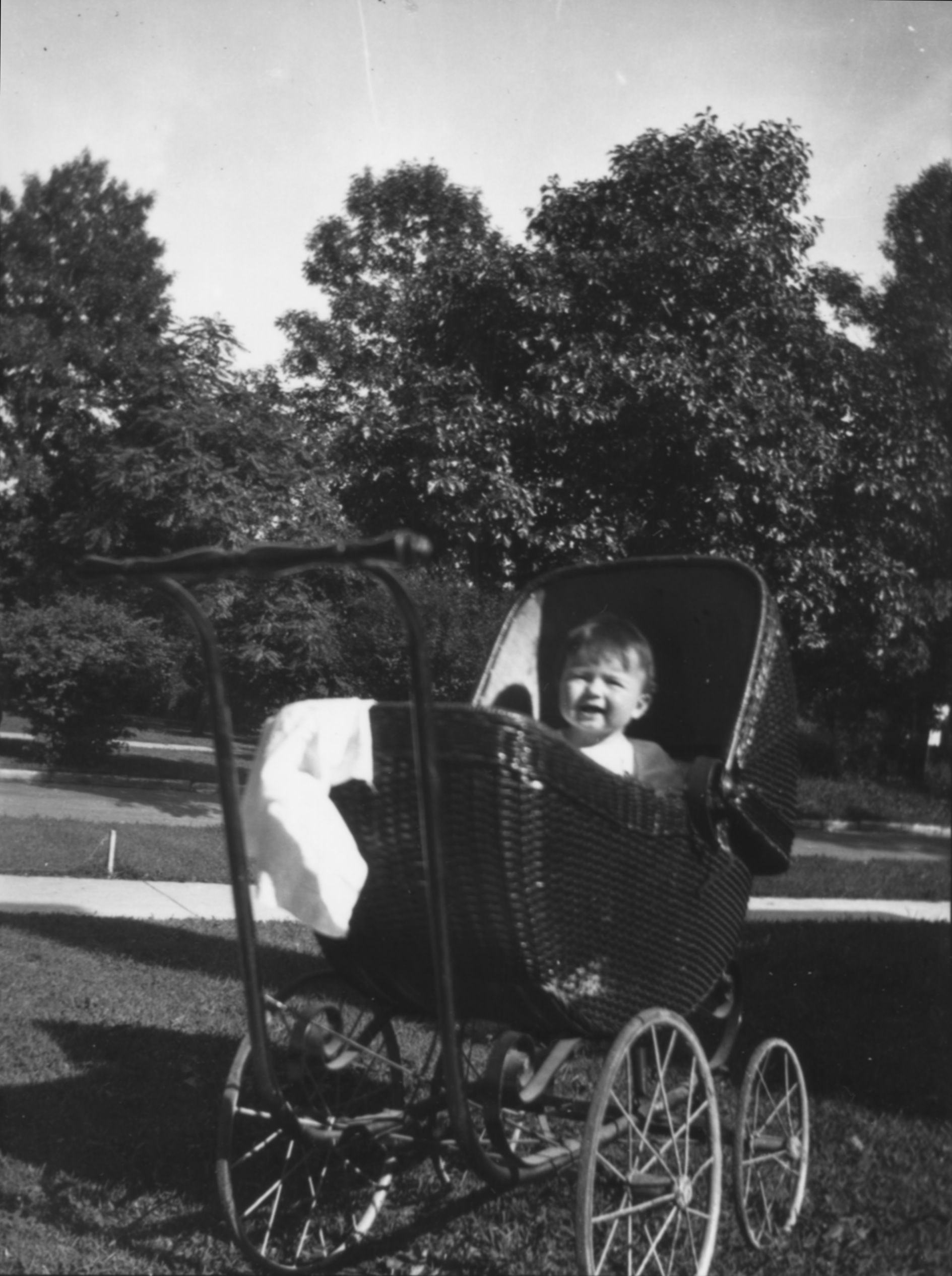
Here’s an early example:

John H. Perkins in baby carriage, probably Evanston, Illinois, circa Spring or Summer, 1922. Perkins family collection. Click to open larger image in new window.

Continue reading

RBOH: The Turck family’s Palmyra, 1825

Another short post in our occasional series of Random Bits of History.

Earlier this summer, while putting together the post How’d they get here? – early Erie Canal images, I came across a tidily-drawn print that helps illustrate the story of the Peter and Rachael (Gay) Turck family’s life before coming to Mequon. It’s downtown Palmyra, Wayne county, New York, in 1825:

Unknown artist, Eastern view in Main-street, Palmyra., in Cadwallader Colden, et. al., Memoir…at the Completion of the New York Canals, New York, 1825. Image from “extra-illustrated” edition in New York Public Library Digital Collections, scanned copy of standard edition of book available via GoogleBooks. Click to open larger image in new window.

Continue reading

But Wait! There’s More!

One of the really neat aspects of researching and writing about Clark House history on this site is the feedback I receive from blog readers. I love hearing from you, whether you have a comment or a question about the topic at hand, or perhaps there is something else that you want to know more about.

[Occupational Portrait of a Salesman], Three-Quarter Length, Seated, Displaying His Wares. Daguerreotype, between 1850 and 1860, cropped and lightly color-adjusted. Library of Congress. Click to open larger image in new window.

“UPDATED…”

History is never “done.” No one can know it all. There are always new sources with fresh information, and new ways to look at well-known material. A question or a new bit of information from a reader will often prompt additional research or a correction to previous statements. The result is that this blog—and our knowledge of the Clark family, their neighbors, and their era—is constantly evolving.

Continue reading

RBOH: How do you spell “Bonniwell”?

Another short post in our occasional series of Random Bits of History.

On my way to doing more research on Henry M. Clark’s possible service with the Union army, circa 1863-65, I stopped to re-check some essential resources. One of these is the National Park Service’s Civil War Soldiers and Sailors Database. This is a very useful and handy resource when searching for information on individual soldiers and the histories of the units in which they served.

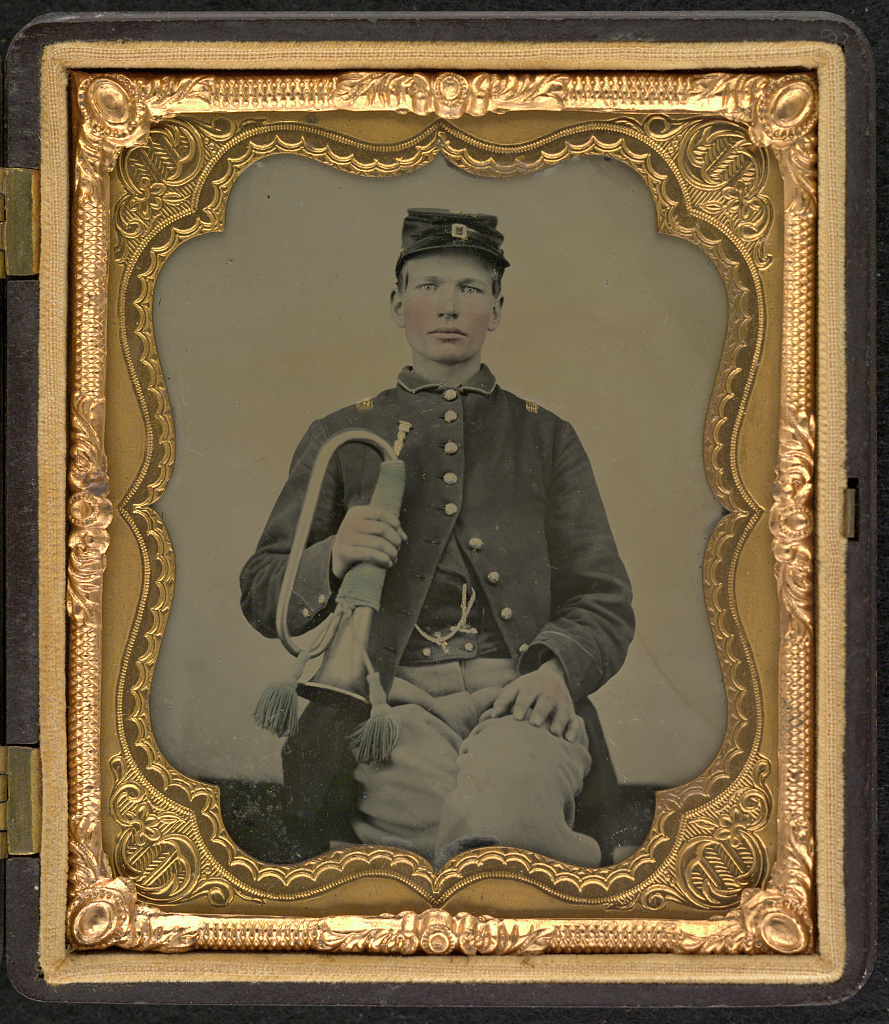
I thought I’d recheck the service info of some other Mequon-born or -related soldiers, including young Evander B. Bonniwell. As mentioned in earlier posts, Evander Bonniwell (1847-1930), was the son of Clark House neighbors James and Phebe (Capes) Bonniwell. Evander served as a bugler, rank of private, Company I, 2nd Regiment, Wisconsin Cavalry. He enlisted at age 14, and served for four years as company bugler.

[Unidentified soldier in Union uniform with bugle], photographer unknown, United States, c. 1861-1865, Library of Congress. Note: this is not a photograph of Evander B. Bonniwell, but of another young, unknown, Union Army bugler from Evander Bonniwell’s era.

Continue reading

Taking a short break…

It’s been a busy summer here at Clark House Historian, with lots of research, writing, editing, and posting, and most of the essays illustrated with unique historical maps, documents, and images. And more Clark House history posts are queued up in draft form, awaiting final touches.

I don’t know about you, but I’m ready for a short break, starting with a cool drink while watching the birds in the backyard. Here’s one frequent visitor to our house:

Havell, Robert, engraver, after John James Audubon, Yellow Bird or American Goldfinch, 1828, plate 33 from The Birds of America (1828-1838), hand-colored engraving and aquatint on Whatman wove paper. National Gallery of Art, Gift of Mrs. Walter B. James. Public domain. Click to open larger image in new window.

Continue reading