Haydn’s “The Creation”

Today’s post was originally intended to complete our coverage of the Milwaukie Beethoven Society’s first performance, on March 23, 1843. But I got caught up unscrambling a mixup I made on my post about the first part of that concert, and got behind in new research and writing, so that post is not yet ready. I expect to finish my look at the Beethoven Society concert this coming Wednesday. Sorry for the delay.

Until then, how about listening to some wonderful, joyous music, to drive away the gloom and darkness of Winter, 2020?

Continue reading

Santa Claus Visits Milwaukee, 1867

Christmas Eve is tomorrow night, so I thought you might enjoy another look at our previous Santa Claus posts, from December 25 and 30, 2017. I have combined the two original posts and incorporated a few revisions and updates to the text. Ho! Ho! Ho!

Christmas in early America

For many years now, Christmas has been celebrated by many Americans as an important religious and community holiday. Christians gather to worship and commemorate the birth of Jesus, and they and other Americans enjoy a break from work and gather with family to feast and exchange gifts. But it was not always this way.

But in many of the American colonies, Christmas was not observed as a religious or secular holiday. The seventeenth-century Puritan leaders of the Massachusetts Bay Colony considered Christmas to be non-biblical and pagan influenced. In Boston and other parts of New England any observance of Christmas was prohibited and, for a few years, actually illegal. The holiday was not generally accepted in many parts of the United States until after the federal government made December 25 a national holiday in 1870.

Continue reading

Monday Musicale!

The Beethoven Society, part 2

UPDATED, December 27, 2020: I managed to mix together my notes on the two works by Haydn—adapted by William Gardiner as “his” pasticcio oratorio “Judah”—that appeared on this first concert of the Milwaukie Beethoven Society. I have updated this post to correct the information and links about piece no. 2, from “Part First” of the performance, “Now elevate the sign of Judah.” The information about the chorus “Lo he cometh”—the 8th item on “Part Second”—has been moved to its correct place in our upcoming post about the second part of the concert, scheduled for Monday, December 28, 2020. Sorry for the confusion. —R.P.

In Friday’s post we introduced what is commonly believed to be Milwaukee’s first concert society, the Milwaukie Beethoven Society. If you missed it, please take a moment to read that post for background on the group and its place in early Milwaukee’s cultural life. They gave their first performance on Thursday, March 23rd, 1843, at the Milwaukee Court House. The advertised program was:

Milwaukee Weekly Sentinel March 15 1843, page 2. Click to open larger image in new window.

The program for the evening was typical for the era, featuring solo songs (“song,” “air,” “ballad”), vocal duets, trios and quartets, and choruses for the full ensemble. (It’s also possible that the duets, trios and quartets may have been sung one-on-a-part, or with the full chorus divided into two, three or four parts to cover the “solo” lines.) On this initial performance, the Beethoven Society did not play any strictly orchestral works.  This suggests that the the newly-formed ensemble may have understood itself to be more of an “oratorio society”—focused on vocal and choral repertoire with instrumental accompaniment—rather than a “symphony orchestra” with an affiliated chorus.

Oratorio Societies

Even as early as 1843, it’s not surprising that the citizens of Milwaukee could form a performing ensemble of some 35 singers and instrumentalists. Oratorio societies were very popular throughout 19th- and early-20th century America for aesthetic and practical reasons. From a practical point of view—and my own more recent experience—it was probably much easier to assemble a reasonably capable group of men and women to form a decent mixed-voice, SATB, chorus. As we discussed last week, many 19th-century Americans were taught the rudiments of music and singing in school, in church, and at home. In the 19th-century, singing in harmony was a common part of worship, education, and home life.  And you don’t need to invest in expensive instruments and years of regular lessons to become a contributing member of a good amateur chorus. Then as now, the talent pool for a good community chorus is usually deeper than for a full amateur orchestra.

Artistically, choral repertoire fulfilled a need for individual and community music-making and aesthetic and spiritual uplift. In today’s post you’ll see that many of the works on the concert—whether originally sacred or secular—were adapted from their original texts and purposes and fitted out with new, English language, Bible-based or liturgical texts. And if not sacred, the texts of the other pieces—with one or two exceptions—tended to be either somewhat sentimental or deeply maudlin. (It was the Victorian era, after all.)

The orchestra

Continue reading

“…hear them discourse most excellent music”

The Beethoven Society, part 1

In our previous post, I teased a first look at the Town of Milwaukee’s first concert organization, the Milwaukie (sic) Beethoven Society. The first mention of the society that I can locate is this announcement in the February 8, 1843, edition of the local newspaper:

Milwaukee Weekly Sentinel February 8, 1843, page 2. Click to open larger image in new window.

This was an ambitious undertaking in a collection of villages that would not unite and become the city of Milwaukee until another three years had passed. In fact, when the Wisconsin territorial census was enumerated in 1842, the combined population of the “Town of Milwaukee”—comprising the West Ward, East Ward, Walker’s Point and adjacent lands—came to a mere 2,730 men, women and children. How was such a musical society—and concert—possible only one year later?

Continue reading

Beethoven’s Birthday!

Today is the 250th anniversary of the birth of composer Ludwig van Beethoven (1770-1827). I’m going to celebrate…and continue work on an upcoming post about Milwaukee’s first musical organization, the Milwaukee Beethoven Society!

Milwaukee Weekly Sentinel February 8, 1843, page 2. Click to open larger image in new window.

Life for early Milwaukee-area settlers was frequently difficult, but often less primitive than we imagine. Among other attributes, Milwaukee has long been a musical place. As early as 1843, the short-lived Milwaukee Beethoven Society brought the first organized concert performances to the neighboring towns that—three years later—would join to become the City of Milwaukee.

1843 was also the year that so many early Mequon immigrants, including Jonathan M. Clark, journeyed to the Milwaukee land office and court house to register and pay for the land they had settled, and obtain their federal land patents. These early Mequon residents knew Milwaukee; it was their center for law, business, shopping, news, and meeting out-of-town visitors. Did Jonathan and Mary Clark make a trip to Milwaukee to hear the Beethoven Society perform? It’s fun to speculate, but we really don’t know.

I’m collecting information on the Beethoven Society’s organizers and their first (and only?) two concerts. In my next post, I aim to gather that information together along with links to online performances of most of the pieces from the first concert so that you can enjoy something like the experience of that debut performance from the comfort of your computer, tablet or phone.

Meanwhile, today is a big day for music lovers. Grab a celebratory beverage (and piece of cake, if you have one1) and enjoy this stirring performance of …

Continue reading

Monday: Map Day! – First official map of Wisconsin, 1837

Squirrel!

Some of my favorite characters in film are the dogs in Pixar’s animated feature Up. It’s clear that Pixar’s artists and writers have a deep understanding of our canine friends, especially their tendency to be distracted by, for example, a…squirrel! 1

Likewise, some of the pleasures (or hazards?) of history research are the many squirrel!-like moments where you manage to be completely distracted by cool stuff that is not at all related to the topic you are actually trying to research. Like the dogs of Up, I am easily distracted, although my attention is drawn more to old maps, books, newspaper clippings, sepia photographs and colorful lithographs.

This week, I was looking for more information about possible Clark connections in Lower Canada in the early 1800s, to add to our earlier posts, including this one, this one and this one. But what did I find? Glad you asked…

Continue reading

Happy 208th Birthday, Jonathan!

November 28, 2020, is the 208th anniversary of the birth of Jonathan M. Clark. To celebrate, I’m reposting a revised, expanded and annotated version of one of my first Clark House Historian posts. Since this was first published, on April 20, 2016, we have learned much more about the lives of Jonathan Clark, Mary Turck Clark, their family and their neighbors. Please check out the footnotes and click on the links for some of this newer, more accurate, information.

Happy Birthday, Jonathan! (and thanks to Nina Look for the timely reminder).

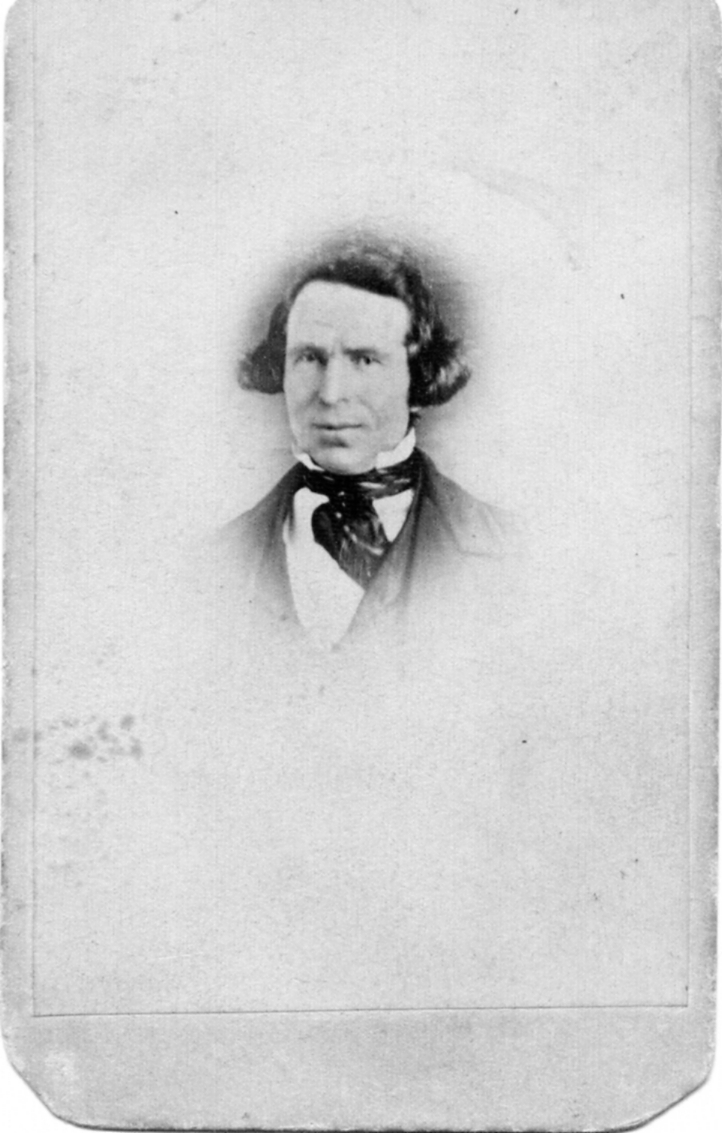
JMC: Man of Mystery

CLARK, Jonathan M portrait

Jonathan M. Clark. Photograph courtesy Liz Hickman.

There he is. Jonathan M. Clark, builder and first owner of the handsome stone home that is now the  Jonathan Clark House Museum in Mequon, Wisconsin. He was probably born in Vermont—or Lower Canada—probably on November 28, 1812, and he died on September 20, 1857. Before coming to Mequon, he served in the United States Army at Fort Howard from 1833 to 1836. He married Mary Turck, eldest child of Mequon pioneer Peter Turck, on March 15, 1840. They had a large family. We even have a photograph of JMC as an adult (above). In some ways, we know quite a bit about Jonathan M. Clark.

Continue reading

Now, where were we? – the search for JMC’s roots

As I mentioned in our previous post, Monday: Map Day!, we still have some essential mysteries to solve in the JMC timeline, the most important of which are: who were JMC’s parents and where was he born and raised? As it’s been a while since we last looked at this, I thought it might be useful to repost our original O!…Canada? History Mystery! No. 3, in which I collected and organized images, transcriptions, and links to the various documents that indicate Jonathan M. Clark’s (two!) “official” birth locations: either Derby, Orleans Co., Vermont or Stanstead Co., Lower Canada [now Province of Quebec].

Smith, Jones… Clark

One of the nicer assignments a genealogist or historian can receive is to trace the history and family of someone with a unique or distinctive surname. It is so much easier to trace families with surnames like Turck, Strickland, Rix or Clow, even if there are common variant or erroneous spellings like Turk, Stickland, Ricks and Clough/Claw/Klauw. But our man Jonathan, he who built the fine stone home in Mequon in 1848, carries one of the most ubiquitous surnames in New England and English-speaking Canada: Clark.

Over the past seven years or so, researchers including Nina Look, Liz Hickman, I—and others—have been trying to find the Jonathan M. Clark “needle” in the massive New England and Lower Canada “haystack” of Clark families. I think it’s time to finally collate our results, organize and set aside the “wrong” Clark families from the search, and see if we can discover Jonathan M. Clark’s roots.

This “sorting of the Clarks” may take quite a few posts.1 We will look at many sources, many family trees, and assorted maps and books to try and find Jonathan’s family. Along the way we’ll have diversions to other topics from time to time, I’m sure. But now, let’s get things started by taking another look2 at what we currently know about Jonathan M. Clark’s birth and family:

Continue reading

Monday: Map Day! – Railroads!

If you look at the timeline and other recent posts about early Mequon settlers Cyrus Clark and Sarah A. Strickland, you realize that these two did a lot of moving about in mid-1800s Wisconsin.

How did they do all that traveling? Back and forth between Mequon and Cedarburg in Washington/Ozaukee county and Potosi in Grant county, Waldwick and Moscow in Iowa county, the city of Oshkosh—back east, so to speak, in Winnebago county—and then “moving to” Madison, Lake Co., South Dakota—and still traveling back to (and living part-time at?) Oshkosh. By foot? Canoe? Horse? Buggy? Stagecoach?

The answer is…

Continue reading

Clarks and Turcks: 1864-1865

No Milwaukee city directory in 1864

As we discussed previously, it appears that there was no Milwaukee directory published in 1864. Did the publisher go out of business? Did the war years cause manpower shortages that made canvassing for information impossible? Do any of our readers know more about this missing 1864 directory? If so, please reply. I’d like to know more.

Clark Mary Mrs. r. 474 Jefferson

As you can see in the new and improved Edwards’ Annual Director […] in the City of Milwaukee for 1865, Mary still resided at 474 Jefferson street in Milwaukee’s seventh ward.

Continue reading