Monday: Map Day! – Diagram of Stanstead Township, c. 1800-1809

I’m still on the hunt for the elusive parents and kin of Jonathan M. Clark. Based on what we know so far, we are looking in the area of Derby, Orleans County, Vermont and its northern neighbor Stanstead Township, Lower Canada, circa 1800-1830 or so.

There are so many documents to read and sort through in order to get a grasp on the various Clark families that pioneered this area. Our Canadian friends had a land grant system that was quite different from our U.S. system, and this has taken time to get used to. Happily, most of the original paper files have been digitized and made available for free (thanks, Library and Archives Canada!), but the organization of the files remains confusing (why do there seem to be so many duplicate images in many of the files?), and the LAC’s user interface makes browsing slow and cumbersome. That said, we are making progress.

Here’s today’s map:

Continue reading

Happy 208th Birthday, Jonathan!

November 28, 2020, is the 208th anniversary of the birth of Jonathan M. Clark. To celebrate, I’m reposting a revised, expanded and annotated version of one of my first Clark House Historian posts. Since this was first published, on April 20, 2016, we have learned much more about the lives of Jonathan Clark, Mary Turck Clark, their family and their neighbors. Please check out the footnotes and click on the links for some of this newer, more accurate, information.

Happy Birthday, Jonathan! (and thanks to Nina Look for the timely reminder).

JMC: Man of Mystery

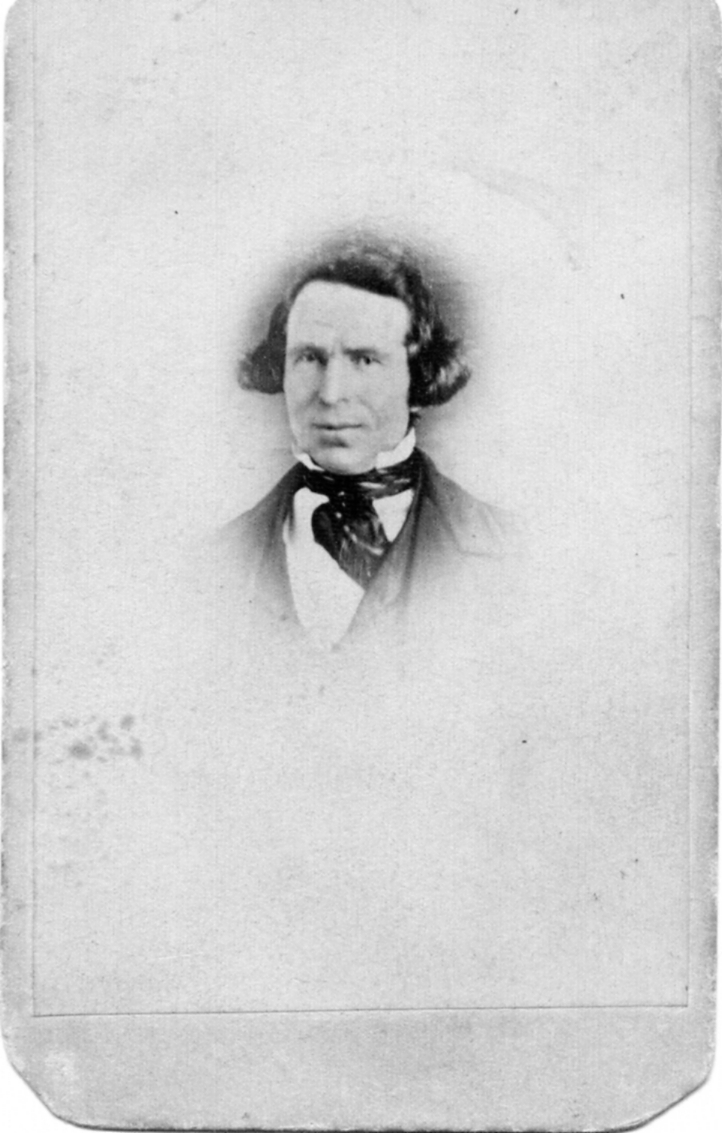
CLARK, Jonathan M portrait

Jonathan M. Clark. Photograph courtesy Liz Hickman.

There he is. Jonathan M. Clark, builder and first owner of the handsome stone home that is now the  Jonathan Clark House Museum in Mequon, Wisconsin. He was probably born in Vermont—or Lower Canada—probably on November 28, 1812, and he died on September 20, 1857. Before coming to Mequon, he served in the United States Army at Fort Howard from 1833 to 1836. He married Mary Turck, eldest child of Mequon pioneer Peter Turck, on March 15, 1840. They had a large family. We even have a photograph of JMC as an adult (above). In some ways, we know quite a bit about Jonathan M. Clark.

Continue reading

Leaders and Associates – the unique land grant system of early Lower Canada

Last time, we continued our search for possible kin of Jonathan M. Clark in Lower Canada by looking at a map found in the Lower Canada land petition archives. Please take a moment to peruse that post and look at the manuscript map of Stanstead Township, Lower Canada from the very early 1800s.

That map was contained in the land petition file of one of Stanstead’s earliest and largest landowners, Isaac Ogden. The Lower Canada Land Petition archives are a tremendous resource for studying the early settlement of the province, but the files are often very large. And, for those of us accustomed to the system of federal land patents used in the United States, the Lower Canada land petition and land grant system is sufficiently different that it may be hard to understand and navigate.

Today’s post will focus on one element of that system in particular, the unique, and often corrupt land petition practice known as the system of township leaders and associates. It has a complicated history, so rather than paraphrasing, let me quote at length from the official provincial report that I discussed in an earlier post, the List of lands granted by the crown in the province of Quebec, from 1763 to 31st December 1890, printed by order of the Quebec Legislature by C.-F. Langlois, Printer to Her Most Excellent Majesty the Queen, Quebec, 1891, beginning on page 7:

Continue reading

Monday: Map Day! – A very early map of Stanstead, LC, landowners

Sorry for the late post. So much information, so little time to organize and interpret…

I’m back on the hunt for Jonathan M. Clark’s possible kin in Stanstead Township, and in the process also trying to master the land grant system, documents, and archives of Lower Canada in the early 1800s. For background to our search, you may want to read (or at least skim through) these posts:

It’s complicated, I don’t yet have a full grasp of the details, but I didn’t want Monday to pass without a new map to help guide us on our way. Today’s example may not seem like much at first glance, but it’s really quite special:

Continue reading

Monday: Map Day! – Peter and Rachael (Gay) Turck’s New York, 1829/32

I’m working with one of our young Clark House Museum volunteers to examine the life of early Mequon settler Peter Turck and his large family. Peter Turck was a man of many talents and trades, which we will look into in more depth in future posts. He was also Mary (Turck) Clark’s father and Jonathan M. Clark’s father-in-law.1

The Turk/Turck family is an old Dutch-American family that first came to the New World in the 1660s, settling on the island of Manhattan, then known as New Amsterdam, part of the Dutch colony of New Netherland. The Turk/Turck family maintained a presence in Manhattan well into the twentieth-century.2 Some Turk/Turck descendants migrated to the Hudson River valley in the 1700s and stayed for many generations.

For our purposes, I thought it would be useful to have a map that gave an overview of the places that Peter Turck and Rachael Gay lived before coming to Wisconsin Territory in 1837:

Continue reading

Monday: Map Day! – Lower Canada ranges and lots

Finding our way on Bouchette’s 1815 Topographical Map

Last Monday—as part of our ongoing search for Jonathan M. Clark’s roots in northern Vermont and Lower Canada—we introduced Joseph Bouchette’s huge and minutely detailed Topographical map of the Province of Lower Canada, published in London in 1815. Today’s post picks up where we left off last week, so if you missed that introduction, I recommend you click here and read it first.

For easy reference, here’s the complete, original map again:

Continue reading

Monday: Map Day! – Lower Canada, 1815

I found Bouchette’s 1815 Topographical Map of Lower Canada

In our previous post, we looked at a verbal description of Stanstead, Lower Canada, excerpted from A Topographical Description of the Province of Lower Canada, with Remarks upon Upper Canada, and on the relative connexion of both provinces with the United States of America, written by Joseph Bouchette, surveyor general of Lower Canada, and published in London in 1815. 

To accompany his 1815 book, Bouchette published a map of the province, and it’s an amazing map, with an extravagant title:

To His Royal Highness George Augustus Frederick … This Topographical map of the Province of Lower Canada, shewing its division into Districts, Counties, Seigniories, & Townships … Is … Most gratefully dedicated by…  Joseph Bouchette, His Majesty’s Surveyor General of the Province & Lieutt. Colonel C.M. … Published by W. Faden, Charing Cross, Augst. 12th. 1815. Engraved by J. Walker & Sons, 47 Bernard Street, Russell Square, London. J. Walker sculp.

Rumsey Collection

For simplicity’s sake, I’ll refer to it as Bouchette’s Topographical map of the Province of Lower Canada, 1815. The original is held in the vast David Rumsey Map Collection at Stanford University. And in the words of their curators,

[t]he large ten sheet map is extraordinary – it is over ten feet long when joined and almost five feet tall. It has five views and three large inset maps of Montreal, Quebec, and Three Rivers. The detail and graphic elegance of the large map is the equal (or perhaps the superior) of any of the contemporary maps that we have seen (and none of which are on such a large scale – the only potential candidate would be Eddy’s Map of the Country Thirty Miles Round the City of New York). Of course the engraving was done by the Walker firm in London, whose resources were up to the New York and Philadelphia engravers, or better, so a comparison with American produced maps is not entirely fair. Bouchette’s work as Surveyor General must have instilled in him an obsession with the accuracy and fineness of detail that one sees in these maps.

Rumsey Collection

So enough fanfare. Let’s look at the map:

Continue reading

A view of Stanstead, Lower Canada, 1827

I’m working on some longer posts, so I thought you might enjoy this image of a hand-colored lithograph from 1827. It’s a view the village of Kilborn’s Mills, Stanstead, Lower Canada, as seen from the south side of the international border, near Derby Line, Vermont. It’s very likely that the 15- or 16-year-old Jonathan M. Clark would have known this scenery, village, bridge, and border crossing:

Continue reading

Monday: Map Day! – Lower Canada, 1802, part 2

Still getting our bearings at the turn of the 19th-century

As we discussed in a few weeks ago, if we’re going to find Jonathan M. Clark’s kin in the early-1800s, we need to know where to look. Lower Canada—one of JMC’s two “official” birth places—has a very long and complicated history. For a decent summary, you can skim this article, and then be sure to look at part 1 of this post. In part 1, I wrote that “we only need to understand a few basic places and dates, all centered around the modern Canadian Province of Quebec, or as it was known from 1791 to 1841, Lower Canada.”

Well, I was wrong. Because “a few basic places and dates” seriously underestimates the complex and changing nature of place names and legal boundaries in Lower Canada during that period. So today I’m going to take another look at the 1802 Lower Canada map and point out some additional places and terms that will be useful in locating Clark-related documents created in the English-speaking part of the province at the turn of the nineteenth century. So, remember this map? …

Continue reading