Tomorrow is Thanksgiving. To celebrate the holiday, I thought I’d reprint a lightly revised version of our now-annual CHH Thanksgiving post, to share with you a few vintage recipes and a nice Currier & Ives lithograph from the period.1
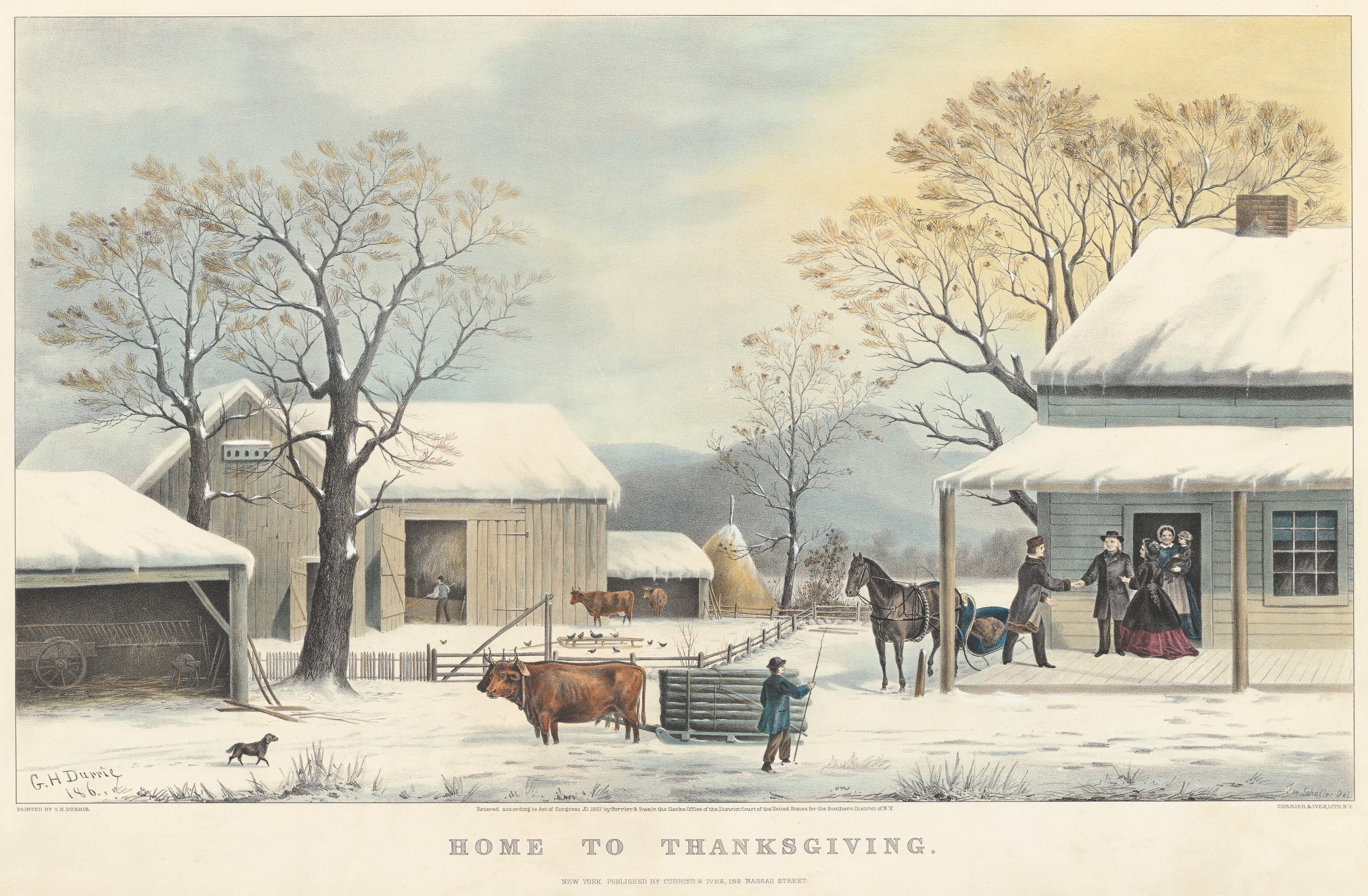
Thanksgiving, 1867
Durrie, George H. and John Schutler, Home to Thanksgiving, ca. 1867, New York, Currier & Ives. National Gallery of Art, Collection of Mr. and Mrs. Paul Mellon. Public Domain. Click to to open larger image in a new window.
By 1867, when this sentimental lithograph was first published, the Clark family had been living in the City of Milwaukee’s seventh ward for about six years. Family patriarch Jonathan M. Clark had died a decade earlier, and his only son, Henry M. Clark, had been gone for about a year and a half. Family matriarch Mary (Turck) Clark was living in a house in Milwaukee with her unmarried daughters, Libbie, Persie, Theresa, Laura, Josie and Jennie.
Revised 17 February 2025 to include some additional material about my Beckmann-related talk at the Cedarburg History Museum in Spring, 2023.
Cedarburg News, October 14, 1885, page 1
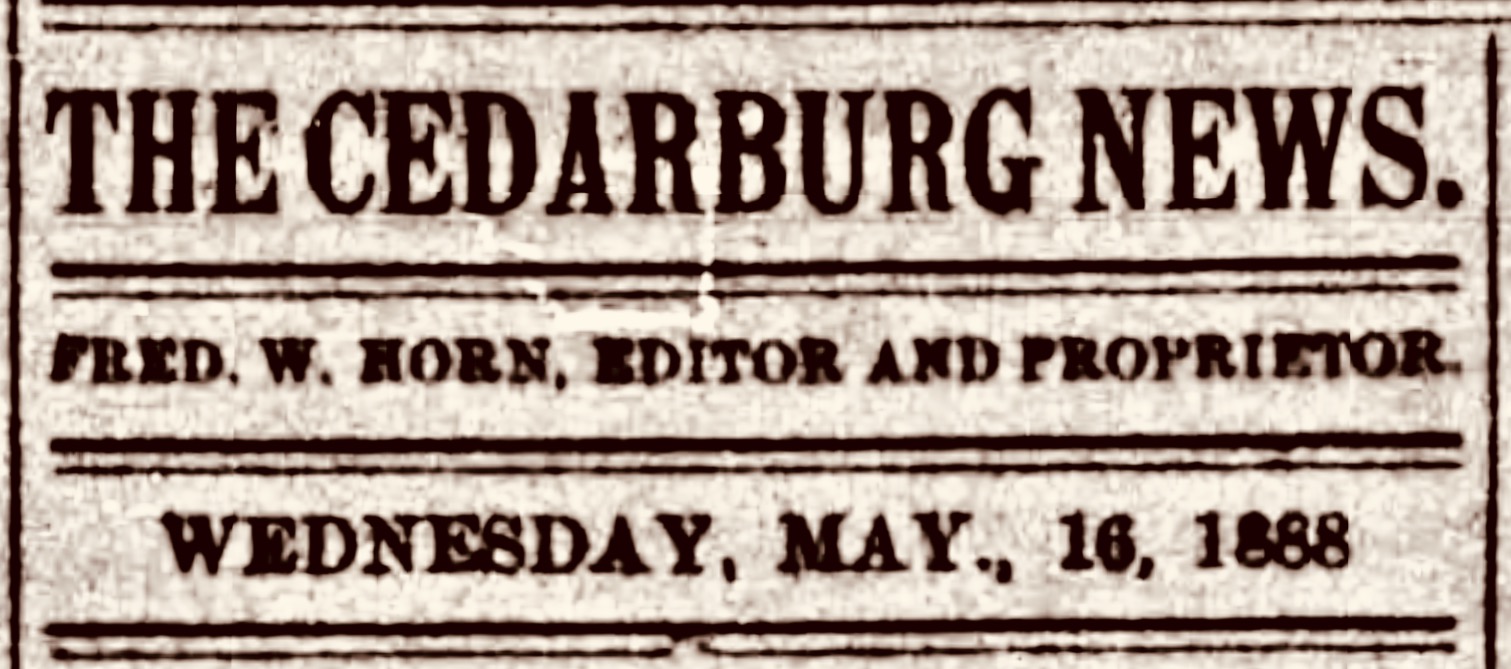
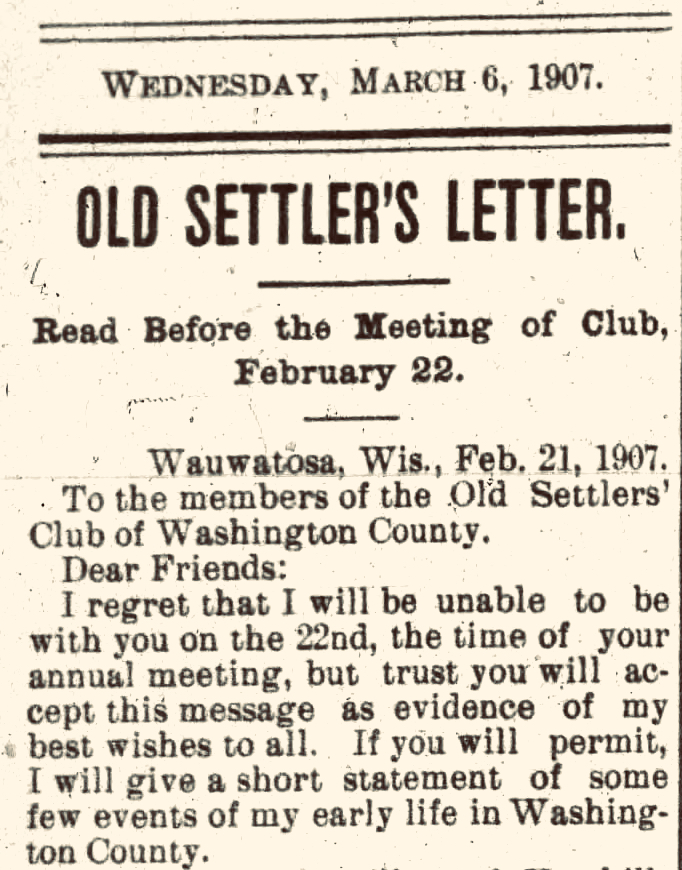
I’ve been spending time with historic local newspapers online, searching for those tasty tidbits of local news that never quite make it into the history books, but are often found in the 19th-century local press. Today I was browsing through 1880s to early-1900s issues of the Cedarburg News, Fred. W. Horn, publisher, and found some interesting random bits o’ history that are connected to the Clark House and to some work I’ve done for the Cedarburg History Museum.
Fred. Beckmann and kin
You may remenber a post I wrote back in July, 2020, about newly-married German immigrant Fred. Beckmann, who farmed and lived on the Jonathan Clark property from 1868 until 1873, at which time he and his growing family moved to Cedarburg, where he then owned and ran the Wisconsin House hotel for the better part of the next four decades. I followed that up with an April, 2023 presentation at the Cedarburg History Museum, where I spoke about the life and the extended circle of family, business associates and friends of Fred. Beckmann. His story connects the hardscrabble early days of our area’s Yankee, Irish and German pioneers (Jonathan and Mary Clark’s generation) with the following generation of established and settled German-American farmers, business owners and civic leaders, such as himself. And Fred also connected and illuminated the story of the Jonathan Clark House with those of nearby Hamilton—and its Concordia Mill—and the development of downtown Cedarburg in the 19th-century.
That 2023 presentation was followed by a March, 2024, illustrated talk I gave at the Cedarburg History Museum as part of their big 2024 Civil War exhibition and lecture series. My subject was “From the ‘Burg to the Battlefield…and Back: Cedarburg’s Beckmann Family and the Civil War.” In my talk, I tried to take a more personal and local look at the war by examining the military service of few of Fred. Beckmann’s Cedarburg relatives, including his brother Charles Beckmann, future brother-in-law, Charles Gottschalk, and future father-in-law Henry Hachfeld/Hackfeldt.
Well, I wasn’t really looking for more info on Fred. Beckmann today, but I stumbled across some interesting things, and thought I’d share them with you here…
Well, whaddya know? Christmas is just around the corner…
JCH Parlour with Christmas tree and decor. Photo credit Reed Perkins
Holiday Lights 2024
December 2 & 3, 2024, brought us the latest edition of our Holiday Lights gathering of Clark house friends old and new. There was good food, tasty beverages, lively conversation, and fine seasonal music, all dished up in the unique ambience of our historic Jonathan Clark House Museum.
As we do every year, the house was decorated with appropriate 1840s-style decorations, including the table-top Christmas tree and ornaments, and the evergreen bough decorations on the window sills, shown above.
It’s Thanksgiving today, and I’m taking a few days off to spend time with family. But in the spirit of the holiday, I thought I’d reprint a lightly revised version of our now-annual Thanksgiving post, to share with you a few vintage recipes and a nice Currier & Ives lithograph from the period.1
Thanksgiving, 1867
Durrie, George H. and John Schutler, Home to Thanksgiving, ca. 1867, New York, Currier & Ives. National Gallery of Art, Collection of Mr. and Mrs. Paul Mellon. Public Domain. Click to to open larger image in a new window.
There’s a lot going on at the Jonathan Clark House this summer! Here’s a quick look at two upcoming June celebrations, as well as information about our other 2024 summer events. Be sure to click Continue reading (below) to see all the details.
Pie on the Patio 2024
As a reminder, Pie on the Patio, our annual salute to donors and Friends of the Jonathan Clark House will be held at the museum this Wednesday, June 12, from 5:00-7:00 p.m. There is limited space for the event and RSVPs were due June 5. But if you have questions or last-minute changes in plans, please contact executive director Nina Look via email at jchmuseum@gmail.com or call 262-618-2051.
And if you don’t want to miss next year’s Pie on the Patio, become a Clark House donor, today! Just click this link to our JCH donor page, or scan the QR code, below, and scroll down to the Donate Online info. And thank you for your support!
This Saturday! – Heritage Day 2024
Put away the electronics and experience life in Mequon-Thiensville as it was in the 1850s. On Saturday, June 15, from Noon to 3:00 p.m., the Jonathan Clark House Museum hosts its annual Heritage Day, where everyone steps back in time to learn more about early settler life. Each event features hands-on activities and fun for all ages. Admission is free and open to the public. Come see us at the corner of Cedarburg and Bonniwell Roads in Mequon!
It’s already the second week of May, 2024, and summertime will soon be here. At our southeastern Wisconsin home the first spring flowers are done, and the next round of blossoms have been blooming for a week or two. The peas will soon be in the ground, and we already harvested enough rhubarb to make two and a half small jars of jam. The tomato and pepper seedlings and the squashes will go in soon, and I need to put up a trellis or two so we can start the big patch of green beans. So even though it’s “early” by the standards of previous years, we’ve got gardening on the mind here at the Historian’s house, and I thought you might enjoy a slightly-belated repost of this annual favorite, which first appeared here in April, 2021. Cheers!
Planning the garden
It’s early April, and the growing season is not far off. For a farmer like Jonathan M. Clark, it’s a little early yet for plowing and sowing, but not too early to make plans and sharpen the tools. For a farmer’s wife, like Mary (Turck) Clark, it’s not too soon to think about the farm garden, its crops and layout.
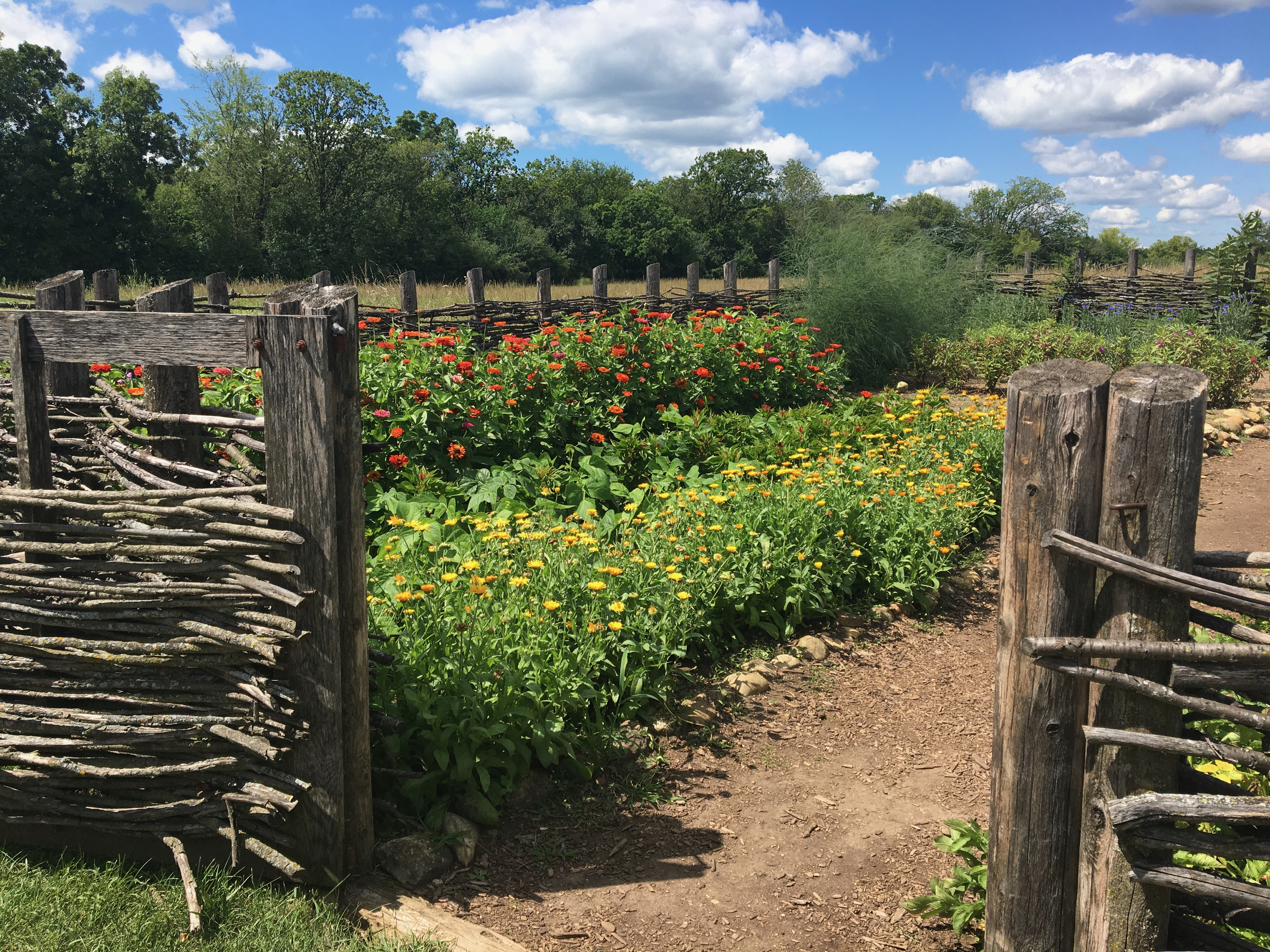
Garden at the Turck-Schottler House, 1870s Hessian Immigrant Farm, Old World Wisconsin. Photo credit Reed Perkins, 2022.1
I don’t know if Mary and Jonathan were regular readers of the popular and affordable farmers’ almanacs of their era; I wouldn’t be surprised if they were. There were many to chose from. Perhaps they had a copy of something like:
It’s Thanksgiving tomorrow, and I’m taking a few days off to spend time with family. But in the spirit of the holiday, I thought I’d reprint a lightly revised version of our now-annual Thanksgiving post, to share with you a few vintage recipes and a nice Currier & Ives lithograph from the period.1
Thanksgiving, 1867
Durrie, George H. and John Schutler, Home to Thanksgiving, ca. 1867, New York, Currier & Ives. National Gallery of Art, Collection of Mr. and Mrs. Paul Mellon. Public Domain. Click to to open larger image in a new window.
I’m behind in my writing. Sorry about that. My Clark House history research continues “behind the scenes,” but I’ve been busy with typical fall chores around the house and garden, and that’s kept me from writing, proofreading, and annotating fresh blog posts.
Anyway, Thanksgiving is almost here, so look for my annual holiday post (with historic recipes!) later this week. And in the meantime, let’s reflect on how thankful we should be that we don’t have to process a barn full of harvested corn by hand anymore…
I’ve been distracted by my day job lately, and work on the Search for JMC’s Roots is progressing slowly. So while I keep chipping away at finding and organizing data from 1790s Lower Canada sources, here’s another evocative lithograph from Currier & Ives, depicting a scene that Jonathan Clark might have experienced in his youth.
While researching the life of one of Mequon’s first white settlers, Isham Day, I ran across the following breathless bit of regional puffery and promotion, penned by Milwaukee co-founder Byron Kilbourn. It’s from page 2 of the November 17, 1836, edition of the Milwaukee Advertiser:
Lawyer Pettibone has, indeed, grown some astounding turnips (“Ruta Baga”), ‘taters, and carrots in the fertile soil of Milwaukee. Likewise Mr. Douglass with his enormous radishes and “common English” turnips. Have others done anything comparable? Indeed they have, and Mr. Kilbourn has the details…