Happy 200th Birthday, Mary!

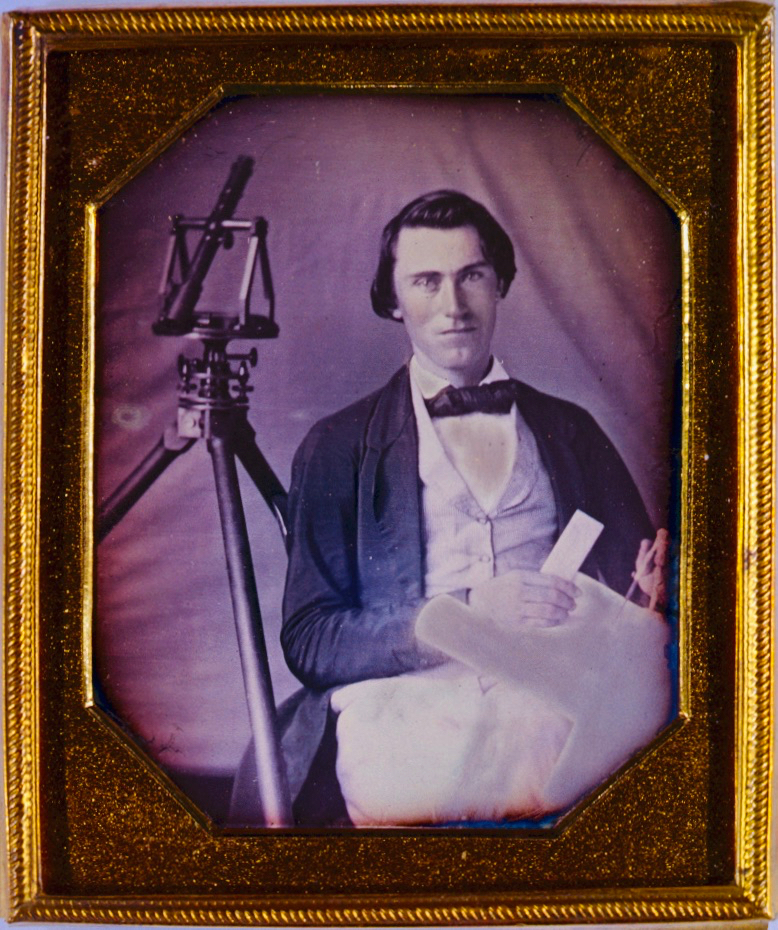
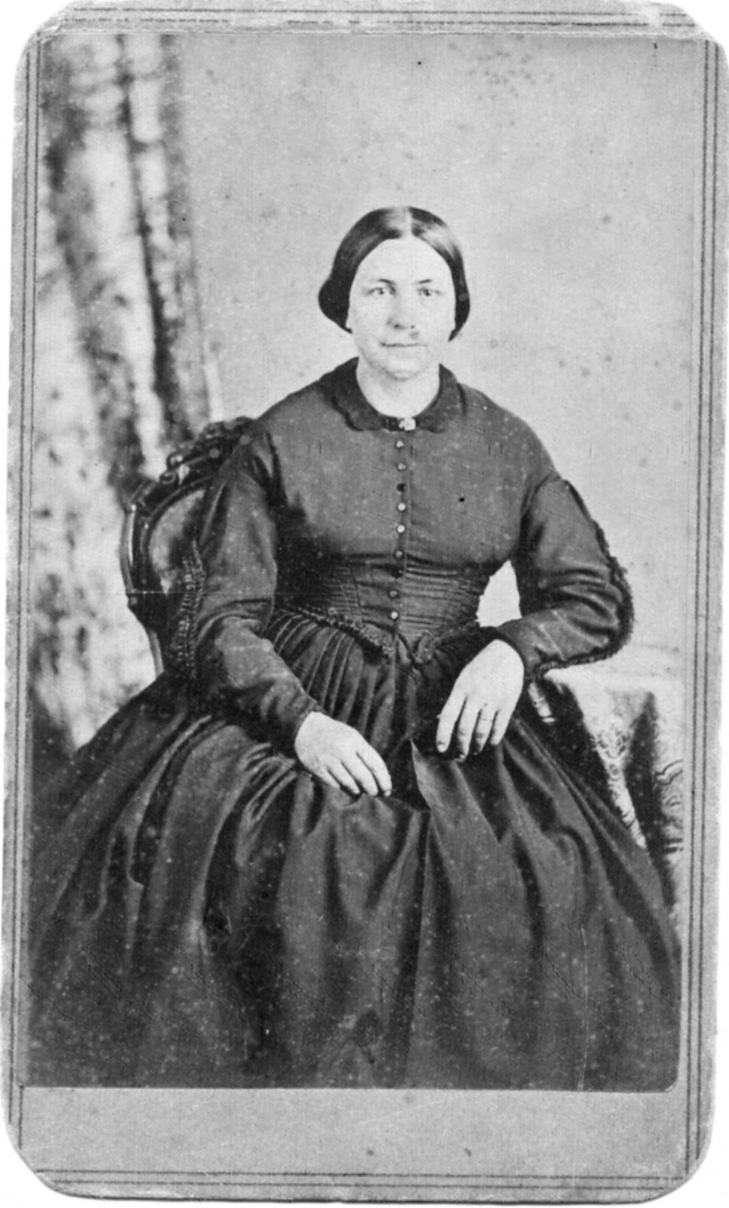
Today, May 3, 2021, marks the 200th birthday anniversary of Mary Turck, the eldest child of Peter Turck and Rachael (Gay) Turck, and future spouse of Jonathan M. Clark. Mary and Jonathan were married in old Washington county on March 15, 1840, and began to farm their Mequon land the same year. They went on to build their handsome stone house—now the Jonathan Clark House Museum—in 1848.

Continue reading

Monday: Map Day! – The First County Roads, 1841

Infrastructure Week! — part 1

Last week’s Monday: Map Day! discussed the Milwaukee and Superior railroad, and the right-of-way through the middle of the Clark farm property that it purchased from Jonathan and Mary Clark in 1857. Even if you already read it, take another look. I’ve recently updated that post to include corrections and new information from reader Sam Cutler (thanks, Sam!).

Today’s post begins Infrastructure Week! a short series focused on the first infrastructure projects in old Washington/Ozaukee county, beginning with the 1841 appointment of the first county road supervisors and their districts.

Old Washington/Ozaukee County, 1837

In order to proceed with county business, the original county commissioners must have had an authoritative map that showed the official county and township boundaries. I would not be surprised if they owned a copy of the 1837 Topographical map of Wisconsin Territory, showing the lands that had been surveyed by, and were available for purchase from, the federal government. As we discussed earlier, this was the first large-scale map of the Wisconsin Territory based on actual surveys. Here’s a detail from that map, showing old Washington county as the 1841 county commissioners would have understood it:

Continue reading

County Government – Early Records

The Jonathan M. Clark House is located in Mequon, Ozaukee (formerly Washington) County, Wisconsin. In our previous post, Mequon – What’s in a name?, we looked into how Mequon became a political entity and how its goverment evolved from the county system to the town system.

From…which archives?

Where do you look when you’d like to read (and download) the handwritten minutes of the meetings of old Washington county’s commissioners, circa 1841-1846? How about…the Washington Co. Highway Department!

This actually makes more sense than you might think, since many of the county’s earliest decisions and expenditures involved proposing, surveying and cutting roads to connect new settlements to each other, to the rest of Wisconsin Territory, and beyond. So—in a fine example of professional organization and public service—the Washington county highway department has gathered together and put online many of their oldest records.

The County Highway Register was an attempt to search out, correlate, and record all known information concerning the laying out of all roads in the county. Some of these books have not been updated since the mid to late 1950’s. Read the forward in the index to understand how these books were created.

(link)

If you follow the link, you’ll find an long list of pdfs, organized by Washington County towns, that contain the collected official highway records and some of the earliest records of county government.

But…Washington County?

Continue reading

Monday: Map Day! – 1874 map of Washington and Ozaukee Counties

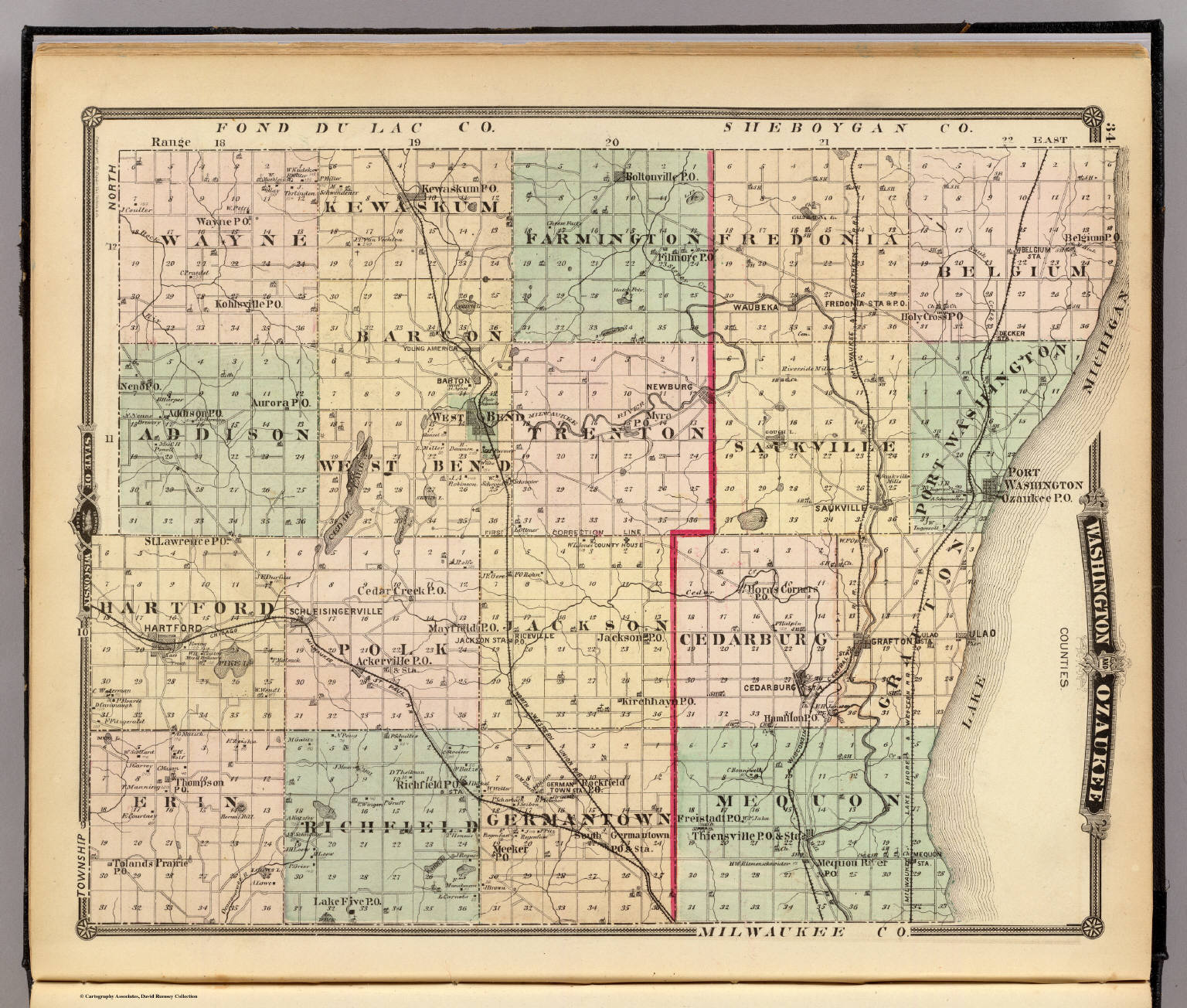
Today’s map is another unique and wonderful map from the University of Wisconsin–Milwaukee, American Geographical Society Digital Map Collection. It is map of Washington and Ozaukee Counties from 1874, and it is packed with information and unique details.

Map of Washington and Ozaukee Counties, Wisconsin 1873-4 / drawn, compiled and published by G.V. Nash & M.G. Tucker ; engraved & printed by J. Knauber & Co. ; colored and mounted by E.M. Harney. University of Wisconsin-MilwaukeeAmerican Geographical Society Digital Map Collection. Full copyright notice here, presented in this post as a public domain item and/or under fair use provisions of U.S. copyright law. Click map to go to the UWM collection and open larger image in new window.

Continue reading

Jonathan got the vaccine…

There were a lot of deadly, infectious diseases in 19th-century North America. When Jonathan M. Clark was young, the causes and cures for most of these illnesses were a mystery. Germ theory was unknown, and for many people hygiene was, at best, a hit-or-miss affair. But even in that era, we can be certain Jonathan M. Clark was inoculated against one of the worst recurring plagues of all time: smallpox.

General Regulations of the U.S. Army, 1821, Art. 73, no. 90

As a new recruit to the U.S. Army, Jonathan M. Clark was subject to the army’s regulations, including article 73, number 90:

Click to open larger image in new window. Original via Internet Archive

Continue reading

It’s our Blog Birthday!

Clark House Historian is 5 years old today!!

Jonathan Clark House, Mequon, Wisconsin, July, 2015. Photograph by Reed Perkins. Click to open larger image in new window.

Our very first post, announcing the new blog, went live on March 29, 2016. The information in that post has now been revised and expanded into the About and Disclaimers sections of the blog.

The first posts with historical content followed in April, 2016. I still link to one of those posts—Where are we?—when I need to explain the evolving place names and political geography of the Mequon area.

Since the first Clark House Historian posts in 2016 we have learned a lot more about the Clark house, its occupants and their families, friends and neighbors. If you’re new to the blog—or the Jonathan M. Clark House—here are some good places to begin reading (and be sure to click the links in each article):

Continue reading

RBOH – Social Calls by Canoe, 1833

Another in our occasional series of Random Bits of History, illustrating life as experienced by the early Mequon settlers and their contemporaries. Today’s RBOH is an example of how strong early Wisconsin women could be, and how they used that strength to maintain community and social relationships across the vast distances between military posts.

Jonathan M Clark served with the U.S. Army’s 5th Regiment of Infantry at Fort Howard, Green Bay, Wisconsin Territory, from 1833-1836. The Fifth Regiment was responsible for four major outposts in the Old Northwest: Ft. Dearborn (Chicago), Ft. Howard (Green Bay), Ft. Winnebago (at the Fox and Wisconsin river portage) and Ft. Crawford (at Prairie du Chien).

We expect a soldier’s life on the frontier to be spartan and difficult, and in many ways is was. Generally speaking, enlisted men like JMC were unmarried and lived in together in the post’s barracks. But quite a few of the regiment’s officers were married, and brought their spouses—and children—to live with them on post or, occasionally, in homes in the adjacent village. As “officer’s ladies,” these women often lived separate lives from the civilian women of nearby settlements, such as Green Bay. So they formed their own bonds to provide mutual aid, comfort, society and entertainment while living in some of the army’s most isolated outposts.

And they did not let their social bonds break, even when friends were transferred to other forts. Here are some examples from about 1833:

Continue reading

Monday: Map Day! – The Erie Canal

Turck, Gay & Clark in the early years of the Erie Canal

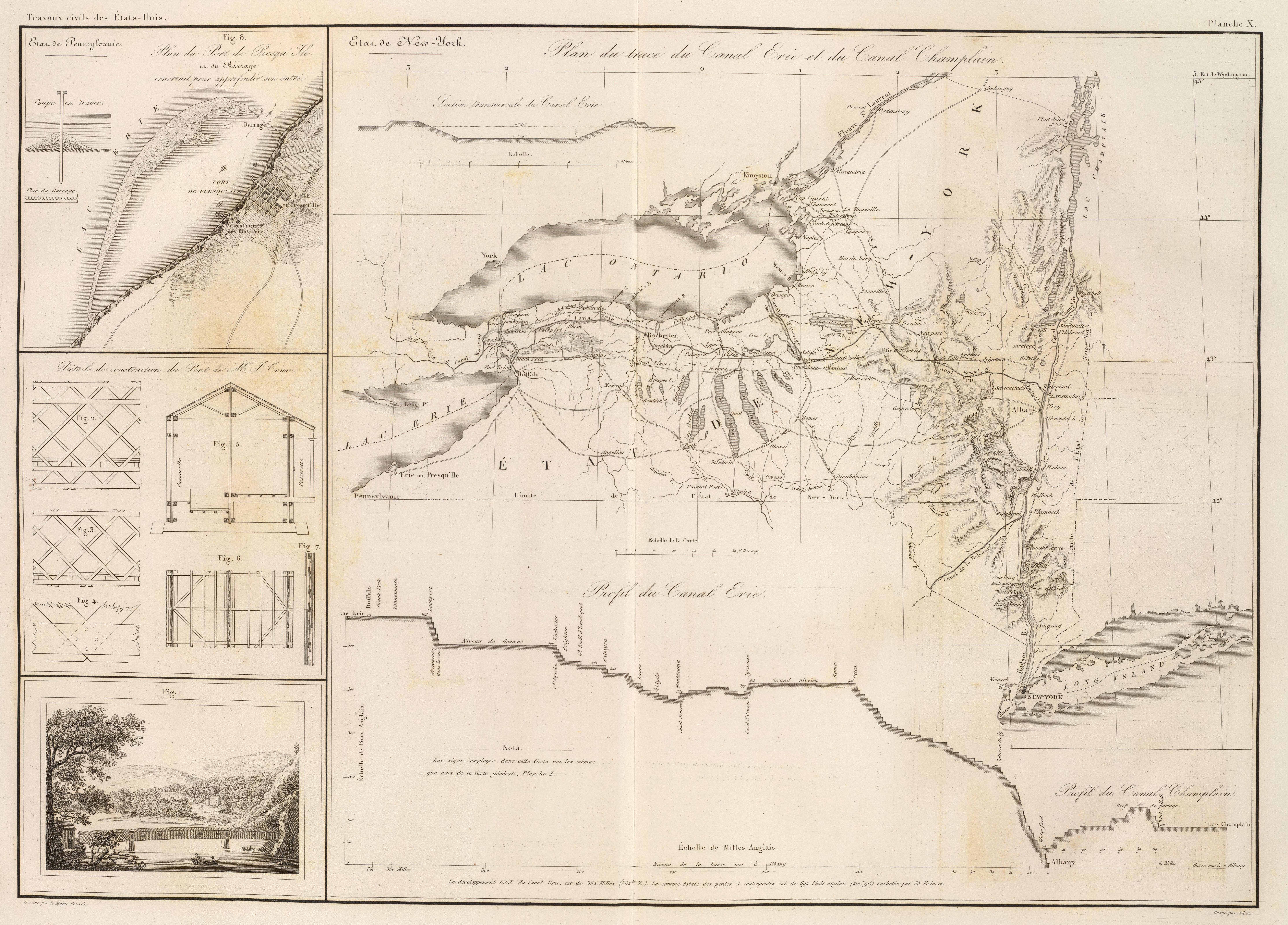
New York state’s Erie Canal was one of the wonders of the modern world when it first opened to the public in 1825. The original 362 miles of canals and locks connected the Hudson River at Albany, in the east, with Lake Erie at Buffalo, in the west. This made a faster, more economical connection between the goods and markets of the eastern states and Atlantic seaboard and the newly opened lands, crops, and timber products of the nation’s newest states and territories.

Another important part of the New York state canal system was the Champlain Canal. It was built at the same time as the Erie Canal and connected Canada and western New England—via Lake Champlain—to New York and the world. Today’s map shows the course of both the Erie Canal and the Champlain Canal, and their rise and fall, as they existed in in the early 1830s. In the 1820s and ’30s, these two canals made possible the westward migration of many of Mequon’s early settlers, including—among others—the Turck, Bonniwell, Woodworth, Strickland, and Loomer families, and the young Jonathan M. Clark. Let’s begin by looking at the whole map, and then zoom in on some particular Clark, Turck and Gay family details:

Continue reading

Monday: Map Day! – Diagram of Stanstead Township, c. 1800-1809

I’m still on the hunt for the elusive parents and kin of Jonathan M. Clark. Based on what we know so far, we are looking in the area of Derby, Orleans County, Vermont and its northern neighbor Stanstead Township, Lower Canada, circa 1800-1830 or so.

There are so many documents to read and sort through in order to get a grasp on the various Clark families that pioneered this area. Our Canadian friends had a land grant system that was quite different from our U.S. system, and this has taken time to get used to. Happily, most of the original paper files have been digitized and made available for free (thanks, Library and Archives Canada!), but the organization of the files remains confusing (why do there seem to be so many duplicate images in many of the files?), and the LAC’s user interface makes browsing slow and cumbersome. That said, we are making progress.

Here’s today’s map:

Continue reading