Happy Birthday, part 2: Cake!

It was Jonathan M. Clark’s birthday!

Note: this post has been updated twice on November 30, 2020, see below.

This past Saturday was the 208th anniversary of the birth of Jonathan M. Clark. If you missed our special birthday post, click here and catch up on all the new and updated information about Jonathan that we’ve discovered and published here at Clark House Historian since 2016.

One of the highlights of Saturday’s post was this photo of Jonathan’s excellent 200th Birthday cake from 2012, courtesy of Anne Bridges:

Click to open larger image in new window. Photo credit Nina Look.

No doubt about it, that is one fine birthday cake. (Thanks, Anne!) But what if you wanted to bake a cake that Jonathan or Mary Clark, or one of their early Mequon neighbors, might recognize? That calls for another look into the first cook book written and published by an American:

Continue reading

Happy 208th Birthday, Jonathan!

November 28, 2020, is the 208th anniversary of the birth of Jonathan M. Clark. To celebrate, I’m reposting a revised, expanded and annotated version of one of my first Clark House Historian posts. Since this was first published, on April 20, 2016, we have learned much more about the lives of Jonathan Clark, Mary Turck Clark, their family and their neighbors. Please check out the footnotes and click on the links for some of this newer, more accurate, information.

Happy Birthday, Jonathan! (and thanks to Nina Look for the timely reminder).

JMC: Man of Mystery

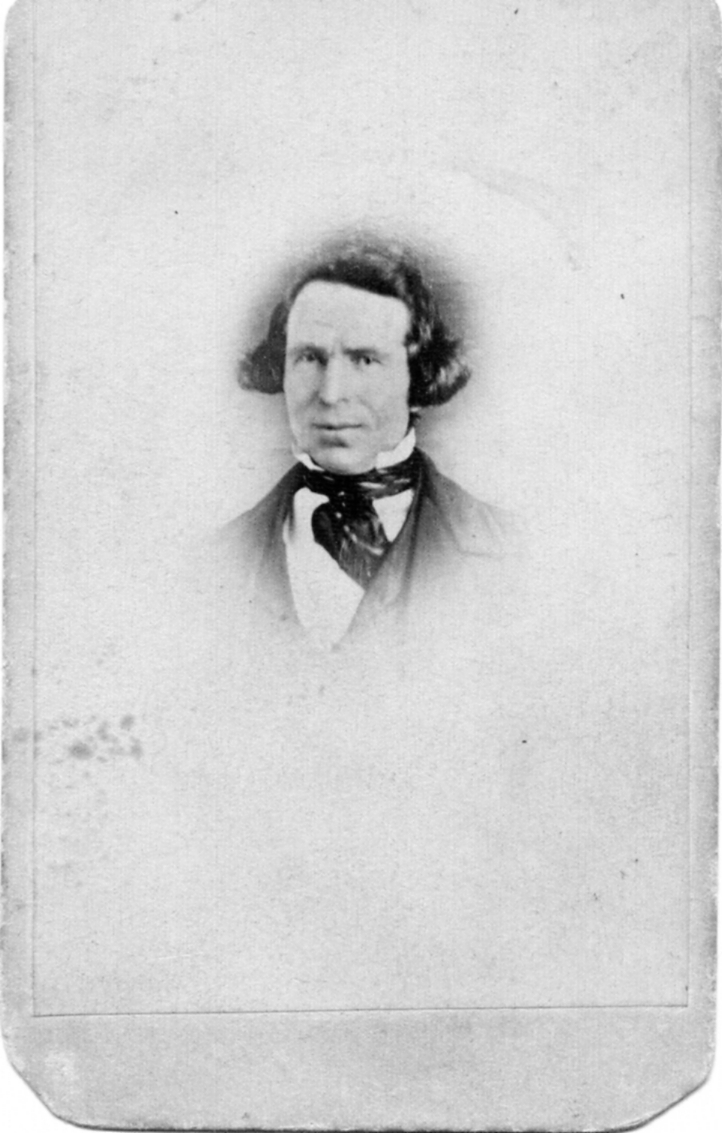
CLARK, Jonathan M portrait

Jonathan M. Clark. Photograph courtesy Liz Hickman.

There he is. Jonathan M. Clark, builder and first owner of the handsome stone home that is now the  Jonathan Clark House Museum in Mequon, Wisconsin. He was probably born in Vermont—or Lower Canada—probably on November 28, 1812, and he died on September 20, 1857. Before coming to Mequon, he served in the United States Army at Fort Howard from 1833 to 1836. He married Mary Turck, eldest child of Mequon pioneer Peter Turck, on March 15, 1840. They had a large family. We even have a photograph of JMC as an adult (above). In some ways, we know quite a bit about Jonathan M. Clark.

Continue reading

“Distressing sickness” – 1811, Lower Canada, edition

Among the unavoidable trials of life in the 1800s were the recurring waves of infectious diseases that frequently troubled cities, towns, and rural settlements. These epidemics and pandemics were made even more disturbing due to the general scientific ignorance of the times.

And although inoculation for the prevention of smallpox1 was practiced in Europe and North America at various times during the eighteenth century, the concept of “germ theory” would not gain widespread acceptance until the second half of the nineteenth century, and routine vaccination to prevent common illnesses would not be in general use until the decades after World War II. Disease was an omnipresent part of life in early America.

Fever ravages Stanstead

In the winter of 1811, a particularly virulent outbreak occurred in the vicinity of Stanstead, Lower Canada, as reported on page 3 of the Bridgeport, Connecticut, Republican Farmer of Wednesday, February 27, 1811:

Continue reading

Leaders and Associates – the unique land grant system of early Lower Canada

Last time, we continued our search for possible kin of Jonathan M. Clark in Lower Canada by looking at a map found in the Lower Canada land petition archives. Please take a moment to peruse that post and look at the manuscript map of Stanstead Township, Lower Canada from the very early 1800s.

That map was contained in the land petition file of one of Stanstead’s earliest and largest landowners, Isaac Ogden. The Lower Canada Land Petition archives are a tremendous resource for studying the early settlement of the province, but the files are often very large. And, for those of us accustomed to the system of federal land patents used in the United States, the Lower Canada land petition and land grant system is sufficiently different that it may be hard to understand and navigate.

Today’s post will focus on one element of that system in particular, the unique, and often corrupt land petition practice known as the system of township leaders and associates. It has a complicated history, so rather than paraphrasing, let me quote at length from the official provincial report that I discussed in an earlier post, the List of lands granted by the crown in the province of Quebec, from 1763 to 31st December 1890, printed by order of the Quebec Legislature by C.-F. Langlois, Printer to Her Most Excellent Majesty the Queen, Quebec, 1891, beginning on page 7:

Continue reading

Veterans Day, 2020

This is a revised, updated, and expanded version of a post originally published at Clark House Historian on November 11, 2016.

One hundred and two years ago, on the eleventh day, of the eleventh month, at the eleventh hour—Paris time—the Armistice of Compiègne took effect, officially ending the fighting on the Western Front and marking the end of the optimistically named “War to End All Wars.”

In the United States, the commemoration of the war dead and the Allied victory began as Armistice Day in 1919, by proclamation of President Woodrow Wilson. Congress created Armistice Day as a legal holiday in 1938. Starting in 1945, a World War II veteran named Raymond Weeks proposed that the commemorations of November 11 be expanded to celebrate all veterans, living and dead. In 1954 Congress and President Eisenhower made that idea official, and this is what we commemorate today. There are many veterans with a connection to the Jonathan Clark house. We honor a few of them in this post.

Continue reading

Monday: Map Day! – Peter and Rachael (Gay) Turck’s New York, 1829/32

I’m working with one of our young Clark House Museum volunteers to examine the life of early Mequon settler Peter Turck and his large family. Peter Turck was a man of many talents and trades, which we will look into in more depth in future posts. He was also Mary (Turck) Clark’s father and Jonathan M. Clark’s father-in-law.1

The Turk/Turck family is an old Dutch-American family that first came to the New World in the 1660s, settling on the island of Manhattan, then known as New Amsterdam, part of the Dutch colony of New Netherland. The Turk/Turck family maintained a presence in Manhattan well into the twentieth-century.2 Some Turk/Turck descendants migrated to the Hudson River valley in the 1700s and stayed for many generations.

For our purposes, I thought it would be useful to have a map that gave an overview of the places that Peter Turck and Rachael Gay lived before coming to Wisconsin Territory in 1837:

Continue reading

Early Election Returns!

While we’re all waiting for this year’s votes to be counted, here’s a revised and updated repeat of a post that first appeared here on November 8, 2016.

Really early returns, from Mequon’s—and Washington County’s— first election, 1840.

In an earlier post, I outlined some of the key moments in the settlement and changing political boundaries of early Washington/Ozaukee county. Originally attached to Milwaukee County for all civil and judicial matters, old Washington County got its civil independence by act of the Territorial Legislature on February 19, 1840. And on “the second Monday of October next,” i.e., October 12, 1840, the first election to chose county officers was held at the Mequon home of Taylor Heavilon.1, 2

Continue reading

Monday: Map Day! – Lower Canada ranges and lots

Finding our way on Bouchette’s 1815 Topographical Map

Last Monday—as part of our ongoing search for Jonathan M. Clark’s roots in northern Vermont and Lower Canada—we introduced Joseph Bouchette’s huge and minutely detailed Topographical map of the Province of Lower Canada, published in London in 1815. Today’s post picks up where we left off last week, so if you missed that introduction, I recommend you click here and read it first.

For easy reference, here’s the complete, original map again:

Continue reading

Monday: Map Day! – Lower Canada, 1815

I found Bouchette’s 1815 Topographical Map of Lower Canada

In our previous post, we looked at a verbal description of Stanstead, Lower Canada, excerpted from A Topographical Description of the Province of Lower Canada, with Remarks upon Upper Canada, and on the relative connexion of both provinces with the United States of America, written by Joseph Bouchette, surveyor general of Lower Canada, and published in London in 1815. 

To accompany his 1815 book, Bouchette published a map of the province, and it’s an amazing map, with an extravagant title:

To His Royal Highness George Augustus Frederick … This Topographical map of the Province of Lower Canada, shewing its division into Districts, Counties, Seigniories, & Townships … Is … Most gratefully dedicated by…  Joseph Bouchette, His Majesty’s Surveyor General of the Province & Lieutt. Colonel C.M. … Published by W. Faden, Charing Cross, Augst. 12th. 1815. Engraved by J. Walker & Sons, 47 Bernard Street, Russell Square, London. J. Walker sculp.

Rumsey Collection

For simplicity’s sake, I’ll refer to it as Bouchette’s Topographical map of the Province of Lower Canada, 1815. The original is held in the vast David Rumsey Map Collection at Stanford University. And in the words of their curators,

[t]he large ten sheet map is extraordinary – it is over ten feet long when joined and almost five feet tall. It has five views and three large inset maps of Montreal, Quebec, and Three Rivers. The detail and graphic elegance of the large map is the equal (or perhaps the superior) of any of the contemporary maps that we have seen (and none of which are on such a large scale – the only potential candidate would be Eddy’s Map of the Country Thirty Miles Round the City of New York). Of course the engraving was done by the Walker firm in London, whose resources were up to the New York and Philadelphia engravers, or better, so a comparison with American produced maps is not entirely fair. Bouchette’s work as Surveyor General must have instilled in him an obsession with the accuracy and fineness of detail that one sees in these maps.

Rumsey Collection

So enough fanfare. Let’s look at the map:

Continue reading

Stanstead, 1815 — a portrait in words

In our previous post we looked at a charming lithograph of Kilborn’s Mills, Stanstead, Lower Canada, as seen from Derby, Vermont, based on an 1827 watercolor by Lt. Col. Joseph Bouchette, the surveyor general of Lower Canada. This was a place and a view that Jonathan M. Clark would have easily recognized as a teenaged lad of 15 or 16 years of age.

I first saw a version of that image as a black and white engraving in Bouchette’s book The British Dominions of North America […], Vol. 1, published in London in 1831. I’ll have more to say about The British Dominions in future posts.

Bouchette’s earlier book

Bouchette also wrote an earlier book—focused on Lower Canada—entitled A Topographical Description of the Province of Lower Canada, with Remarks upon Upper Canada, and on the relative connexion of both provinces with the United States of America, published in London in 1815. Here’s the title page of that earlier book:

Continue reading