What we do — and don’t — know about the Clarks’ only son (part 2)
This is the second in a series of posts examining what we do — and don’t — know about Henry Clark, his life, and his possible military service. If you missed it, you might want to start with part 1: Meet the Children: Henry M. Clark
Reading, Mass. Selectmen. The union must be preserved! The citizens of Reading are hereby invited to meet at Lyceum Hall to-morrow, Thursday, at 6 o’clock. P.M., to make such arrangements as may seem necessary to raise our proportion of volunteers … Selectmen of Reading. Boston, 1862. Library of Congress Meetings such as this were held all over the North—including Wisconsin—before and after the passage of the Militia Act of 1862. Click to open larger image in a new window.
Here’s another Random Bit o’ History. I found this while researching an upcoming post on Henry Clark and the Civil War draft. It was too good (?) to sit idly by, so here ya go:
UPDATED with correction, June 18, 2021: The Peter Turck house at 474 Jefferson was (and is?) in Milwaukee’s seventh ward. Why I said “second ward” when the map clearly shows “VII” or seventh ward is a mystery. So please note the correction to the headline and content of the relevant paragraph “The Seventh Ward,” below.
What we do — and don’t — know about the Clarks’ only son (part 1)
Jonathan M. and Mary (Turck) Clark had eight children: seven daughters and one son, Henry M. Clark (1843-1866). The Clark children were born between 1840 and 1857. All lived to adulthood, some longer than others. For a general overview of the Clark children, including birth and death dates, start with our earlier posts Meet the Children (part 1) and History Mystery! No. 2 – The Clark “Family Record.”
Although we know quite a bit about most of the Clark children, our recent Memorial Day 2021 post reminds us that we know very little about several important aspects of Henry Clark’s life, in particular: did he serve in the Civil War? I’ve been working on this question, off and on, for a number of years, and I think it’s time to pull the sources together and see what really we do — and don’t — know about Henry Clark, his life, and his possible military service.
There is a lot of information to sort through and interpret, so this post will be the first of several about Henry and the events of his life. Today we focus on what we know of Henry’s life before the Civil War.
——— 1840s ———
1843(?)
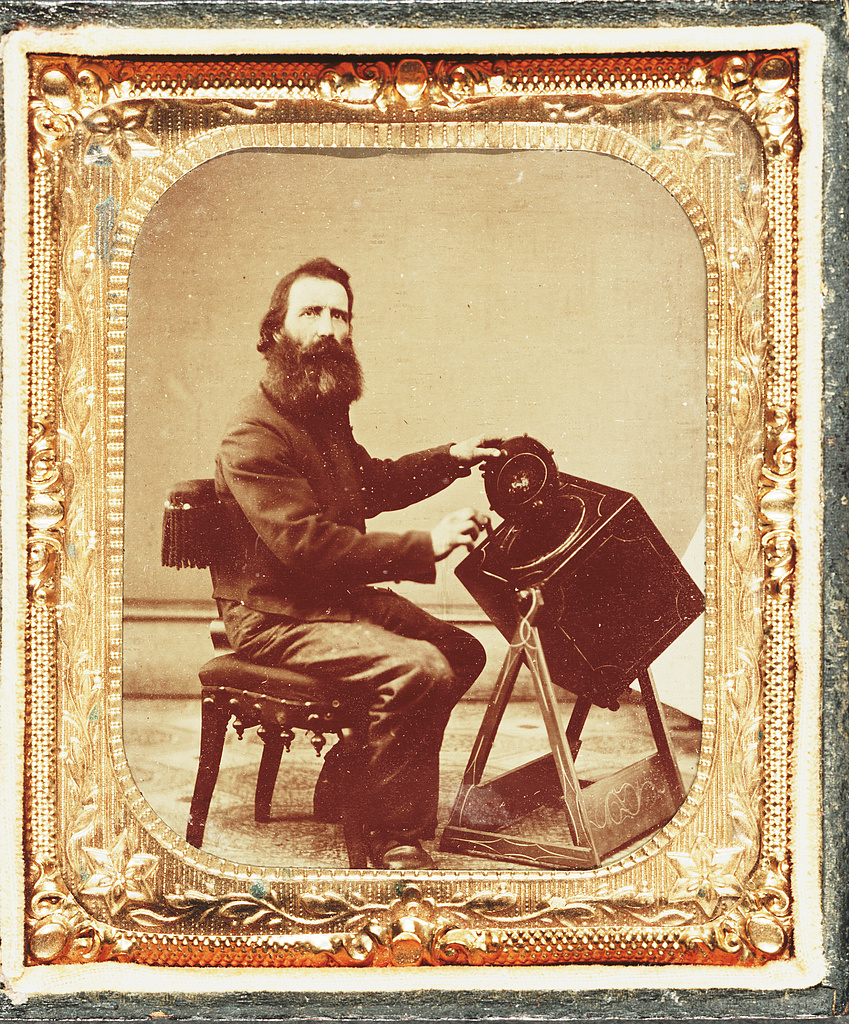
The first documentary mention of Henry Clark may possibly be this report of his birth on February, 21, 1843, written at an unknown date in the Clark “Family Record”:
Please pardon this interruption. This is not a regular Clark House Historian post. This is a test.
I’m trying to write my next CHH posts—on the life of Henry Clark—and I’ve run into a weird technical problem at WordPress. My previously drafted and saved words and images are not showing in my editing window. This is occurring on the draft Henry Clark posts and on some of my previously published (and, as far as I can tell, otherwise unchanged and still viewable) posts.
This problem is new to me, and I have sent in a help request to find a solution. I’m writing and publishing this new little post to see what’s still working and to help diagnose what’s going wrong with my WordPress blog platform.
It’s been an awfully dry spring in southeastern Wisconsin. Even so, the grass around the Historian’s house has gotten pretty tall and scruffy. Time to get out the mower and tidy up the yard.
I need to make a correction. In one of the previous posts of our Infrastructure! series, I wrote:
In early 1841, before the commissioners approved county roads Nos. 1, 2, and 3, there was already one federal road in the county. The Green Bay road was a federal road […]. It ran generally south to north, joining Ft. Dearborn in Chicago to […] Ft. Howard in Green Bay. Along the way it passed through a number of growing settlements including the three villages that would become Milwaukee, and the future towns of Mequon, Cedarburg, and Grafton.
That’s almost accurate. To be precise, I should have said there was one federal road in the southeast corner of the county—the part that would become the towns of Mequon, Cedarburg and Grafton—the Green Bay road. But, if you consider the whole of old Washington county, there were not one, but two federal roads prior to 1841, the north-south Green Bay road and the east-west Dekorra road.
Both of these roads appear on the first map of Wisconsin Territory drawn from official government surveys, published in 1837. The two federal roads are indicated on the original map by closely-spaced parallel gray lines. On the detail below I’ve highlighted the then-existing eastern portion of the Dekorra road in blue, and the Washington county portion of the Green Bay road in green:
This is a revised and updated version of a post that originally appeared here on May 25, 2020. Please be sure to read the Notes & Updates, below, for new information.
Lest We Forget
Graves of Unknown Union Soldiers, Memphis National Cemetery, photo by Clayton B. Fraser, (Library of Congress), public domain. Memphis National Cemetery is the final resting place of Mequon’s Watson Peter Woodworth, and almost 14,000 of his Union Army comrades.
As we begin to recover1 from the worst pandemic in a century, a quick glance at the news will show that many Americans are celebrating this “Memorial Day Weekend” in our now usual way, as “the first day of summer.” Beaches and parks are open, stores entice customers with deals and sales, and people are crowding shoulder to shoulder in swimming pools and along ocean boardwalks.
But for many of us, Memorial Day remains rooted in its origins as Decoration Day. The first national observance was in 1868, when retired general John A. Logan, commander and chief of the Grand Army of the Republic—the Union veterans’ organization—issued his General Order Number 11, designating May 30 as a memorial day “for the purpose of strewing with flowers or otherwise decorating the graves of comrades who died in defense of their country during the late rebellion, and whose bodies now lie in almost every city, village, and hamlet churchyard in the land.”
This Memorial Day, let’s remember those Clark House family, friends, and Mequon neighbors who served in the Civil War, and what they fought—and died—for. The History of Washington and Ozaukee Counties (1881) lists these 65 volunteers from Mequon: