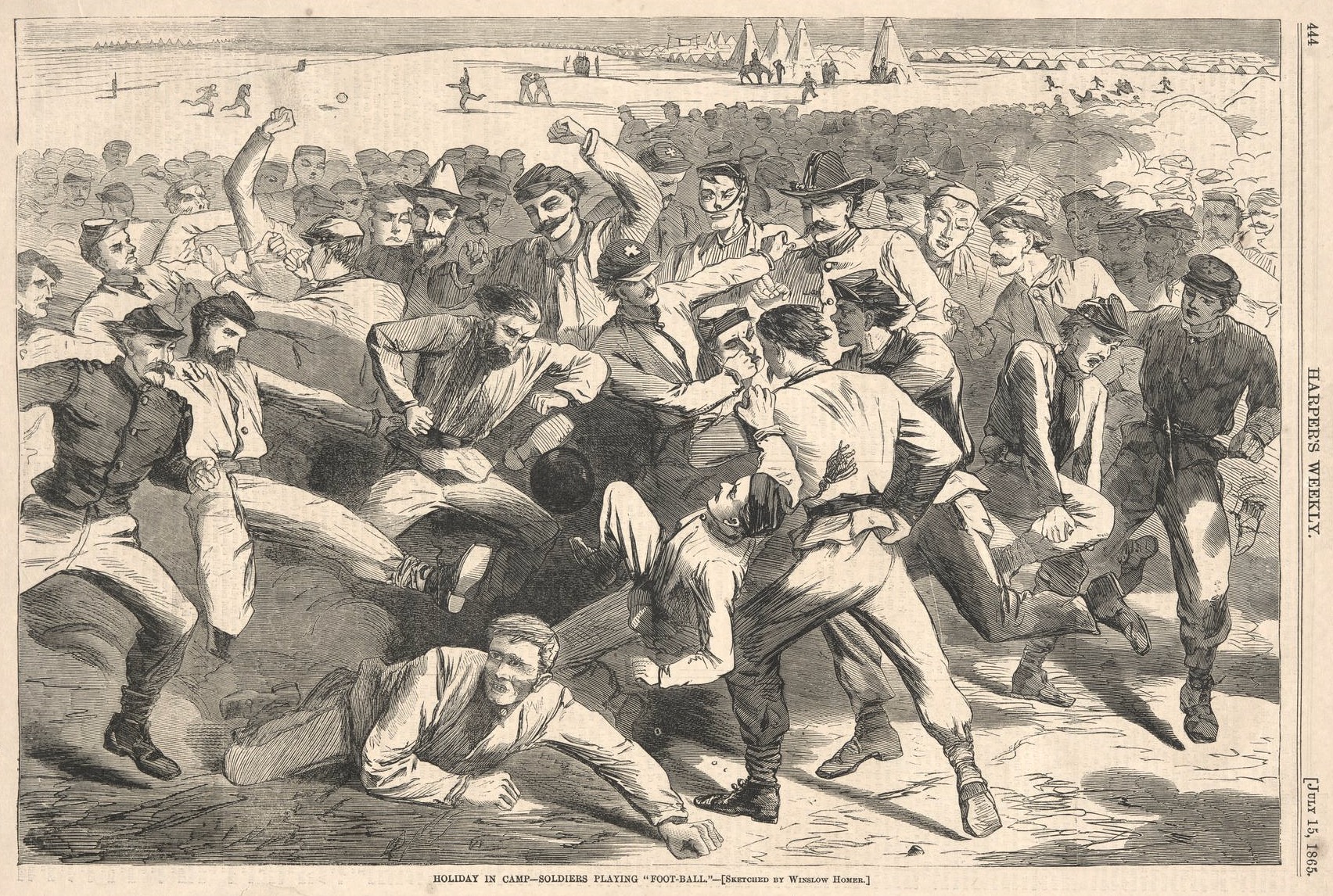
I hear there’s some sort of big sporting event today. Something called…”football.”
Homer, Winslow, Holiday in Camp – Soldiers Playing “Foot-Ball,” from Harper’s Weekly, July 15, 1865, Yale University Art Gallery, Gift of Allen Evarts Foster, B.A. 1906.
Rothstein, Arthur, photographer. Detour sign, Chillicothe, Ohio, 1940, Library of Congress (public domain).
I know, I know. Clark House Historian blog posts have been sparse lately.
It’s not for lack of material. I have a big backlog of Clark House history, with many interesting maps, images and documents to write about and share with you. But my history research—and writing—have taken a bit of a detour over the last few weeks…
Unknown photographer, [Occupational Portrait of an Unidentified Stonecutter, Three-Quarter Length, Three-Quarters to the Right, Holding Mallet and Chisel Against Block of Stone], circa 1850-1860. Library of Congress
Is that one of our early Mequon pioneers, shaping a stone block for the front of the historic Jonathan Clark House, circa 1848?
I’m still digging in the archives, trying to wrap up our ongoing exploration of the Bonniwell family adventures in the California gold fields, bring (almost) everyone back to Mequon, and finish our (unexpectedly long and thorough) look at the life of Jonathan and Mary Clark’s brother-in-law, Alfred T. Bonniwell.
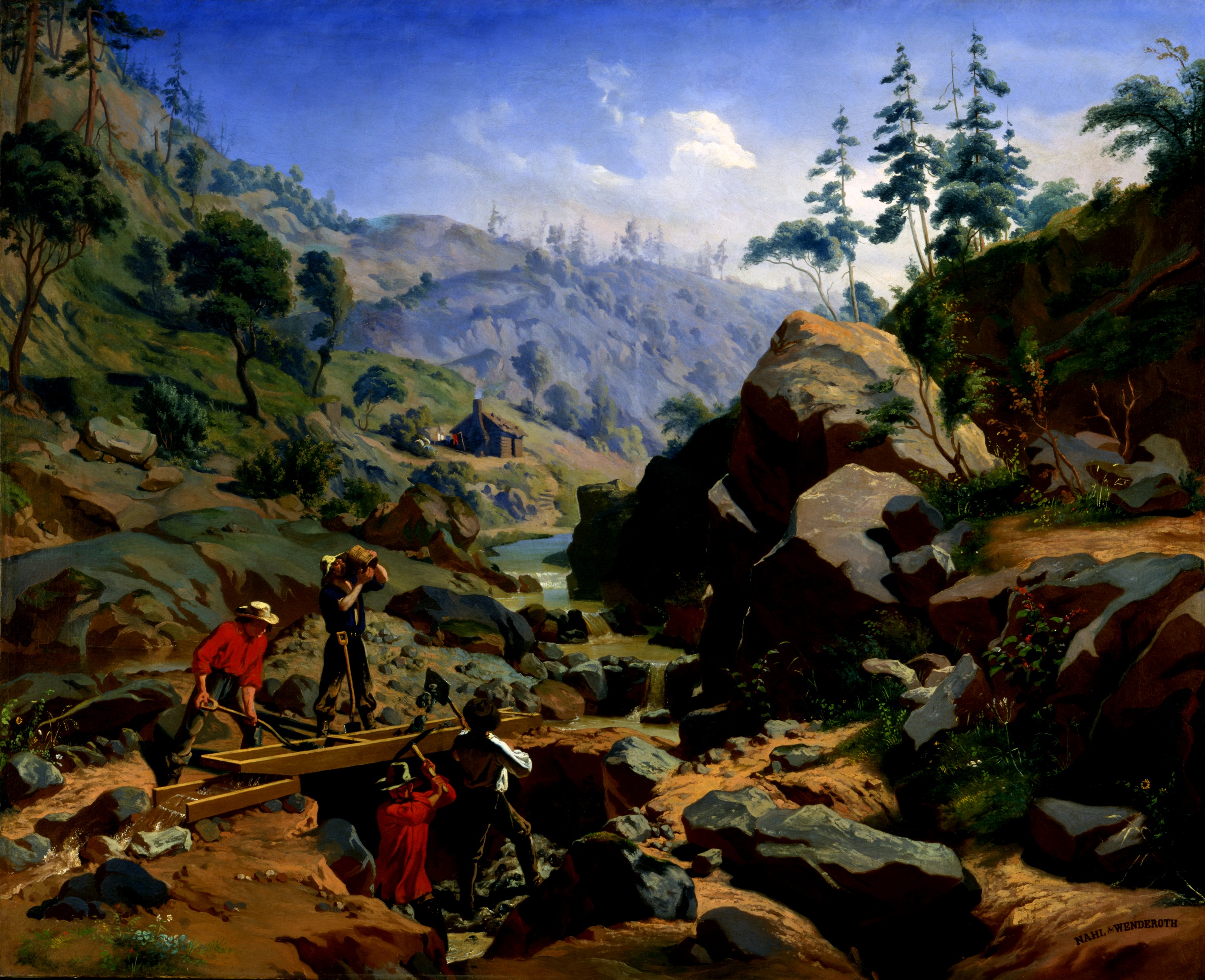
I’m currently mining a rich vein of 1850 and ’52 census documents for California and Wisconsin, as well as contemporary ships’ passenger manifests and published newspaper announcements of maritime comings and goings. Once again, I have a large pile of raw material to sift through and write about, and it’s taking more time than expected. I hope to have things organized for you next week. In the meanwhile, I thought you might enjoy this painting, made in California at the same time as the Bonniwell expedition, Miners in the Sierra:
As always, be sure to click the image to open a larger, higher-resolution image in a new window.
So the members of the overland Bonniwell overland expedition were not enumerated on the decennial census while on the trail [in Nebraska] in the summer of 1850. According to George Bonniwell’s diary, the party did not arrive in the gold country until August 8th, eight months after the disastrous California floods of January, 1850. […] Would the census still be in progress in the hills and valleys of the mining district? Would any members of either Bonniwell party have a chance to be enumerated in California? Recording the census in the frenzy and wilderness of gold rush California must have been a daunting task. Could the government’s enumerators get up into the scattered high-country mining camps? Did they enumerate all the miners and merchants and other California settlers? Would the paper census forms survive the wilderness, weather—and wild times—of 1850 California?1
Today we’ll see if we can answer those questions.
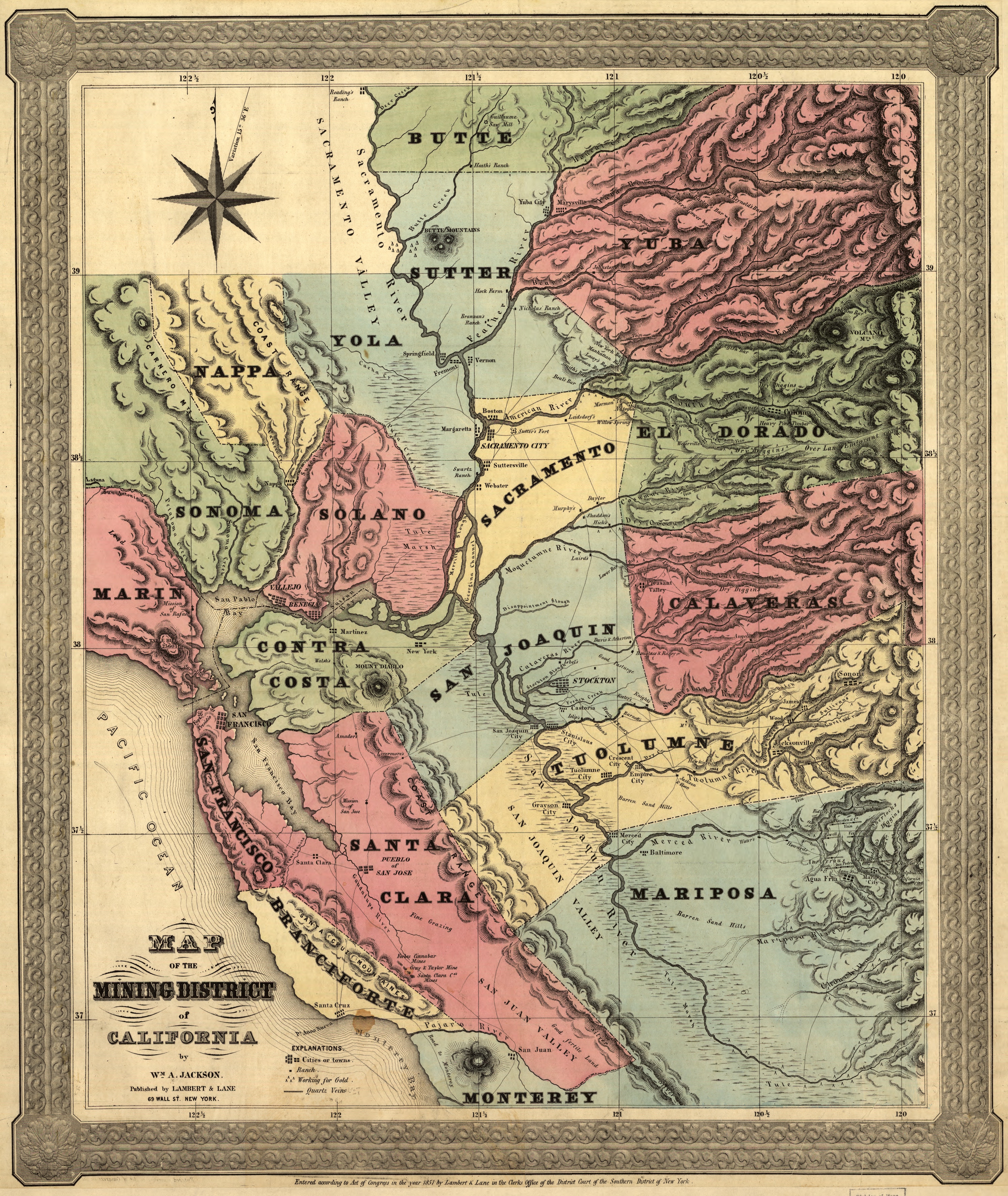
Gold rush counties, c. 1850
Since the federal decennial census is always enumerated by counties, let’s get our bearings by looking at this contemporary map of the California gold region, showing the various county boundaries at that time:
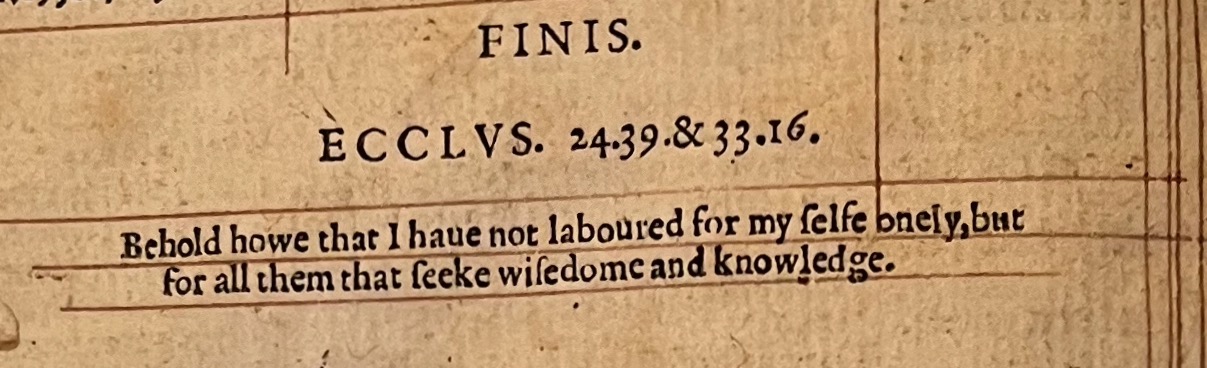
[The Bible,] Geneva version, published by Christopher Barker, London, circa 1580-1588. Collection of the Jonathan Clark House, photo credit: Reed Perkins, 2022.
What a year!
Finis. The End. Today is December 31, the last day of a long and eventful 2022. I’m not up to the task of summarizing all the highs and lows of the past year. I’ll leave that to others.
But I thought recalling one special summer day at the Clark House might make a nice valediction at the close of the old year and the beginning of the new. And for me, without question, the best day for the Clark House this year was July 23, 2022, the day we celebrated the generous donation of the historic Bonniwell family Bible and papers.
I’m still taking some time to relax and catch up on my reading. Meanwhile, I hope you enjoy this Revised! and Enhanced! holiday post that first appeared last December. UPDATED: 28 Dec.2022 to correct a minor error about the “Bower of Beauty” illustrations.
It’s the week after Christmas. Perhaps you have family or friends visiting from out of town. If you have children, they’re home from school. How to keep them entertained? If you lived near New York City in 1864, you were in luck. Barnum’s American Museum was ready with spectacular and unique holiday exhibits for the whole family, all for the low, low, price of 25 cents for adults, 15 cents for children under age ten!
Christmas is here, and I thought you might enjoy this seasonal Turck family anecdote, “a true story,” as related in the pages of Correct English magazine, written, edited and published by Peter Turck’s granddaughter—and Mary (Turck) Clark’s niece—Josephine Turck Baker, and later collected with other similar tales and published as a book, Correct English in the Home, Chicago, 1909.
In the foreword to her book, the author explains:
When I was a little girl, like most children, I was very fond of listening to stories; but unlike most children, I did not care for fairy tales, my first question invariably being, ” IS IT A TRUE STORY?” I don’t want a “once upon a time” story. This is a true story. The children, their names, the incidents narrated, are all true. Beatrice, Roschen, and the “Boitie,” are my children […] For those who like really true stories of really true people with really true names, this little book is written. That it may instruct and entertain all readers, both little and big, young and grown up, is the earnest wish of Yours for Correct English, Josephine Turck Baker
Tonight is Christmas Eve, and I thought you might enjoy an expanded reprise of our 1867 Santa Claus story, originally posted December 25 and 30, 2017. Last year I combined the two original posts and incorporated some new illustrations and a few revisions of the text. Here it is again, for your holiday enjoyment. Ho! Ho! Ho!
Christmas in early America
For many years now, Christmas has been celebrated by Americans as an important religious and (increasingly secular) community holiday. Christians gather to worship and commemorate the birth of Jesus, and they and other Americans enjoy a break from work to gather with family and friends to feast and exchange gifts. But it was not always this way.
In many of the American colonies, Christmas was not observed as a religious or secular holiday. The seventeenth-century Puritan leaders of the Massachusetts Bay Colony considered Christmas to be non-biblical and pagan influenced. In Boston and other parts of New England any observance of Christmas was prohibited and, for a few years, actually illegal:
Penalty for Keeping Christmas, 1659
Records of the Governor and Company of the Massachusetts Bay in New England. Printed by order of the Legislature, edited by Nathaniel B. Shurtleff, M.D., Vol. IV, Part I, 1650-1660, online at mass.gov (accessed 21 Dec. 2021). Click to open larger image in new window.
Transcription: For preventing disorders arising in several places within this jurisdiction, by reason of some still observing such festivals as were superstitiously kept in other countries, to the great dishonor of God and offence of others, it is therefore ordered by this Court and the authority thereof, that whosoever shall be found observing any such day as Christmas or the like, either by forbearing of labor, feasting, or any other way, upon such accounts as aforesaid, every such person so offending shall pay for every such offence five shillings, as a fine to the country.
Christmas was not generally accepted as a holiday in many parts of the United States until after the federal government made December 25 a national holiday in 1870.
On the other hand…
The Massachusetts Puritans may not have approved of “observing any such day as Christmas or the like, either by forbearing of labor, feasting, or any other way,” but Christmas was “kept in other countries” and increasing numbers of immigrants from those countries to the United States—particularly from Victorian England, Catholic Europe, and the German Lands—celebrated the day in their new American homes with many of their accustomed religious observances and national traditions.







 Clark House Historian