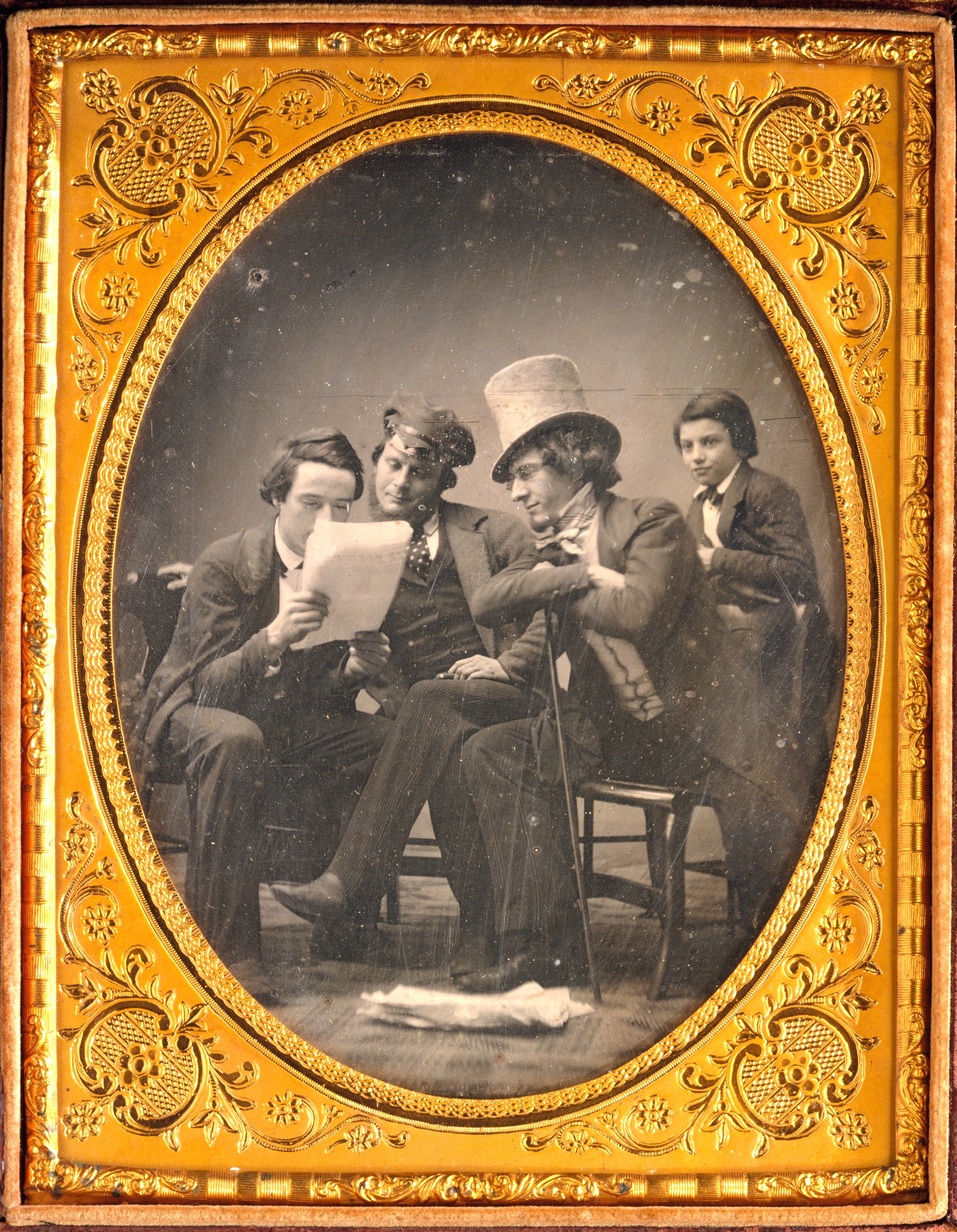
Harrison, Gabriel, “California News,” Daguerreotype, c. 1850. Metropolitan Museum of Art
What’s the news? I’ve gathered the expert—and stylish—editorial staff of Clark House Historian (see above) and together we proudly present the latest installment of our more-or-less annual Blog Year in Review!
Let’s begin with some blog statistics for 2025:
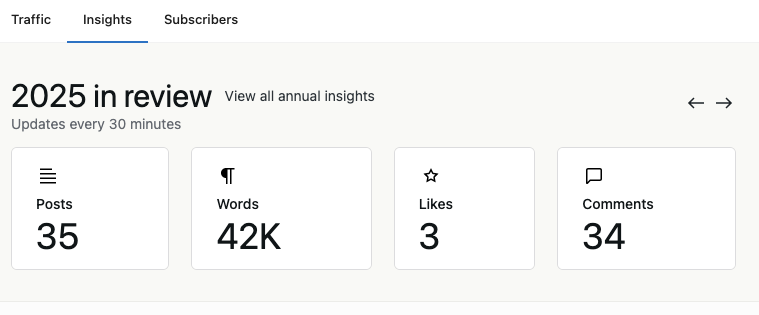
In some ways, 2025 was not a particularly productive year for CHH. I only managed to publish 35 posts, averaging less than one per week. Most posts were new material, but some were revised repeats of favorite seasonal and holiday topics, such as Christmas, Memorial Day, Veterans Day and such.
Meanwhile, “behind the scenes,” I was busy with some non-blog research projects, one focused on the post-Fred Beckmann history of the Wisconsin House building in Cedarburg, and another centered on the history and construction of the Jonathan Clark House.
Not surprisingly, with the number of CHH posts down, reader engagement dropped also, to a low of only 3 “likes” and 34 comments for the year. Just to be clear, I really do like to hear from y’all, so let me encourage you “like,” comment, and ask questions more often in 2026. Even if I’m working on a larger, longer, research project—which tends to slow my online blog production—I really enjoy reading and replying to your queries.
On the other hand, the number of blog subscribers increased in the past year. Clark House Historian currently has 86 subscribers. If you’d like to comment or subscribe, but don’t know how, click this link for all the “how to” details.
Monthly readership
As you can see (below), even though the number of new posts in 2025 was lower than in previous years, total blog readership was up substantially over 2024:
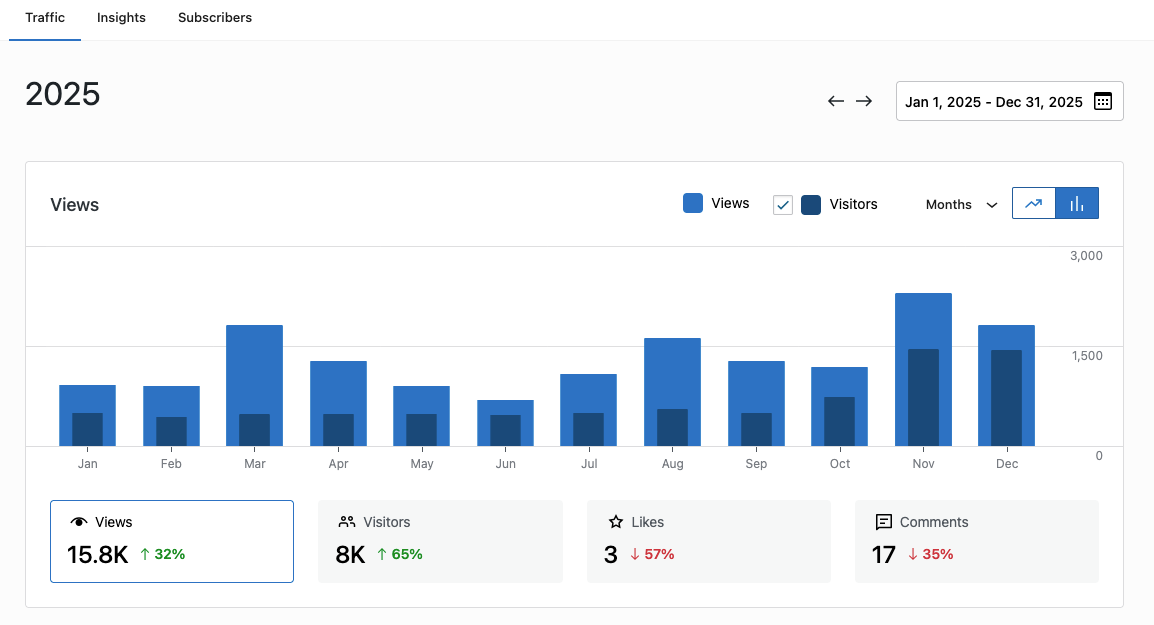
The blog had 15,771 “views” in 2025, with 8,005 “visitors” (i.e., 8,005 separate clicks onto the blog, from an unknown number of individual readers, each reader viewing an average of about 2 articles per visit). Views were up 32 percent over 2024, and visits were up by a whopping 65 percent.
Full disclosure: as always, a certain, not inconsequential, number of visits to the blog were made by me. as I regularly use the blog as a reference resource as I research various topics and write new posts. But even so, I don’t visit the site that often, and these 2025 numbers indicate a substantial increase in visitors and separate visits to the site last year.
“Likes” and “Comments” were down for 2025, as mentioned above. I’m hoping that more CHH posts, issued more regularly, will spur more interactions between the blog and its readers in 2026. And speaking of reader interaction, which posts did our 2025 readers seek out the most?
2025 reader favorites
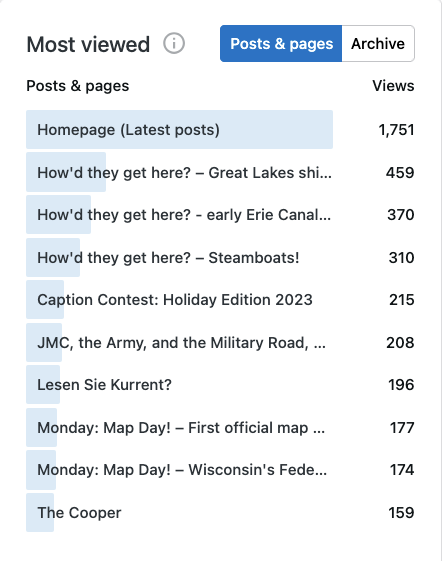
As to be expected, visits to the Homepage, the location of every new post, got the most views: 1,751.
And once again, some of our posts about Clark-era travel—focused on sail and steam ships, the Erie Canal, and the Great Lakes—remain very popular. In particular, these three posts from 2021: How’d they get here? – Great Lakes ships, circa 1837, How’d they get here? – early Erie Canal images and How’d they get here? – Steamboats! continue to get hundreds of views every year.
Why these posts? I’m not sure. As their author, I am very proud of these essays; I was able to locate, analyze and discuss some really neat source materials that are very relevant to our Clark, Turck, and Bonniwell families and their journeys from the East to the Wisconsin Territory. But I’d love to hear from the readers that enjoy these posts year after year. Are you sail or steamship fans, or perhaps students working on an academic assignment? I’m really curious…
Other 2025 reader favorites include posts focused on historic maps, early local roads, barrel making, and reading 19th-century German handwriting. And also, for reasons that escape me, my 2023 bit of holiday nonsense featuring Carol Highsmith’s photo “Santa and Mrs. Claus milk a cow. Why, we’re not exactly sure,” continues to amuse CHH readers.
Thanks for sharing…
Personally, I’m not much of a social media user. But I do appreciate it when someone shares a Clark House Historian blog post. So I was surprised and pleased to see this CHH stat:
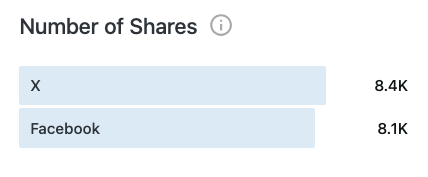
Yep, it looks like various CHH posts (for 2025 or since 2016? I’m not sure) have been shared about 8,400 times on Twitter/X and about 8,100 times on Facebook. Thanks for that.
Projects for 2026
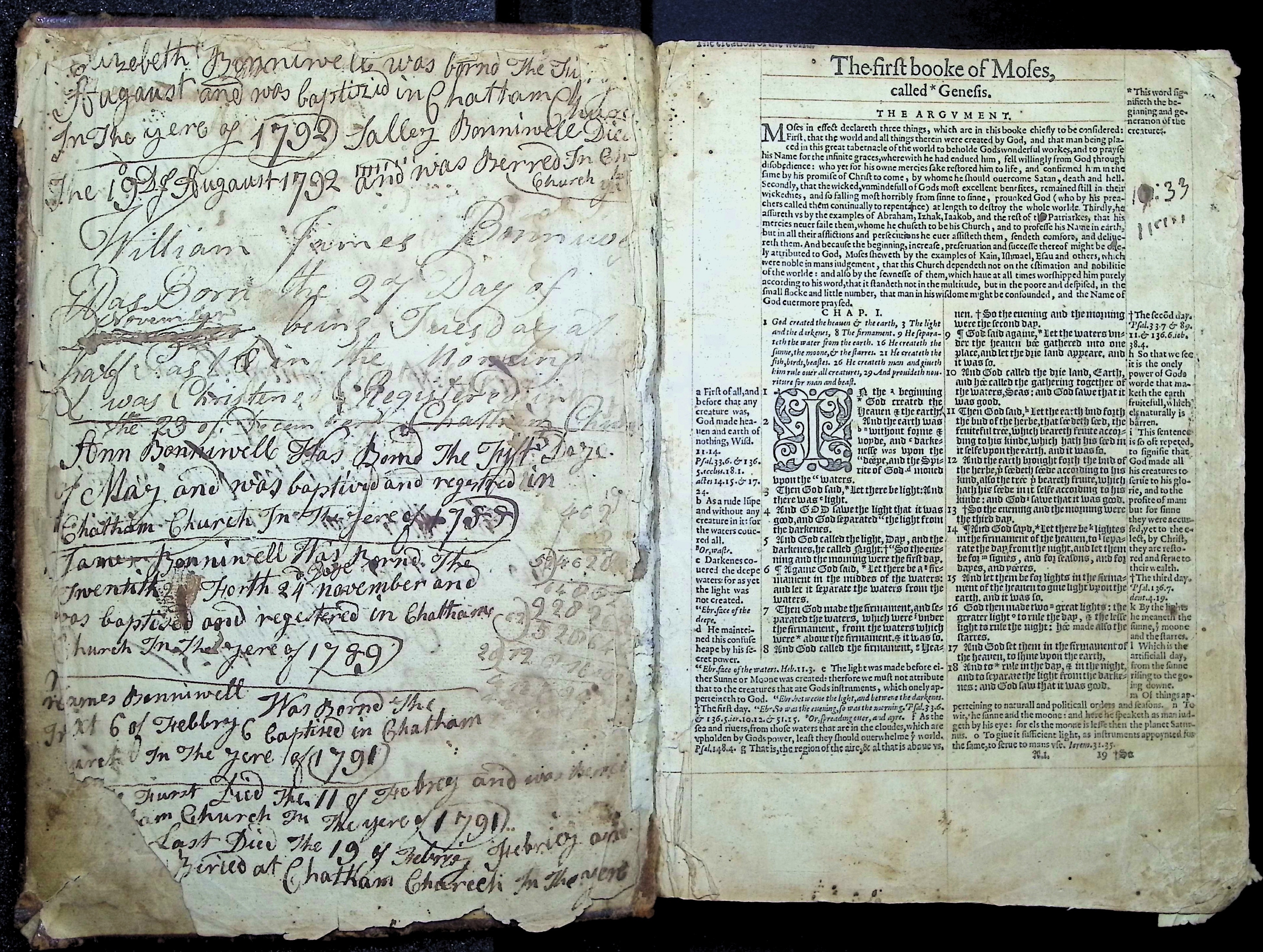
The Bonniwell Bible, 1581. Upper free endpaper, verso, with Bonniwell family inscriptions and folio 1, recto, Genesis 1:1-18.
The tenth anniversary of Clark House Historian is coming up in just a few months. I think it’s time to revisit and update the basics, the who, what, when, where of Jonathan and Mary (Turck) Clark, their eight children and their spouses, and several other, important relatives including cousins Benjamin Turck and Barney Clow. I also have a number of substantial projects that are underway for 2026, some of them following years of preparatory research. These include:
- The Bonniwell Bible: what we now know about the book and it’s owners
- Life before the big stone house: shanties and log cabins in early Mequon
- Jonathan M. Clark after the army. What did JMC do from 1836 to 1839? We have new info
- Banking on land: how the Clarks and Turcks use deeds and mortgages to safeguard and increase personal wealth over the decades
- Mental health on the frontier. Life in early Wisconsin could be difficult, and the Clark and Turck families, and their neighbors the Hubbards, all had experiences with mental health issues. We will look at how such health crises were dealt with in mid-century Wisconsin
- Alfred Bonniwell after the Gold Rush. One of the youngest Bonniwell siblings plays an important role in Clark family history. I need to bring him back from California and bring his story up to date
- Native Americans and their relations with local white settlers (it’s more complicated than you might think)
Will I finish all of these projects this year? Experience says, “probably not.” But I have piles of information on these—and other—subjects, and it’s time to dig in and start sharing that info. What do you think? Do any of these topics particularly interest you? Let me know what you’d like to know more about in 2026
I speak, too…
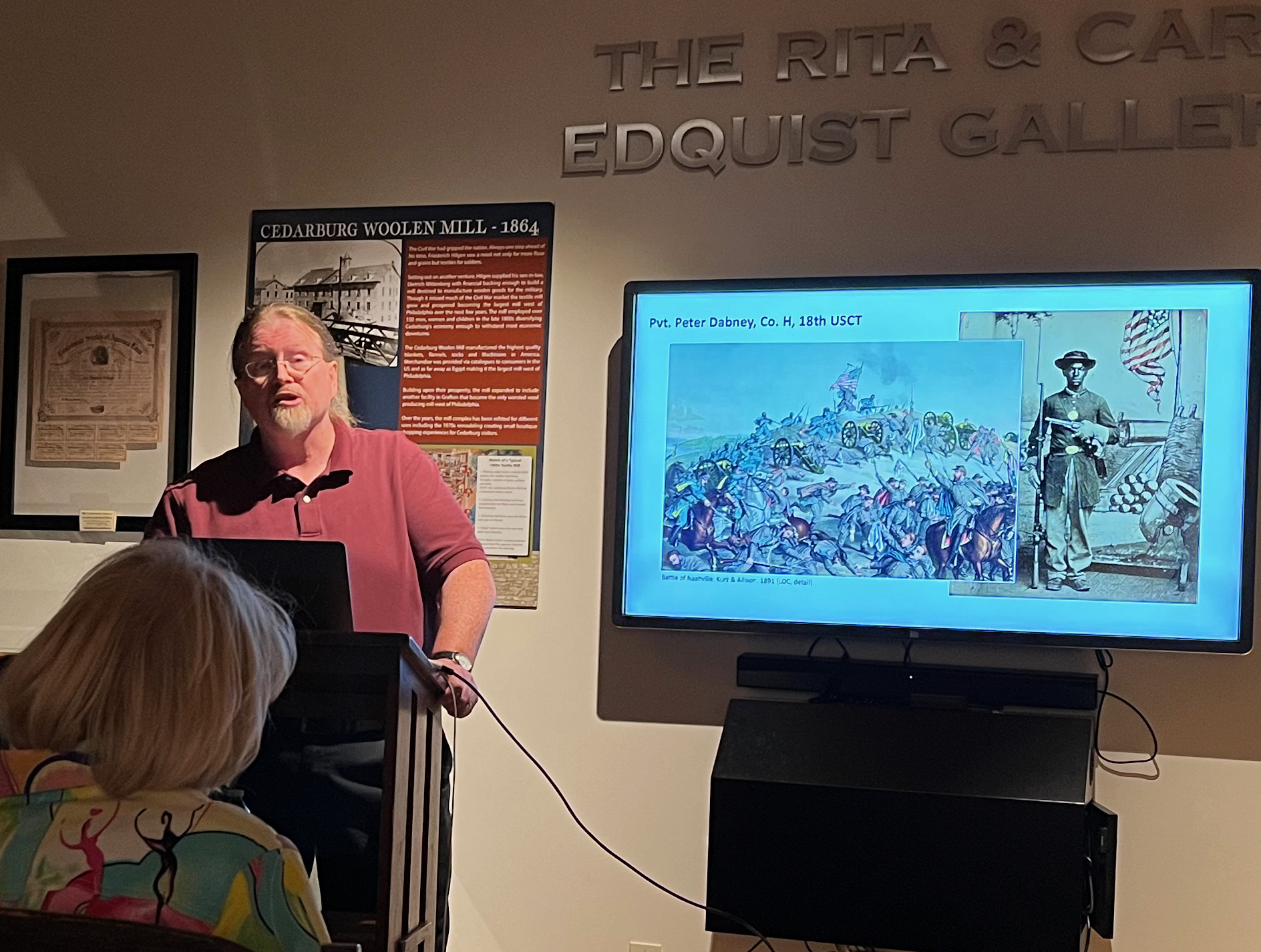
RP speaking at the Cedarburg History Museum, 2024. Photo credit: Anna Perkins
By the way, I also prepare and present illustrated history talks. Last August I spoke to the Wisconsin Society, Daughters of the American Revolution, at their excellent Portage, Wisconsin, museum. In 2026 I’ll be returning to the Cedarburg History Museum for two presentations, and I’ll be speaking at a meeting of the Milwaukee County Genealogical Society, too. I’ll have more detailed information about these talks in an upcoming CHH post.
I enjoy speaking about Clark House—and early Wisconsin—history, and I’m available to talk to your group, small or large. Contact me via this blog if you are interested.
All-time stat highlights
As noted elsewhere, this blog is my own project, but written in support of the mission of the Jonathan Clark House Museum. The blog began in March, 2016, and since then we’ve had
- 58,333 Views, by
- 23,779 Visitors, who read
- 476 Posts, and made
- 429 Comments.
So far, so good. But there’s a lot of Clark House History left to discover and share. See you again soon.
 Clark House Historian
Reed – thanks for the report and your dedication to JCH. Nina
LikeLike
My pleasure, Nina. And thanks for all you do for the JCH. —Reed
LikeLike
I like all of your proposed 2026 investigation projects/topics. As a JCH docent tour guide, I specifically like the following two projects: 1) What did JMC do from 1836-1839 2) Life before the big stone house ( for the JMC family). 3) I’d like to add one new project for you: What did JMC die of.
Ed Foster
LikeLike
Happy New Year, Ed!
Thanks for the feedback. Projects (1) and (2) are near the front of the blogging queue.
As for (3), “What did JMC die of?”, I don’t have much new info since I wrote about this in my July 10, 2020 post 1857: Disaster!
I do have some additional info on the causes of death for Mequon-area residents during the census years of 1850 and 1860, and I hope to post that info later in the year. Meanwhile, the “1857: Disaster!” post is the best info to date about JMC’s death.
Cheers,
Reed
LikeLike
Reed Thanks for your quick response and for the “1857: Disaster” link, which I read. As the 1857 Disaster article indicates, there were a number of diseases people were dying from in the mid 1800s. It seems to me that there is a good chance that JMC died from one of those diseases. Ed
LikeLike
I agree, Ed.
JMC probably died from one of several prevalent diseases of the era. Leading suspects have to include typhus, scarlet fever, TB (aka “consumption”) and cholera or some other sort of dysentery. Yellow fever is not impossible, either. It’s also possible he got kicked by a horse, stepped on by an ox, or wounded in a hunting accident. The possibilities are endless. (Although he probably did not die from smallpox; he would have been inoculated against smallpox at the time of his Army enlistment, as I discussed here.)
If you’re interested, Rev. Woodworth’s autobiography, “My Path and the Way the Lord Led Me,” is filled with all kinds of illnesses and farm accidents and near-misses, both fatal and not. The JCH library has a searchable pdf scan of the book on a dvd-rom, if you’re interested. —Reed
LikeLike
Thanks for the additional information
LikeLike