I hope you enjoyed Monday’s post Help the Historian — what’s Nellie’s last name? and that you’re now working on your best guess for Nellie’s almost-illegible surname.
A historical handwriting puzzle like this is fun when the stakes are low and you don’t have any pressure to get the job done quickly. But did you know that there are several hundred federal employees in Salt Lake City who decipher thousands and thousands of bad or damaged printed and handwritten addresses every day? Let’s let YouTube’s excellent experience-it-yourself man, Tom Scott, show us how it’s done:
How the U.S. Postal Service reads terrible handwriting
It’s an amazing system, when you think of it. To begin with, the speed and accuracy of optical character recognition (OCR) technology has improved dramatically over the years. But when the writing is really bad, or smudged? Then the mail is viewed by the men and women of the USPS Remote Encoding Center in Salt Lake City process, and they read and key in 1.2 billion (that’s billion with a B) images of mail every year. My hat’s off to the USPS employees that can do this fast-paced detective work so efficiently, day after day. Meanwhile, how about you and your deciphering skills?
Your turn!
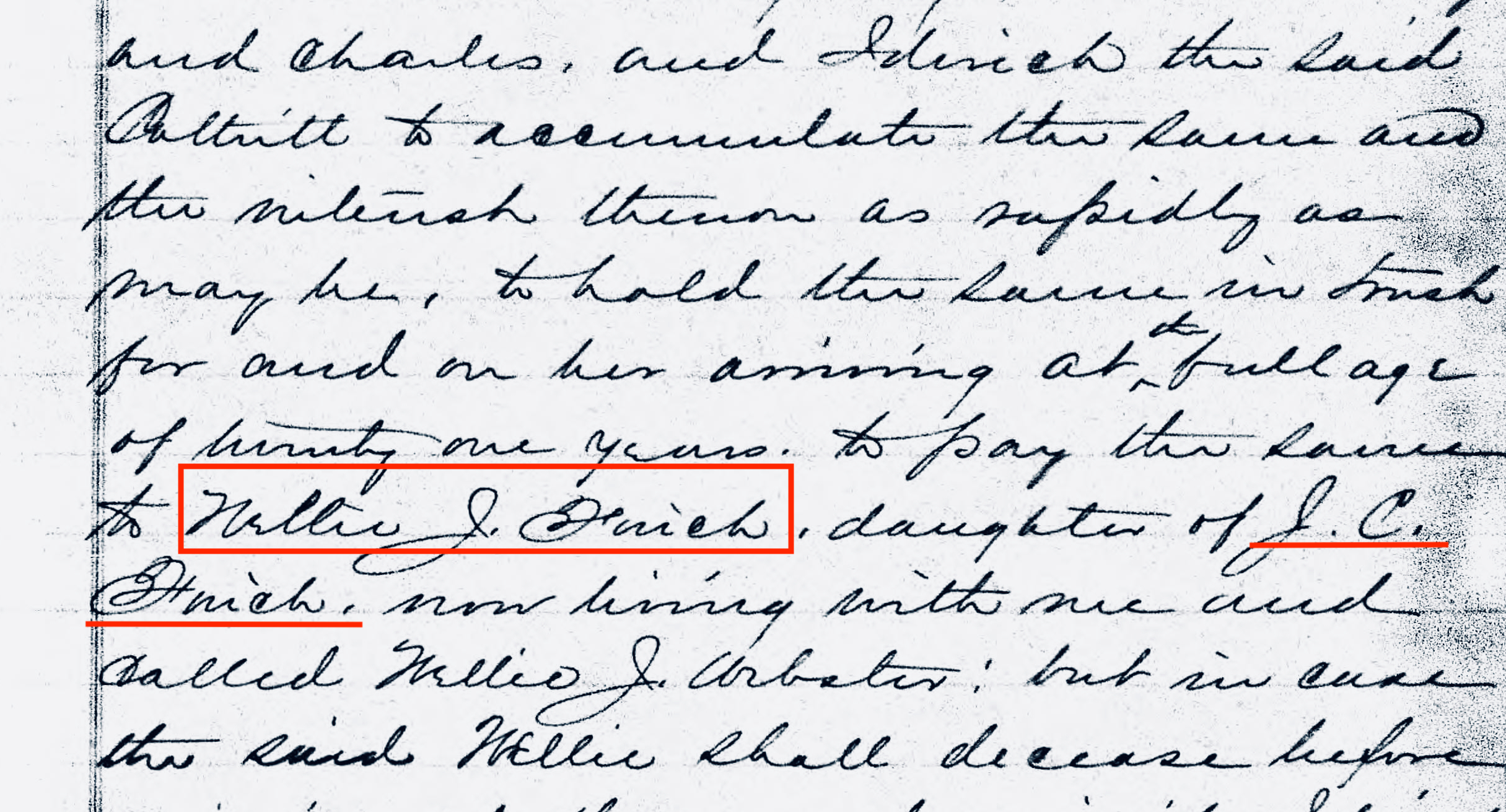
Once again, here are our two handwriting samples. Your mission: figure out the surname—highlighted in red—in the two examples, below:
Document #1:

As always, click the images to open higher-resolution versions of each.
Document #2
Help the Historian!
For the full story of this historic handwriting challenge, see Monday’s Help the Historian — what’s Nellie’s last name? Then let me know how you think Nellie spelled her surname. It’s the last missing piece of an interesting genealogy and history puzzle.
Join the conversation and send your comments and best guesses to me via the Leave a Reply area, below, or use the blog’s CONTACT function to send me a private message.
________________________________
UPDATED: August 2, 2023 to correct a word.
 Clark House Historian