The lives of Mary Clark’s sister Elizabeth (Turck) Maxon, her husband Densmore W. Maxon, and the Maxon children are deeply intertwined with the history of Washington and Ozaukee counties, and with the lives of many of the early settlers, especially the Clark, Turck and Clow families.
From the early 1840s until at least the 1880s, members of the Maxon family—and especially D. W. Maxon— played important, recurring roles in Clark and Turck family affairs. That being the case, I thought we might benefit from a reasonably detailed overview of D. W. Maxon’s life, and I found a good one in A. M. Thomson’s A Political History of Wisconsin, second edition (C. N. Caspar Company, Milwaukee, 1902).
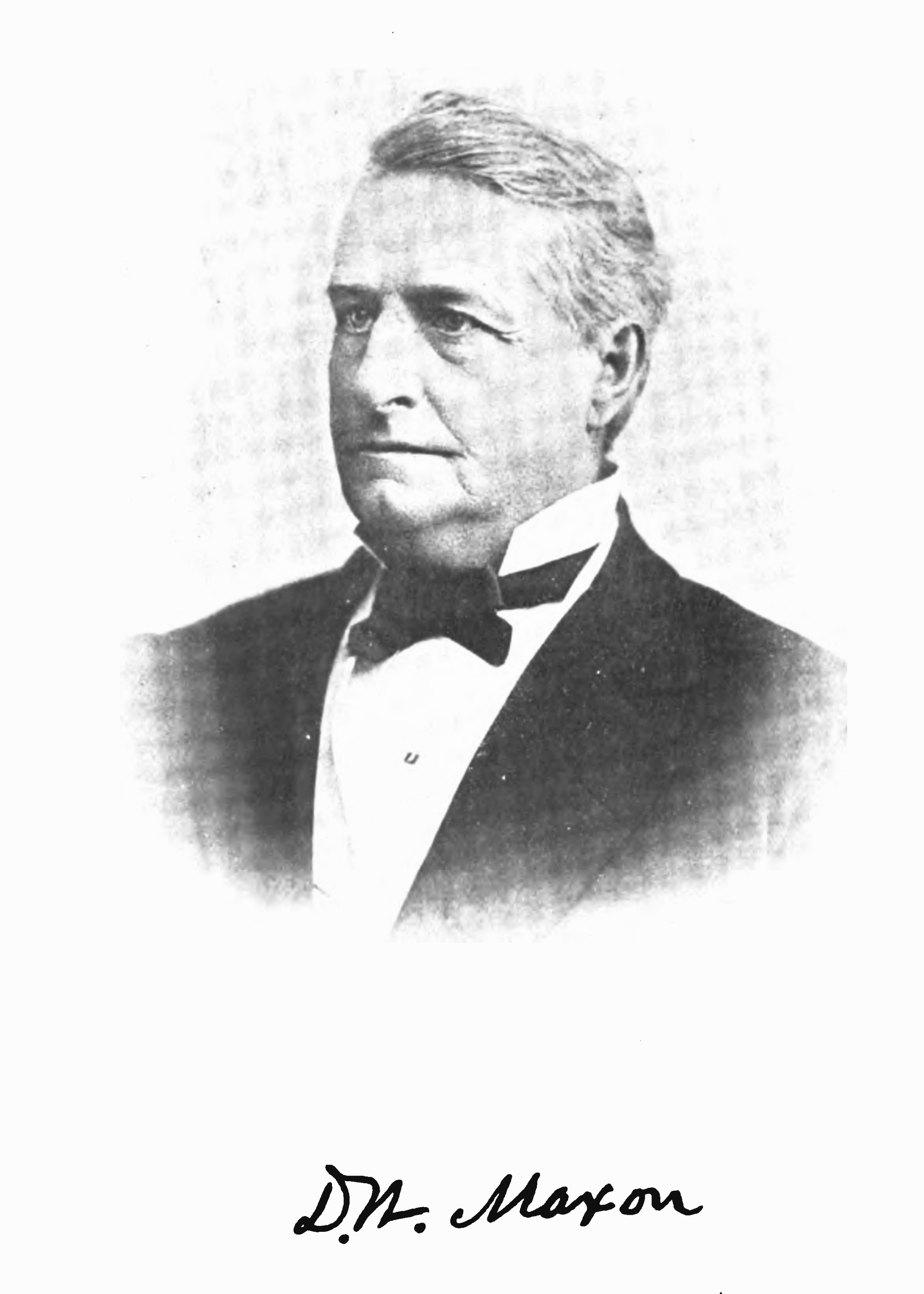
D. W. Maxon
The biography spans pages 431-433. D. W. Maxon’s portrait, with signature (above), is found facing page 236. I have proofread the transcribed text and added some paragraph breaks and headers for ease of reading. Otherwise the text, displayed here in grey-background “quotation” paragraphs, is complete as published in 1902.
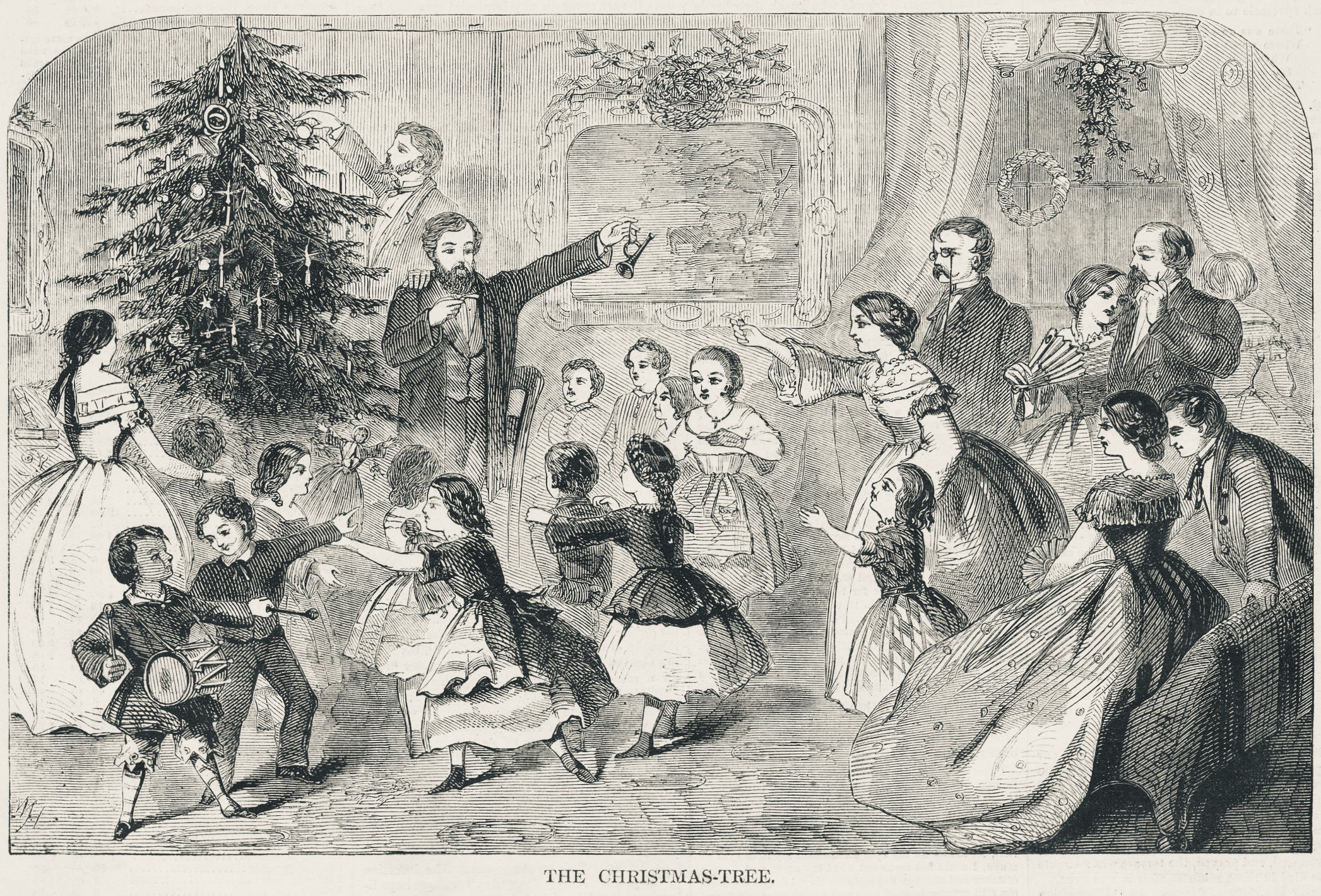
“The Christmas Tree,” after Winslow Homer, Harper’s Weekly, 25 Dec. 1858. Metropolitan Museum of Art, public domain.
Christmas is almost upon us and, frankly, I’ve been too busy—and too tired—this month to write much for the blog. It’s certainly not for lack of topics or sources. I have the beginnings of over 60 [sic!] blog posts sketched out already, and a huge pile of fascinating documents and images set aside to illustrate those posts. The amount of interesting material is daunting, and organizing each topic into one or more coherent posts takes time and energy that have been hard to come by these past few months. Now it’s late December and I’m looking forward to visits from family that will keep me happily preoccupied until early January.
I’ll be back with new material after the New Year. In the meanwhile, below are links to a few holiday-themed favorites from past years for your (re-)reading pleasure. I hope you enjoy them. And in 2026, I look forward to an exciting (and more consistently productive!) year of discoveries here at Clark House Historian.
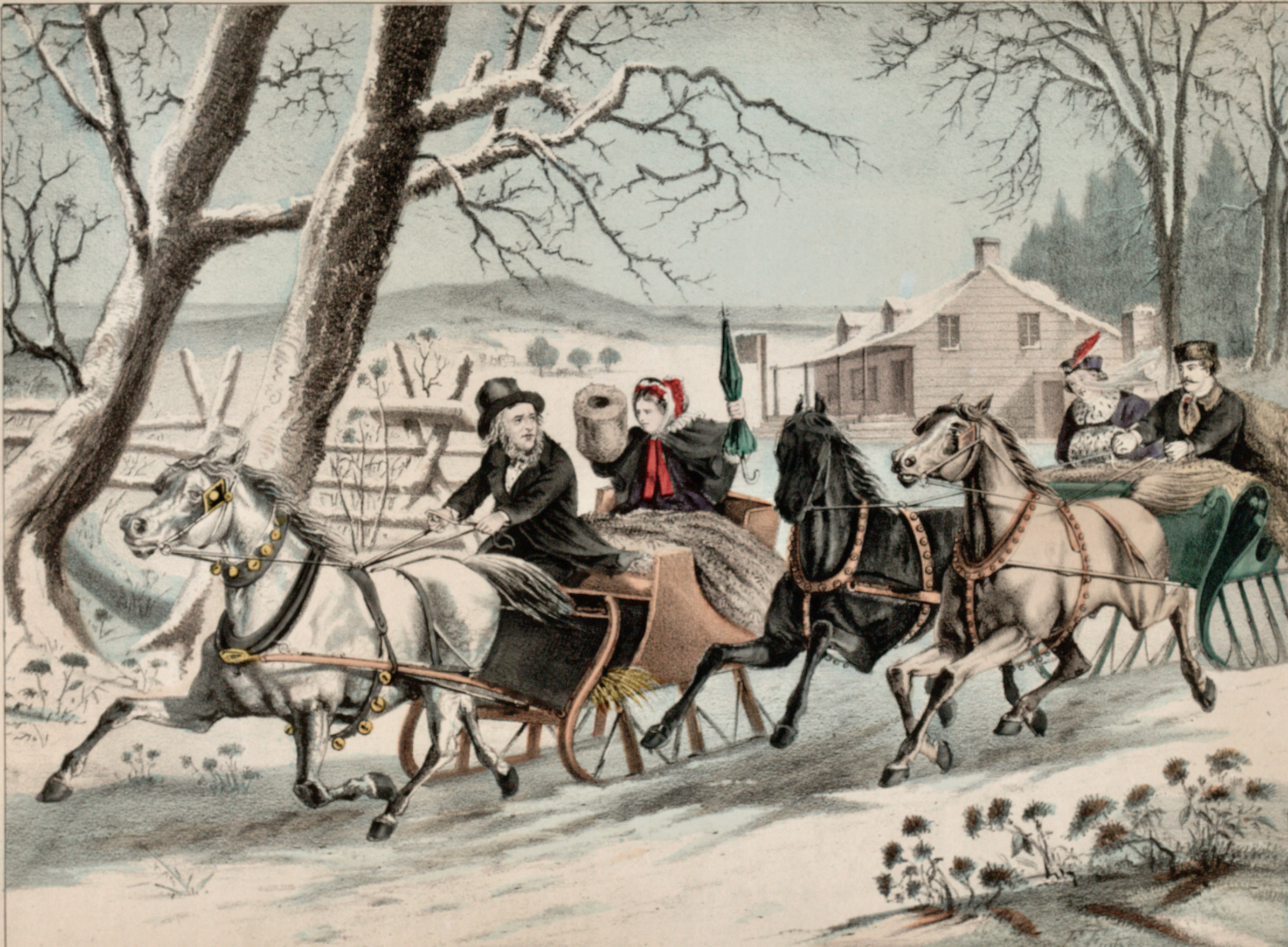
As I write this, southeastern Wisconsin is in the midst of our first substantial snowfall of Winter, 2025-2026. In Jonathan and Mary Clark’s lifetime, the day after a storm like this meant it was time to hitch up the sleigh and have some fun “dashing through the snow.” Here’s a lightly-revised and expanded repeat of a post that celebrates Clark-era “sleighing time” and “jingle bells.” (And be sure to click the highlighted links for more vintage wintertime images and info.)
Kimmel and Forster, publishers, “Winter Pleasure in the Country,” circa 1865. National Museum of American History, Peters Prints Collection, Smithsonian Institution.1 Note the modest straps of jingle bells on the one-horse sleigh and the much more ostentatious—and louder—straps of bells on the two-horse sleigh.
Last winter, our earlier CHH posts Snow!, Shoveling out -and other winter chores and Stuff Happens – on a sleigh ride, got me wondering again about winter travel in old Washington/Ozaukee county during the Clarks’ era of the mid-1830s through the 1860s or so. Assuming most of the more successful farmers—such as the Clarks, Bonniwells and Turcks—owned a one- or two-horse sleigh, how easy was it to navigate that sleigh on the early county roads? Could you sleigh ride all the way to Milwaukee? And if you could, how long might that take?
In a recent CHH post I wrote about my Saturday, August 16 visit to, and presentation at, the WSDAR’s excellent Fort Winnebago Surgeons Quarters historic site. That was worth a road trip in itself. But since I was heading up to Portage, I decided to make a history weekend out of the occasion. So on Friday the 15th, I spent a fine few hours touring the nearby Historic Indian Agency House and museum, just a short distance from the Surgeon’s Quarters across the old channel of the Fox River.
Historic Indian Agency House, 2025. Photo credit: Reed Perkins
The Historic Indian Agency House
The Historic Indian Agency House (HIAH) is one of Wisconsin’s oldest museums and a “must see”, for those of you interested in the early days of the Wisconsin Territory and the history of the state’s original Native American inhabitants and their forced removal during white settlement in the 1820s, ’30s and beyond. Like the nearby Fort Winnebago and its remaining Surgeon’s Quarters, the story of the HIAH overlaps and intersects with the story of Jonathan M. Clark and his 1833-1836 military service at Fort Winnebago’s headquarters post, Fort Howard, in Green Bay.
249 years ago today, representatives of all thirteen of Britain’s American colonies, gathered “in congress” in Philadelphia, and publicly declared our independence from “George the Third, by the Grace of God, King of Great Britain, France, and Ireland, Defender of the Faith, and so forth,” and his distant and unresponsive legislature. The Americans proposed to separate—forever—from their Divinely appointed King, and form a new and independent nation, the “united States of America.” This decision was bold, completely unprecedented in a world dominated by autocratic monarchs, and potentially fatal for anyone that supported this Declaration of Independence. From the King’s point of view, the authors, his subjects, were committing treason.
After a public reading of the Declaration of Independence at Bowling Green, on July 9, 1776, New Yorkers pulled down the statue of King George III.
The authors of the Declaration were clear-eyed about the stakes, yet unwavering in their desire to separate from the King. They closed their—our—Declaration of Independence with their unanimous avowal that, […] for the support of this Declaration, with a firm reliance on the protection of divine Providence, we mutually pledge to each other our Lives, our Fortunes and our sacred Honor.
The Declaration of Independence is our pivotal foundational document. People risked their lives and fortunes by creating and signing it. Thousands of Patriots died in the subsequent War of Independence in order to make the “united States of America” a reality. A large number of British-Americans, still loyal to their monarch, fled the 13 colonies and migrated to the King’s remaining possessions to the north, including Nova Scotia and the Province of Quebec.
Through it all, the ideals expressed in the Declaration inspired generation after generation of Americans, including Jonathan Clark and his ancestors, as attested in this excerpt from daughter Caroline (Clark) Woodward’s 1893 biographical sketch:
[…] Jonathan M. Clark, was a Vermonter of English descent, who, born in 1812, of Revolutionary parentage, inherited an intense American patriotism.
Jonathan Clark and his Mequon neighbors—including native-born “Americans,” as well as more recent immigrants from Ireland, the German lands, the United Kingdom, Nova Scotia, and elsewhere—knew the Declaration, read it aloud at patriotic events (in English and German!), and shared its anti-monarchical sentiments.
This July 4th, before you head to the beach or light the barbecue, why not refresh your memory and read the document that created our nation, and forever declared our freedom from the “absolute Despotism” of kings?
In Congress, July 4, 1776.
The unanimous Declaration of the thirteen united States of America,
When in the Course of human events, it becomes necessary for one people to dissolve the political bands which have connected them with another, and to assume among the powers of the earth, the separate and equal station to which the Laws of Nature and of Nature’s God entitle them, a decent respect to the opinions of mankind requires that they should declare the causes which impel them to the separation.
This is the second part of a multi-part look at local (Mequon and Washington/Ozaukee County) history sources. If you missed Part 2, I recommend you click this link and read that first.
In today’s post, I’d like to guide you to and through another one of the local histories that I’ve bumped into over the last decade or so. As in Part 1, I’ll include a link to a PDF copy of the source, make comments on the range and quality of the information in the book, and sum it up with an overall grade for accuracy, style, and usefulness.
“All sources lie.” — Lawrence of Arabia (supposedly)
That provocative quote begins the forward of Elizabeth Shown Mills’s monumental Evidence Explained (third edition, revised, 2017), the “Bible” of genealogical research, source evaluation, and modern citation practices. It makes an arresting opening for her almost 900-page book, devoted to historical and genealogical sources and how to cite them.1 But what does the author mean by beginning her book with Lawrence’s (supposed) quote? Here is part of her explanation:
I’ve been preoccupied with all sorts of archival work lately, and I thought I’d pass along a few preservation tips for those of you that might have some “stuff” that you’d like to protect and save for the future.
Know your archival plastics!
Do you have photographs, artwork, manuscripts, letters, coins or currency that you’d like to preserve for years to come? Perhaps you’d like to enclose those items in a protective plastic enclosure, so that they may be viewed and handled with minimal damage? That’s a fine idea, but you should know that when it comes to archival storage, there are good plastics, and (very) bad plastics. With that in mind, I thought I’d share this helpful infographic, hoping that some of you may find it useful.
As always, feel free to click the image for a clearer, downloadable and/or printable version of the image.
If you are interested in the history of the Jonathan Clark House, there are a number of published local histories that you might consult. Many of them are available online, as free, searchable, PDF downloads from Internet Archive, GoogleBooks, the Library of Congress, and other digital repositories. This is pretty cool but, as you might expect, not all sources are equal. Some are more reliable than others. Some contain detailed information about early settlement, settlers, government and politicians, pioneer businesses and other local affairs, often drawing upon old primary sources, some of which have since disappeared. Other histories are more content to paraphrase (and sometimes mangle) earlier volumes. How do you know which to trust?
A guide for the perplexed
In today’s post, I’d like to guide you to and through several of the published histories that I’ve spent a lot of time with. I’ll provide links to PDF copies where available, make a few comments on the range and quality of the information in each book, and give each book an overall grade for accuracy, style, and usefulness.
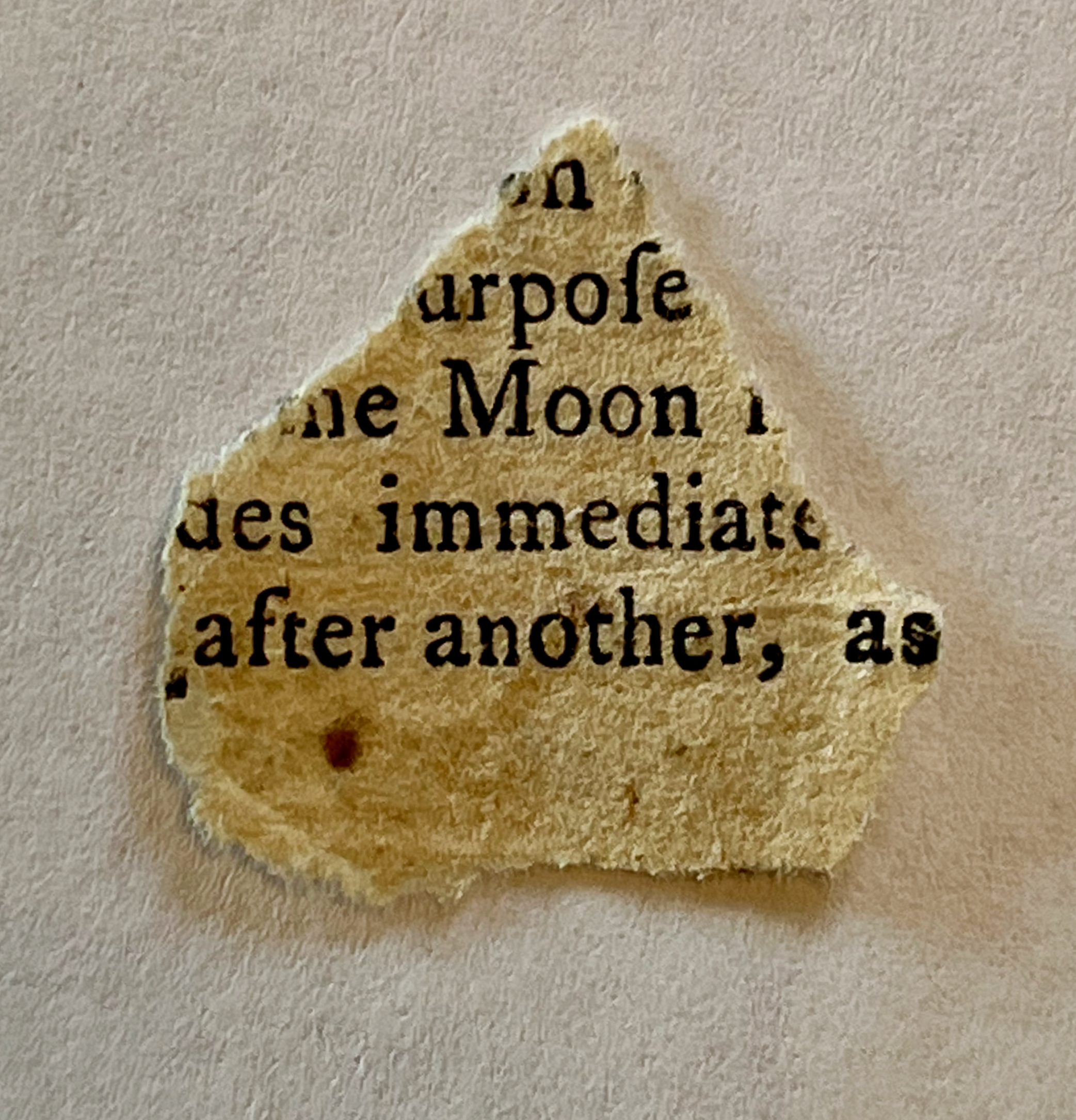
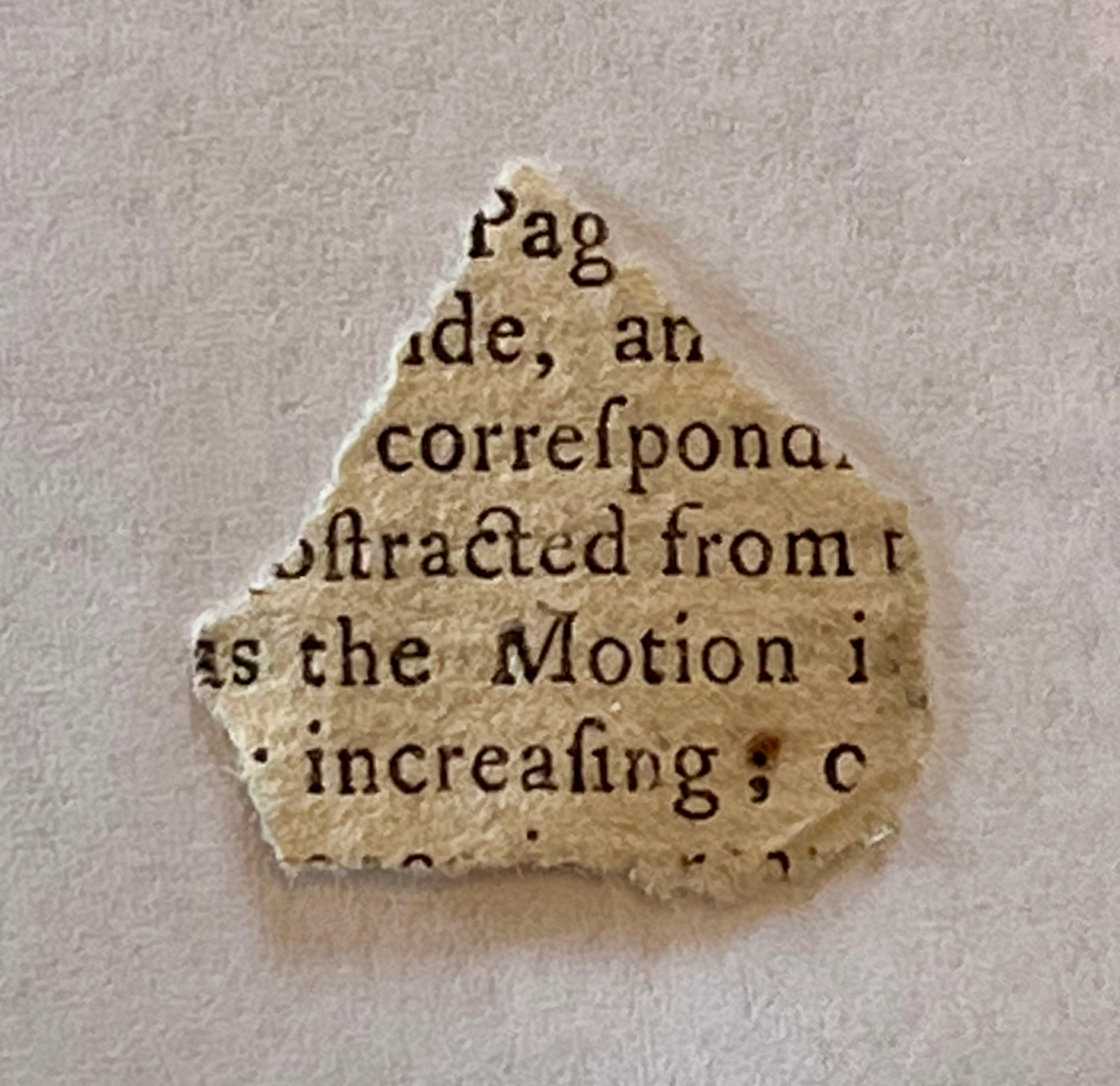
Among the real pleasures of writing a blog like this are the comments I receive from CHH readers. Recently, I heard from reader James Cornelius of nearby Grafton, Wisconsin,1 who had some thoughts about our January 24, 2025, post “Help the Historian: Mysterious (Bible?) Fragment.”2
As the original post explained, I had been examining a number of loose Bonniwell papers, scraps, and other ephemera that were donated to the Clark House along with the Bonniwell family Bible itself, and I was particularly interested in one little fragment of printed text that had me baffled.
The mysterious fragment, sides A & B, photo credit: Reed Perkins, 2022.
In my original post, I examined the text and typography of the fragment and estimated that the it was published sometime between the late-sixteenth century (at the very earliest) and—at the very latest—the first decades of the nineteenth century. And the mentions of “Moon” and “motion” and such suggested a source that might be more scientific or philosophical, and not necessarily a sacred text, but I couldn’t think what that might be.
A new possible source: Almanacs!
In his comment, James observed: My hunch is that this triangular scrap /bookmark came from an almanac, likely as common in 1800-1820 U.K. as in U.S. a half-decade later. Many fairly good or detailed ‘scientific’ discussions appeared in the old almanacs or ‘farmer’s friends.’
I think James is on to something. Almanacs seem like a very plausible source. But how common were farmer’s almanacs in the UK, and how likely was it that the Bonniwells had access to these annual “farmer’s friends” in Chatham, Kent, England, in the years before their 1832 immigration to North America?




 Clark House Historian