Another family portrait! Caroline (Clark) Woodward, c. 1890s

UPDATED – October 9, 2021, with clarification that “NWCTU” means, indeed, the National (and not Nebraska) WCTU.
UPDATED – October 8, 2021, to correct typos in the date range of the photo. Correct (maximum) date range is 1889 to 1900. Also removed a few randomly duplicated words in the first paragraph.

More Big News! It was only a few weeks ago that we presented a previously unknown photo of the youngest child of Jonathan M. and Mary (Turck) Clark, Dr. Jennie Clark Morrison. Today we have another great find, a professional photo portrait of the Clark’s eldest child, Caroline Mary (Clark) Woodward (1840-1924):

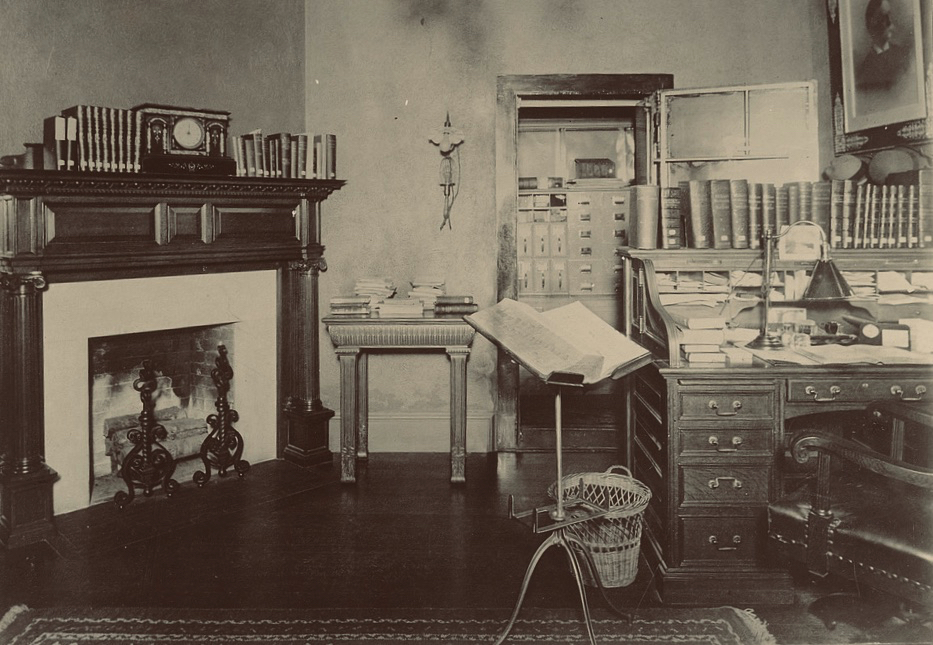
Townsend Elite Studio, [Portrait, Caroline M. (Clark) Woodward], inscribed “Mrs. C. M. Woodward, Supt. Work among Railroad Employes, N.W.C.T.U.”, photograph, circa 1889-1900. Photo courtesy Frances Willard House Museum & WCTU Archives, Evanston, Illinois. Click to open larger image in new window.

Clark family descendant Liz Hickman and I have been gathering information about Caroline for many years. Spurred on by this new photo of Caroline in her prime, I think it’s finally time to assemble the sources, line up the facts, and begin to share more of what we know about Caroline’s remarkable life as a teacher, wife, mother, and social activist. There is a lot of material to work with, so today let’s stay focused and just take a closer look at this new-to-us photograph.

Continue reading

A Dental Divertimento…

UPDATED, September 17, 2021, to add a few details about the Morrison children, Jennie’s dental practice in the 1880s and ’90s, and the date of her divorce from second husband A. G. Widger.

Due to unforeseen circumstances, I won’t be blogging much this week. (Let’s just say that the cause of my hiatus has inspired today’s post, featuring a brief introduction to the life of the Clarks’ youngest child, Dr. Jennie M. Clark, D.D.S.)

Unknown photographer, [Dentist], daguerreotype with applied color, circa 1855. Smithsonian American Art Museum, Museum purchase from the Charles Isaacs Collection made possible in part by the Luisita L. and Franz H. Denghausen Endowment. CC0. si.edu. Click to open larger image in a new window.

Clark House dentists

I’m not sure who Mequon’s first dentist was, or when he set up shop. It’s entirely likely that the Jonathan Clark family did not visit a dentist until they moved to Milwaukee (and they still may not have seen a dentist once there). But Mequon’s Jonathan Clark House plays an important part in the lives of two Mequon/Milwaukee area dentists.

Continue reading

J. R. Turck – from Mequon to New Orleans

Mequon kin, down South

Previously, we turned our thoughts to the historic city of New Orleans, and the disastrous impact of then-ongoing Hurricane Ida. Once again the Crescent City was hit by a major hurricane. Ida has since moved on and lessened in intensity, but leaves in its wake significant wind and water damage; over one million Louisiana residents are currently without electricity, gasoline, and fresh water, and it looks like it will take weeks to restore services. We wish a speedy recovery for all those in the affected areas.

I have a more-than-passing interest in New Orleans because our Clark House family has ties to the city; Mary (Turck) Clark’s brother, Joseph Robert Turck (1823-1902), spent most of his adult life there.

New Orleans, Louisiana Sugar and Rice Exchange, c. 1891. Source and credits, below (note 1). Click to open larger image in new window.

Joseph R. Turck

Like his big sister Mary, Joseph R. Turck was born in Athens, Greene county, New York. He was about five years old when the family moved to Wayne county, New York, and about fourteen years old when the family migrated west to Mequon in 1837.

In February, 1845, Joseph purchased 40 acres of his father Peter Turck’s Mequon land.2 Joseph did not keep it long; he sold it back to his father in September of the same year. What happened next? We’re not sure. But by 1848 Joseph had left Wisconsin and relocated to New Orleans.

Continue reading

New Orleans

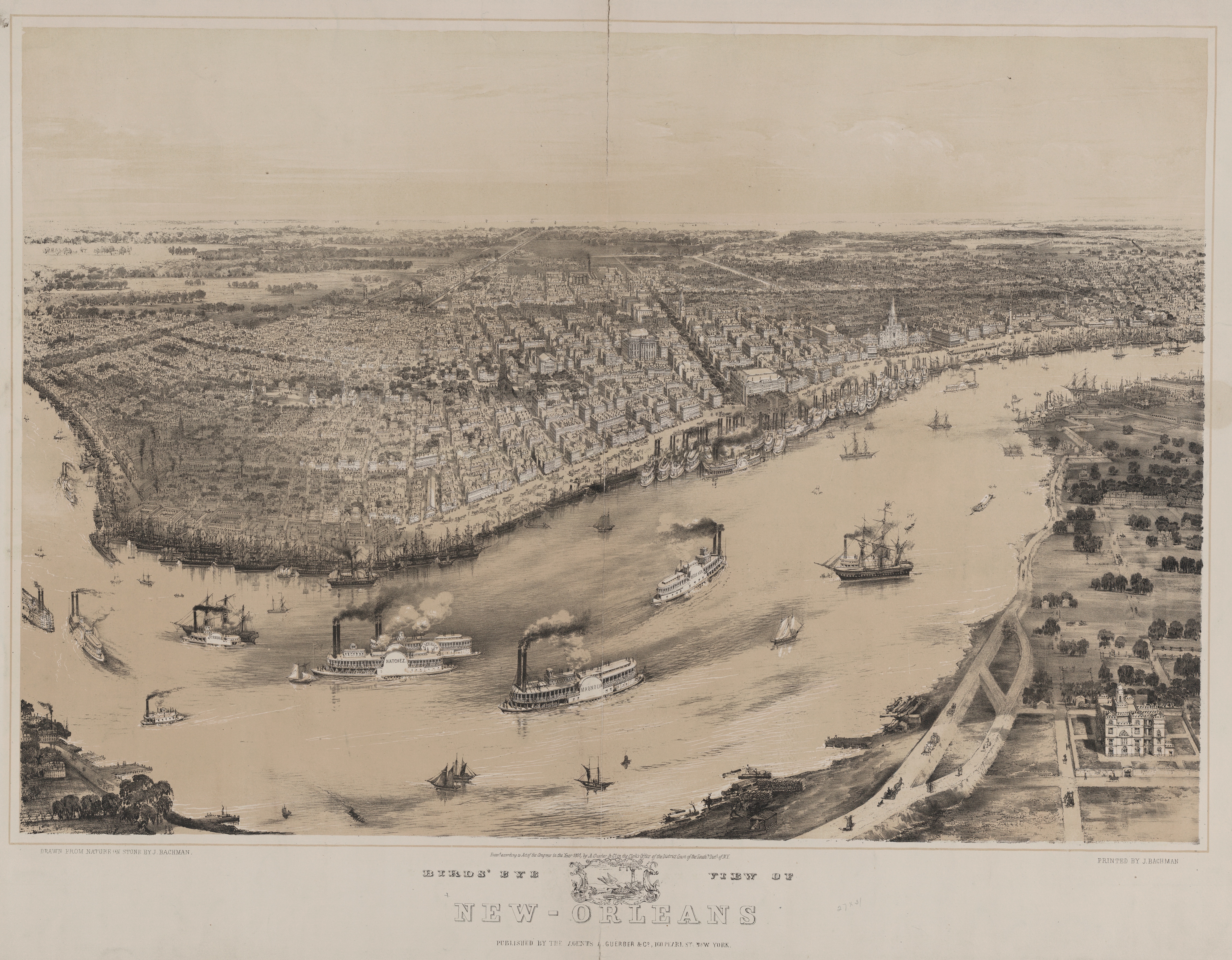
Once again, several states along and north of the Gulf of Mexico face the force of a major hurricane. As I type this, New Orleans, one of the most historic cities in the United States, is without power, and hundreds of thousands of citizens—and large parts of the the area’s industries and environment—remain threatened as Hurricane Ida makes its way inland. I’ll let other, more knowledgable sources report the news. For now, I encourage you to remember and support our compatriots as they endure and recover from this major natural disaster.

Bachmann, John, Birds’ eye view of New-Orleans / drawn from nature on stone by J. Bachman, [i.e., Bachmann], ca. 1851. New York: Published by the agents A. Guerber & Co., Printed by J. Bachman. Library of Congress. Click to open larger image in new window.

Continue reading

Martin Luther King Jr. Day

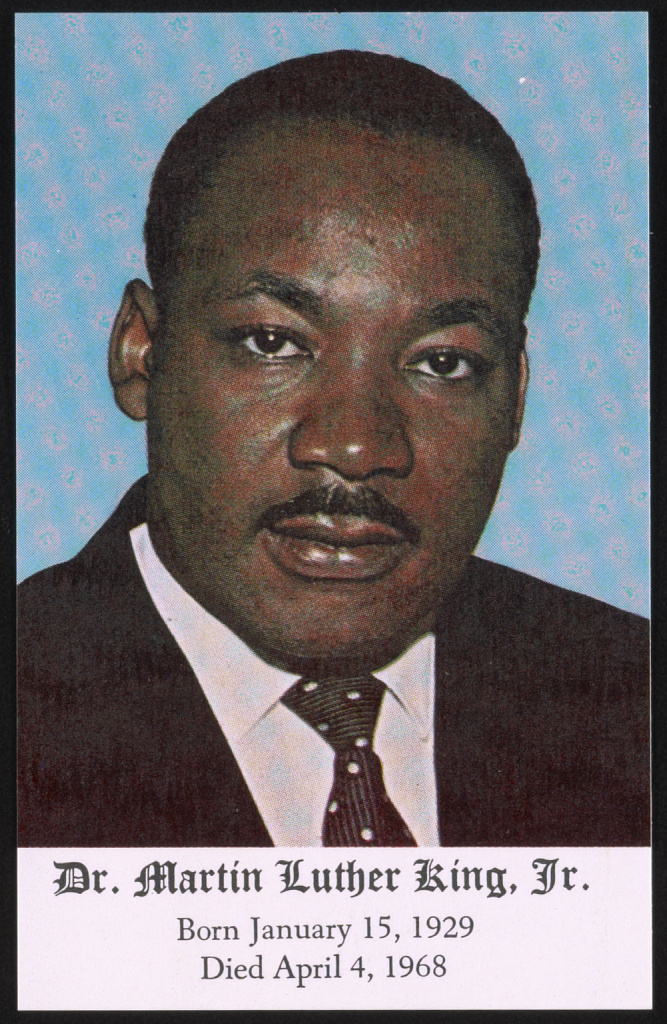
Today is the day set aside to commemorate the life and work of Dr. Martin Luther King, Jr. (1929-1968), one of the first and foremost proponents of Gandhi-style non-violent protest in the West, and one of the most inspirational and influential civil-rights, labor-rights and anti-war advocates in American history.

Unknown photographer. “Dr. Martin Luther King, Jr. Born January 15, 1929, died April 4, 1968.” From the Rosa Parks Collection, Library of Congress, https://www.loc.gov/item/2015651821/. Used here under Free Use provisions of U.S copyright law.

Among many honors, Dr. King was awarded the Nobel Peace Prize in 1964. The Norwegian Nobel Committee has a good biography here and additional information including a series of school lessons with lesson plans, videos, photos and other materials here. These are excellent resources for all of us. While Dr. King is—justly—remembered for his “Letter from a Birmingham Jail” and his 1963 “I have a dream” speech, it’s important that we remember the full depth and breadth of his life and work, and not just a few often-repeated quotes and sound bites.

Continue reading

Christmas, 1944

One of the useful things about studying history—if you pay attention—is that it can give you a bit of perspective on life and current events. This year, 2020, has been an objectively awful year, no doubt about it. A previously unknown virus has killed hundreds of thousands, infected millions, and brought economic misery to even more. Our communities and our political system have undergone stresses they have not seen since the mid-19th century.

Social distancing and mask wearing have become necessary to protect our health and our neighbors. Many of us are frustrated and sad that we will must spend our holidays apart from family and friends. It’s a tough ending for a rough year.

So this Christmas, I wanted to share something with you from my family collection. It’s a reminder that—when push comes to shove—we can work together and get through difficult times—like 2020—and even find ways to celebrate the spirit of the season in spite of difficult circumstances.

Continue reading

Veterans Day, 2020

This is a revised, updated, and expanded version of a post originally published at Clark House Historian on November 11, 2016.

One hundred and two years ago, on the eleventh day, of the eleventh month, at the eleventh hour—Paris time—the Armistice of Compiègne took effect, officially ending the fighting on the Western Front and marking the end of the optimistically named “War to End All Wars.”

In the United States, the commemoration of the war dead and the Allied victory began as Armistice Day in 1919, by proclamation of President Woodrow Wilson. Congress created Armistice Day as a legal holiday in 1938. Starting in 1945, a World War II veteran named Raymond Weeks proposed that the commemorations of November 11 be expanded to celebrate all veterans, living and dead. In 1954 Congress and President Eisenhower made that idea official, and this is what we commemorate today. There are many veterans with a connection to the Jonathan Clark house. We honor a few of them in this post.

Continue reading

Monday: Map Day! – Another Clark Family

This week we take a break from our usual focus on the extended Jonathan M. and Mary (Turck) Clark family and begin a week of posts about two remarkable, original Mequon settlers and Clark House neighbors: Sarah Allise Strickland (1823-1891) and her husband, Cyrus Clark (1815-1905).

Sarah A. Strickland was born and raised in Nova Scotia, the eldest child of Daniel and Matilda Strickland. Her family was one of the original white settler families in the area; they were enumerated in Milwaukee County on Wisconsin’s first territorial census in 1836.1

Cyrus Clark was born in western Massachusetts and was in Mequon by about 1839. He married Sarah Strickland in Grafton, Washington (later Ozaukee) County, on March 1, 1841. They lived almost forty years in Wisconsin. First in Mequon and Cedarburg, Washington/Ozaukee) County, and then divided their time between their farm in Moscow, Iowa County, and homes of one or more adult children in Oshkosh, Winnebago County. So how—and why—did they end up in South Dakota at the end of their days?

It’s an interesting story, and one that illustrates a characteristic type of pioneer experience: the continued drive to push westward, on to new frontiers and new challenges. It may seem cliché to us, but it was a real, lived experience for many of Cyrus and Sarah’s generation. This week’s posts will look at a number of key moments in their long lives, especially the decades they spent in Wisconsin. And we have some unique and new sources to share, too.

Beginning at the end…

Click to open larger image in new window.

Gravestones of Cyrus Clark and Sarah A. (Strickland) Clark, Graceland Cemetery, Madison, South Dakota.
Photo by Steve Van Slyke, used by permission.

We begin the story of Cyrus and Sarah Clark at the end, in Lake County, South Dakota, their final resting place. And not one, but two maps today, all of which take us far from Mequon and the Jonathan M. Clark house.

Continue reading