J. R. Turck – from Mequon to New Orleans

Mequon kin, down South

Previously, we turned our thoughts to the historic city of New Orleans, and the disastrous impact of then-ongoing Hurricane Ida. Once again the Crescent City was hit by a major hurricane. Ida has since moved on and lessened in intensity, but leaves in its wake significant wind and water damage; over one million Louisiana residents are currently without electricity, gasoline, and fresh water, and it looks like it will take weeks to restore services. We wish a speedy recovery for all those in the affected areas.

I have a more-than-passing interest in New Orleans because our Clark House family has ties to the city; Mary (Turck) Clark’s brother, Joseph Robert Turck (1823-1902), spent most of his adult life there.

New Orleans, Louisiana Sugar and Rice Exchange, c. 1891. Source and credits, below (note 1). Click to open larger image in new window.

Joseph R. Turck

Like his big sister Mary, Joseph R. Turck was born in Athens, Greene county, New York. He was about five years old when the family moved to Wayne county, New York, and about fourteen years old when the family migrated west to Mequon in 1837.

In February, 1845, Joseph purchased 40 acres of his father Peter Turck’s Mequon land.2 Joseph did not keep it long; he sold it back to his father in September of the same year. What happened next? We’re not sure. But by 1848 Joseph had left Wisconsin and relocated to New Orleans.

Continue reading

New Orleans

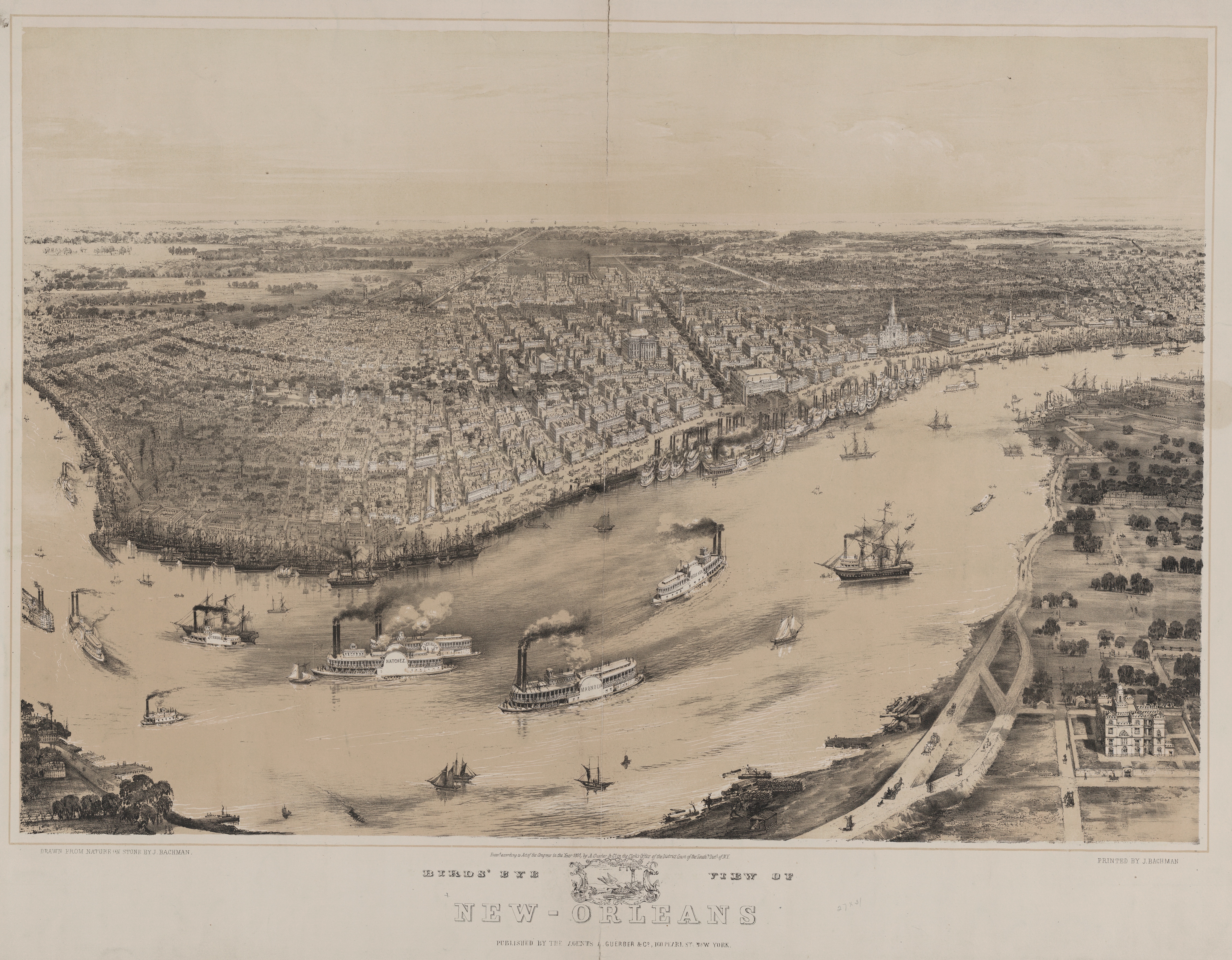
Once again, several states along and north of the Gulf of Mexico face the force of a major hurricane. As I type this, New Orleans, one of the most historic cities in the United States, is without power, and hundreds of thousands of citizens—and large parts of the the area’s industries and environment—remain threatened as Hurricane Ida makes its way inland. I’ll let other, more knowledgable sources report the news. For now, I encourage you to remember and support our compatriots as they endure and recover from this major natural disaster.

Bachmann, John, Birds’ eye view of New-Orleans / drawn from nature on stone by J. Bachman, [i.e., Bachmann], ca. 1851. New York: Published by the agents A. Guerber & Co., Printed by J. Bachman. Library of Congress. Click to open larger image in new window.

Continue reading

Henry Clark’s final resting place

UPDATED, July 4, 2021 to add a photograph of Henry Clark’s memorial inscription.

What we do — and don’t — know about the Clarks’ only son (part 5)

This is the fifth in a series of posts about the life of Henry M. Clark:
• Part 1: Meet the Children: Henry M. Clark
• Part 2: Henry Clark and the Civil War draft
• Part 3: Henry Clark – Civil War draftee

• Part 4: Henry Clark’s last days
• and a related tidbit: Avoiding the draft, 1862 style

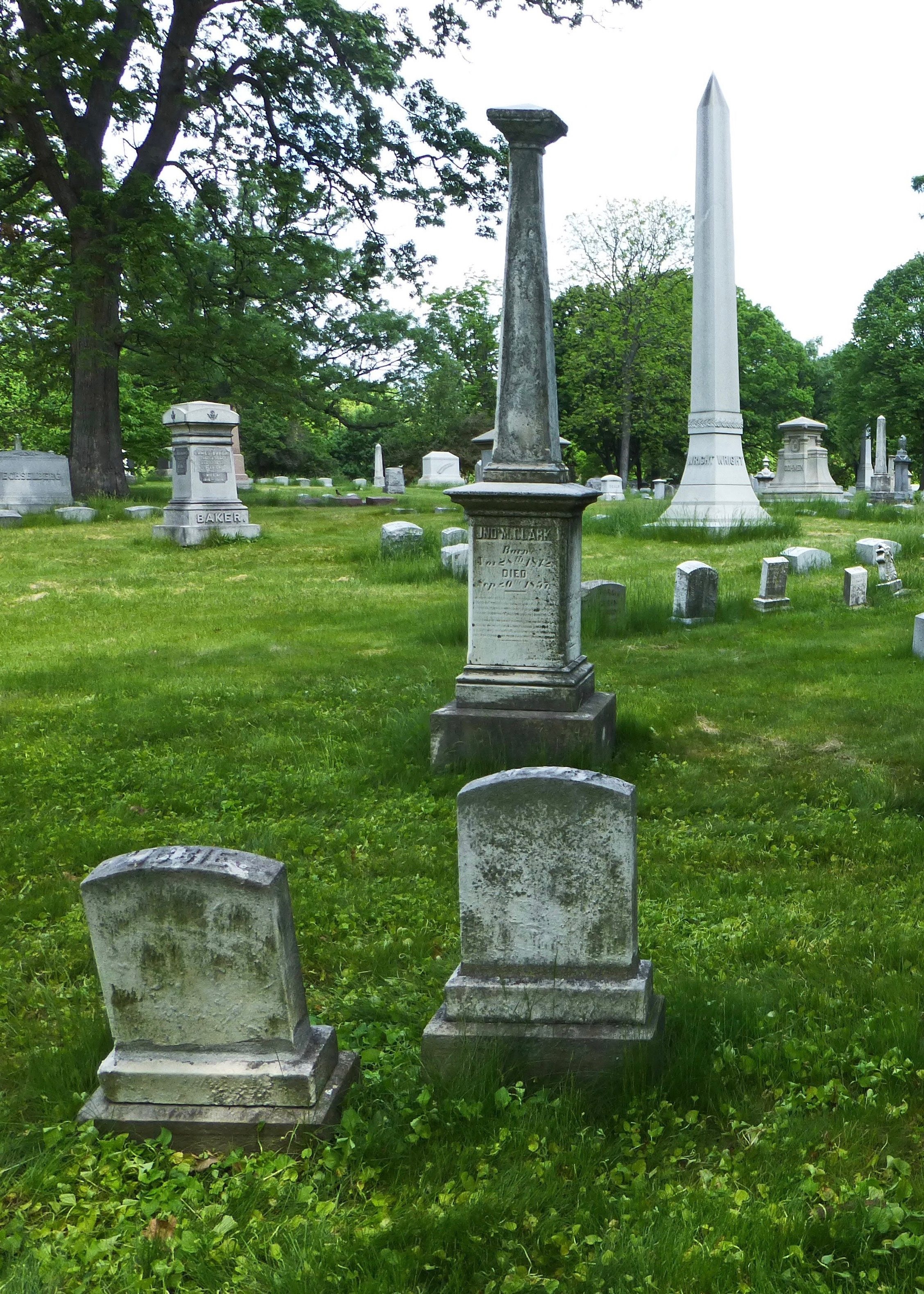
As we learned in our previous post, Henry Clark—only son of Jonathan M. and Mary (Turck) Clark—was buried “in Cedarburg” on Monday, April 23, 1866. But if you seek Henry’s final resting place, you’ll find him next to his father, mother, and sister Josie in the Clark family lot at historic Forest Home Cemetery in Milwaukee. How this came to be, and what this tells us about Clark family history, is the subject of today’s post.

Clark family graves, lot 3, block 44, section 10, Forest Home Cemetery, Milwaukee, Wisconsin. Photo courtesy Liz Hickman, 2016. Click to open new image in larger window.

Continue reading

Memorial Day, 2021

This is a revised and updated version of a post that originally appeared here on May 25, 2020. Please be sure to read the Notes & Updates, below, for new information.

Lest We Forget

Graves of Unknown Union Soldiers, Memphis National Cemetery, photo by Clayton B. Fraser, (Library of Congress), public domain. Memphis National Cemetery is the final resting place of Mequon’s Watson Peter Woodworth, and almost 14,000 of his Union Army comrades.

As we begin to recover1 from the worst pandemic in a century, a quick glance at the news will show that many Americans are celebrating this “Memorial Day Weekend” in our now usual way, as “the first day of summer.” Beaches and parks are open, stores entice customers with deals and sales, and people are crowding shoulder to shoulder in swimming pools and along ocean boardwalks.

But for many of us, Memorial Day remains rooted in its origins as Decoration Day. The first national observance was in 1868, when retired general John A. Logan, commander and chief of the Grand Army of the Republic—the Union veterans’ organization—issued his General Order Number 11, designating May 30 as a memorial day “for the purpose of strewing with flowers or otherwise decorating the graves of comrades who died in defense of their country during the late rebellion, and whose bodies now lie in almost every city, village, and hamlet churchyard in the land.”

This Memorial Day, let’s remember those Clark House family, friends, and Mequon neighbors who served in the Civil War, and what they fought—and died—for. The History of Washington and Ozaukee Counties (1881) lists these 65 volunteers from Mequon:

Continue reading

Back at the General Store

I’ve recently returned to my job behind the counter at the local mercantile. This is good—for all sorts of practical reasons—but requires an adjustment to my research and writing schedule that I’ve not quite figured out. Yet.

Main counter and clerk, 1880s General Store at Old World Wisconsin, July, 2016. Photo by Reed Perkins. Click to open larger image in new window.

I should be back with the conclusion of Infrastructure Week! next week. Meanwhile, here are a few more photos of the General Store at Old World Wisconsin — “big box” retail at its finest, circa 1880.

Continue reading

RBOH – Photo Mystery, 1865

Another in our occasional series of Random Bits of History, illustrating life as experienced by the early Mequon settlers and their contemporaries. Today we examine a photograph that may—or may not—depict an early Mequon settler or their kin.

Is this a photo of young Sarah (Strickland) Clark?

Reader Eric Pearman is a descendant of early Mequon settlers Cyrus Clark and Sarah Strickland. For a while last year Clark House Historian spent some time tracing Cyrus and Sarah’s lives, and analyzing some old photographs of those Mequon pioneers here, here, here, here and here (and a few more places, too; just use the blog’s Search function and keyword “Cyrus” or “tintype”).

Eric recently sent me this, unidentified, photo that belonged to a Cyrus and Sarah Clark descendent, and wondered if it might be of a previously un-photographed member of the Cyrus Clark or Sarah Strickland families. Even if this is not a Cyrus Clark or Sarah Strickland family member, the photo has a unique feature that you may want to know about as you examine other old photos. Let’s take a look…

Continue reading

Mary Turck Clark—updated

The original version of this post was the second-ever post on Clark House Historian. It represented what we knew at the time about Mary Turck, the daughter of Peter Turck and Rachael Gay, wife of Jonathan M. Clark, and mother of the eight Clark family children. The original April, 2016, post was pretty accurate, but we have learned a lot more about Mary and her Turck and Clark families in the meantime. So here is a revised version of that post with errors corrected and ambiguities clarified—where possible.

Please note that there are many more facts about Mary and her Clark and Turck families that I’ve written about in the past almost-5 years that are not linked to in this post. If you are looking for more information about Mary, I highly recommend using the blog’s SEARCH function and our new INDEX. And if you still can’t find the info you want, please ask me! Just use the Leave a Reply box, below, or the CONTACT link, above.

Mary Turck Clark: Mequon Pioneer

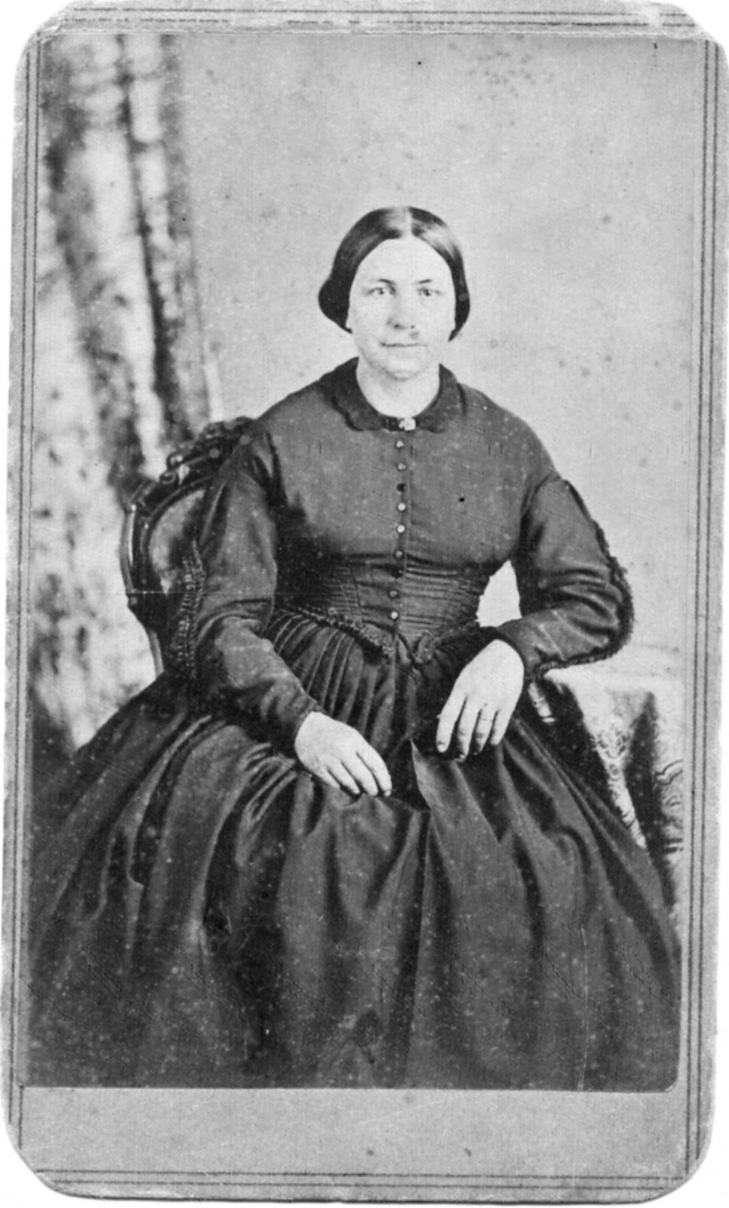
CLARK, Mary TURCK portrait

Mary Turck Clark. Photograph courtesy Liz Hickman. Click to open larger image in new window.

Continue reading

When was Mary Turck born?

Just when you think you know the answer…

A few days ago, Clark House museum director Nina Look asked me a simple question: when, exactly, was Mary Turck Clark born? So I looked in my database and I came up with…two answers: Mary Turck Clark was born on either May 4th, 1820 or May 3, 1821. So I reviewed my dates and sources, and today’s post is about what I (re-)discovered, and what I still have to investigate.

Haven’t we been over this before?

Why, yes, we have. Here are links to earlier posts on essential sources of Mary Turck Clark birth date and birth year information, starting with my second Clark House Historian post, this now-outdated post about Mary from 2016. Other, more recent, posts have gone into detail examining Mary, her family, and their likely birth dates as found on the U.S. federal decennial censuses:

I’ve not yet blogged about Mary’s 1870 or 1880 federal censuses—both enumerated in Milwaukee—but I’ve seen them and used them in my research. More on these in a moment.

Continue reading

Presidential Elections — the early years…

Well, the big day is just a week away. Here at Clark House Historian I try and remain officially non-partisan. But as a researcher and writer, and as an American with long, deep, roots in this country, I have a passionate interest in our nation and its history, and a life-long desire to see us live up to our highest ideals and aspirations. (Of course, human nature being what it is, we have not always lived up to those ideals.)

So with the election approaching, today’s post takes a look at the political leanings of early Washington County and—after its establishment in 1853—Ozaukee County, with an emphasis on presidential elections from 1848 to 1880. Our main source today is the invaluable History of Washington and Ozaukee counties, Wisconsin […], published in Chicago in 1881. Let’s begin with some of the earliest results, following statehood in early 1848:

Continue reading