“Dashing through the snow…”

As I write this, southeastern Wisconsin is in the midst of our first substantial snowfall of Winter, 2025-2026. In Jonathan and Mary Clark’s lifetime, the day after a storm like this meant it was time to hitch up the sleigh and have some fun “dashing through the snow.” Here’s a lightly-revised and expanded repeat of a post that celebrates Clark-era “sleighing time” and “jingle bells.” (And be sure to click the highlighted links for more vintage wintertime images and info.)

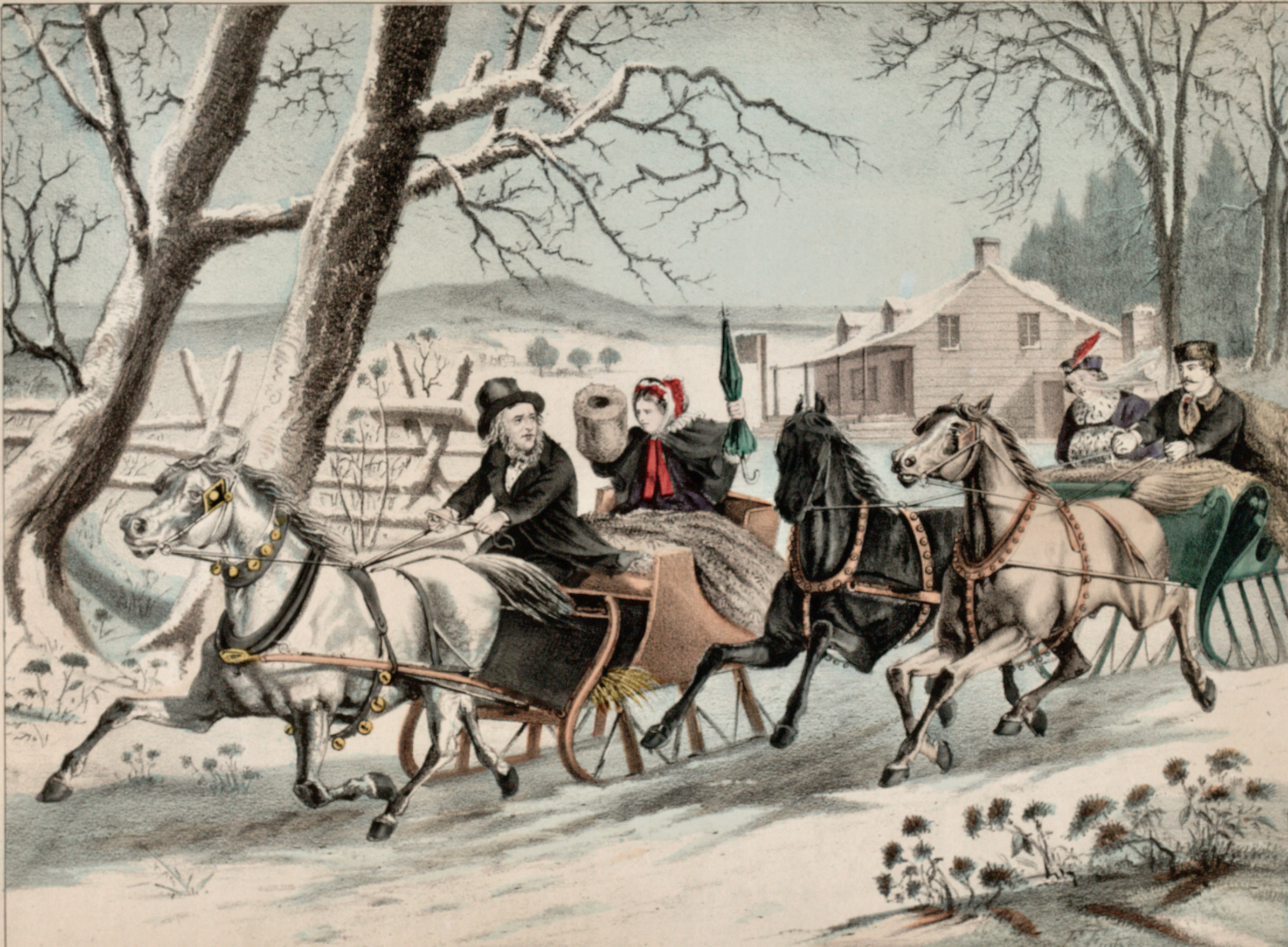
Kimmel and Forster, publishers, “Winter Pleasure in the Country,” circa 1865. National Museum of American History, Peters Prints Collection, Smithsonian Institution.1 Note the modest straps of jingle bells on the one-horse sleigh and the much more ostentatious—and louder—straps of bells on the two-horse sleigh.

Last winter, our earlier CHH posts Snow!, Shoveling out -and other winter chores and Stuff Happens – on a sleigh ride, got me wondering again about winter travel in old Washington/Ozaukee county during the Clarks’ era of the mid-1830s through the 1860s or so. Assuming most of the more successful farmers—such as the Clarks, Bonniwells and Turcks—owned a one- or two-horse sleigh, how easy was it to navigate that sleigh on the early county roads? Could you sleigh ride all the way to Milwaukee? And if you could, how long might that take?

Continue reading

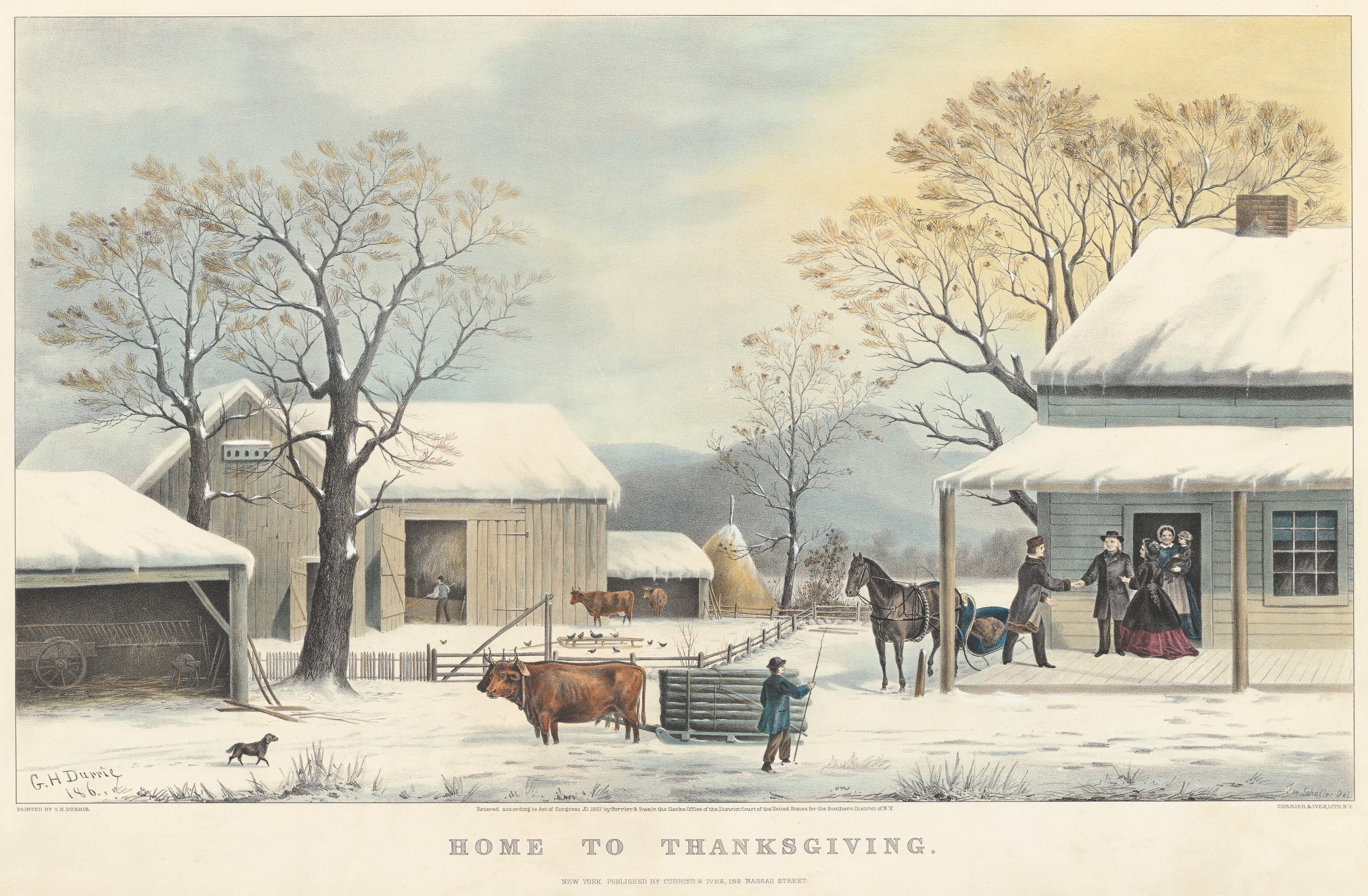
Home to Thanksgiving

Tomorrow is Thanksgiving. To celebrate the holiday, I thought I’d reprint a lightly revised version of our now-annual CHH Thanksgiving post, to share with you a few vintage recipes and a nice Currier & Ives lithograph from the period.1

Thanksgiving, 1867

Durrie, George H. and John Schutler, Home to Thanksgiving, ca. 1867, New York, Currier & Ives. National Gallery of Art, Collection of Mr. and Mrs. Paul Mellon. Public Domain. Click to to open larger image in a new window.

By 1867, when this sentimental lithograph was first published, the Clark family had been living in the City of Milwaukee’s seventh ward for about six years. Family patriarch Jonathan M. Clark had died a decade earlier, and his only son, Henry M. Clark, had been gone for about a year and a half. Family matriarch Mary (Turck) Clark was living in a house in Milwaukee with her unmarried daughters, Libbie, Persie, Theresa, Laura, Josie and Jennie.

Continue reading

Veterans Day, 2025

Veterans Day is today. For a perspective on the day—and our early Mequon veterans—here’s a post originally published at Clark House Historian on November 11, 2016, and revised, expanded and republished several times since.

Armistice Day — Veterans Day

One hundred and seven years ago today, at the eleventh hour, of the eleventh day, of the eleventh month—Paris time—the Armistice of Compiègne took effect, officially ending the fighting on the Western Front and marking the end of World War I, the optimistically named “War to End All Wars.”

In the United States, the commemoration of the war dead and the Allied victory began in 1919 as Armistice Day, by proclamation of President Woodrow Wilson. Congress created Armistice Day as a legal holiday in 1938. Starting in 1945, a World War II veteran named Raymond Weeks proposed that the commemorations of November 11 be expanded to celebrate all veterans, living and dead. In 1954 Congress and President Eisenhower made that idea official, and this is what we commemorate today. There are many veterans with a connection to the Jonathan Clark house. We honor a few of them in this post.

114th Regimental Reunion, May 30, 1897, Norwich, N. Y., Library of Congress [cropped and adjusted]. Many Clark neighbors served during the Civil War, and many remained active in the Grand Army of the Republic, the national organization for Union Army veterans, including these men from rural New York, gathered together in 1897.

Continue reading

Hot off the press…

The new JCH Newsletter is here!

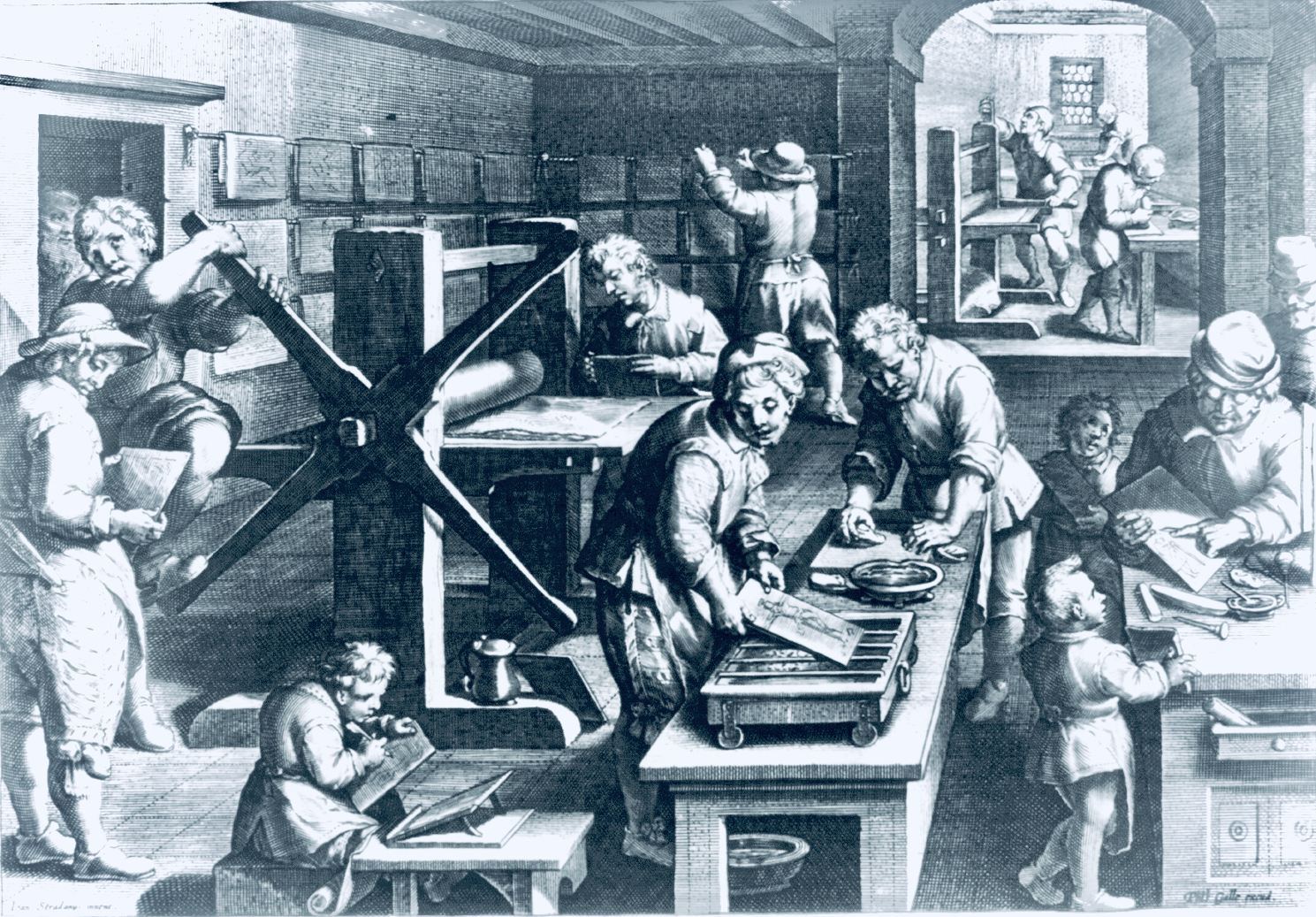
Hot off the (virtual) presses, the latest issue of the Jonathan Clark House Newsletter is here! Seven pages of JCH news, announcements, and photographs, recalling some of our summer 2025 activities and looking ahead to Fall at the Clark House. And fortunately for us—living in the 21st-century—no hand-typesetting, manual printing, or acid baths for copperplate engravings were required.

For all the details, and your own pdf copy of the new newsletter, click “Continue reading”…

Continue reading

School supplies…and more, 1850

Labor Day has come and gone, and for many this marks the unofficial “end of summer.” With that in mind, I thought you might enjoy a lightly revised and enhanced re-post of this CHH piece from 2023.

Many students start classes today. Others began school a week or two ago. Many Wisconsin families have spent the past few weeks (or months) preparing for the new school year, shopping for “Back to School” deals on clothing and school supplies at local, chain, and online retailers.

Harrison’s Columbian inks, black, scarlet, red, blue. [United States, publisher not transcribed], c. 1846. Library of Congress

Shopping for school supplies at the start of the school year is nothing new. But the origin of the now ubiquitous use of “Back to School!” as a marketing phrase is obscure. From what I’ve observed, it seems very much a post-World War II phenomenon. Yet with our current focus on three-ring binders, zippered pencil cases, and boxes of 64 Crayolas (with the built-in sharpener!), have you ever wondered what kind of school or office supplies might have been necessary or useful for Jonathan and Mary Clark, their children, and their neighbors? For a fun comparison, let’s take a look at just two of the many relevant advertisements from the columns of the Clarks’ local papers, in this case the [Milwaukee] Daily Free Democrat, November 2, 1850, page 4…

Continue reading

Labor Day – a photo essay

UPDATE: This was supposed to go out on Monday. I hit “publish” before the piece was ready. Here’s the updated 2025 version for your reading enjoyment. Sorry for any confusion (and, for you CHH subscribers, the premature email in your inbox).

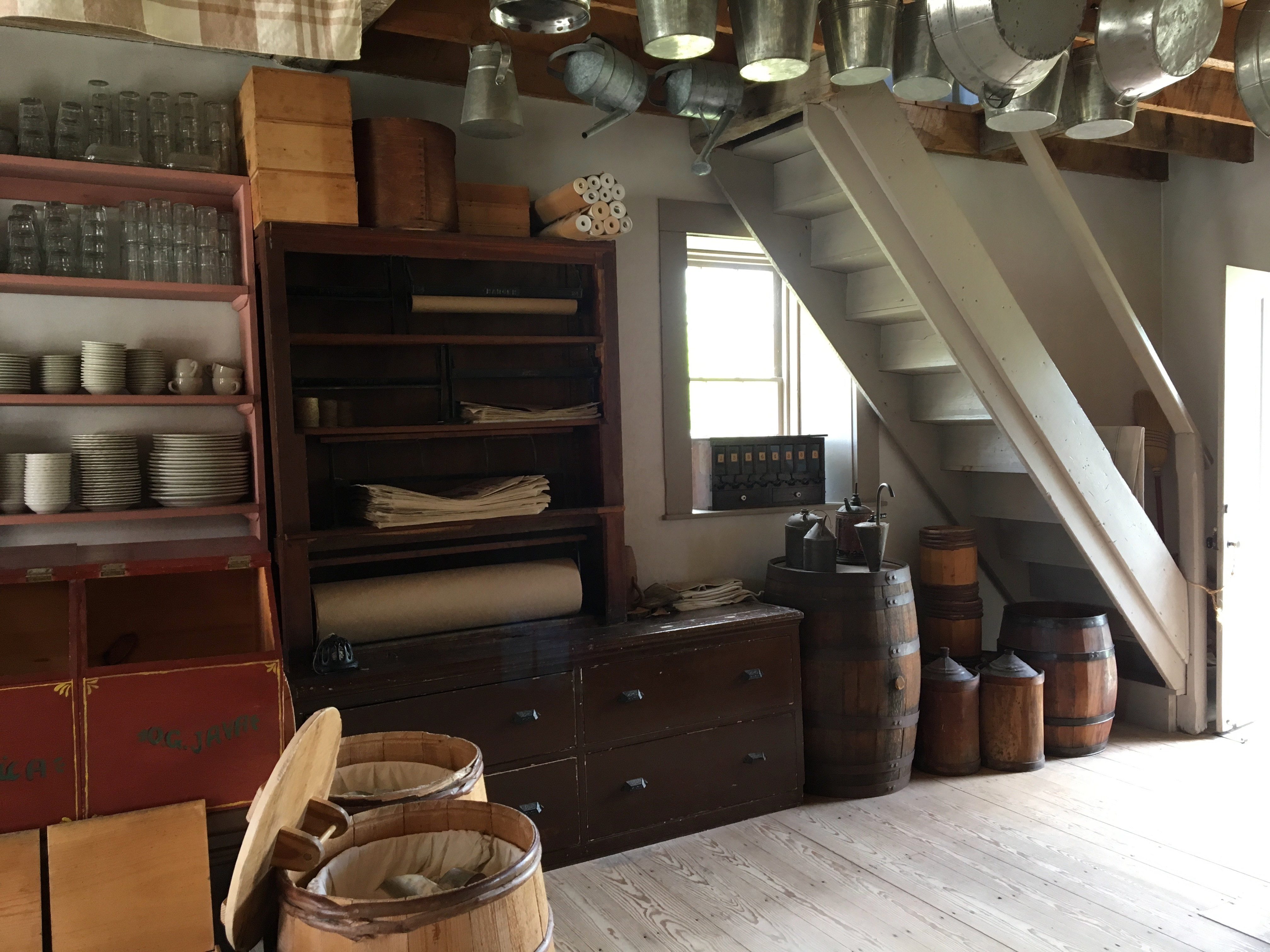
Monday, September 1st, is Labor Day, the holiday celebrating the working men and women of our nation, and I thought I’d commemorate the day with a lightly-revised re-post of this CHH piece from 2023. This Labor Day, as in 2023, I have to work a shift at our local mercantile establishment. You know, a store kind of like this one, only much bigger, stocked with just about anything you need for modern living:

Like many Americans, I don’t have the day “off” on Monday, and won’t be marching in a parade, but I’d still like to honor the holiday and salute the American worker, past and present. With that in mind, let’s revisit some of the nineteenth-century occupations we’ve talked about previously at Clark House Historian, highlighting a few of the many skills, trades, and occupations common during the Clark House era.

Since it is a holiday, I’m not going to add long commentaries to each photo. Enjoy the photo galleries, and be sure to click each gallery—and photo—to open and peruse larger versions of each image. And click the highlighted links to visit the original CHH posts, filled with lots more information about the different skills, tools, and jobs, and the full image credits.

Continue reading

Memorial Day, 2025

Lest We Forget

Our annual Memorial Day post, first published in 2020, more relevant with each passing year.

Graves of Unknown Union Soldiers, Memphis National Cemetery, photo by Clayton B. Fraser, (Library of Congress), public domain. Memphis National Cemetery is the final resting place of Mequon’s Watson Peter Woodworth, and almost 14,000 of his Union Army comrades.

Today is the day our nation officially observes Memorial Day. For many Americans, Memorial Day represents “the first day of summer,” and is traditionally celebrated with trips to the lake, picnics, parades, and sales on cars, appliances, and other consumer goods.

But for many of us, Memorial Day remains rooted in its origins as Decoration Day. The first national observance was in 1868, when retired general John A. Logan, commander and chief of the Grand Army of the Republic—the Union veterans’ organization—issued his General Order Number 11, designating May 30 as a memorial day “for the purpose of strewing with flowers or otherwise decorating the graves of comrades who died in defense of their country during the late rebellion, and whose bodies now lie in almost every city, village, and hamlet churchyard in the land.”

On this Memorial Day, let’s take a moment to remember what this day truly represents.

Continue reading

The Clarks, a family of readers…

Some of our recent and upcoming posts are focused on reading and evaluating source materials. The first of these posts, JCH Sources, part 1, was illustrated with this drawing…

Whistler, James McNeill, artist, Reading by Lamplight, etching and drypoint, 1859. MetMuseum. Bequest of Julia H. Manges, in memory of her husband, Dr. Morris Manges, 1960

This is James McNeill Whistler’s 1859 Reading by lamplight, an evocative drawing of a young woman, reading by the light of an oil lamp, a cup of tea at her side. The lamp is supported on a tall, slender metal stand. It’s light is raised even further by placing the lamp stand on a large, overturned bowl.

If I didn’t know better, I’d think this was Caroline Clark, or one of her other well-read sisters. Caroline would have been about 19 years old in 1859, when Whistler made this drawing. She was in the middle of her pioneering two-year high school course in Milwaukee, a talented, energetic young woman on the way to living a remarkable life of service. Here she is circa 1889-1900, around age 50, in the prime of life:

Continue reading

“Dashing through the snow…”

Kimmel and Forster, publishers, “Winter Pleasure in the Country,” circa 1865. National Museum of American History, Peters Prints Collection, Smithsonian Institution.1

Talk of sleighs and sleighing in our recent CHH posts on Snow! and Shoveling out -and other winter chores, plus our January, 2022, essay on Stuff Happens – on a sleigh ride, got me wondering again about winter travel in old Washington/Ozaukee county during the Clarks’ era. Assuming most of the more successful farmers—such as the Clarks, Bonniwells and Turcks—owned a one- or two-horse sleigh, how easy was it to navigate that sleigh on the early county roads? Could you ride all the way to Milwaukee? And if you could, how long might that take?

Continue reading