Blog News! – August, 2023

A late-summer look at Clark House Historian news and upcoming posts…

First, a few stats…

I missed publishing my annual review of CHH stats on the blog’s seventh (!) anniversary last March. But here are a few numbers for those of you keeping score at home, beginning with this year’s (incomplete) numbers, as of August 20, 2023:

• Number of visitors, 2023: 2,262
• Number of views, 2023: 4,660
• Number of posts, 2023: 38
• Number of words, 2023: 50.5K

For comparison, here are the numbers for all of last year:
• Number of visitors, 2022: 2,424
• Number of views, 2022: 5,523
• Number of posts, 2022: 62
• Number of words, 2022: 68.2K

The blog’s all-time outreach on behalf of the Jonathan Clark House Museum (as of Aug.20, 2023), includes:
• Number of visitors, all time: 8,985
• Number of views, all time: 26,819
• Number of posts, all time: 361
• Number of words, all time: circa 382K
• Subscribers: 49

Full disclosure: In addition to sharing Clark House history with you all, I use the blog as a searchable archive of the facts, analyses, and images that I find or create during my work as Clark House Historian. I often search for and refer to previous blog posts as I prepare new posts and other work. So take the “visitor” and “views” stats with a grain of salt, and assume that at least a certain number of visits to the various blog posts are mine.

A bit of a ‘”Bonniwell break”…

I was at the Friends of the Clark House annual meeting back in January, 2022, and I overheard Clark House director Nina J. Look mention a little research project focused on the youngest—and least documented—member of the Mequon’s pioneer Bonniwell family: Clark House neighbor and brother-in-law, Alfred T. Bonniwell. I volunteered to help with a “short series” of related blog posts. After all, when I began this project, I had fewer than a dozen records documenting Alfred’s life. How long could a quick survey of those take? A month or so, at most?

Continue reading

Clark House News – August, 2023

JCHM Newsletter is here!

Here’s the Summer | August, 2023 edition of the Jonathan Clark House Museum newsletter. It’s filled with Clark House news, notices of upcoming events, and recaps and photos of a variety of summer happenings. Click the image below to view and/or download your own PDF copy of the complete newsletter.

Thanks to all involved in producing a summer full of Jonathan Clark House activities, especially museum director Nina J. Look and our wonderful crew of docents, volunteers and board members. And a tip of the hat to Nina (and our savvy graphic designer, Shayla Krantz) for this latest edition of the newsletter.

But wait—there’s more!

Continue reading

School supplies…and more, 1850

Almost three weeks remain until Labor Day marks the unofficial end of summer, and already many Wisconsin families are preparing for the new school year. “Back to School” promotions and special merchandise can be found in many local, chain, and online retailers. The history of “Back to School” as a marketing theme in the U.S. is obscure, but from what I’ve observed, it seems very much a post-World War II phenomenon.

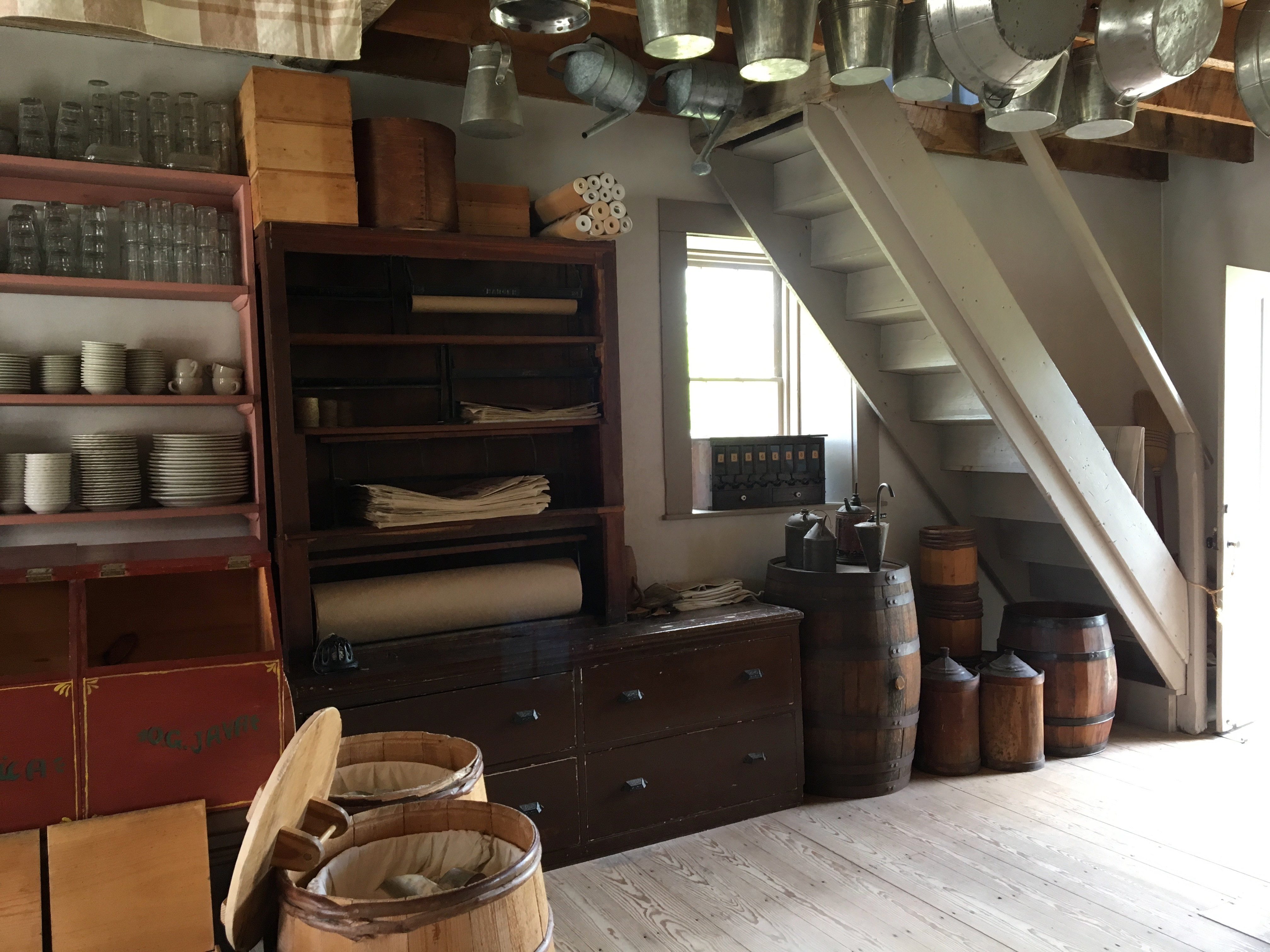
With our current the focus on three-ring binders, zippered pencil cases, and boxes of 64 Crayolas (with the built-in sharpener!), have you ever wondered what kind of school or office supplies might have been necessary or useful for Jonathan and Mary Clark, their children, and their neighbors? Just for fun, here are just two of the many informative advertisements from the columns of the local papers, in this case the [Milwaukee] Daily Free Democrat, November 2, 1850, page 4:

Your local book & stationery shop

Milwaukee book & stationery retailer Rood & Whittemore had a fine selection of supplies for the scholar, letter writer, or professional man or woman of 1850:

Something for everyone, including the “country traders” and teachers that often served as buyers and distributors of school textbooks for their rural areas. For their efforts, the traders and teachers received “liberal terms,” presumably some sort of discount (for cash accounts, of course), from Rood & Whittemore.

And as you might expect, even from its earliest days Milwaukee was not a one-store town. In the words of the immortal Ron Popiel

Continue reading

At my desk, writing…

Sorry for the lack of blog posts lately. My week began with several days devoted to an unexpected and very stressful issue that has now been resolved (or, at least, much improved) and I am researching and writing once again.

I’ll have more history for you here presently, and I have a brief but interesting piece coming up shortly in the next Jonathan Clark House newsletter. What’s that about? Let’s just say that something in today’s portrait of a rather posh Philadelphia silversmith is more relevant to the Clarks’ era—and the Jonathan Clark House Museum collection—than you might think.

Thanks for reading and see you soon!

Continue reading

More munching mammals!

We have a vegetable garden in the backyard of our southeastern Wisconsin house. It’s not large, but we still manage to grow a nice quantity of green peas, heirloom tomatoes, green beans, peppers, basil, and squash, enough to top off several dozen vacuum-sealed mason jars and fill a chest freezer each year.

Nature being what it is, we are not the only critters in the neighborhood that enjoy the bounty of our labors. Last May I mentioned our ever-expanding population of Rabbits! and the efforts needed to keep them from our young and ripening produce. This week we face a new foe…

Continue reading

Thomas Day: farmer, prospector, preacher

I’m still collating information about how and when the members of the Bonniwell gold rush expedition(s) returned to Wisconsin. I hope to have the full list posted here, shortly. In the meanwhile, I thought you might be interested in learning more about Clark family neighbor Thomas Day. He was a member of the Bonniwell 1849 by-land-and-sea expedition to the California gold fields and was a friend and colleague to Clark House neighbor and Methodist evangelist William W. Woodworth. Thomas Day’s life story sheds light on the early Washington/Ozaukee county settler experience, and illuminates various aspects of immigration, religion, and family life in pioneer days.

As we begin, be sure to note that our subject, Thomas Day, immigrated to Wisconsin from England in 1846, and is not directly related to the Tennessee-born, 1836 Mequon pioneer Isham Day.

Rev. Thomas Day, 1809 – 1901

Let’s start at the end, with the longer of two versions of Thomas Day’s obituary, as published on page 3 of the Indianapolis News, Sunday, April 21, 1901:

Continue reading

Isham Day: Civil War casualty

Isham Day was one of the very first white pioneers to settle in the future Town of Mequon, Wisconsin Territory. I first wrote about Isham Day, and his historic house—later Mequon’s first post office, and also known as the Yankee Settlers’ Cottage—in an earlier post, River Walk. You might want to read that before continuing with today’s essay.

Isham Day was not only one of the first settlers in this area, he was active member of the small but growing community in what would become Washington and, later, Ozaukee counties. There is a lot to say about his role in the early decades of pioneer life in the Clarks’ neighborhood, some of which is already known through early local histories and various federal and local primary sources. (And he appears in six different posts here at Clark House Historian.)

One thing that is less well known is what happened to Isham Day after those early days in Milwaukee and Mequon. I wanted to know and, after an extended search, I found out. In many ways, it’s a story of the stereotypical moving-ever-westward American pioneer experience. But it’s also a story of a man trying to live a peaceful life in the midst of violence and rebellion. In our recent post, Memorial Day, 2023, we remembered some of our local men that fought and died to preserve the Union and end the scourge of slavery in “the land of the free.” Today we examine one of the many civilian casualties of that conflict: Isham Day.

Isham Day house (“Yankee Settler’s Cottage”), built 1839, Mequon, Wisconsin. The oldest house in Ozaukee county still on its original foundation. Photo credit: Anna Perkins, 2021.

Please note: sensitive or younger readers may find some of the language and events documented below to be disturbing.

Continue reading

Random bits of Gold Rush history

UPDATED, May 28, 2023 with additional information about Panama (City) and Postal Museum hours.

I’m still organizing a final roundup of what we know about the Bonniwell gold rush expeditions and when everyone returned to Wisconsin. Until that’s ready, here are three random bits of history that might interest you. All are closely tied to the homecoming experiences of the Clark House neighbors that went prospecting in California between 1849 and the mid-1850s. And if you missed our series of Farewell to California! The Bonniwell party returns, you can catch up with these links to Part 1, Part 2, Part 3 and Part 4.

Piracy

In a follow-up question to part 4 of this series, reader Laura Rexroth asked: “Reading about the robberies on land, traveling from San Francisco to New York, I’m wondering if there was any piracy at sea with all these ships carrying so much gold dust?”

That’s a good question. As I mentioned in my original reply, the U.S. Mail Steamers that served the Pacific and Atlantic sides of the California mail route were considered the latest and greatest in ocean transportation and I suspect they could probably out run most other ships of the day. That said, I did find this interesting news item, “Arming of the Chagres steamers” on page 2 of the September 10, 1851, Milwaukee Weekly Wisconsin:

Continue reading

Rabbits!

Audubon, John James, artist, and John T. Bowen, printer, Lepus Sylvaticus, Bachman, circa 1845-1848, Smithsonian Institution, Peters Prints Collection, Creative Commons CC0 license.1

There they are: Mr. & Mrs. Cottontail and one of their many offspring. The Eastern Cottontail and its relatives were a common sight in Jonathan and Mary Clark’s world, just as they are today.

We seem to have a bumper crop of rabbits in our suburban Wisconsin yard this year and, no doubt about it, the bunnies are cute and entertaining. But for the gardener, rabbits mean trouble. If you are trying to raise vegetables and fruits to feed your pioneer family, these amusing little fur balls are the enemy. They can consume huge amounts of seedlings and sprouts in just a day or two. What’s a gardener to do?

Last year—after they ate through the plastic fence around our vegetable garden and then devoured our entire crop of green been sprouts—I went to the local big box store and got a roll of metal wire rabbit fencing and some steel posts to hold it up. That worked great for us, but it made me wonder: what did Jonathan and Mary Clark use to keep the ravenous rabbits at bay? Well, I don’t have any documentation from the Clarks’ farm, but during my researches, I have noticed some popular 19th-century methods of rabbit control.

Continue reading

The farm garden

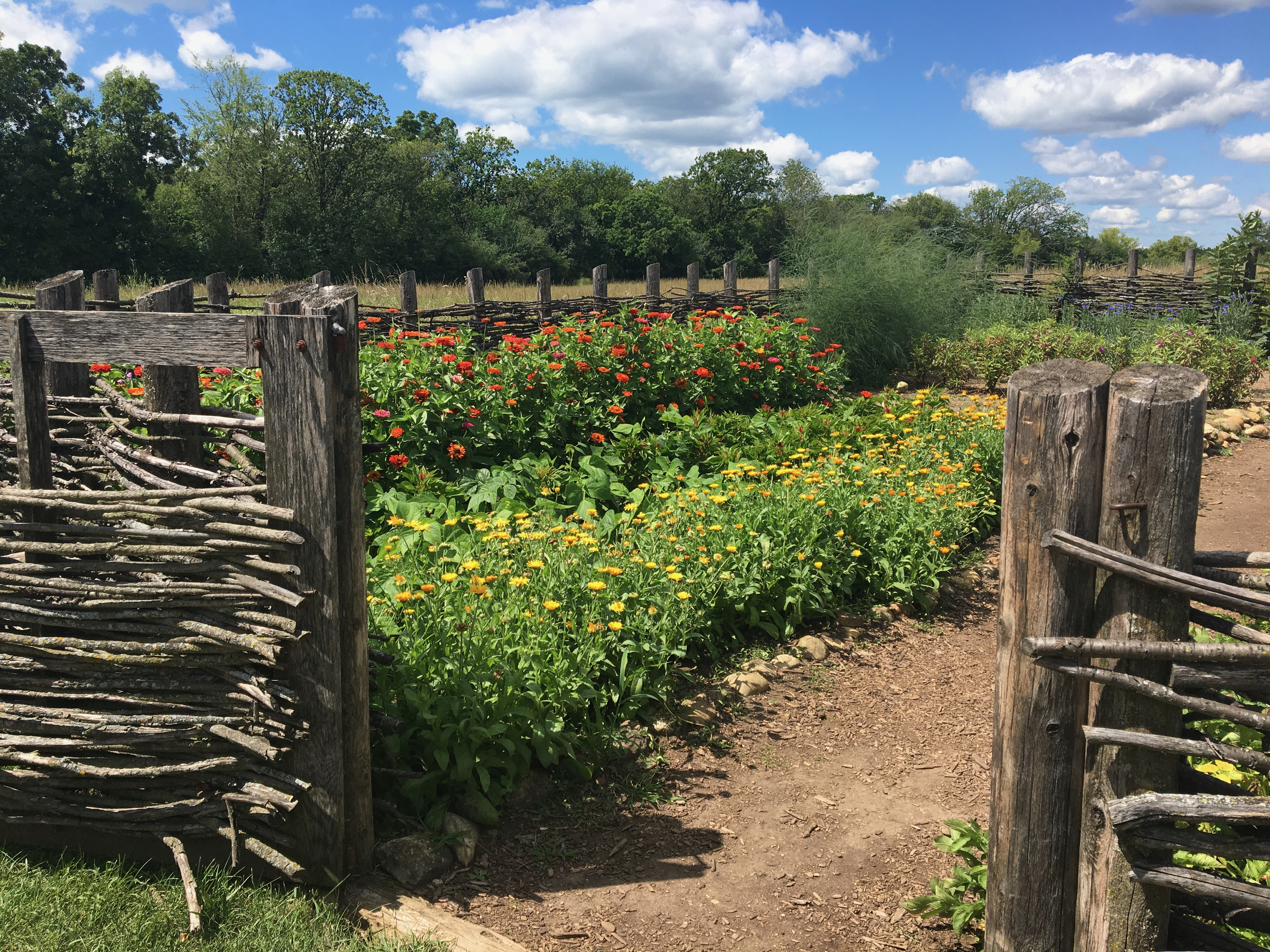
It’s already the third week of May, 2023, and summertime will soon be here. At our southeastern Wisconsin home the first spring flowers are done, and the next round of blossoms have been blooming for a week or two. The peas are in the ground and already about 8 inches high, the rhubarb is big enough to cut and make one or two pies, and we harvested the first half-dozen radishes today. We still have to put in the tomato and pepper seedlings and start the big patch of green beans. So with gardening on my mind, I thought you might enjoy a slightly-belated repost of this annual favorite, which first appeared here in April, 2021. Cheers!

Planning the garden

It’s early April, and the growing season is not far off. For a farmer like Jonathan M. Clark, it’s a little early yet for plowing and sowing, but not too early to make plans and sharpen the tools. For a farmer’s wife, like Mary (Turck) Clark, it’s not too soon to think about the farm garden, its crops and layout.

I don’t know if Mary and Jonathan were regular readers of the popular and affordable farmers’ almanacs of their era; I wouldn’t be surprised if they were. There were many to chose from. Perhaps they had a copy of something like:

The Cultivator […], New Series, Vol. VII, Albany, 1850, title page. Click to open larger image in new window.

Continue reading