We’ve had some snow in my corner of southeastern Wisconsin, several modest snowfalls over the past few days. I’ve had to shovel the walks and driveway at our house a few times this week, and there’s more snow—and shoveling—in the forecast. With that in mind, I thought you might enjoy the snow-related images and stories from a revised edition of this post, which originally appeared here in February, 2023.
Homer, Winslow, A Winter-Morning,—Shovelling Out, 1871. Wood engraving. Brooklyn Museum, Gift of Harvey Isbitts.
Winter chores
I empathize with the lads in this 1871 engraving by Winslow Homer. Unlike these fellows, with their (homemade?) wooden shovels, I have a lightweight, sturdy, ergonomic, plastic and metal snow shovel to work with. And although we do get snow in 21st-century Wisconsin, I haven’t had to deal with shoulder-high accumulations like the ones in Homer’s picture since I lived in western Massachusetts in the early 2010s. It looks like our 1871 snow shovelers are dealing with the kind of snowfall that Clark family neighbor Rev. James W. Woodworth described in these January, 1871, diary entries:
Hey there! We finally got some snow in southeastern Wisconsin, which prompts me to republish this essay, which originally appeared in early 2021, and has been updated and re-posted several times since. Have fun outside—or enjoy a warm beverage inside—and admire the snowy winter landscape while you can. Cheers!
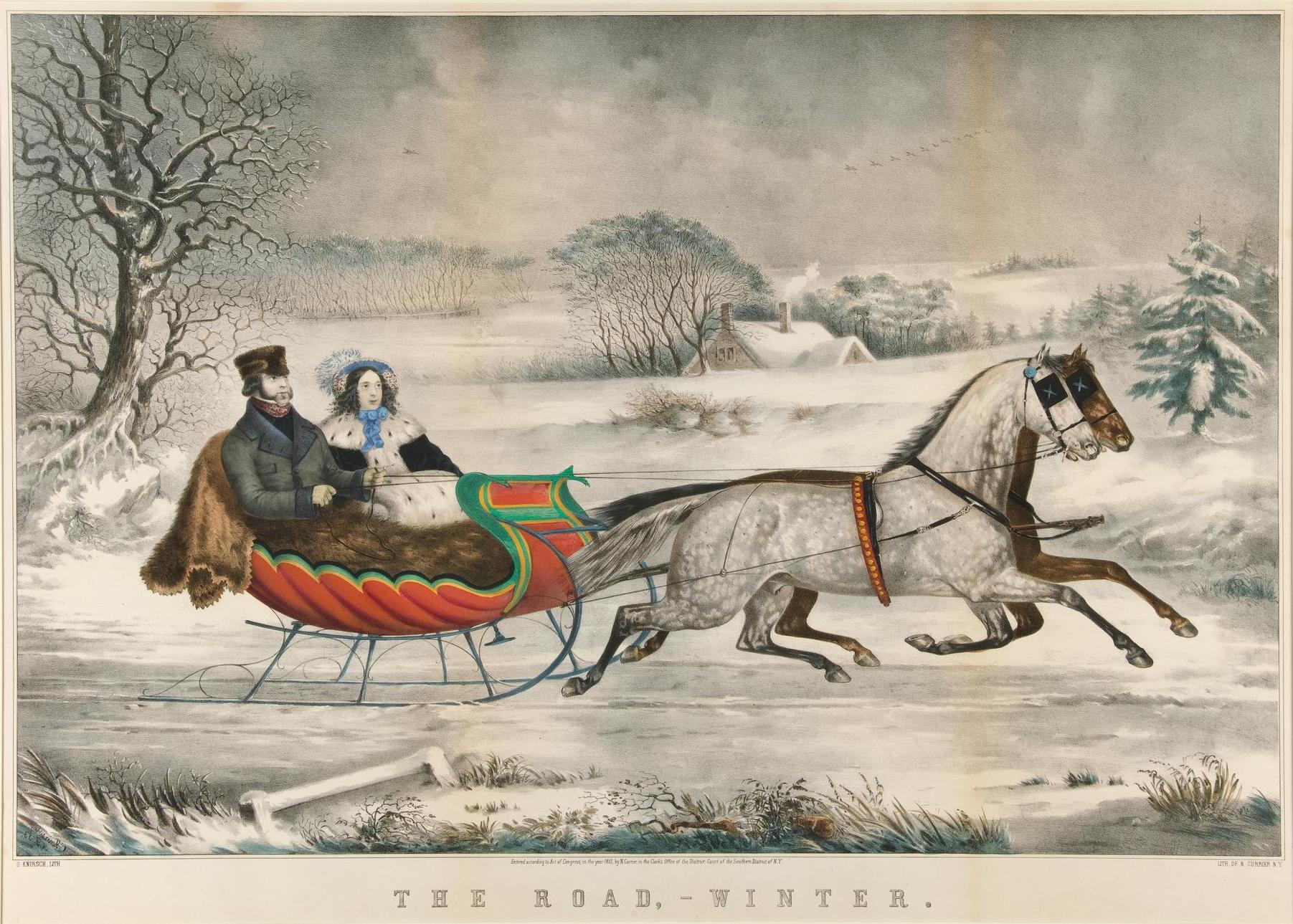
Snow, and often lots of it, was a feature of Jonathan and Mary Clark’s life in Wisconsin. And if you wanted to go to town or church or visit your neighbors during the snowy Wisconsin winter—or just enjoy a pleasant winter ride in the country—you’d need a sleigh.
Currier, Nathaniel (1813-1888), The road, winter / O. Knirsch, lith., 1853. New York: Published by Currier & Ives. Yale University Art Museum, Whitney Collections of Sporting Art, given in memory of Harry Payne Whitney (B.A. 1894) and Payne Whitney (B.A. 1898) by Francis P. Garvan (B.A. 1897) June 2, 1932. Public domain. Click to open larger image in new window.1
We don’t know if the Clarks owned a sleigh while they lived in Mequon. I suspect they did, though their sleigh—and their clothing—may not have been quite as posh as those in this Currier & Ives lithograph from 1853.
Saturday, March 1, 2025, from 9:00 am to Noon, the Jonathan Clark House Museum, at the corner of Bonniwell and Cedarburg Roads in Mequon, will host a special museum open house featuring an up-close exploration of our newly-acquired 1860 Plat Map of Mequon.
Tonight is Christmas Eve, and I thought you might enjoy an expanded reprise of our 1867 Santa Claus story, originally posted in two parts, December 25 and 30, 2017. In 2021 I combined the two original posts and incorporated some new illustrations and a few revisions of the text. Here it is again, for your holiday enjoyment. Ho! Ho! Ho!
Christmas in early America
For many years now, Christmas has been celebrated by Americans as an important religious and (increasingly secular) community holiday. Christians gather to worship and commemorate the birth of Jesus, and they and other Americans enjoy a break from work to gather with family and friends to feast and exchange gifts. But it was not always this way.
In many of the American colonies, Christmas was not observed as a religious or secular holiday. The seventeenth-century Puritan leaders of the Massachusetts Bay Colony considered Christmas to be non-biblical and pagan influenced. In Boston and other parts of New England any observance of Christmas was prohibited and, for a few years, actually illegal:
Penalty for Keeping Christmas, 1659
Records of the Governor and Company of the Massachusetts Bay in New England. Printed by order of the Legislature, edited by Nathaniel B. Shurtleff, M.D., Vol. IV, Part I, 1650-1660, online at mass.gov (accessed 21 Dec. 2021). Click to open larger image in new window.
Transcription: For preventing disorders arising in several places within this jurisdiction, by reason of some still observing such festivals as were superstitiously kept in other countries, to the great dishonor of God and offence of others, it is therefore ordered by this Court and the authority thereof, that whosoever shall be found observing any such day as Christmas or the like, either by forbearing of labor, feasting, or any other way, upon such accounts as aforesaid, every such person so offending shall pay for every such offence five shillings, as a fine to the country.
Christmas was not generally accepted as a holiday in many parts of the United States until after the federal government made December 25 a national holiday in 1870.
On the other hand…
The Massachusetts Puritans may not have approved of “observing any such day as Christmas or the like, either by forbearing of labor, feasting, or any other way,” but Christmas was “kept in other countries” and increasing numbers of immigrants from those countries to the United States—particularly from Victorian England, Catholic Europe, and the German Lands—celebrated the day in their new American homes with many of their accustomed religious observances and national traditions.
Well, whaddya know? Christmas is just around the corner…
JCH Parlour with Christmas tree and decor. Photo credit Reed Perkins
Holiday Lights 2024
December 2 & 3, 2024, brought us the latest edition of our Holiday Lights gathering of Clark house friends old and new. There was good food, tasty beverages, lively conversation, and fine seasonal music, all dished up in the unique ambience of our historic Jonathan Clark House Museum.
As we do every year, the house was decorated with appropriate 1840s-style decorations, including the table-top Christmas tree and ornaments, and the evergreen bough decorations on the window sills, shown above.
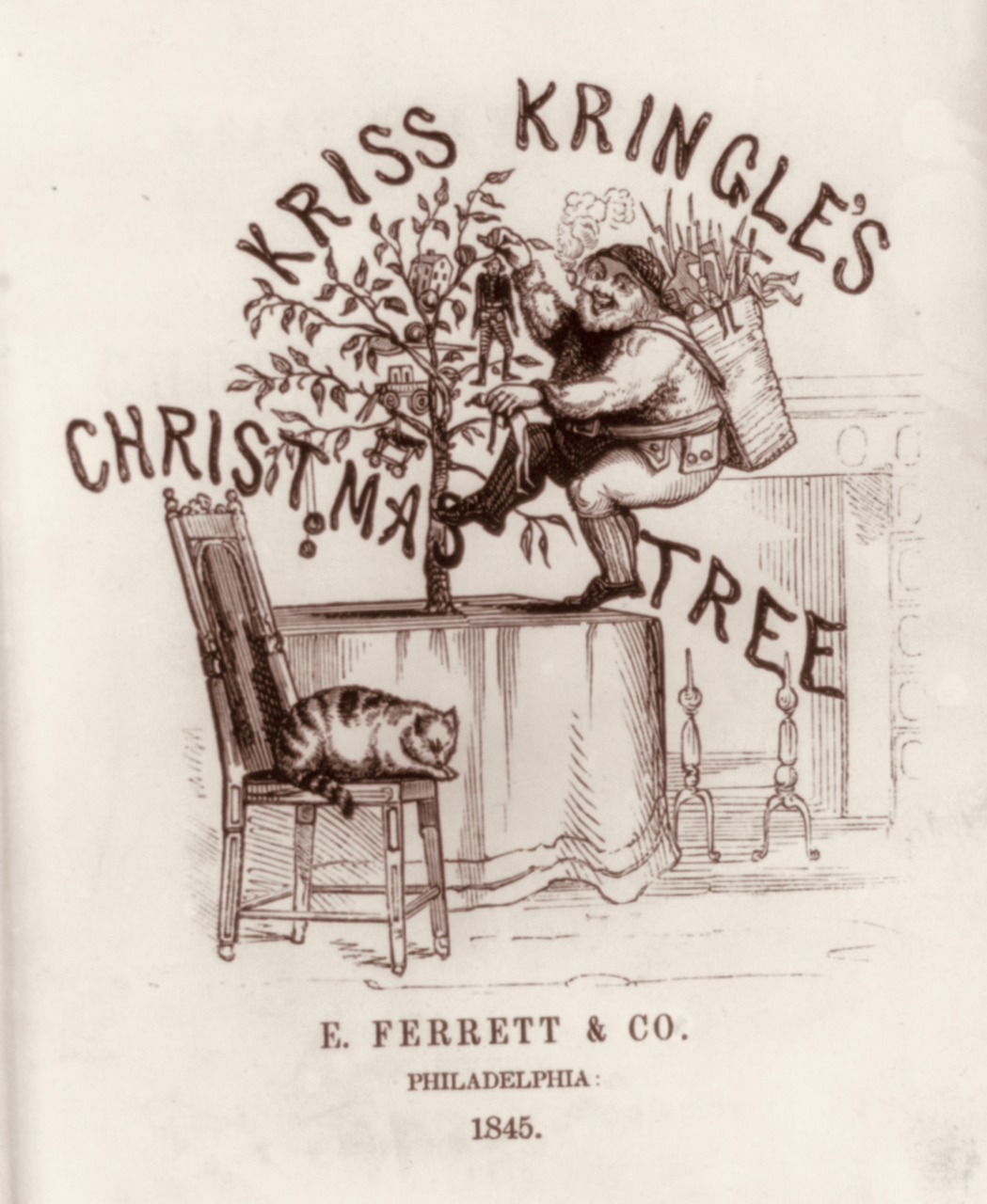
KrissKringle’s Christmas Tree [title page], E. Ferrett & Co., Philadelphia, 1845. Library of Congress
I grew up in the Chicago suburbs, and I remember the holiday thrill of riding the Chicago & Northwestern commuter train downtown with my parents, and then walking into the majestic State Street headquarters of Chicago’s grandest department store, Marshall Field & Company. Our mission? A trip up to the “toy floor” at Field’s, where we would wait in line to tell Santa all the wonderful things we would like to receive for Christmas that year.1
It goes without saying that I haven’t been able to fit on Santa’s lap for a very long time. But as the Clark House Historian, I still have holiday dreams and wishes, and today I’d like to share some of them with you. Who knows, perhaps Santa will work his magic once again?
(Official disclaimer: I do not serve on the JCH Board of Directors, or any of its committees. This is my Christmas daydream, a fantasy of what I’d like to see unfold at my favorite museum, given unlimited resources. And besides, as the great Chicago architect and city planner Daniel Burnham famously said: “Make no little plans. They have no magic to stir men’s blood!”)
My list is organized into several parts, the first of these is…
Today is Labor Day, the holiday celebrating the working men and women of our nation, and I thought I’d commemorate the day with a lightly-revised re-post of this piece from 2023.
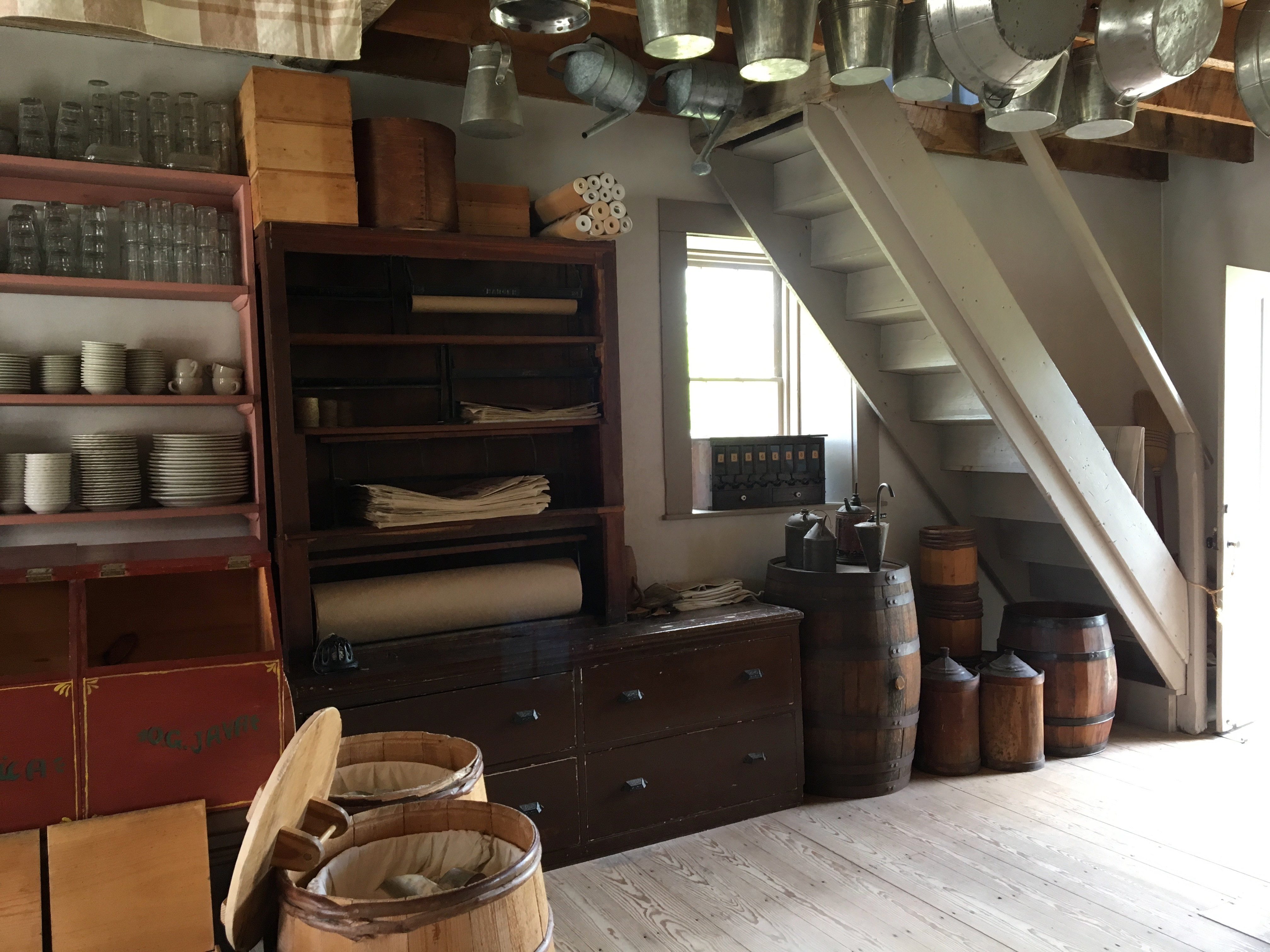
This Labor Day, I’ll be at home, working on my upcoming lectures for the state DAR and the Cedarburg History Museum. Last year, I had to work at our local mercantile establishment. You know, a store kind of like this one, only much bigger, stocked with just about anything you need for modern living:
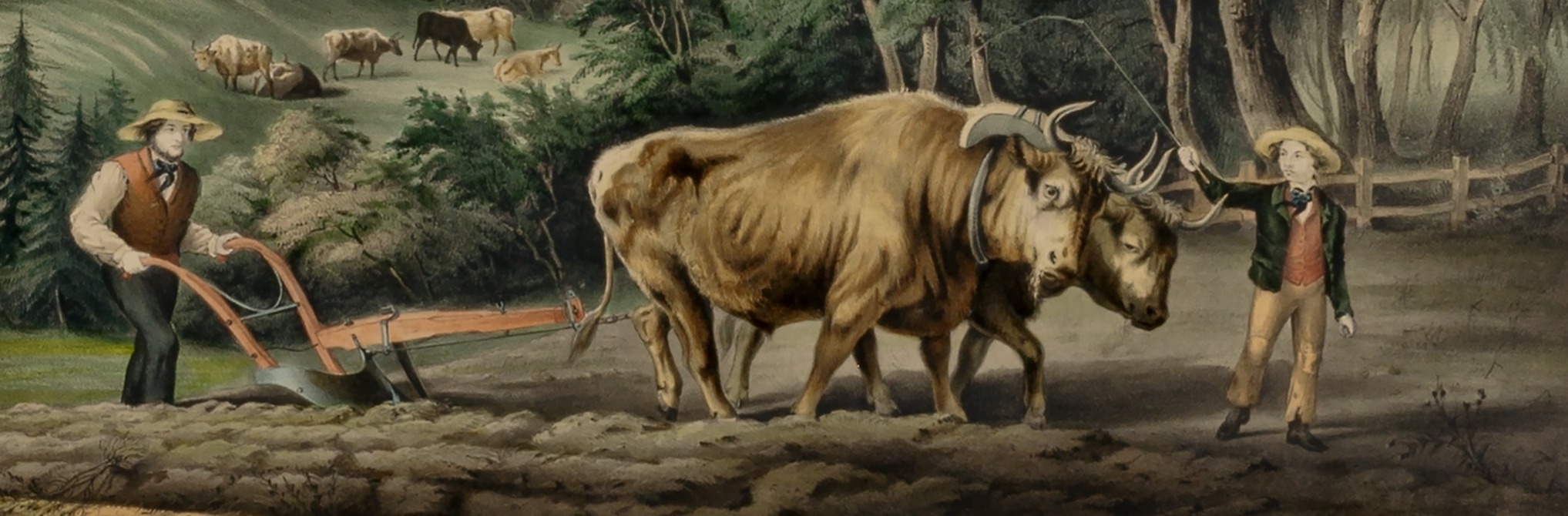
I don’t really have the day “off” today—too much writing to do—and won’t be marching in a parade, but I’d still like to honor the holiday and salute the American worker, past and present. With that in mind, let’s revisit some of the nineteenth-century occupations we’ve talked about previously at Clark House Historian, highlighting a few of the many skills, trades, and occupations common during the Clark House era.
Since it is a holiday, I’m not going to add long commentaries to each photo. Enjoy the photo galleries, and click each gallery to open larger versions of each image. And click the highlighted links to visit the original CHH posts, filled with lots more information about the different skills, tools, and jobs, and the full image credits.
Updated, August 4, 2024, to add a few explanatory links, to clarify the years of arrival of B. Clow and D. Maxon, and to clarify which families stayed in Washington/Ozaukee county, and which sold out and moved on.
Home away from home
Until the late-1850s, there were no railroads connecting Mequon to Milwaukee. If you needed to go to the city—for shopping, shipping, social calls or legal business—you either had to ride a horse, a wagon, a carriage (a sleigh in the winter), or simply walk there and back. It was about a 19 mile journey, over roads of dubious quality and variable states of repair. Even in fine weather, a one way trip might take the better part of the day.
So it was not unusual for Mequon farmers, such as the Clarks and their neighbors, to need a place to stay overnight when they ventured to the city. And from early days, one of the top destinations for Milwaukee travelers was the American House hotel. In 1844, the American House looked like this…
Advertisement, “American House,” [Prairieville (later Waukesha), Wisconsin] American Freeman, 28 Sept 1844 p 4
Take a moment to click the image and open a larger version in a new window. Zoom in and admire the couples strolling on the balconies and the arriving, or departing, stagecoach at the front door. All in all this looks pretty deluxe, by 1840s’ standards. But the hotel business, then as now, was always changing. Less than six years later the American House would be expanded, refurnished, and under new management…
I’m still on the search for Jonathan M. Clark’s parents and other kin somewhere in the early-19th-century wilderness of northern Vermont and southern Québec. I hope to publish more about that here in the near future.
As part of that project, I’ve spent quite a bit of time over the past few months organizing and re-examining the many research materials that I’ve gathered about JMC and his world, and I’ve constructed a whole bunch of genealogies for early Vermont, New Hampshire, and Lower Canada families named Clark that turn out—alas!—not to be related to our Jonathan M. Clark.
More mysteries…
Along with the mystery of JMC’s still-unknown family and childhood, Clark House museum director Nina Look and I have been trying to chase down some rumors that suggest Jonathan Clark may have spent his three years between mustering out of the U.S. Army (in 1836), and purchasing land at the land office in Milwaukee (in late 1839), as a surveyor in or near the area around Fort Winnebago, Columbia County, Wisconsin Territory. At the moment, that story remains a mystery, too. I’ll let you know if we find out more.
Anyway, with all these facts, rumors and mysteries—and many, many others—rolling around in my head, I thought it might be useful to outline JMC’s life in a handy, chronological timeline. Here’s a draft of that timeline, including what we do—and don’t—know about Jonathan M. Clark’s whereabouts and activities during his lifetime, as of July 1, 2024. I’ve included links to some relevant Clark House Historian posts where possible; please click on them for more information.
Recently, reader and Jonathan Clark House friend Ed Foster mentioned that he wanted to know more about how various JCH tools were used and necessary supplies were made, for example, how were lye soap or candles made? These are excellent questions, as they help us understand the day-to-day world of the Clarks and their neighbors in a more vivid and detailed way.
So, how did Jonathan and Mary Clark make candles or soap or perform many of the other home- and farm-related tasks that occupied so much of their time? Living in their pre-internet, pre-YouTube era, if they did not learn these skills from a parent or other mentor, how did they master such skills on their own? Fortunately for them, the 19th-century was a golden era of what we would call “How To” books.
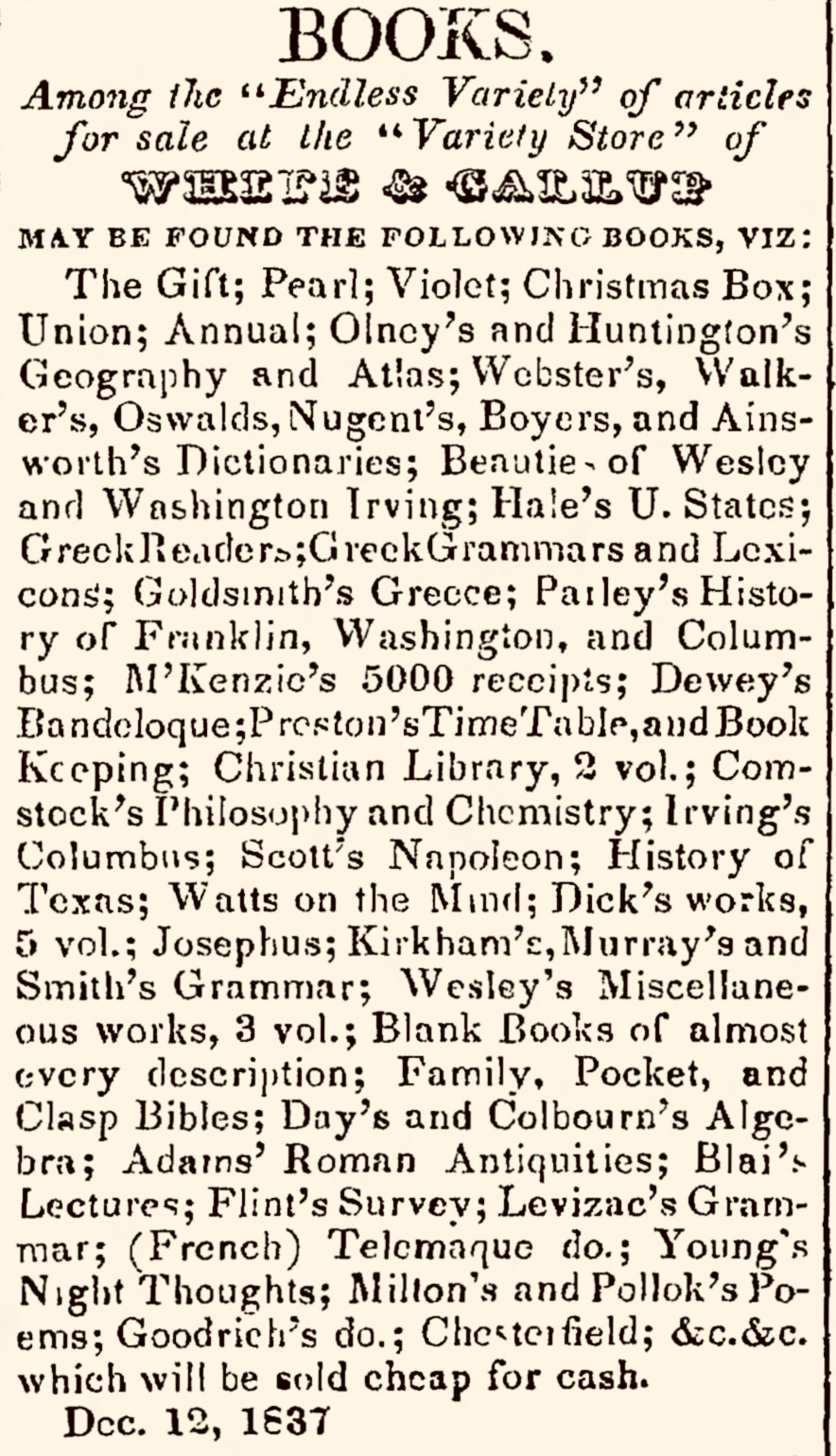
The “Endless Variety” of books, circa 1837
Jonathan M. Clark mustered out of the U.S. Army at the end of his three-year’s service with Co. K, 5th Regiment Infantry, in September, 1836. While in service, he may have learned or refined a number of useful skills, especially those related to surveying and road construction. The army thought highly enough of his character and aptitude that he rose from private soldier in September, 1833, to Sergeant in 1836. He was, by several accounts, an intelligent and well-read man.
But even an intelligent, experienced man can’t know everything. For that, there were books and stores that sold them. If Jonathan, after he left the army, needed more information on the “practical arts,” he could stop by a shop such as White & Gallup’s “Variety Store” in Green Bay, and probably find the information he needed:
“Books,” advertisement from the [Green Bay] Wisconsin Democrat, 13 Jan 1838, page 1. First published 12 Dec 1837.
One of these advertised volumes caught my eye, just like it may have attracted the eye of Jonathan Clark and many other settlers in the wilds of the Wisconsin Territory in the 1830s…






 Clark House Historian