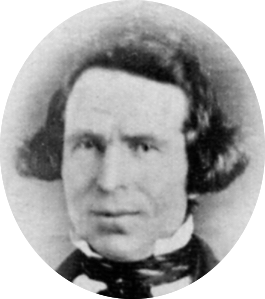
The Clark Family in 1860

UPDATED, December 27, 2020, to correct a typo in the list of family ages. Mary Clark was enumerated as age 39 (not 44 as previously mis-typed). —R.P.

The death of Jonathan M. Clark in September, 1857, must have been a tremendous blow to his family. Suddenly, Mary Turck Clark was a 37-year-old widow, with a nursing infant and seven other children, all under the age of 17. She had a family to raise, a 160-acre farm to manage, and important decisions to make.

What to do? Remarry for economic security? Sell the farm and move to Milwaukee for a better education for the children? Her father, Peter Turck, was already living in the city with his second wife, Christina, and their 8 year old daughter; could she and the children move in with them? Or would Mary find a new home of her own in the city?

Still here

Mary decided to stay, and make a go of it on her own. When the federal decennial census was enumerated in the summer of 1860, Mary and the children were still on the farm in Mequon:

Continue reading

1857: Disaster

As the year 1857 began, things seemed to be going well for the Clark family. Jonathan M. and Mary Turck Clark had been married for seventeen years. On May 25, 1857, they welcomed the birth of their eighth child, daughter Jennie Marietta Clark. She joined six older sisters—Caroline, Elizabeth, Persie, Theresa, Laura and Josie—and one brother, Henry.

The family had been living in their handsome, two-story home of stone and wood—now the Jonathan Clark House Museum—for nine years. They owned 160 acres of fine farmland, and appeared to be one of the more successful and comfortable farm families in the area.

But not all was well in the neighborhood. In November, 1856, typhus struck Rev. James W. Woodworth’s father, Peter. By late December, Rev. Woodworth’s daughters Rosetta and Julietta were both ill with the disease. In early February, Rev. Woodworth’s wife, Cerena Loomer Woodworth was taken ill with typhus, followed by daughter Sophia a few days later.

Continue reading

Summer in the Kitchen

I’m working on a number of longer posts, none of which are ready yet. So how about a Jonathan Clark House Museum photo instead?

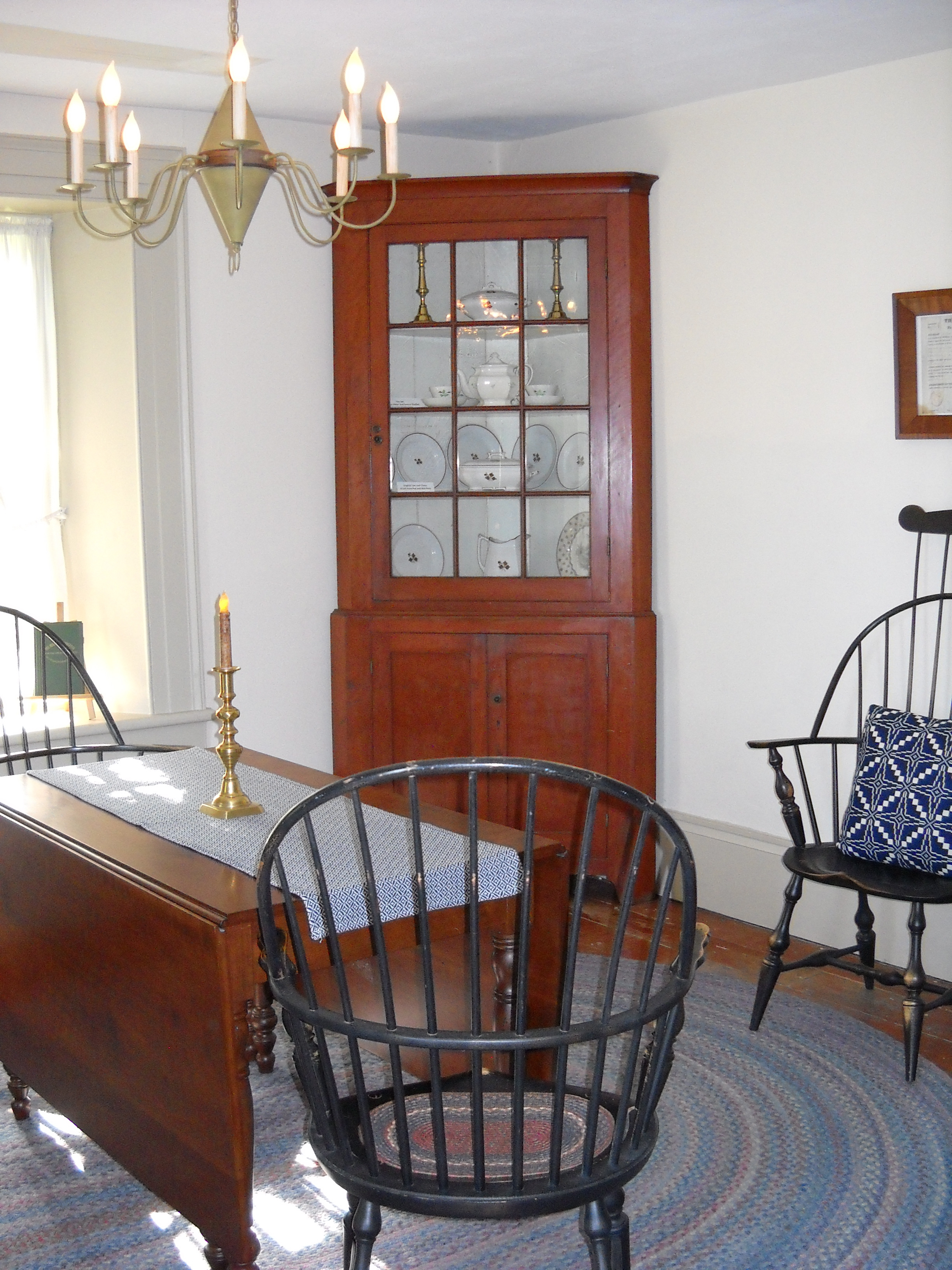
Part of the kitchen at the Jonathan Clark House museum, Mequon, Wisconsin, July, 2016. Photo by Anna Perkins, used by permission. Click to open larger image in new window.

Mary Turck Clark—and the Clark children—probably spent part of each spring, summer and early fall day tending a sizable herb and vegetable garden. Herbs added flavor to food and were also valued for their medicinal properties. But herbs often grow faster than you can use them. What to do? Hang them up to dry, and enjoy their scents, flavors and healing qualities throughout the coming year.

In early July, if the weather had been good—lots of sun and perhaps an inch or two of rain each week—the Clark family might have enjoyed the first fresh green beans of the summer. That would have been a real treat after months and months of dried produce and the last, tired, potatoes, turnips, onions, carrots and such from the root-cellar1.

By the time autumn arrived, the last beans on the bush would have been big and kind of stringy. Not as tasty as the mid-summer beans, they would be hung up to dry so that the beans could be saved, ready for planting the next spring.

Continue reading

Census Records for the In-Between Years: 1855 — Part 2

Who’s On That 1855 Census Page?

This is a follow-up to our previous post about the Jonathan M. Clark family and the 1855 Wisconsin state census. You might want to read that post first, and also take a look at our recent discussion of English/Latin and German Kurrent hand writing styles as used in places like Wisconsin in the 1800s.

In the comments to that 1855 state census post, blog reader and Clark House friend Liz Hickman asked:

Am curious about the others listed on the page; starts with James Woodworth [Rev.?]. Do you see any other names of interest? Can you figure out the name below Jonathan’s?

Liz Hickman, reply to Census Records for the In-Between Years: 1855

Thanks again, Liz, let me see if I can help. First of all, let’s take a look at that first page of the Mequon return for the 1855 state census:

Continue reading

Census Records for the In-Between Years: 1855

A Growing Family in a Growing State

The late-1840s and early-1850s were boom years for Wisconsin settlement. The final territorial census was enumerated in 1847, and statehood arrived in 1848. The seventh decennial federal census was taken in 1850. (If you’re late to the party, we covered the Clark family and the 1850 census here, here, here, here and here.) And in 1853, the seven easternmost townships of old Washington county were established as Ozaukee county.

Such rapid growth called for frequent changes in political boundaries and representation. To make that happen, a number of state censuses were produced during the years between decennial federal censuses. The first of these was officially enumerated on June 1, 1855. The “Jon. M. Clark” family appears on line 20, page 1 of the Enumeration of the Inhabitants of the Town of Mequon, in Ozaukee County, State of Wisconsin […] taken by me, Wm. Zimmermann, Town Clerk.

Continue reading

History Mystery! No. 4 – Who was Arthur Clark?

And what can he tell us about Jonathan’s Vermont (or Lower Canada) roots?

We’ve spent a lot of time looking at the Clark family on the 1850 federal census, and using that document to tease out as much information as possible about Jonathan, Mary, their children and their life in Mequon, circa 1850. If you missed the earlier posts, you can catch up here, here, here, and here. Yet after all that, we are still left with one intriguing question from that census: Who was Arthur Clark?

To date, the only source that connects any “Arthur Clark” to the Jonathan Clark family is line 23 of this page of the 1850 census. What do we find there?

Arthur Clark on 1850 U.S. Federal Census, Mequon Dist. 15, Washington Co., Wisconsin (detail of header and line 23) Click to open larger image in a new window.
Continue reading

The Clark Family in 1850 – part 4

Beyond Names, Dates & Birthplaces

Previously—and, yes, it’s been a while—we looked at the Jonathan Clark family as enumerated on the population schedule of the 1850 U. S. Federal Census. If you missed those posts, here are the links for Part 1, Part 2 and Part 3. Take a look at those, and you’ll learn some key facts about the Clarks: the names and ages of each person in the household, and where each was born. That’s important information, but not all. In 1850, the census bureau wanted to know more, and if we look carefully we can discover some interesting things about the family:

Continue reading

Lesen Sie Kurrent?

“Lesen Sie Kurrent?” —Do you read Kurrent?—generated at
http://www.deutsche-handschrift.de/adsschreiben.php#schrifftfeld

Do you have ancestors from the German-speaking world? No? Then perhaps you have genealogy or local history interests in southeastern Wisconsin or other German-settled areas of the USA? Or you’ve bumped into handwritten census images, family correspondence, or other historical documents that seem to be almost written in “normal,” readable cursive, but some—or a lot—of the letters just don’t make sense? Would you like to be able to decipher these records? Then whether your name is Smith or Schmidt, you need to learn a bit about Kurrent, the standard handwriting style of the German-speaking world from around the seventeenth- until the early twentieth-century.

And to make things more confusing, writers of German didn’t always use the Kurrent script. Sometimes they employed “English cursive,” also known as “Latin script,” similar to some of the well-known American and English writing styles of the time, and it’s not unusual to see documents created in both the USA and “the old country” that employ a mix of Kurrent and English cursive styles in the same document.

Here’s a practical example. Take a look at the following list of names, recorded in elegant cursive on page 1 of the 1855 Wisconsin State Census for Mequon, Ozaukee County:

Continue reading

Think Like a Historian…

To all my blog readers, I hope this finds you well and staying safe at home.

I just received a message from Jonathan Clark House director Nina Look and I thought I’d share it with you:

Dear Friends-

As you might imagine, the Clark House is closed at this time, but we continue to think about the history of our early settlers and how important it is to share that history with our children. I prepared the attached guide with the help of JCH Education Coordinator Margaret Bussone and JCH Curator Fred Derr.

Feel free to pass it on to a young person who may want to “Think like a historian.”

Nina Look, Director

CLARK HOUSE Think Like a Historian image

Click this link to open the CLARK HOUSE Guide for Young Visitors

Continue reading

O!…Canada? History Mystery! No. 3

Jonathan M. Clark was born…where?

Perhaps this should really be the Number One Clark House History Mystery! — was Jonathan M. Clark born in the United States or not? All of our previous evidence indicates that Jonathan M. Clark was born in Vermont in 1811 or 1812, namely: 

• Jonathan’s army enlistment papers from September 19, 1833, state that he was “…born in Derby, in the State of Vermont.”

• His 1850 Federal Census population schedule declares he was born in “Vir,” which we are quite certain indicates the State of Vermont.

• In later years, JMC’s children would almost always declare on subsequent Federal Censuses that their father was born in Vermont. (There were a few exceptions; “Ohio” was given by one daughter almost a half-century after her father’s death. We’ll have more on those census responses in later posts.) For example, the second sentence of daughter Caroline Clark Woodward’s biography in American Women: Fifteen Hundred Biographies With Over 1,400 Portraits… (New York: Mast, Crowell & Kirkpatrick, 1897, page 799) reads: Her father, Jonathan M. Clark, was a Vermonter of English descent, who, born in 1812 , of Revolutionary parentage, inherited an intense American patriotism.

So it seems clear that Jonathan M. Clark was born in Vermont. If that’s the case why, on March 19, 1848, did JMC travel to the District Court of the United States in Milwaukee County, Wisconsin Territory and file this document?:

Continue reading