Now, where were we? – the search for JMC’s roots

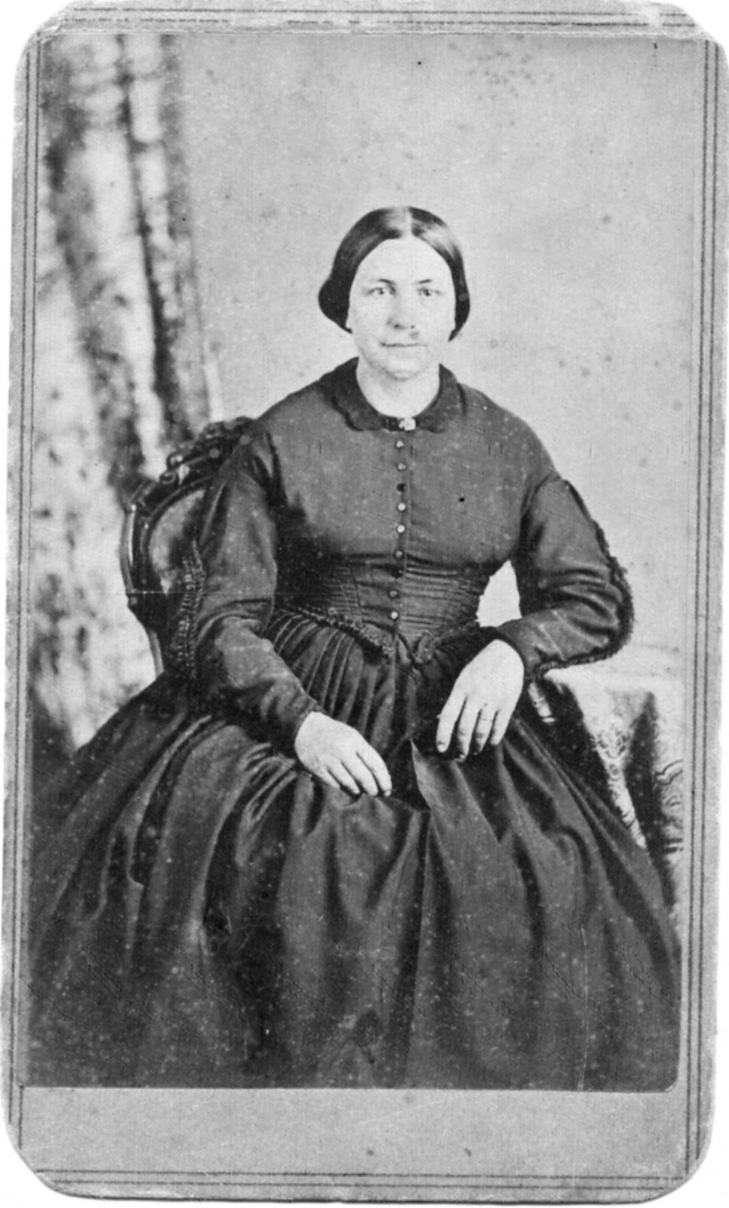
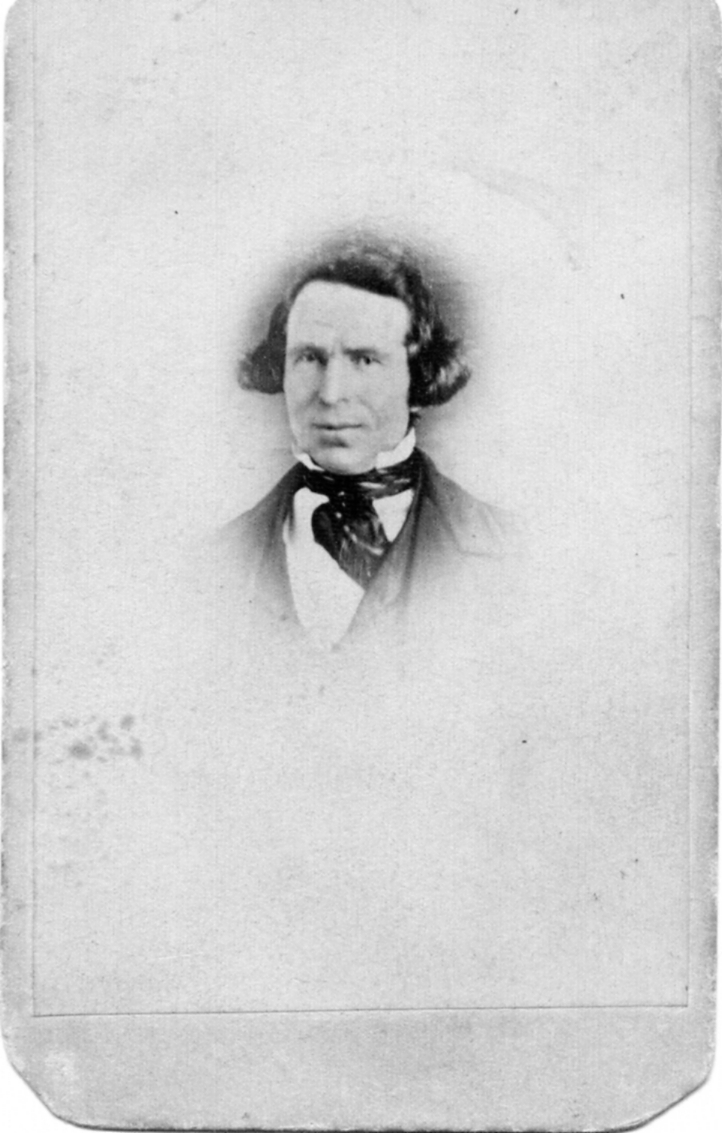
As I mentioned in our previous post, Monday: Map Day!, we still have some essential mysteries to solve in the JMC timeline, the most important of which are: who were JMC’s parents and where was he born and raised? As it’s been a while since we last looked at this, I thought it might be useful to repost our original O!…Canada? History Mystery! No. 3, in which I collected and organized images, transcriptions, and links to the various documents that indicate Jonathan M. Clark’s (two!) “official” birth locations: either Derby, Orleans Co., Vermont or Stanstead Co., Lower Canada [now Province of Quebec].

Smith, Jones… Clark

One of the nicer assignments a genealogist or historian can receive is to trace the history and family of someone with a unique or distinctive surname. It is so much easier to trace families with surnames like Turck, Strickland, Rix or Clow, even if there are common variant or erroneous spellings like Turk, Stickland, Ricks and Clough/Claw/Klauw. But our man Jonathan, he who built the fine stone home in Mequon in 1848, carries one of the most ubiquitous surnames in New England and English-speaking Canada: Clark.

Over the past seven years or so, researchers including Nina Look, Liz Hickman, I—and others—have been trying to find the Jonathan M. Clark “needle” in the massive New England and Lower Canada “haystack” of Clark families. I think it’s time to finally collate our results, organize and set aside the “wrong” Clark families from the search, and see if we can discover Jonathan M. Clark’s roots.

This “sorting of the Clarks” may take quite a few posts.1 We will look at many sources, many family trees, and assorted maps and books to try and find Jonathan’s family. Along the way we’ll have diversions to other topics from time to time, I’m sure. But now, let’s get things started by taking another look2 at what we currently know about Jonathan M. Clark’s birth and family:

Continue reading

Monday: Map Day! – Railroads!

If you look at the timeline and other recent posts about early Mequon settlers Cyrus Clark and Sarah A. Strickland, you realize that these two did a lot of moving about in mid-1800s Wisconsin.

How did they do all that traveling? Back and forth between Mequon and Cedarburg in Washington/Ozaukee county and Potosi in Grant county, Waldwick and Moscow in Iowa county, the city of Oshkosh—back east, so to speak, in Winnebago county—and then “moving to” Madison, Lake Co., South Dakota—and still traveling back to (and living part-time at?) Oshkosh. By foot? Canoe? Horse? Buggy? Stagecoach?

The answer is…

Continue reading

Meet the Neighbors: Cyrus Clark and Sarah A. Strickland

This is the second in what was originally planned to be a three-part1 series on early Mequon settlers Cyrus Clark and Sarah A. Strickland Clark. If you missed it, click here for part one. Also, I suggest you read this post to view maps that will prove useful in following today’s discussion.

The Jonathan Clark House Museum, and my work as Clark House Historian, is not just about Jonathan M. Clark, Mary Turck Clark and their family. The mission of the museum—and this blog—is to:

Collect, preserve and share the history of the Jonathan Clark House and the early settlers of Mequon and Thiensville.

Jonathan Clark House Museum mission statement

So with that in mind, I like to explore the stories of the Clark’s friends and neighbors in order to develop a more comprehensive picture of early Washington/Ozaukee county and it’s settlers. This week—thanks to an unexpected contact from blog reader Lynette Thompson—we will be focusing on not one, but two of Mequon and old Washington/Ozaukee county’s earliest settlers, Sarah Allise Strickland and her husband, Cyrus Clark. Why them? Just look at what I got in my inbox:

Continue reading

Monday: Map Day! – Another Clark Family

This week we take a break from our usual focus on the extended Jonathan M. and Mary (Turck) Clark family and begin a week of posts about two remarkable, original Mequon settlers and Clark House neighbors: Sarah Allise Strickland (1823-1891) and her husband, Cyrus Clark (1815-1905).

Sarah A. Strickland was born and raised in Nova Scotia, the eldest child of Daniel and Matilda Strickland. Her family was one of the original white settler families in the area; they were enumerated in Milwaukee County on Wisconsin’s first territorial census in 1836.1

Cyrus Clark was born in western Massachusetts and was in Mequon by about 1839. He married Sarah Strickland in Grafton, Washington (later Ozaukee) County, on March 1, 1841. They lived almost forty years in Wisconsin. First in Mequon and Cedarburg, Washington/Ozaukee) County, and then divided their time between their farm in Moscow, Iowa County, and homes of one or more adult children in Oshkosh, Winnebago County. So how—and why—did they end up in South Dakota at the end of their days?

It’s an interesting story, and one that illustrates a characteristic type of pioneer experience: the continued drive to push westward, on to new frontiers and new challenges. It may seem cliché to us, but it was a real, lived experience for many of Cyrus and Sarah’s generation. This week’s posts will look at a number of key moments in their long lives, especially the decades they spent in Wisconsin. And we have some unique and new sources to share, too.

Beginning at the end…

Click to open larger image in new window.

Gravestones of Cyrus Clark and Sarah A. (Strickland) Clark, Graceland Cemetery, Madison, South Dakota.
Photo by Steve Van Slyke, used by permission.

We begin the story of Cyrus and Sarah Clark at the end, in Lake County, South Dakota, their final resting place. And not one, but two maps today, all of which take us far from Mequon and the Jonathan M. Clark house.

Continue reading

Busy researching…

I’m in the middle researching and writing several multi-part Clark House Historian posts, so no essay today. How about a sunny photo of the Clark House parlour, instead?

Photo by Reed Perkins, 2015. Click to open larger image in new window.

The cherry gate-leg drop leaf table dates from about 1850, and is used at Jonathan Clark House Museum board meetings. The bow backed Windsor chairs are based on 1840s originals. These reproductions date from around the 1940s or so.

The cherry corner cupboard is from about 1840. The finish and most of the glass are original. The tea leaf pattern china and twig pattern tea set in the parlour cupboards were donated by local antiques collectors. And the period reproduction light fixture was made in a small shop in Vermont.

Hope you have a fine day and a lovely weekend.

Back soon with surprises!

Monday: Map Day! – A Look at Wisconsin, 1851

Recent Monday: Map Day! (here, here) posts have focused on Mary Clark’s family—and her father Peter Turck and brother James B. Turck— as Mary and her children made the transition from rural life in Mequon to a home in the city of Milwaukee in the early 1860s. Today we backtrack a bit and look at some developments in the state of Wisconsin in the early 1850s.

The 1850s was a crucial time for many early Washington/Ozaukee county settler families. A few of the younger settlers were drawn West by the 1849 Gold Rush. A handful stayed in California, most returned home. Some—such as Mary Clark and her brother James B. Turck—decided that the city would be a better place to live and to raise and educate their children. Others, including more than a few of the early “Yankees” that had arrived from New England and New York state in the late 1830s and early 1840s, got the itch to sell out, take a profit and move on. Many of these went “West.”

Going West

In the 1850s, “Going West” meant different things to different people. For some, it meant the opportunity to buy large parcels of fine prairie farmland in nearby counties such as Fond du Lac, Waukesha and Walworth. For others, going west meant adventures in the lead mines and Mississippi River ports of southwest Wisconsin. And some would not stop at the Mississippi, eventually moving on to newly opened lands in Minnesota, the Dakotas and beyond, With that in mind, take a look at today’s map:

Continue reading

Monday: Map Day! – Milwaukee Street Map, 1859

In our most recent Clark House Historian posts, 1861/1862: Moving Time and Fred Beckmann, Sr., we began to look investigate how in 1861/62, Mary Clark and her children left the Clark farm in Mequon and moved in with her widowed father Peter Turck in Milwaukee. Before getting down to the nitty gritty of the various homes occupied by the Clarks and by Peter Turck during the decade of the 1860s, I thought I should make a quick answer to the question: who lived and farmed the Clark farm from about 1861 to 1868?

Well, it turns out that the answers to that question are more complicated, and the evidence more sparse and in need of interpretation than I anticipated. So we are going to pause our investigation of the “who was Mary Clark’s tenant farmer?” issue for a moment, as I sort through maps and census schedules and consult with Clark House museum director Nina Look and others.

On the street where you live…

Meanwhile, I thought today’s Monday: Map Day! item should be a street map of Milwaukee from about the same time that Mary Clark and the children moved to the city in 1861/62. You may remember our post featuring the 1854 Panoramic Map of Milwaukee. I find that map really interesting and informative in a general way, but it has one shortcoming: none of the streets are labeled. That’s not very useful if we are trying to follow the Clark family’s progress from place to place in the 1860s and beyond. So how about this map?—

Continue reading

Monday: Map Day! – 1854 Panoramic Map of Milwaukee

The first white settlers to old Washington County, Wisconsin—later divided into Washington and Ozaukee counties—arrived in the late-1830s and early-1840s. Many of these settlers were so-called “Yankees,” namely New England and New York state residents. Other early immigrants to old Washington county came from places such as Lower Canada (i.e., Quebec), Nova Scotia, and the many German-speaking lands.

Why did they come?

For many families, the chance to buy inexpensive land, clear the forest, build a house, and work their own farm was a dream come true. Many of the Yankee immigrants had realized that the farms of New England were too small to continue dividing generation after generation and still make a profit. (Sometimes—as the old joke goes—it seemed like the only guaranteed “crop” each year was the annual spring “harvest” of rocks in the field.) For European immigrants, land ownership was often unaffordable or simply not allowed for the average family back in “the old country.” Other European immigrants fled mid-century famine, as in Ireland, or mandatory military service or political unrest in various places, including the German lands. It’s no surprise that many Wisconsin immigrants of the ’30s, ’40s and ’50s made their homes in Washington/Ozaukee county and then farmed there for decades, often passing the house and farm to the next generation and beyond.

For other early arrivals, the opening of government land in Wisconsin Territory represented a chance to make money. More than a few of the Yankee settlers came to the territory early, bought land at $1.25 per acre, farmed for a decade or so, and then sold out to the next wave of immigrants, often making a considerable profit. Some of these men—such as Solomon Juneau, Byron Kilbourn, and William A. Prentiss—were land speculators that made (and sometimes lost) fortunes in the process, and became important figures in nineteenth-century Milwaukee and Wisconsin business and government. Other, smaller, investors were simply savvy farmer-capitalists that bought government land cheaply, held it for a while, and then sold at a profit. Some of these repeated the process several times throughout their lives, buying and selling, moving westward as the government opened new tracts of cheap—or even free—land in the new territories of the frontier.

Stay or go?

By the mid-1850s, a number of early Washington/Ozaukee county settlers decided that rural life was no longer for them. Mary Clark’s father, Peter Turck, was one of the first Mequon settlers to relocate. A self-made polymath, from his earliest days in the territory Turck had been—often simultaneously—a farmer, Baptist preacher, sawmill owner, justice of the peace, coroner, territorial and state legislator, and lawyer. In the 1840s he survived the death of his first wife Rachael Gay, remarried, and had another child. By the early 1850s—like a number of his early Mequon neighbors—he decided to leave his farm and relocate to nearby Milwaukee. There he could focus on his work as a lawyer and real estate dealer and, perhaps, seek better educational opportunities for his youngest children.

Milwaukee

In 1836,—a year before the Turck family arrived there from New York—Milwaukee had been a small, random collection of roughly made homes and businesses along the east and west banks of the Milwaukee River where it flowed into Lake Michigan. By the time Peter Turck moved to Milwaukee from Mequon, the city looked like this:

Continue reading

The Clark Family in 1860, part 2

A Closer Look at the 1860 Census: Checking Ages and Dates

As we did for their 1850 census, I thought we should do the math and check whether the enumerator got everyone’s correct age on the Clark family’s 1860 census schedule. And do the ages agree with the Clark “Family Record” and other Clark family documents and known facts, including their 1850 census schedule?

First, examine the Clark’s 1860 census page header. It was enumerated by Assistant Marshall (for the census) Hugo Boclo and covered the “Free Inhabitants in the town of Mequon in the County of Ozaukee State of Wisconsin enumerated by me, on the 20th day of July. 1860.”

Continue reading