I’m chipping away at my sources, trying to carve out a coherent post or two.

Revised May 13, 2022 to correct spelling of Nathaniel Currier’s name.
It’s mid-May in southeastern Wisconsin, and with luck the last frost is behind us. For the past weeks and months farmers and gardeners have been tending to the soil and preparing for planting. At this time of year in the 1840s and ’50s, Jonathan M. Clark would have done much the same, hitching up his team of oxen to a steel-bladed plow to cut and turn over the tough prairie grasses and break up the soil of his newly-cleared lands.

Infrastructure Week Fortnight Month continues…
It’s been a busy few weeks here at the Historian’s (actual) house, and I’m (very) slowly transcribing handwritten documents and making maps to illustrate the work of Jonathan M. Clark and his fellow road supervisors as they mapped and built old Washington County’s first roads in early 1841. While you’re waiting for those posts, check out our previous installments in this series — County Government – Early Records and Monday: Map Day! — for some interesting background, maps, and first-hand records.
Jonathan Clark – surveyor?
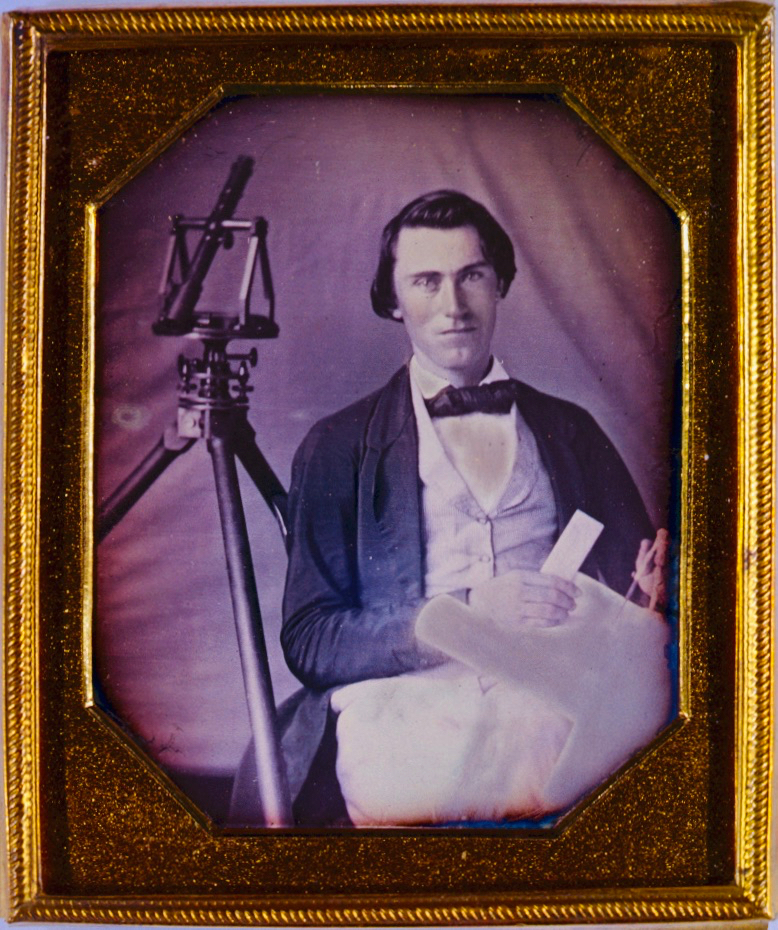
What did Jonathan Clark know about surveying and road building? Probably quite a bit. Like most farmers—then and now—Jonathan would not have been successful without a good understanding of maps, distances, land boundaries and how to best use and navigate the fields, forests and wetlands of his property.
If you recall our earlier posts detailing JMC’s military service (starting with Fort Howard, October 1833 (part 1) and including Ouisconsin Territory, 1836), you’ll remember that his unit, the U.S. Army’s 5th infantry regiment, was responsible for laying out and cutting the new military road that would ultimately connect Ft. Howard in Green Bay, Ft. Winnebago near Portage, and Ft. Crawford at Prairie du Chien. Jonathan’s Co. K was involved in this work for the better part of his final two years of service (1835-1836). This assignment would give him hands-on experience in surveying, map-making, grubbing out roads and building serviceable bridges with the materials at hand. By the time he arrived in Mequon, in late 1839, it’s possible that Jonathan Clark was the most experienced road builder (and one of the better surveyors) in early Washington/Ozaukee county.
A surveyor and his tools…
No posts this past Wednesday or Friday. I’ve been enjoying some fun time with my family.
UPDATED, April 26, 2021, to incorporate some interesting observations and corrections from reader Sam Cutler. (See the comments, below.)
I’ve had a busy weekend, and not much time to write. But I found an interesting, Clark- and Mequon-related map you may not have seen before.

It’s early April, and the growing season is not far off. For a farmer like Jonathan M. Clark, it’s a little early yet for plowing and sowing, but not too early to make plans and sharpen the tools. For a farmer’s wife, like Mary (Turck) Clark, it’s not too soon to think about the farm garden, its crops and layout.
I don’t know if Mary and Jonathan were regular readers of the popular and affordable farmers’ almanacs of their era; I wouldn’t be surprised if they were. There were many to chose from. Perhaps they had a copy of something like:

The Cultivator […], New Series, Vol. VII, Albany, 1850, title page. Click to open larger image in new window.
Continue readingI’m still trying to hammer out a few new posts. Nothing’s ready today. Meanwhile…

Portrait of a Blacksmith in His Workshop, ca. 1855. Photograph. https://www.loc.gov/item/2008680496/. Public domain. Click to open larger image in new window.
Another great image from the Daguerreotype collection at the Library of Congress, still in its handsome original case.
Every town in nineteenth-century America would have at least one blacksmith, ready to make or repair pretty much anything made of metal needed for farm, home, or workshop. Most blacksmiths made tools and specialty iron work, some also made wagons and carriages. Other smiths were trained as farriers, specialists the anatomy and health of the lower limbs and hooves of horses, and the making and fitting of horseshoes.
Continue readingWe got some snow in southeast Wisconsin over the weekend, and I’ve spent good parts of the past two days shoveling the driveway and sidewalk. (And then—of course—shoveling the driveway a second time after the city plow finally came through.) Of course, snow was a feature of Jonathan and Mary Clark’s time, too:
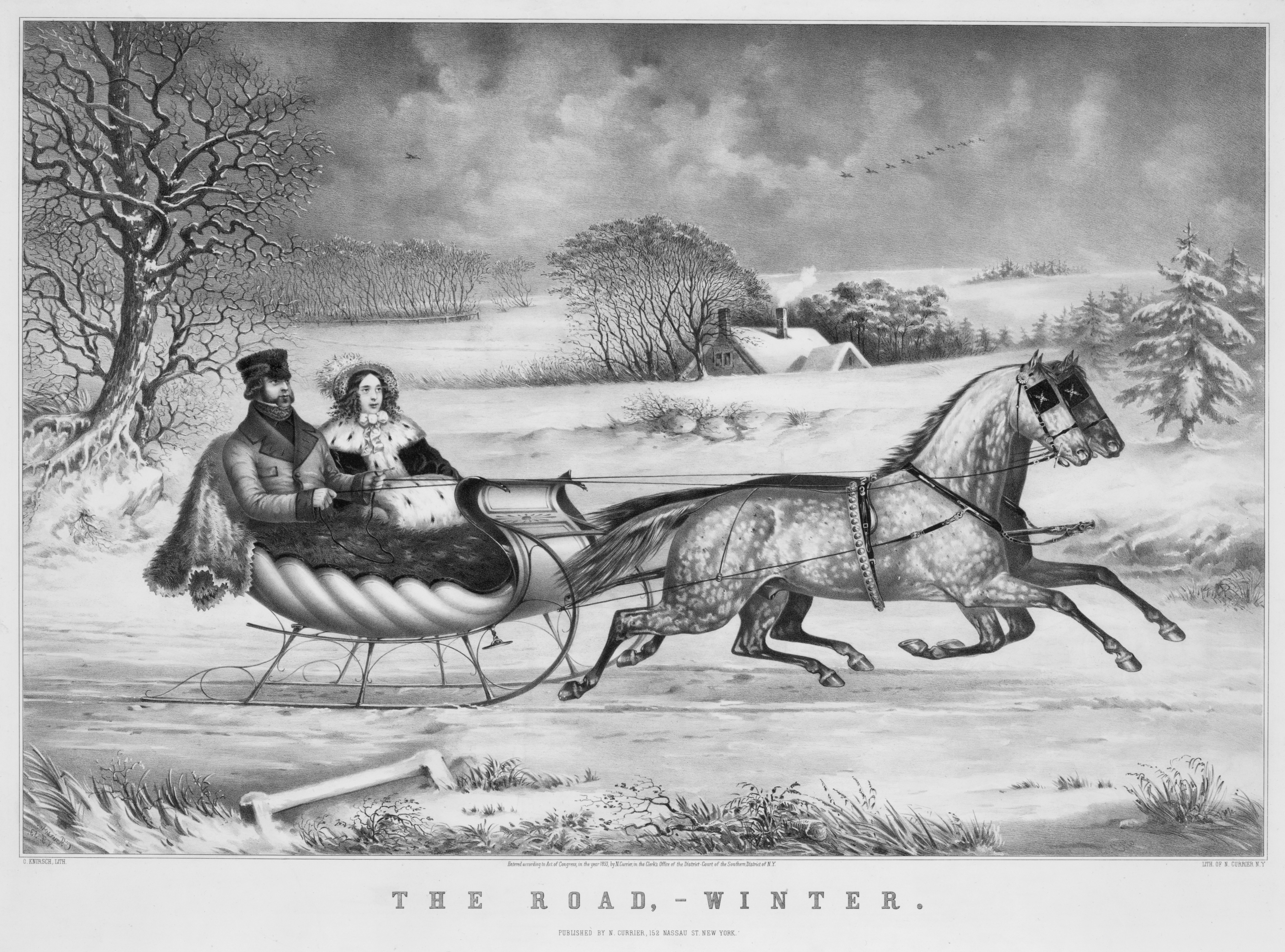
Currier & Ives. (1853) The road, winter / O. Knirsch, lith. United States, 1853. New York: Published by Currier & Ives. [Photograph] Retrieved from the Library of Congress, https://www.loc.gov/item/93511164/ (lightly retouched for color balance). Click to open larger image in new window.
We don’t know if the Clarks owned a sleigh while they lived in Mequon. I suspect they probably did, though their sleigh—and their clothing—may not have been quite as posh as those in this Currier & Ives lithograph from 1853.
Continue reading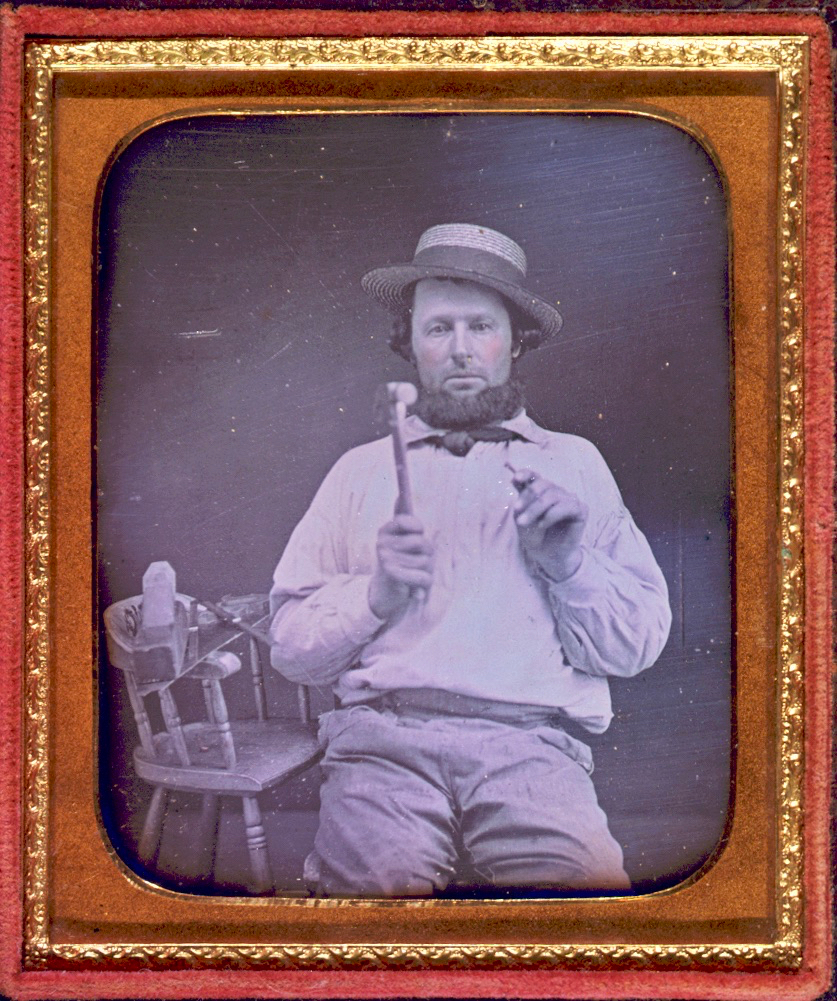
 Clark House Historian