Old Washington/Ozaukee county’s first postmasters, 1837-1844

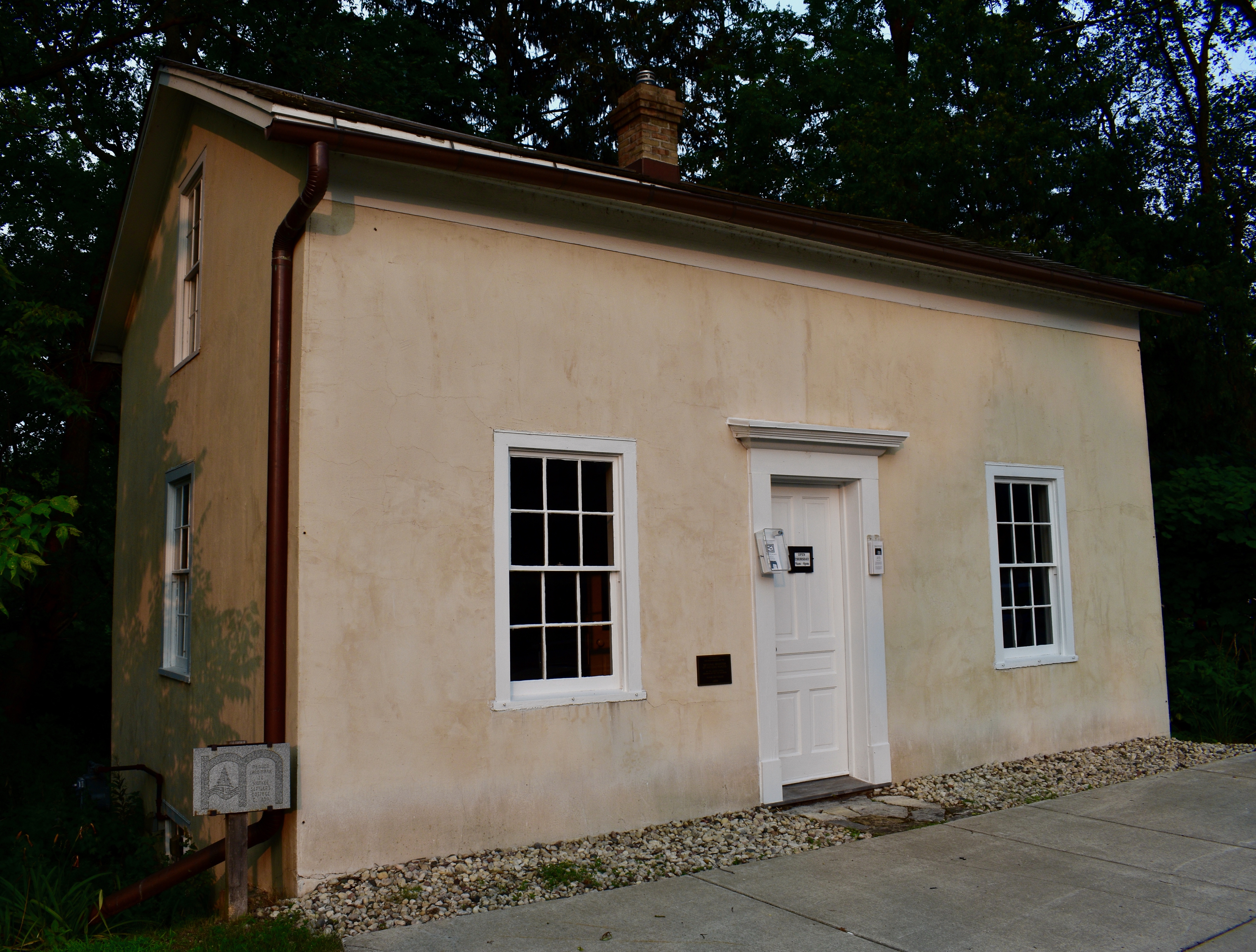
I’m working on a subject suggested by my friends Sam Cutler and Bob Blazich from the Mequon-Thiensville Historical Society. Among other projects over the last few decades, they and their colleagues at the MTHS have restored what is believed to be Ozaukee county’s oldest building on its original foundation, the historic Isham Day house, and developed its interior into the Mequon River Postal Museum. Now my friends at the MTHS want to know more about the life of Mequon River Post Office’s original postmaster, one of Mequon’s very first pioneer settlers, John Weston.

Isham Day house, exterior, west front. Photo credit: Anna Perkins, 2021

So for the last several weeks I’ve been doing a great deal of behind-the-scenes reading and re-reading of primary and secondary sources, as well as a lot of searching for additional relevant documents, including early Milwaukee and Washington/Ozaukee county deeds and other land records. In the process, I’m learning a lot about John Weston, Isham Day, Henry Thien, and some of our other first white settlers. But I’m not quite ready to write a John Weston profile, and I still need to clear up some mysteries about Isham Day’s land and house, too.

First Postmaster(s)

New post office…at Mequan River…John Weston appointed postmaster, Milwaukee Advertiser, Oct. 10, 1840, page 2

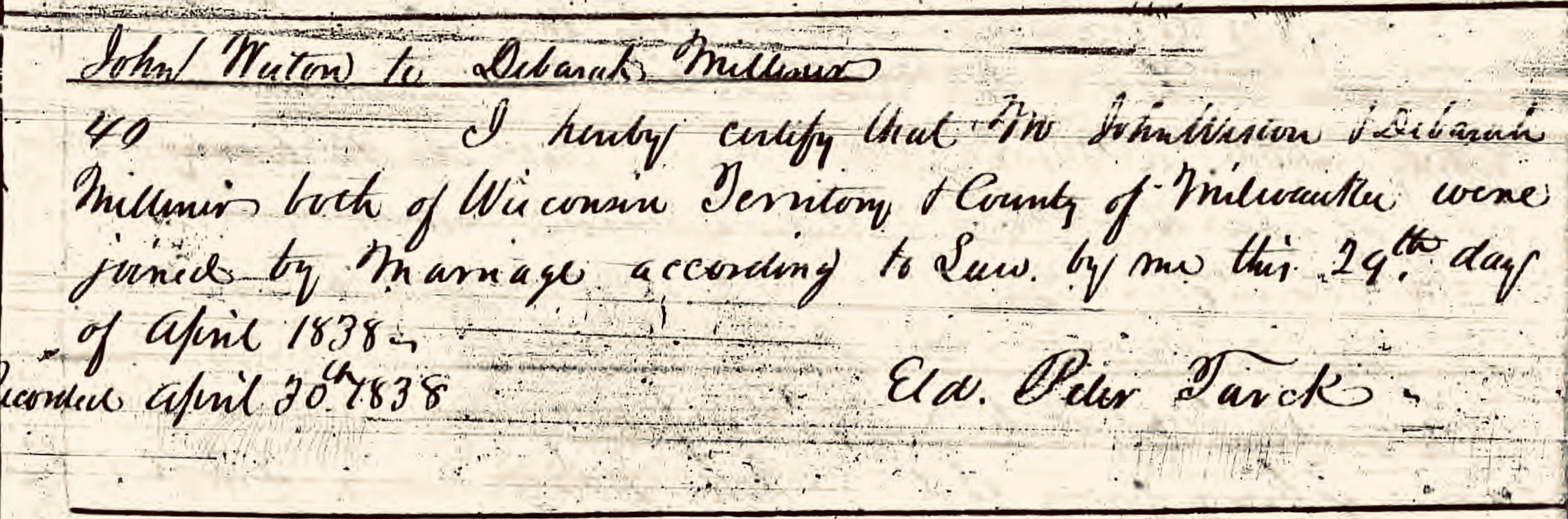
Let’s get our bearings by making an accurate list of the county’s first postmasters and their terms of office. Our source is from the National Archives in Washington, DC, the Record of Appointment of Postmasters, 1832-Sept. 30, 1971; Records of the Post Office Department; Record Group Number: 28; Series: M841; Roll Number: 144. County: Polk – Wood, Vol. 12B, circa 1832-1844, pages 794-795, currently available via Ancestry.com as U.S., Appointments of U. S. Postmasters, 1832-1971 [database on-line], 2010, image 428 of 583 (accessed 18 Jan 2024). Here’s the microfilmed image of the two-page ledger recording Washington county’s first post offices and postmasters, slightly retouched to make for easier reading:

Click the image for a higher-resolution view, and then read on for more details about old Washington/Ozaukee county’s first two post offices and their original postmasters.

Continue reading

Happy New Year, 1848

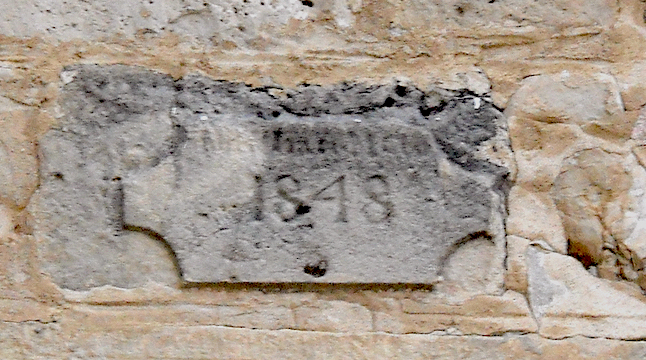
1848 was a big year for Jonathan and Mary (Turck) Clark. Their family now included four children: Caroline (b. 1840), Henry (b. 1843), Libbie (b. 1845) and infant daughter Persie (b. 1847). And 1848 was the date that Jonathan M. Clark inscribed—just below his own name—on the Clark House “cornerstone” that still decorates the lintel above the Clark House front (south) door.

Photo credit: Reed Perkins, 2015

1848 was a landmark year in many respects. Gold was discovered in California, the War with Mexico ended with the Treaty of Guadelupe Hidalgo and, most importantly for our Mequon pioneers, the Wisconsin Territory adopted a state constitution and was admitted by act of Congress as the 30th state in the Union.

Of course, on January 1, 1848, those events—and many others—still lay in the future, in the New Year. We’ve blogged about some of those events here at Clark House Historian, and we’ll have more to say about other 1848 events in the future. But did you ever wonder how our Mequon settlers observed the change from one year to the next during the 1840s and 1850s?

Continue reading

Home to Thanksgiving

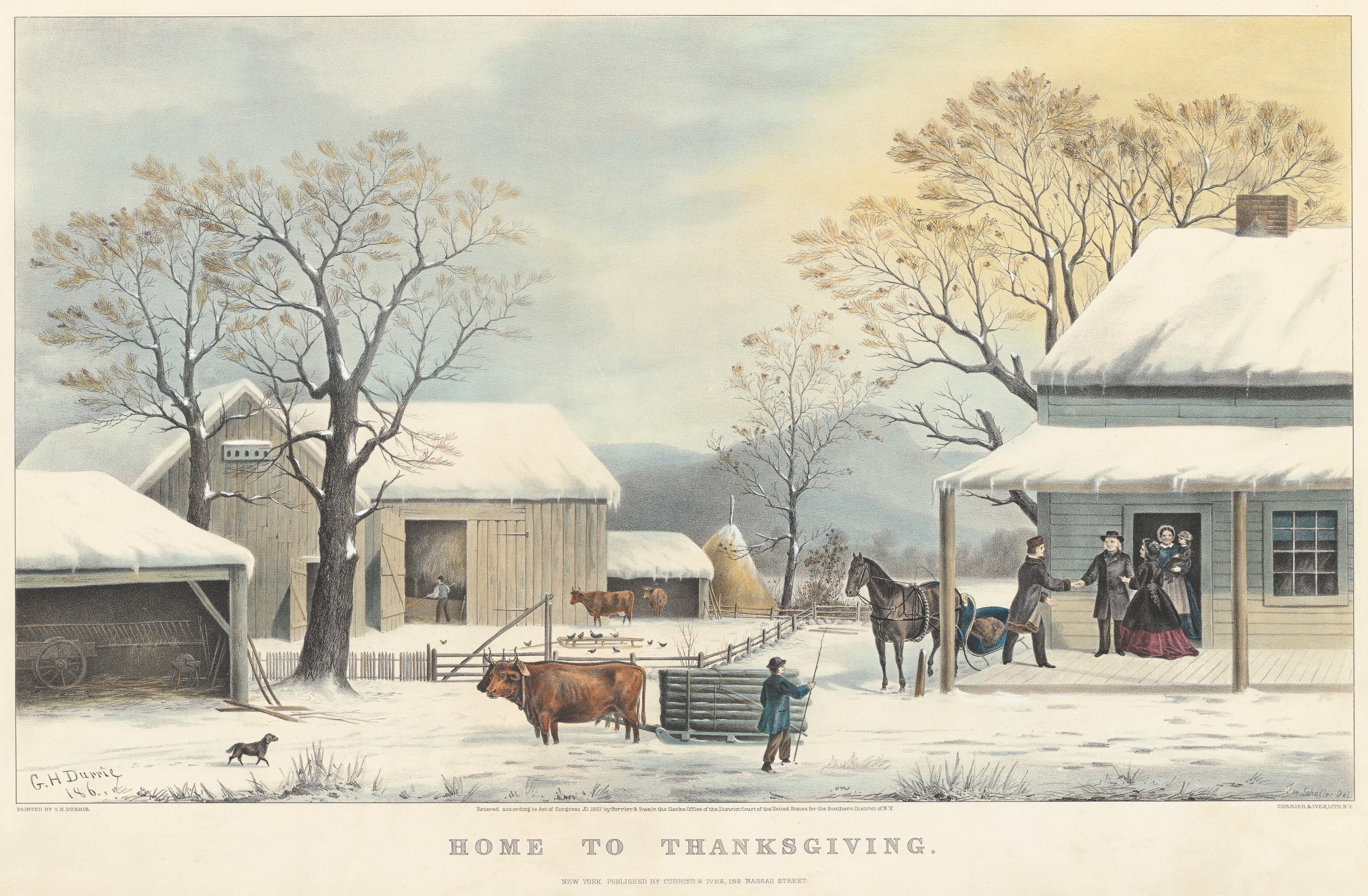
It’s Thanksgiving tomorrow, and I’m taking a few days off to spend time with family. But in the spirit of the holiday, I thought I’d reprint a lightly revised version of our now-annual Thanksgiving post, to share with you a few vintage recipes and a nice Currier & Ives lithograph from the period.1

Thanksgiving, 1867

Durrie, George H. and John Schutler, Home to Thanksgiving, ca. 1867, New York, Currier & Ives. National Gallery of Art, Collection of Mr. and Mrs. Paul Mellon. Public Domain. Click to to open larger image in a new window.

Continue reading

Finding JMC’s roots: Vintage first names puzzle

No new research today. I’m celebrating a big event with family, and taking a few days off from emails and major blog posts while I do.

“They just don’t name ’em like they used to…”

I’m loath to leave loyal blog readers without some Clark House History to while away the time until our next big CHH post, so I made another word search puzzle.

Your assignment today is to find the vintage Stanstead-area settler first names, all of which are documented from Clark-era sources in and around Stanstead, Lower Canada, circa 1790-1840, and many of which will feature in future posts as we search for JMC’s roots.

As in our previous post, just click the image to open and print your own copies of this version of the puzzle. Or, if you’d like to play online, just click this link: https://thewordsearch.com/puzzle/6173938/stanstead-first-names-c-1790-1840/

Continue reading

Searching for JMC’s roots: Québec land & records

A tale in four news clippings

As you know by now, we believe that Jonathan M. Clark was born or raised—or both—in or near the Township of Stanstead, Lower Canada. Who his parents were, where they came from, and what happened to them afterwards, are important questions that we have yet to answer. There are two main stumbling blocks. On the one hand, reliable birth, marriage, death and similar records for this part of Lower Canada and northern Vermont do not begin to appear on a regular basis until a decade or more after JMC’s birth in 1811/1812. And at the same time, the CLARK surname is unbelievably common in New England and the adjacent parts of English-speaking Canada. There are just too many Clark families listed in relevant indexes and archives to even begin a useful search; for a productive search, we need a way to narrow the list to only those Clarks that might be related to JMC.

So one of my first steps in this (renewed) search is to go Clark-hunting among the larger archival sources of Lower Canada, record the potentially-relevant Clark-related information and (full) names that I find, and make a big list of persons named Clark that were in or near Stanstead between about 1790-1830. If we get really lucky, we”ll find specific records of JMC, his parents, and his family. More likely, we’ll end up with a massive list of people named Clark, and from that list we can see which of these Clarks stand out as likely suspects, identify—where possible—which Clarks are definitely not “our” Clarks, and proceed from there.

For the next several weeks our name collecting expedition will be focused on the Library and Archives Canada (LAC) database of Land Petitions of Lower Canada, 1764-1841. I suspect many of our U.S. readers will see that and wonder: why waste time in that seemingly arcane archive? (Our Canadian readers will probably nod their heads and think, yes, that sounds like a very logical place to look for early Clark and Stanstead documents).

A history in 4 newspaper items

So for those readers whose knowledge of Canada history is spotty at best, let me give a very, very brief explanation of a few bits of pertinent local history, including the Loyalist issue, how Québec became Lower Canada, and how JMC’s ancestors—and their relatives and neighbors—might have been enticed to move to Lower Canada, using four contemporary newspaper clippings.

Continue reading

Monday: Map Day! Bouchette, Jr.’s map of Upper & Lower Canada, 1831

Today’s spectacular Map of the Provinces of Lower & Upper Canada.1 was created by Joseph Bouchette, Jr., et. al., and published in London in 1831. It was made as a companion to his father’s exhaustive written description of the same territory, British Dominions of North America, also published in 1831.2

Bouchette, Joseph Jun., Joseph Bouchette [Sr.], et. al., Map of the Provinces of Lower & Upper Canada, London, James Wyld, 1831.David Rumsey Map Collection.3

We are particularly interested in this map as it shows the British possessions in North America—essentially present-day Canada—as they were understood in 1831, the year JMC migrated to New York state, and a year before the Bonniwell family arrived in Lower Canada (Québec). And when compared to Bouchette, Sr.’s great map of Upper and Lower Canada in 1815, it illustrates the rapid growth of British North America, and the Eastern Townships, in the decade and a half since the end of the War of 1812 (1812-1815).

Continue reading

Searching for JMC’s roots in Eastern Township sources: books (part 1)

If this were an academic thesis (don’t worry: it’s not, it’s still a blog), one of the first things we’d do at the start of a project like this is create a “literature review” and accompanying annotated bibliography. Now that we’re restarting our search for JMC’s roots in the border area of northern Vermont and the Eastern Townships of southern Québec, circa 1790-1840, I thought it would be smart to do something similar, but less formal. Over the next several posts we’re going to sort and prioritize the various sources that look useful, and find a way to organize those sources—with their proper bibliographical citations—in a way that will serve us over time.

The Clark House Historian, growing old as he searches for Jonathan M. Clark’s roots…1

Today’s post is Part 1 (of many) of our hybrid literature review and annotated bibliography that—we hope—will finally lead us to JMC’s as-yet-unknown parents, ancestors, possible siblings, and kin.2 We begin with some Lower Canada—Eastern Townships books that I have found more (or less) useful.

Continue reading

Labor Day – a photo essay

Even thought it’s Labor Day, the holiday celebrating the working men and women of our nation, I’ll be at work, back at our local mercantile establishment. You know, a store kind of like this one, stocked with just about anything you need for modern living:

I don’t have the day off, and won’t be marching in a parade, but I’d still like to honor the holiday and salute the American worker, past and present. With that in mind, let’s revisit some of the nineteenth-century occupations we’ve talked about previously at Clark House Historian, highlighting a few of the many skills, trades, and occupations common during the Clark House era.

Since it is a holiday, I’m not going to add much commentary today. Enjoy the photos, and click the links to visit the original CHH posts with lots more information about the different skills and jobs, and for full image credits.

Continue reading

On the northern frontier: (resuming) the search for JMC’s roots

The scene above is A settler’s hut on the frontier, by W. H.Bartlett and R. Sands, published in London in 1841.1 Based on the known locations of some of Bartlett’s other, similar images, published at about the same time, it is almost certain that the scene depicted was drawn from life in Lower Canada (modern day Québec), and possibly in or near Stanstead, or one of the neighboring Eastern Townships of Lower Canada.

The landscape, dwelling, and people in this scene would have been very familiar to young Jonathan M. Clark. They are the physical and human landscape of his first three decades of life—from about 1812 to 1831—in the vast and sparsely settled north woods of Stanstead, Lower Canada, and nearby Derby, northern Vermont.

I have been searching Vermont and Lower Canada for Jonathan M. Clark’s parents, possible siblings, or other kin for over seven years, and have not yet been able to identify any. As it’s been a while since the blog focused on JMC’s roots, I thought it was time to organize our previous research, publish new sources and findings, and see if we can get closer to locating the family of the builder and first occupant of Mequon’s 1848 Jonathan Clark House.

Continue reading