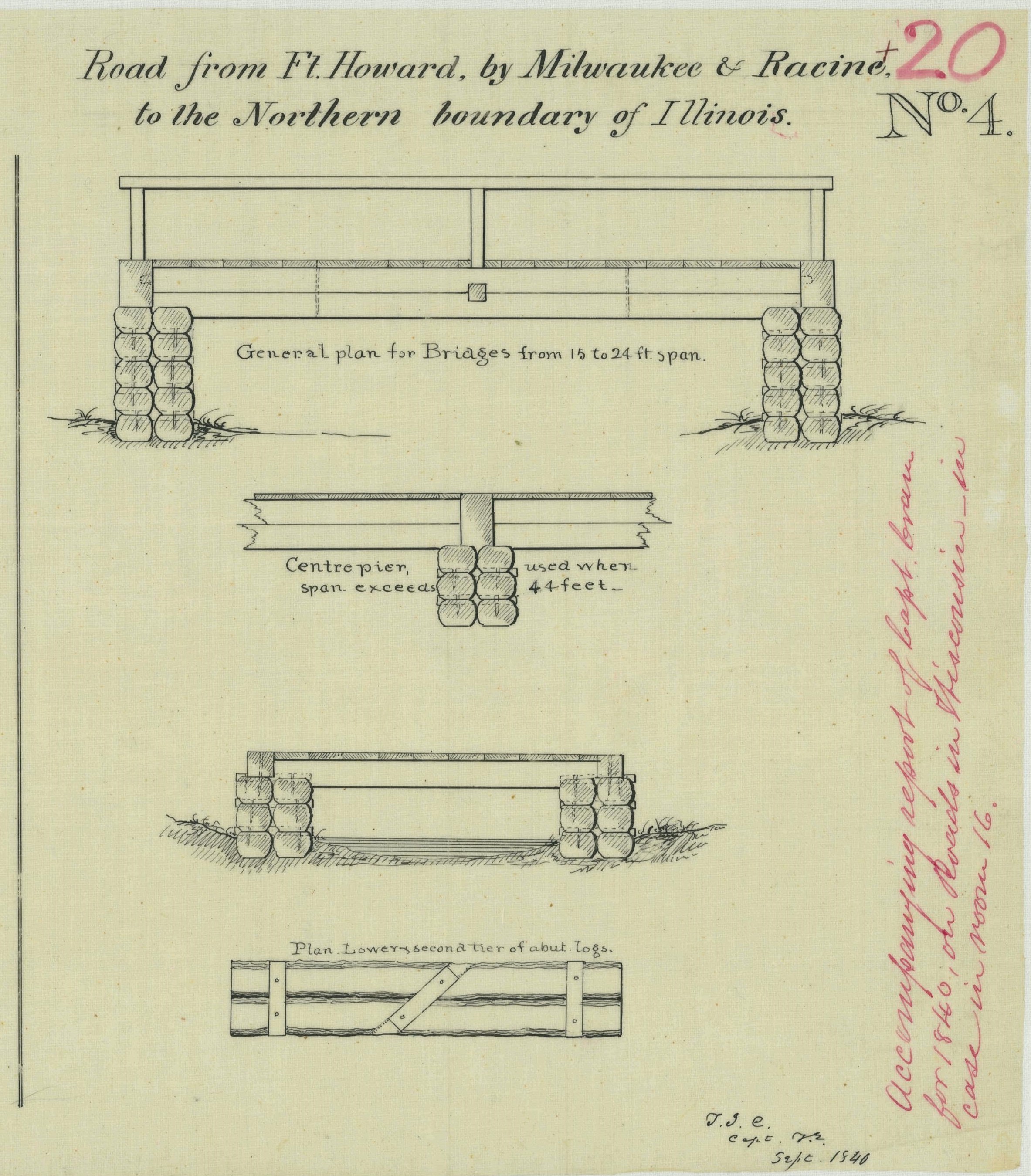
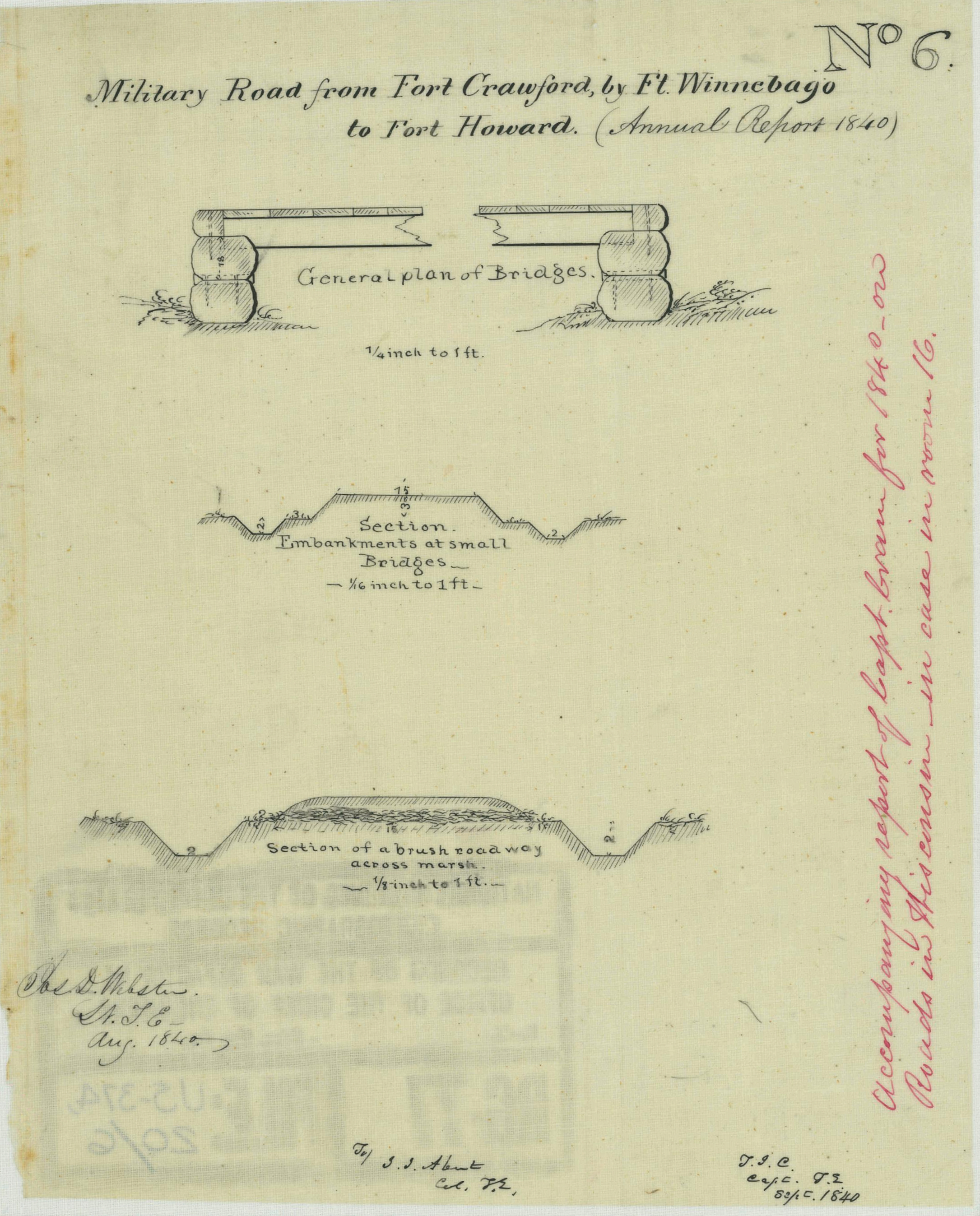
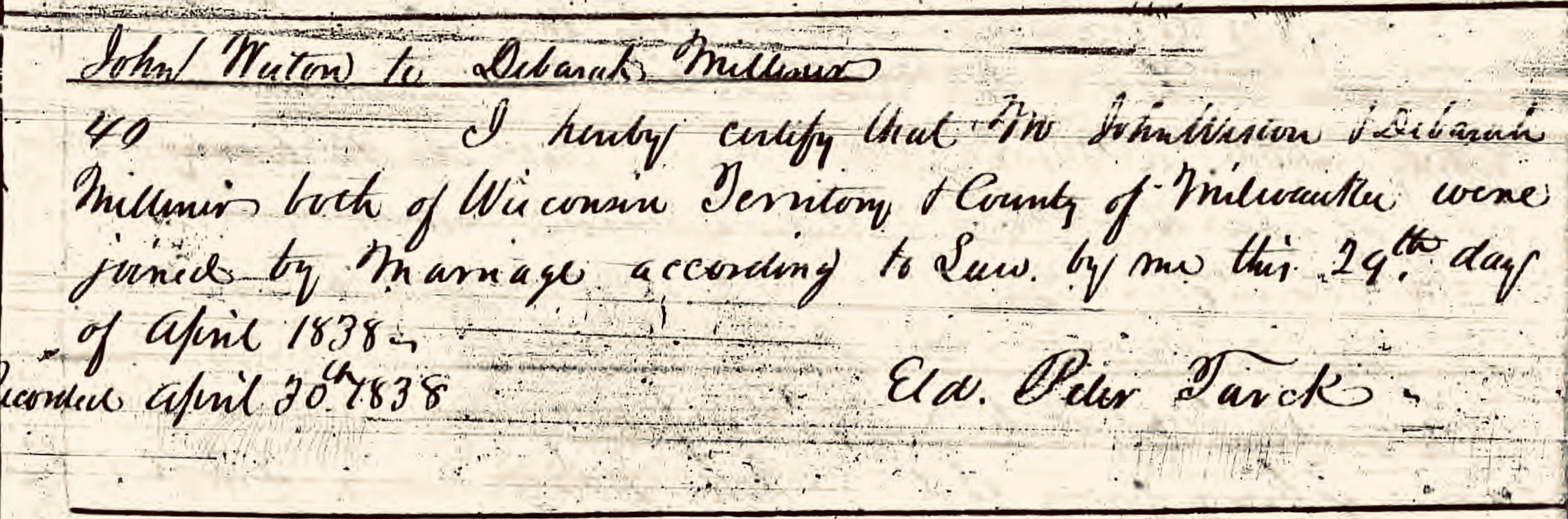
I’m deep in documents…

…as I prepare my March 9th Civil War presentation for the Cedarburg History Museum, try to sort out the full story of Mequon-Thiensville’s earliest settlers and landowners (including first postmaster John Weston), and look through a bushel of fresh sources in our ongoing search for Jonathan Clark’s kin who hail, we think, from somewhere up around where Derby, Vermont meets Stanstead, Québec.

The Clark House Historian and his crack research team, searching for answers in the written record…1

As you can see, I’ve got work to do in order to dig out from under—and make sense of—the big pile of historical documents that I’ve accumulated over the past several weeks.

So no new CHH post today, but I’ll be back soon with more Clark House history.

Continue reading

Monday: Map Day! – One more (updated) look at Ouisconsin Territory, 1836

Today’s Monday: Map Day! revisits and makes a correction to an interesting map that we first discussed here on October 29, 2017, and then re-visited on July 11, 2020. And for unknown reasons, that original 2017 post—according to my monthly WordPress statistics report—was the most-viewed post on this site for the month of January, 2024, with 341 views (!).

Burr, David H. Map of the Northern Parts of Ohio, Indiana and Illinois and Michigan and that part of the Ouisconsin Territory lying East of the Mississippi River, 1836, detail of title & author. Library of Congress.

The 2020 re-post was originally conceived as a kind of addendum to our June-July, 2020, multi-part discussion of the earliest Wisconsin territorial, state, and federal censuses. It also served to locate Jonathan M. Clark in Wisconsin Territory during his U.S. Army service from September, 1833, to September 19, 1836.

Today’s post includes one particular correction that I’ve been meaning to make for a while. When I added my original annotations to a detail of this map (in red), in 2017, I made an error. I mislabeled Sgt. Jonathan M. Clark’s location at the time he mustered out of service, a temporary army camp along the under-construction military road from Fort Howard (Green Bay) to Fort Winnebag0 (Portage). JMC’s muster-out location was always referred to in the records of the Fifth Regiment of Infantry as “Camp Hamilton.” For some reason, when I made my annotated detail map, I incorrectly labeled this place “Ft. Hamilton.” A minor error, but worth correcting , especially now that this map is receiving fresh attention.1

It’s 1836. Where’s…Wisconsin?

In September, 1836, Sgt. Jonathan M. Clark was discharged from the U.S. Army at “Camp Hamilton,” Wisconsin Territory, after serving his three-year term of service with Co. K, Fifth Regiment of Infantry.2  One year later, in the autumn of 1837, Jonathan’s future wife Mary Turck would make the long trip from Palmyra, New York, to Milwaukee and finally Mequon, Washington County, Wisconsin, with her parents Peter and Rachael Turck and six younger siblings. By the end of 1840 Jonathan and Mary would be married and starting their family in Mequon.

That seems simple enough, until you take a moment to wonder how much Jonathan—or especially Mary and her family—knew about this new Wisconsin Territory.  Jonathan had been in the territory since October, 1833, mostly on post at Ft. Howard. In the last year or so of his service he was busy cutting trees and building bridges for the military road along the Fox River waterway from Ft. Howard (Green Bay) towards Ft. Winnebago (near modern Portage). As a road-building soldier, Jonathan might have done some surveying and seen—or helped draw—a variety of maps of the military road and its vicinity. But for a better overview of this new territory, Jonathan or Mary might have sought out a map such as this:

Continue reading

RBOH: Weston & Western, Loomis & Loomer, and how do you pronounce Isham?

Time for a few Random Bits of History: Early Mequon Settlers’ Disambiguation Edition.

John Weston & John Western

Mequon’s first postmaster, John Weston, is mentioned many times in the essential local history book, the History of Washington and Ozaukee Counties, Wisconsin … Illustrated. Western Historical Publishing Co., Chicago, 1881. Using the “Find” function on my PDF copy of the book,1 I found results for “John Weston” on pages 475, 476, 523, 524 and 545.

There is also an entry for “T. Weston” among the names on the “First Poll-List of Washington County” on page 316. I am confident that this is a typographical error and that “T. Weston” is actually John Weston.

The same source also records, among the early area settlers, one “John Western,” on pages 316, 477 and 478. Is this the same man as John Weston? I have carefully compared a number of sources, including the early minutes of the county road supervisors and deeds in the Washington/Ozaukee county deed books, and I am convinced that during the early years of settlement in the Mequon-Milwaukee area, “John Weston” and “John Western” are the same person, namely John Weston, born in New York about 1800, and married to Deborah Milliner in Milwaukee County in April, 1838. I’ll have examples from the documents that explain my reasoning in a future post.

Fun fact: Mary (Turck) Clark’s father, (Baptist) “Elder” Peter Turck, was the officiant at the Weston-Milliner wedding in 1838. It was the fortieth marriage recorded in the first volume of marriage records for Milwaukee county (and its still-attached for judicial purposes neighbor counties, including old Washington/Ozaukee county).2

With the Weston & Western mystery solved—for the moment—let’s see what other bits of error and confusion we can clear up…

Continue reading

Meet the neighbors: the Loomis family

I’m in the middle of several larger CHH research projects and I find myself swamped with information on early Mequon area pioneers. So rather than wait until I’ve got it all sorted out and then organize it into a big essay or two (or more!), I’ll be putting up some of these new bits and pieces on the blog as I find them.

Today’s subjects are the families of Jonathan Loomis (1776-1849) and his eldest child, Issac Chester Loomis (1802-1882), two of old Washington/Ozaukee county’s first white settler families. I’ve mentioned some of these folks in previous CHH posts. And while the Loomis name does appear in some of the early county histories and land records, so far I’d not been able to learn much about the family or how they came to the Wisconsin Territory in the 1830s. In fact, given that the mid-1800s penmanship on some of the source documents was often florid to the point of being unreadable, I was sometimes unsure whether documents discussing or signed by “J. Loomis” versus “I. Loomis” represented the same man, or two individuals. Today’s source goes a long way toward solving these questions.1

Descendants of Joseph Loomis in America

Loomis, Elias, and Charles Arthur Hoppin. Descendants of Joseph Loomis in America, and his antecedents in the old world. edited by Loomis, Elisha S [Berea? O, 1909], Library of Congress.

As luck would have it, I just ran across a useful digitized book in the collection of the Library of Congress, titled Descendants of Joseph Loomis in America, and his antecedents in the old world. I’m not an expert in Loomis genealogy, and thus not entirely sure how accurate this book is, but what I have read here mostly checks out when compared to what I have found elsewhere. With that said, below are the key bits of the book that are related to very early Washington/Ozaukee county history and, in particular, Isaac Chester Loomis and his family. What follows is taken verbatim from pages 193 and 390-391, though I’ve taken the liberty of expanding many of the abbreviations and adding a few paragraph breaks for ease of reading. I’ve also added a few footnotes to explain some possibly obscure references.

Let’s begin with the patriarch of the family, Jonathan Loomis…

Continue reading

Old Washington/Ozaukee county’s first postmasters, 1837-1844

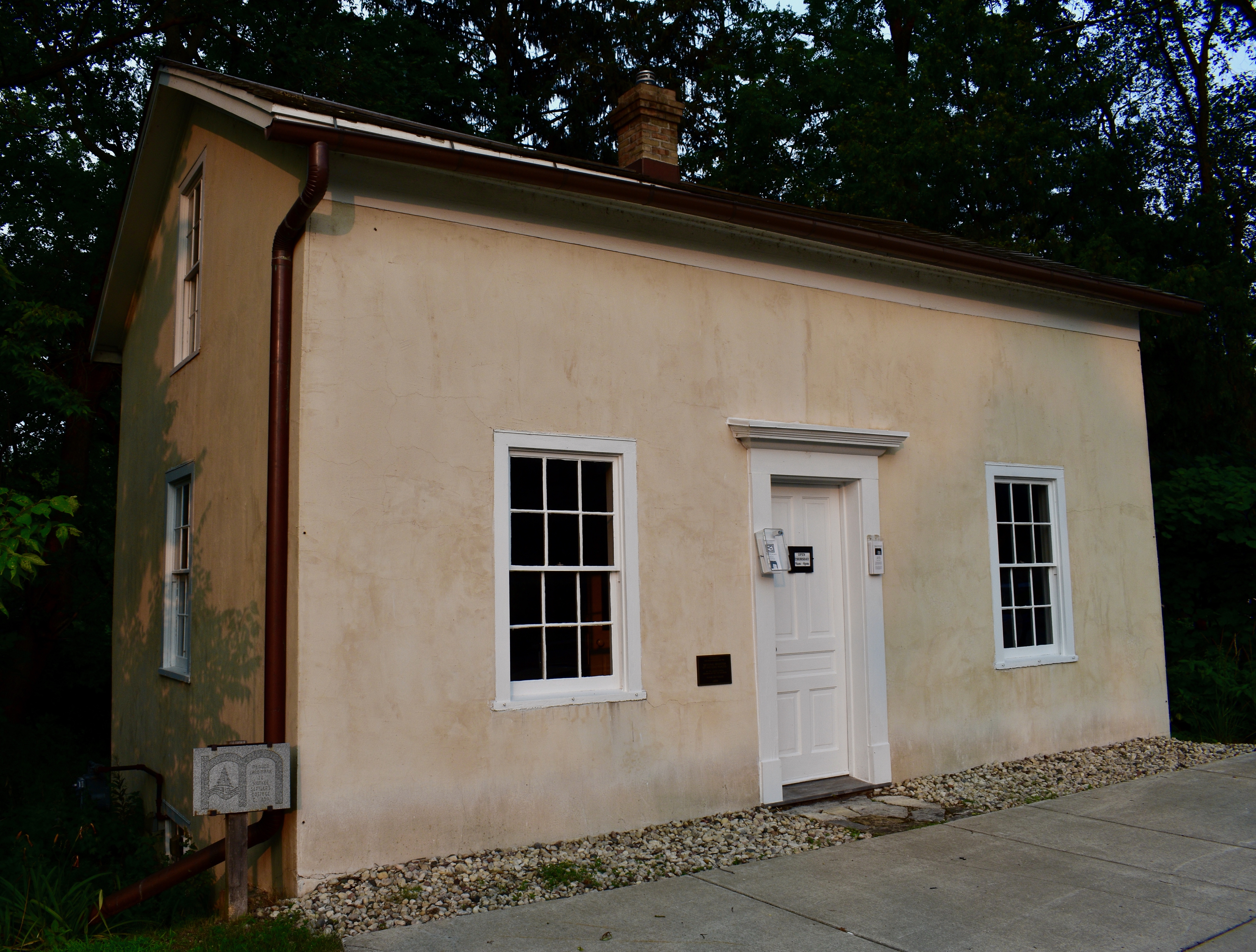
I’m working on a subject suggested by my friends Sam Cutler and Bob Blazich from the Mequon-Thiensville Historical Society. Among other projects over the last few decades, they and their colleagues at the MTHS have restored what is believed to be Ozaukee county’s oldest building on its original foundation, the historic Isham Day house, and developed its interior into the Mequon River Postal Museum. Now my friends at the MTHS want to know more about the life of Mequon River Post Office’s original postmaster, one of Mequon’s very first pioneer settlers, John Weston.

Isham Day house, exterior, west front. Photo credit: Anna Perkins, 2021

So for the last several weeks I’ve been doing a great deal of behind-the-scenes reading and re-reading of primary and secondary sources, as well as a lot of searching for additional relevant documents, including early Milwaukee and Washington/Ozaukee county deeds and other land records. In the process, I’m learning a lot about John Weston, Isham Day, Henry Thien, and some of our other first white settlers. But I’m not quite ready to write a John Weston profile, and I still need to clear up some mysteries about Isham Day’s land and house, too.

First Postmaster(s)

New post office…at Mequan River…John Weston appointed postmaster, Milwaukee Advertiser, Oct. 10, 1840, page 2

Let’s get our bearings by making an accurate list of the county’s first postmasters and their terms of office. Our source is from the National Archives in Washington, DC, the Record of Appointment of Postmasters, 1832-Sept. 30, 1971; Records of the Post Office Department; Record Group Number: 28; Series: M841; Roll Number: 144. County: Polk – Wood, Vol. 12B, circa 1832-1844, pages 794-795, currently available via Ancestry.com as U.S., Appointments of U. S. Postmasters, 1832-1971 [database on-line], 2010, image 428 of 583 (accessed 18 Jan 2024). Here’s the microfilmed image of the two-page ledger recording Washington county’s first post offices and postmasters, slightly retouched to make for easier reading:

Click the image for a higher-resolution view, and then read on for more details about old Washington/Ozaukee county’s first two post offices and their original postmasters.

Continue reading

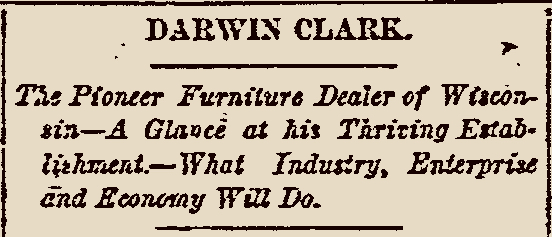
Darwin Clark: Nope, not our Clark family…

Today we have another addition to our list of various Clark-surnamed people that show up in our search for Jonathan M. Clark’s kin and that we establish (with reasonable certainty) are not JMC’s parents or other relatives. The gentleman in question is early (1837) Madison, Wisconsin Territory, settler Darwin Clark (1812-1899).

“Darwin Clark,” (Madison) Wisconsin State Journal 1884-12-26 p 8 (detail)

Continue reading

Finding JMC’s roots: Vintage first names puzzle

No new research today. I’m celebrating a big event with family, and taking a few days off from emails and major blog posts while I do.

“They just don’t name ’em like they used to…”

I’m loath to leave loyal blog readers without some Clark House History to while away the time until our next big CHH post, so I made another word search puzzle.

Your assignment today is to find the vintage Stanstead-area settler first names, all of which are documented from Clark-era sources in and around Stanstead, Lower Canada, circa 1790-1840, and many of which will feature in future posts as we search for JMC’s roots.

As in our previous post, just click the image to open and print your own copies of this version of the puzzle. Or, if you’d like to play online, just click this link: https://thewordsearch.com/puzzle/6173938/stanstead-first-names-c-1790-1840/

Continue reading

Searching for JMC’s roots: Navigating the “Land Petitions of Lower Canada, 1764-1841”

We believe that Jonathan M. Clark was born or raised, or both, in or near the Township of Stanstead, Lower Canada, in 1811 or 1812. Who his parents were, where they came from, and what happened to them, are important questions that we want to answer. I’ve been searching the Library and Archives of Canada (LAC) database of Land Petitions of Lower Canada, 1764-1841, and I have located what I believe are the earliest founding documents for Stanstead. Before we begin our examination of these documents, looking for signs of early settlers named Clark or Clarke (and their relatives and neighbors), I thought I should share a few notes about what we are looking for, and how we can find it again, in case anyone would like to check or build on the work we’re doing here.

Finding the documents

How do you find records of your early Eastern Townships pioneer? Begin by clicking over to the Library and Archives Canada (LAC) database called Land Petitions of Lower Canada, 1764-1841. The (old but still operating1) home page for that database looks like this:

Read the information on this page. It’s not long, but it’s very helpful. One of the essential points to note is the description of what is—and is not—indexed in this database:

Continue reading

Searching for JMC’s roots in Eastern Township sources: books (part 2)

UPDATED Nov. 9, 2023 to correct Mrs. Day’s first name. It’s Catherine (not Caroline) Matilda Day.

Continuing our search for Jonathan M. Clark’s supposed ancestry in Stanstead, Eastern Townships, Lower Canada—and before the deluge of original, mostly handwritten, documents from the Land Petitions of Lower Canada, 1764-1841 begins—we have another interesting and useful book to add to the first installment of our book list.

Day. 1863. Pioneers of the Eastern Townships1
Day, Mrs. C. M. [Catherine Matilda], Pioneers of the Eastern townships : a work containing official and reliable information respecting the formation of settlements, with incidents in their early history, and details of adventures, perils and deliverances, Montreal, 1863. Online via Canadiana, accessed September 24, 2023.

This early collection of Eastern Township history is not to be confused with the same author’s longer and more comprehensive History of the Eastern Townships Province of Quebec of 1869. Today’s 1863 book, only about 170 pages, is not intended to be a broad survey of early Eastern Township history like its 1869 successor, and it does not have any Stanstead- or Clark-specific information. But researchers seeking information on early Lower Canada history, land patent process, and settlement will find Pioneers of the Eastern townships to be very helpful and illuminating in two distinct ways.

Continue reading

Searching for JMC’s roots: Québec land & records

A tale in four news clippings

As you know by now, we believe that Jonathan M. Clark was born or raised—or both—in or near the Township of Stanstead, Lower Canada. Who his parents were, where they came from, and what happened to them afterwards, are important questions that we have yet to answer. There are two main stumbling blocks. On the one hand, reliable birth, marriage, death and similar records for this part of Lower Canada and northern Vermont do not begin to appear on a regular basis until a decade or more after JMC’s birth in 1811/1812. And at the same time, the CLARK surname is unbelievably common in New England and the adjacent parts of English-speaking Canada. There are just too many Clark families listed in relevant indexes and archives to even begin a useful search; for a productive search, we need a way to narrow the list to only those Clarks that might be related to JMC.

So one of my first steps in this (renewed) search is to go Clark-hunting among the larger archival sources of Lower Canada, record the potentially-relevant Clark-related information and (full) names that I find, and make a big list of persons named Clark that were in or near Stanstead between about 1790-1830. If we get really lucky, we”ll find specific records of JMC, his parents, and his family. More likely, we’ll end up with a massive list of people named Clark, and from that list we can see which of these Clarks stand out as likely suspects, identify—where possible—which Clarks are definitely not “our” Clarks, and proceed from there.

For the next several weeks our name collecting expedition will be focused on the Library and Archives Canada (LAC) database of Land Petitions of Lower Canada, 1764-1841. I suspect many of our U.S. readers will see that and wonder: why waste time in that seemingly arcane archive? (Our Canadian readers will probably nod their heads and think, yes, that sounds like a very logical place to look for early Clark and Stanstead documents).

A history in 4 newspaper items

So for those readers whose knowledge of Canada history is spotty at best, let me give a very, very brief explanation of a few bits of pertinent local history, including the Loyalist issue, how Québec became Lower Canada, and how JMC’s ancestors—and their relatives and neighbors—might have been enticed to move to Lower Canada, using four contemporary newspaper clippings.

Continue reading