I’ve been busy…at the Portage! (part 2)

In a recent CHH post I wrote about my Saturday, August 16 visit to, and presentation at, the WSDAR’s excellent Fort Winnebago Surgeons Quarters historic site. That was worth a road trip in itself. But since I was heading up to Portage, I decided to make a history weekend out of the occasion. So on Friday the 15th, I spent a fine few hours touring the nearby Historic Indian Agency House and museum, just a short distance from the Surgeon’s Quarters across the old channel of the Fox River.

Historic Indian Agency House, 2025. Photo credit: Reed Perkins

The Historic Indian Agency House

The Historic Indian Agency House (HIAH) is one of Wisconsin’s oldest museums and a “must see”, for those of you interested in the early days of the Wisconsin Territory and the history of the state’s original Native American inhabitants and their forced removal during white settlement in the 1820s, ’30s and beyond. Like the nearby Fort Winnebago and its remaining Surgeon’s Quarters, the story of the HIAH overlaps and intersects with the story of Jonathan M. Clark and his 1833-1836 military service at Fort Winnebago’s headquarters post, Fort Howard, in Green Bay.

Continue reading

Labor Day – a photo essay

UPDATE: This was supposed to go out on Monday. I hit “publish” before the piece was ready. Here’s the updated 2025 version for your reading enjoyment. Sorry for any confusion (and, for you CHH subscribers, the premature email in your inbox).

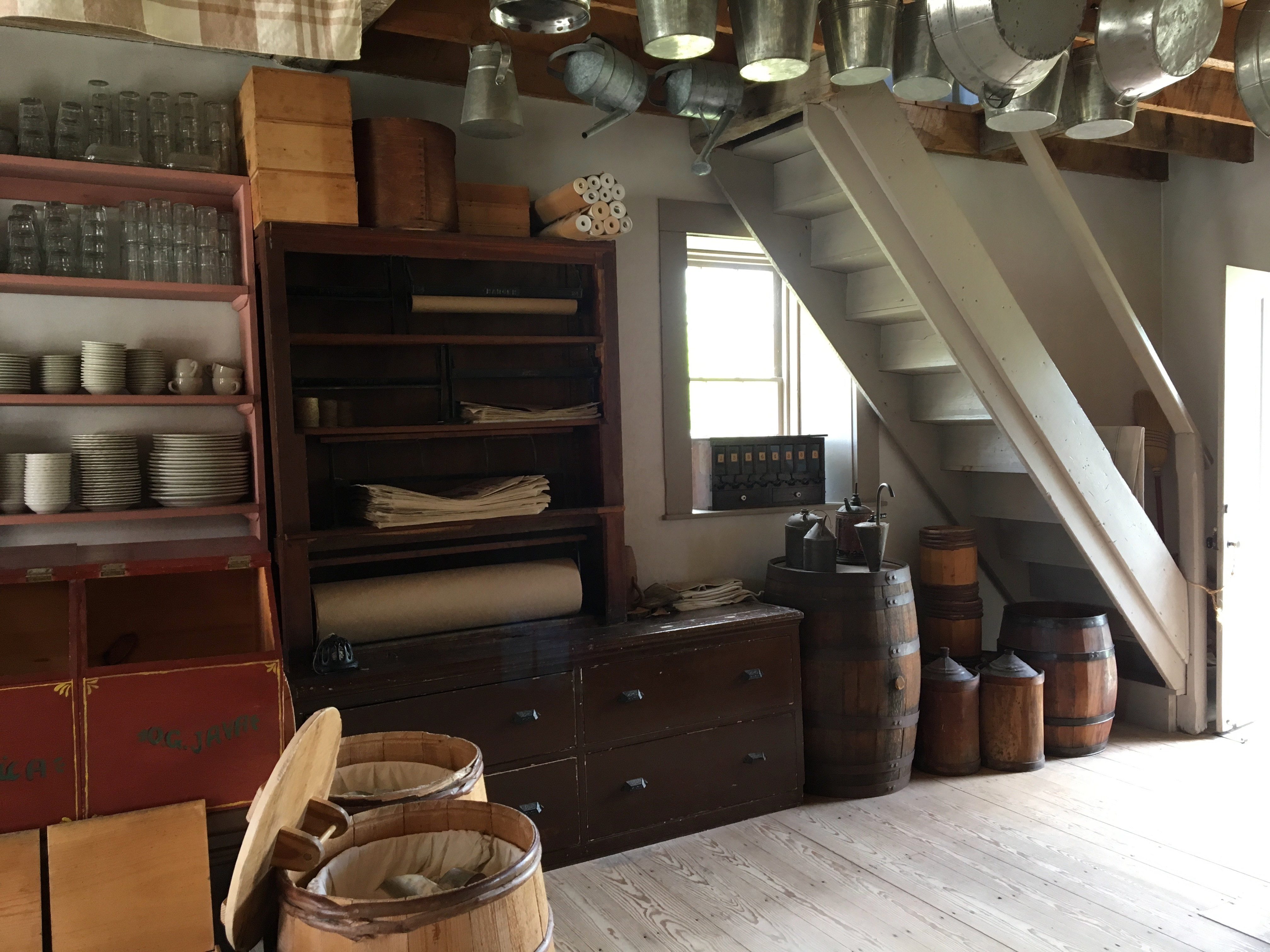
Monday, September 1st, is Labor Day, the holiday celebrating the working men and women of our nation, and I thought I’d commemorate the day with a lightly-revised re-post of this CHH piece from 2023. This Labor Day, as in 2023, I have to work a shift at our local mercantile establishment. You know, a store kind of like this one, only much bigger, stocked with just about anything you need for modern living:

Like many Americans, I don’t have the day “off” on Monday, and won’t be marching in a parade, but I’d still like to honor the holiday and salute the American worker, past and present. With that in mind, let’s revisit some of the nineteenth-century occupations we’ve talked about previously at Clark House Historian, highlighting a few of the many skills, trades, and occupations common during the Clark House era.

Since it is a holiday, I’m not going to add long commentaries to each photo. Enjoy the photo galleries, and be sure to click each gallery—and photo—to open and peruse larger versions of each image. And click the highlighted links to visit the original CHH posts, filled with lots more information about the different skills, tools, and jobs, and the full image credits.

Continue reading

I’ve been busy…at the Portage! (part 1)

It’s been a while, I know! One thing led to another and this summer ended up being a very quiet summer here on the CHH blog, with just a post or two over the past few months. My apologies to you all. However, I have been very busy “behind the scenes,” reading, researching and writing all summer long, and I have lots of new historical information and stories to share with you.

Fort Winnebago Surgeons Quarters—and more

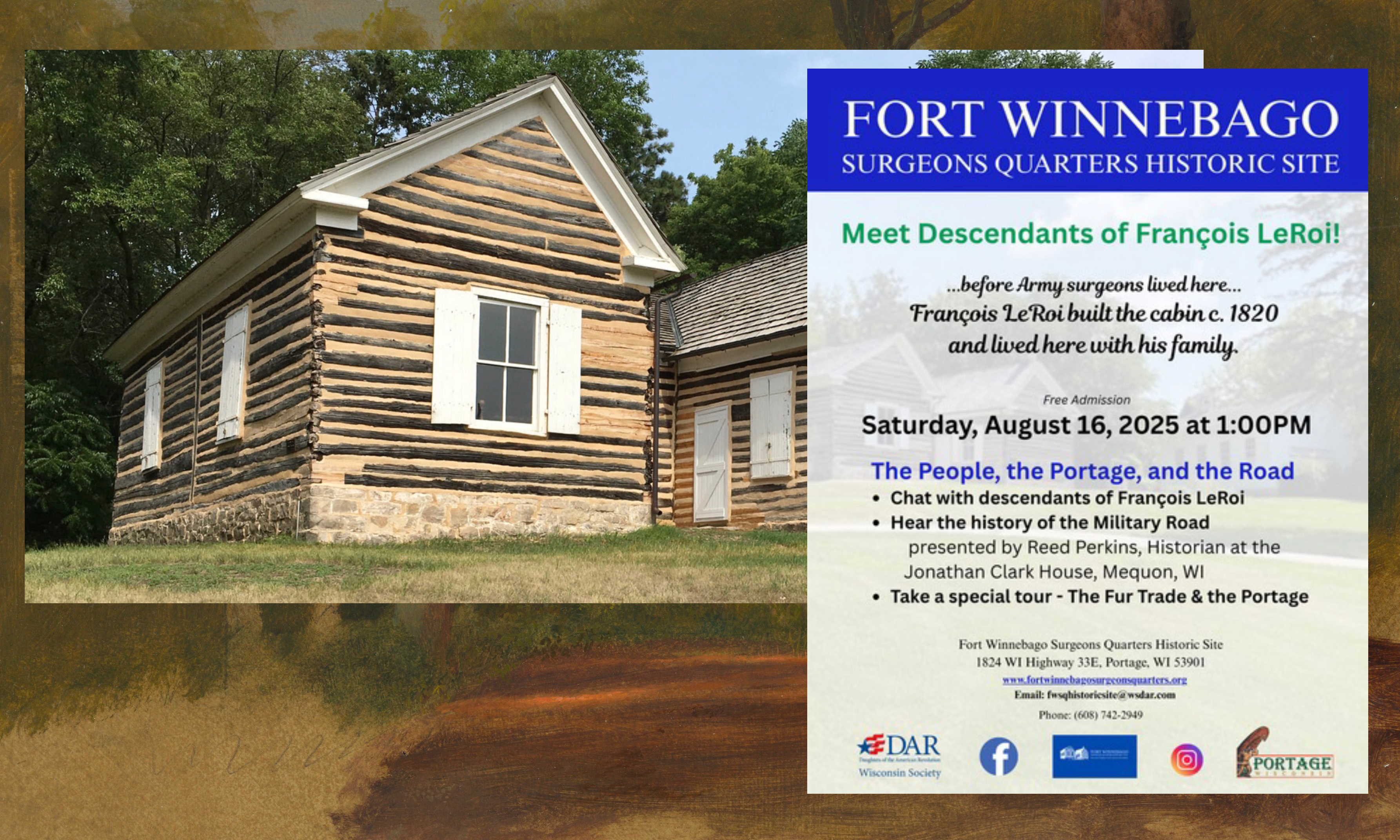
One of the projects that has kept me busy this summer was researching and preparing a presentation that I gave last Saturday, at the historic Fort Winnebago Surgeons Quarters museum as part of their The People, the Portage and the Road event. Originally, my talk was going to be a lightly-revised update of my September, 2024 talk at the Wisconsin Society of the Daughters of the American Revolution’s Fall Workshop in Oshkosh.

That talk, “Building the Military Road,” contained about 45 minutes of detailed information about Wisconsin’s first federal road, and the men that built it—including our own Sgt. Jonathan M. Clark—tightly squeezed into about a half-hour time slot. The presentation was well-received, and I was invited to repeat that talk at this August, 2025, event at the WSDAR’s Fort Winnebago Surgeons Quarters museum in Portage.

However! The August 16th event was also going to be a reunion of the descendants of François LeRoi (aka Francis LeRoy or Roy)—the man that first built and occupied the historic surgeon’s quarters (1816-1829), and it was suggested that I include some Francis LeRoy related information in my talk, a very reasonable request. Since I already knew quite a bit about the Military Road, the Portage, and the life and times at Forts Howard and Winnebago in the 1830s, I thought I would just need to make a few minor cuts to my original talk, find a few, possibly obscure or unknown, LeRoi documents, add them to the presentation and, well, that would be just the thing! Well…

Continue reading

Memorial Day, 2025

Lest We Forget

Our annual Memorial Day post, first published in 2020, more relevant with each passing year.

Graves of Unknown Union Soldiers, Memphis National Cemetery, photo by Clayton B. Fraser, (Library of Congress), public domain. Memphis National Cemetery is the final resting place of Mequon’s Watson Peter Woodworth, and almost 14,000 of his Union Army comrades.

Today is the day our nation officially observes Memorial Day. For many Americans, Memorial Day represents “the first day of summer,” and is traditionally celebrated with trips to the lake, picnics, parades, and sales on cars, appliances, and other consumer goods.

But for many of us, Memorial Day remains rooted in its origins as Decoration Day. The first national observance was in 1868, when retired general John A. Logan, commander and chief of the Grand Army of the Republic—the Union veterans’ organization—issued his General Order Number 11, designating May 30 as a memorial day “for the purpose of strewing with flowers or otherwise decorating the graves of comrades who died in defense of their country during the late rebellion, and whose bodies now lie in almost every city, village, and hamlet churchyard in the land.”

On this Memorial Day, let’s take a moment to remember what this day truly represents.

Continue reading

JCH Sources: a look a local histories, part 2

This is the second part of a multi-part look at local (Mequon and Washington/Ozaukee County) history sources. If you missed Part 2, I recommend you click this link and read that first.

In today’s post, I’d like to guide you to and through another one of the local histories that I’ve bumped into over the last decade or so. As in Part 1, I’ll include a link to a PDF copy of the source, make comments on the range and quality of the information in the book, and sum it up with an overall grade for accuracy, style, and usefulness.

“All sources lie.” — Lawrence of Arabia (supposedly)

That provocative quote begins the forward of Elizabeth Shown Mills’s monumental Evidence Explained (third edition, revised, 2017), the “Bible” of genealogical research, source evaluation, and modern citation practices. It makes an arresting opening for her almost 900-page book, devoted to historical and genealogical sources and how to cite them.1 But what does the author mean by beginning her book with Lawrence’s (supposed) quote? Here is part of her explanation:

Continue reading

JCH Sources: a look a local histories, part 1

If you are interested in the history of the Jonathan Clark House, there are a number of published local histories that you might consult. Many of them are available online, as free, searchable, PDF downloads from Internet Archive, GoogleBooks, the Library of Congress, and other digital repositories. This is pretty cool but, as you might expect, not all sources are equal. Some are more reliable than others. Some contain detailed information about early settlement, settlers, government and politicians, pioneer businesses and other local affairs, often drawing upon old primary sources, some of which have since disappeared. Other histories are more content to paraphrase (and sometimes mangle) earlier volumes. How do you know which to trust?

A guide for the perplexed

In today’s post, I’d like to guide you to and through several of the published histories that I’ve spent a lot of time with. I’ll provide links to PDF copies where available, make a few comments on the range and quality of the information in each book, and give each book an overall grade for accuracy, style, and usefulness.

Continue reading

Help the Historian: Mysterious (Bible?) Fragment – a clue!

Among the real pleasures of writing a blog like this are the comments I receive from CHH readers. Recently, I heard from reader James Cornelius of nearby Grafton, Wisconsin,1 who had some thoughts about our January 24, 2025, post “Help the Historian: Mysterious (Bible?) Fragment.” 2

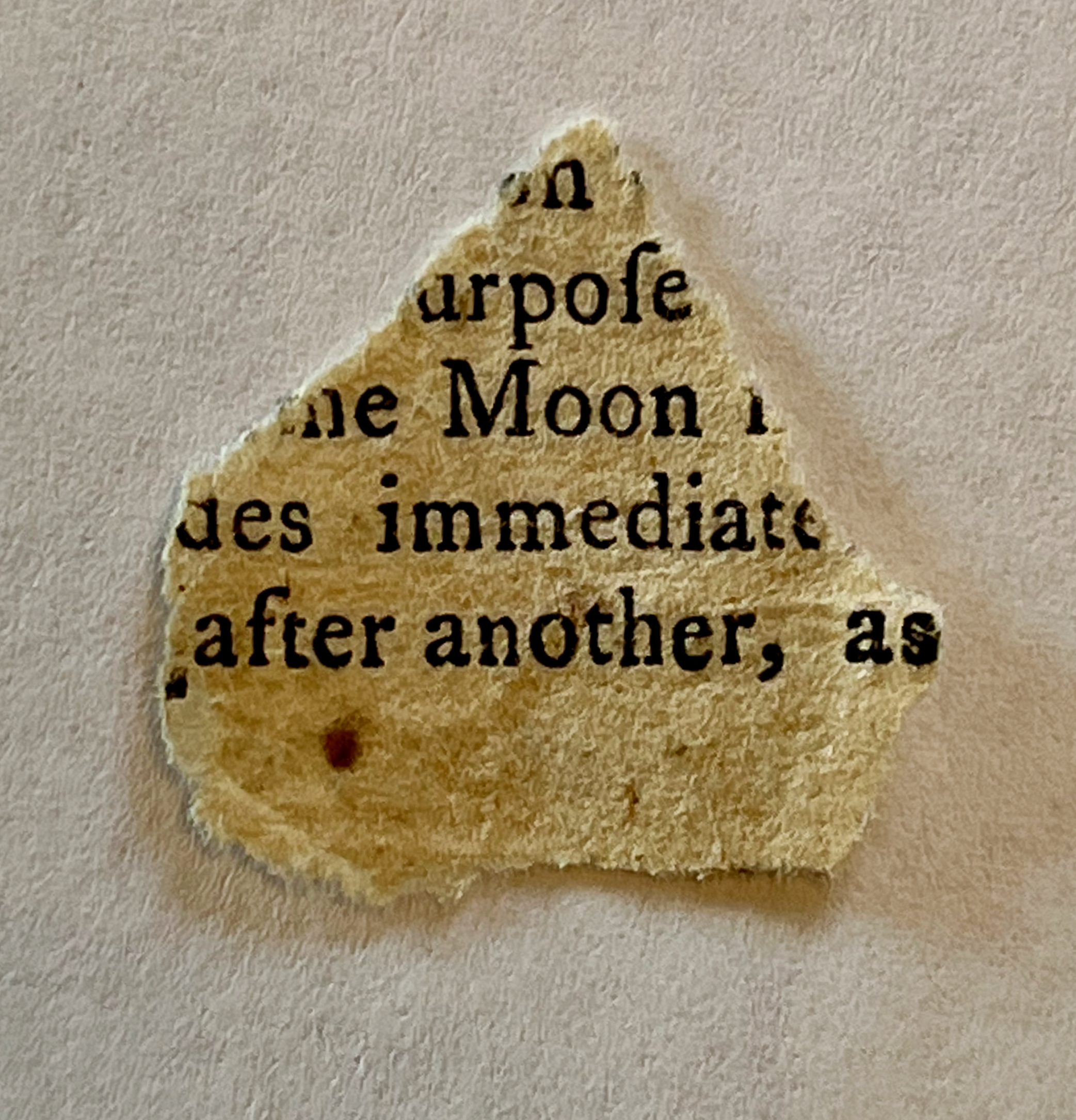
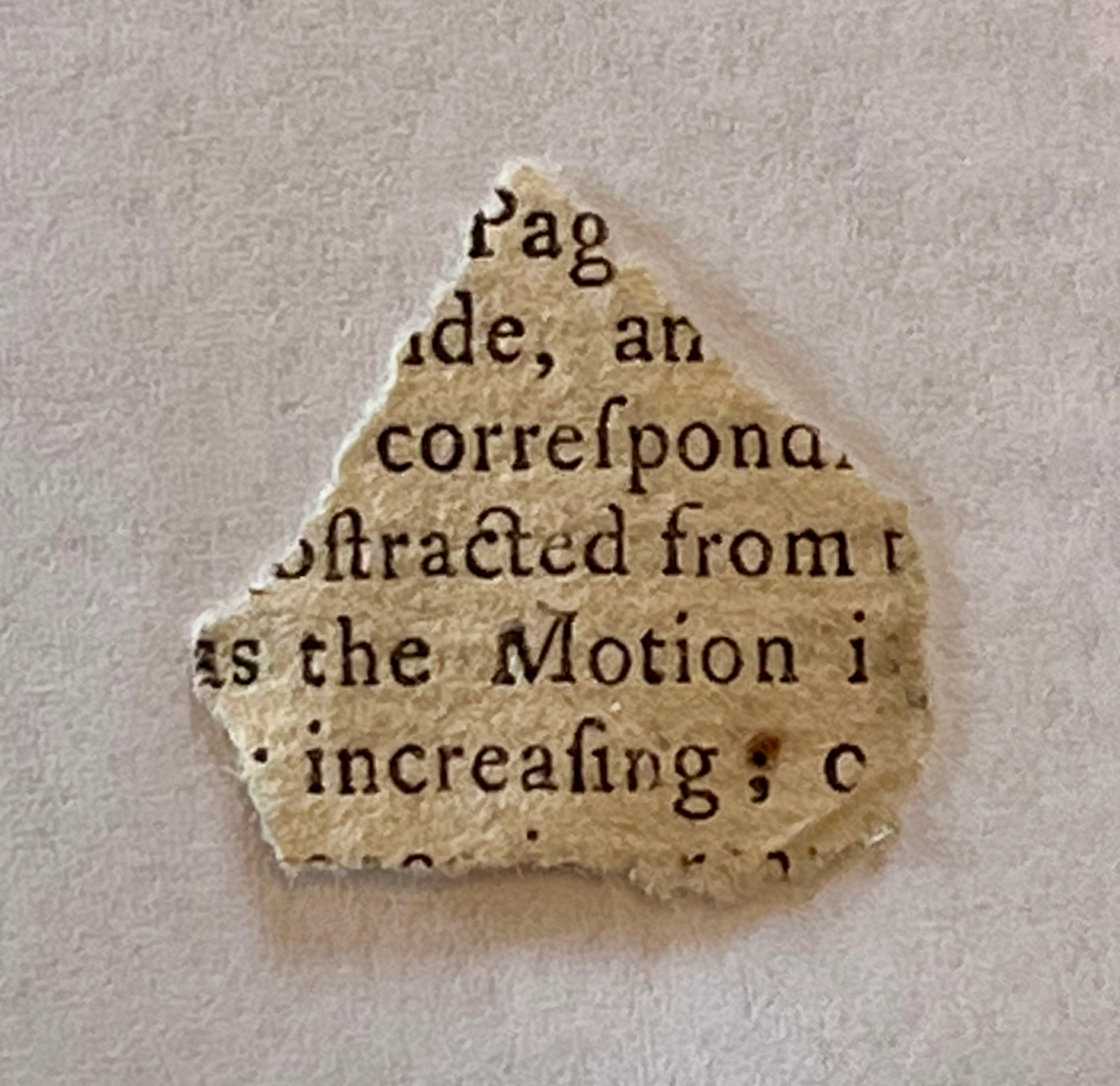
As the original post explained, I had been examining a number of loose Bonniwell papers, scraps, and other ephemera that were donated to the Clark House along with the Bonniwell family Bible itself, and I was particularly interested in one little fragment of printed text that had me baffled.

The mysterious fragment, sides A & B, photo credit: Reed Perkins, 2022.

In my original post, I examined the text and typography of the fragment and estimated that the it was published sometime between the late-sixteenth century (at the very earliest) and—at the very latest—the first decades of the nineteenth century. And the mentions of “Moon” and “motion” and such suggested a source that might be more scientific or philosophical, and not necessarily a sacred text, but I couldn’t think what that might be.

A new possible source: Almanacs!

In his comment, James observed: My hunch is that this triangular scrap /bookmark came from an almanac, likely as common in 1800-1820 U.K. as in U.S. a half-decade later. Many fairly good or detailed ‘scientific’ discussions appeared in the old almanacs or ‘farmer’s friends.’

I think James is on to something. Almanacs seem like a very plausible source. But how common were farmer’s almanacs in the UK, and how likely was it that the Bonniwells had access to these annual “farmer’s friends” in Chatham, Kent, England, in the years before their 1832 immigration to North America?

Continue reading

JMC: a soldier’s life at Fort Howard, 1834

In the summer of 1834, the U.S. Army’s Brevet Brigadier General Hugh Brady made an inspection tour of many of the posts under his command. One of those posts was Fort Howard, at Green Bay, in the then Michigan Territory. In an earlier post, I briefly mentioned the General’s July 17, 1834, visit to the fort and how “Gen. Brady reviewed all the troops, who made a brilliant display of military evolutions, highly gratifying to those who witnessed them, and evidently meriting the approbation they received from the worthy and excellent commander-in-chief.

Gen. Hugh Brady, c. 1844-1851. Photo credit: see note 1

I have since located the official report of the inspection that Brady sent to his superiors back in Washington, DC. and I want to share it with you today. I think you’ll find that a close reading of the general’s report will give some insights into the daily lives and routines of soldiers—including our Jonathan M. Clark—as they served their country “on the frontier” in the mid-1830s.

Continue reading