Monday: Map Day! – Mary Turck’s Greene County, NY, 1829

As we discussed last Monday, 2021 is the bicentennial of Mary Turck Clark’s birth. So this year I’d like to focus on Mary, her parents and her seven siblings: where they came from, how they got to Wisconsin, and where they went afterwards. Today we’ll start to get our Turck-family bearings with a look at an excellent map of Greene County, New York, an important place in the lives of Mary, her parents, and her extended family.

The Hudson River Dutch-Americans

Mary Turck’s parents and ancestors descended from Dutch-American families that had been in New York since colonial times. For more background and a fine 1829/32 map of the whole state, take a minute to re-read our previous Monday: Map Day!, Peter and Rachael (Gay) Turck’s New York, 1829/32. The initial Dutch immigrants to New Netherland landed on Manhattan Island; it wasn’t long before Dutch settlers headed inland, west and north up the Hudson River. By the time Mary Turck was born in 1821, there had been generations of Dutch-Americans living along the Hudson. The story of Mary’s extended family—the Turck, Gay, Groom, and Van Loon families and their kin—is centered around a handful of Hudson River counties. Some of the boundaries and place names changed over the centuries, but much of the story of Mary Turck’s family will be found in the documents, maps and places of Ulster and Greene counties on the west bank of the river and Dutchess and Columbia counties on the east side.

Burr, David H., Map of the State of New-York and the surrounding country by David H. Burr. Compiled from his large map of the State, 1832.[…] Entered according to Act of Congress Jany. 5th., 1829 by David H. Burr of the State of New York. Engd. by Rawdon, Clark & Co., Albany & Rawdon, Wright & Co., New York [detail]. Credit, David Rumsey Map Collection, David Rumsey Map Center, Stanford Libraries, non-commercial use permitted under Creative Commons license. Click image to open larger map in new window.

Continue reading
When was Mary Turck born?

Just when you think you know the answer…

A few days ago, Clark House museum director Nina Look asked me a simple question: when, exactly, was Mary Turck Clark born? So I looked in my database and I came up with…two answers: Mary Turck Clark was born on either May 4th, 1820 or May 3, 1821. So I reviewed my dates and sources, and today’s post is about what I (re-)discovered, and what I still have to investigate.

Haven’t we been over this before?

Why, yes, we have. Here are links to earlier posts on essential sources of Mary Turck Clark birth date and birth year information, starting with my second Clark House Historian post, this now-outdated post about Mary from 2016. Other, more recent, posts have gone into detail examining Mary, her family, and their likely birth dates as found on the U.S. federal decennial censuses:

I’ve not yet blogged about Mary’s 1870 or 1880 federal censuses—both enumerated in Milwaukee—but I’ve seen them and used them in my research. More on these in a moment.

Continue reading

A view of Stanstead, Lower Canada, 1827

I’m working on some longer posts, so I thought you might enjoy this image of a hand-colored lithograph from 1827. It’s a view the village of Kilborn’s Mills, Stanstead, Lower Canada, as seen from the south side of the international border, near Derby Line, Vermont. It’s very likely that the 15- or 16-year-old Jonathan M. Clark would have known this scenery, village, bridge, and border crossing:

Continue reading

History Mystery! No. 2

The Clark Family Record: What is it? Who created it?

Welcome to our second installment of the Clark House Historian’s History Mystery! in which you, the reader, are invited to Help the Historian and solve one of the many persistent mysteries surrounding Jonathan M. Clark, his family, and related unknowns of local history. In a previous post, we got to Meet the Children of the Clark family. One of the sources for that post is an image that I received from Clark descendant Liz Hickman (thanks, Liz!) of what looks like a single page removed from an old family bible. The page lists birth dates for Jonathan M. Clark, Mary Turck Clark, and their children, and death dates for Jonathan and his only son, Henry. It’s a key document for Clark family research and yet there is much we don’t know about it.  History Mystery! No. 2 seeks to answer: What is the Clark “Family Record,” who created it, and how accurate is it?

Here’s a copy of the image from our files: Continue reading

Where are we?

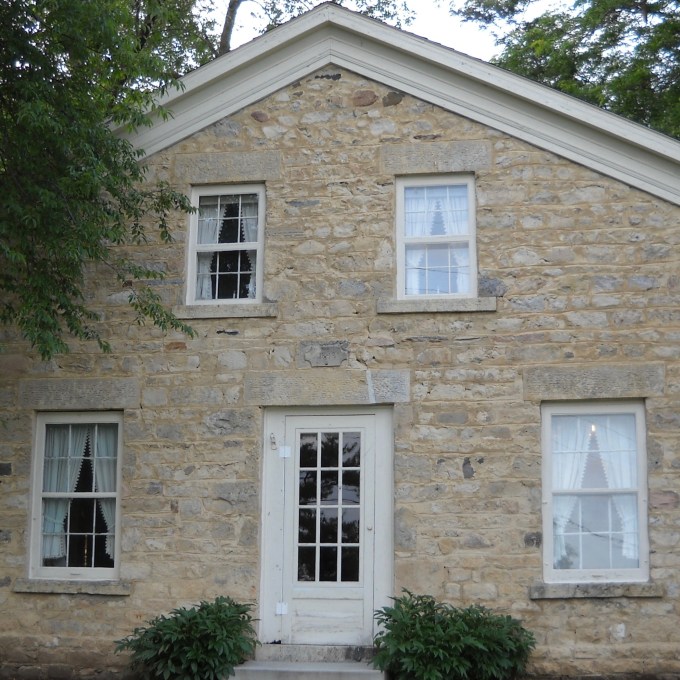
CLARK, Jonathan house square crop  July,  2015

Jonathan Clark House, Mequon, Wisconsin, July, 2015. Photograph by Reed Perkins

Where are we? Well, if you’re looking at this handsome stone house in real life, you’re standing by the front door of the Jonathan Clark House Museum, looking northward. On a modern map you can find it at 13615 N. Cedarburg Road—on the intersection with Bonniwell Road—Mequon, Wisconsin. If you’d like to visit the museum, click here for more info.

But “Where are we?” is never a simple question when it comes to historic places, because the answer often changes over time. Along with “Where are we?” we need to ask “When are we?” The answer to “Where are we?” is surprisingly varied—and useful for further research—throughout the lives of Jonathan and Mary Clark.

Continue reading

Mary Turck Clark

UPDATE, January 30, 2021: this post was the second-ever post on Clark House Historian. It represented what we knew at the time about Mary Turck, the daughter of Peter Turck and Rachael Gay, wife of Jonathan M. Clark, and mother of the eight Clark family children. This original post was pretty accurate, and I’m leaving it here for reference. But we have learned a lot more about Mary and her Turck and Clark families in the intervening almost-5 years. For the most up-to-date info on Mary Turck Clark, please go the the revised version of this biographical sketch. Thanks for reading!

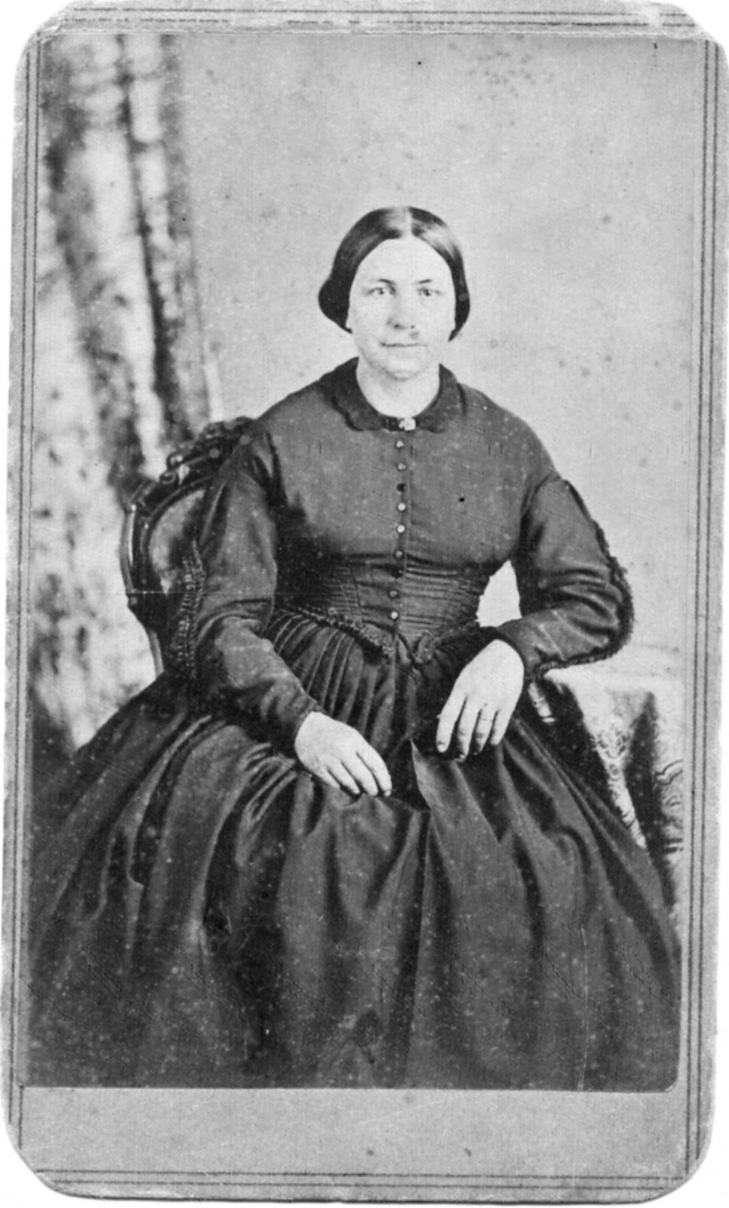
CLARK, Mary TURCK portrait

Mary Turck Clark. Photograph courtesy Liz Hickman.

It is a commonplace of genealogical and historical research that women and their stories are the “forgotten fifty percent.” In most North American societies it was, and in many places remains, the custom that upon marriage the woman took her husband’s surname. Some documents that recorded marriages, births and deaths might include a place for the woman’s surname, and sometimes the names of her parents, but this information was often left blank. After a generation or two, the woman’s name and those of her parents and grandparents would be completely forgotten, even by her closest descendants.

Continue reading