Finding what you want: a few tips for readers

Sometimes a blog is like a labyrinth…
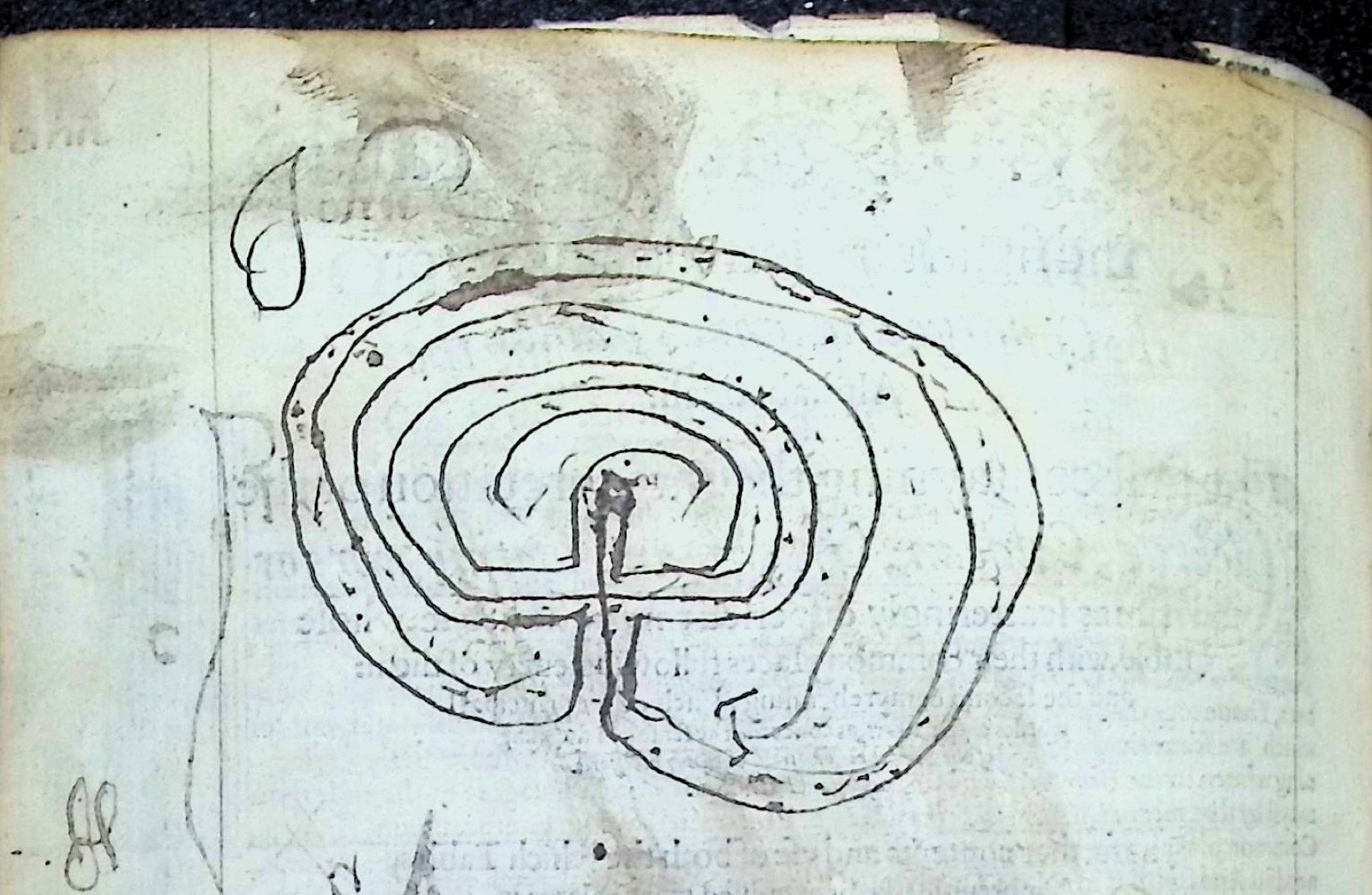
JCH Bonniwell family Bible, MS inscription “John” and drawing of a Labyrinth, First […] Concordance, sig. A1 verso (detail)

I’m looking forward to blogging more regularly, and I hope you enjoy the upcoming posts. But I’ve been publishing Clark House Historian for almost ten years (!), and I know it can be hard to navigate the blog and find the particular historical information, photos, maps and other images that you might be looking for. Today’s post has a few tips to help you make your way through the twists and turns of the Clark House Historian information labyrinth.

Tip No. 1: Click the links!

If you’d like to view a larger, clearer version of almost any image on the blog: click the image (or, sometimes, the link in the caption), and a new full-size image will open in a new window. Other links (highlighted in the blog’s signature minty-green color) will connect you with related blog posts and online sources for further information.

And by the way, you can read the blog on your phone and open and zoom in on the photos, drawings, maps and other images. But I create the CHH posts on a device with a good-sized screen, and I recommend viewing on the largest screen that you can.

Finally, and most importantly, be sure to click the Continue reading—> link, typically found after the first image and paragraph or two. There is a lot more to be found “below the fold.”

Continue reading
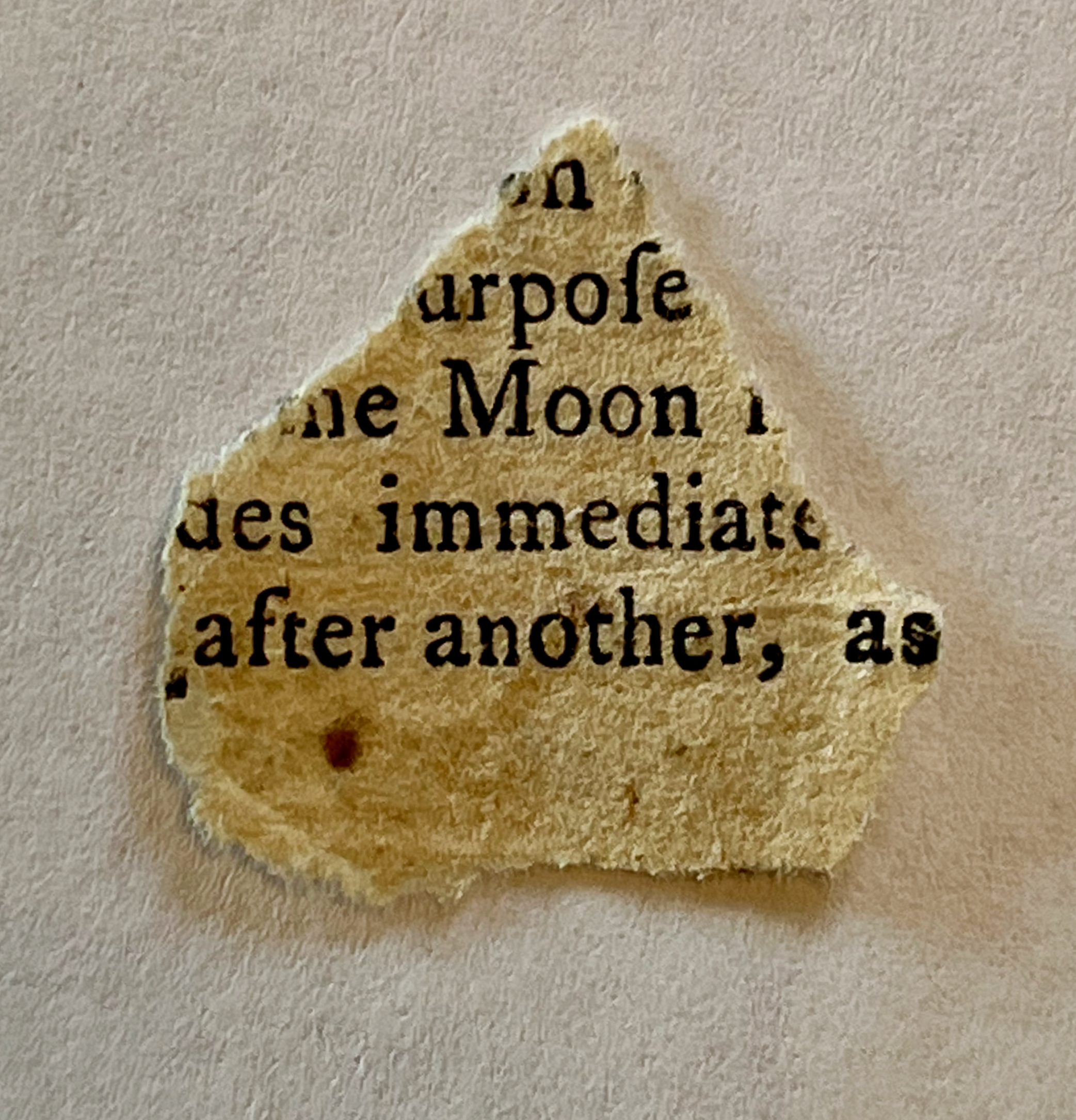
Help the Historian: Mysterious (Bible?) Fragment

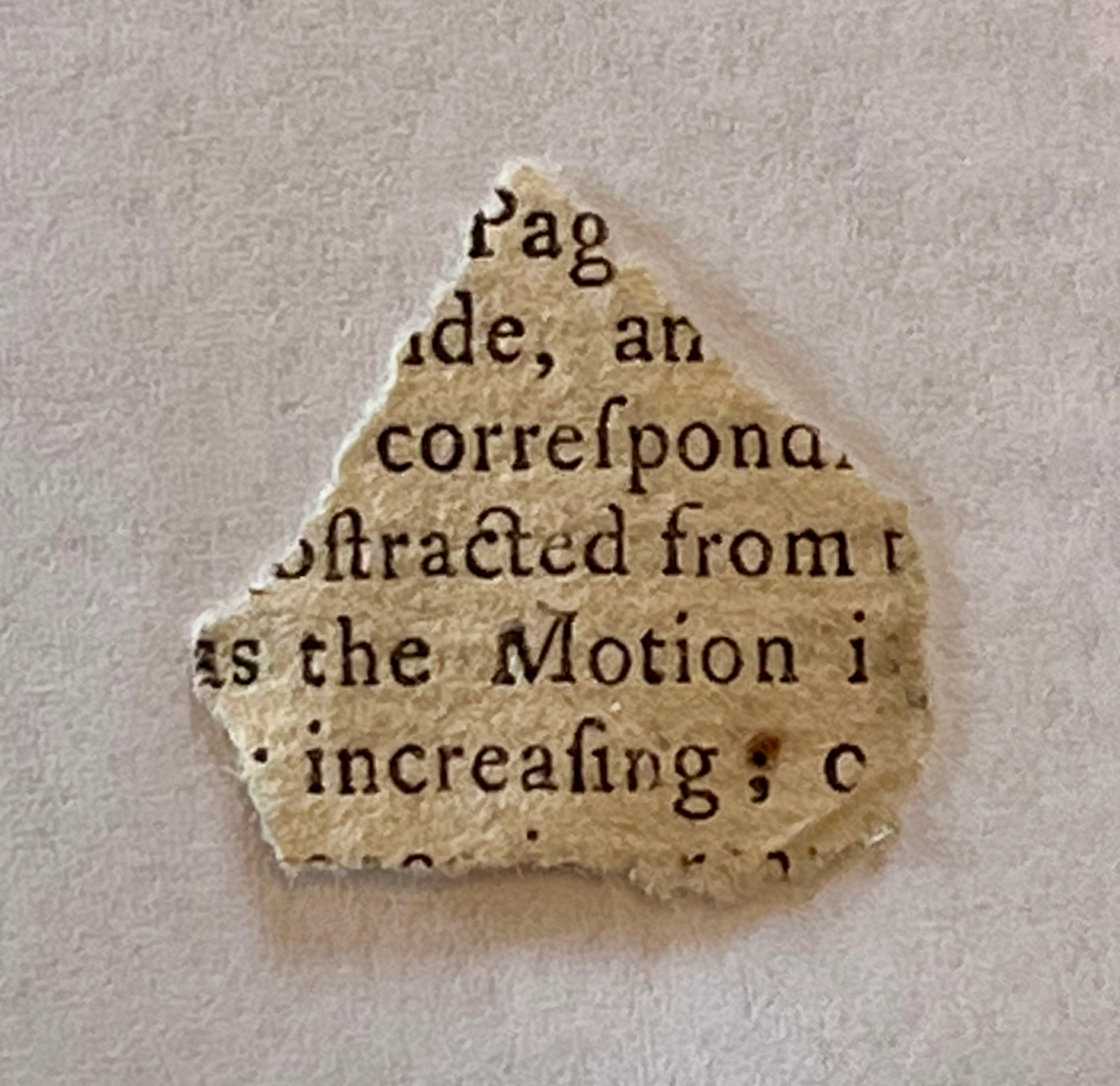
I’m spending some of my time this winter on projects related to the cataloging, interpretation and display of our historic Bonniwell Family Bible. One of the items on my “to do” list involves the study of a number of Bonniwell papers and other ephemera that were donated along with the Bible itself. Some of the miscellaneous papers are self-explanatory and easily understood. But one little fragment of printed text has me baffled, and I need your help, history lovers!

The fragment, sides A & B

Photos credit: Reed Perkins

Continue reading

Monday: Map Day! – the Bonniwells in Kent

OK, this “Monday: Map Day!” is a few days late (and has been updated since posting, see notes 7 & 8). But I needed a bit more time to edit this beautiful and historic map of the County of Kent for you. Kent was home to Mequon’s pioneering Bonniwell family and their kin for almost 150 years, and taking a close look at its geography may prove helpful for understanding the family and its history, including some of the earlier inscriptions in the Bonniwell family Bible.

Cantivm Vernacule Kent, 1665

Let’s begin with a view of the complete, original map. It was made in 1665, just before James Bonniwell (1636-1709) moved his family from Sutton-Courtney, Berkshire, in south-central England, to Kent, in the southeast.1 As always, I encourage you to click the images to view higher-resolution versions of each map in a new window. Take some time to zoom in and out and scroll around. There’s a lot to see, so I’m going to keep the commentary to a minimum.2

This 1665 map, titled Cantivm Vernacule Kent [Cantium, in the vernacular, Kent], is part of a much larger work, Joan Blaeu’s magnificent Atlas Maior Sive Cosmographia Blaviana, published in Amsterdam between 1662-1672. This is another amazing map made available online by the David Rumsey Map Collection, whose staff provided this commentary:

Continue reading

Finis, 2022

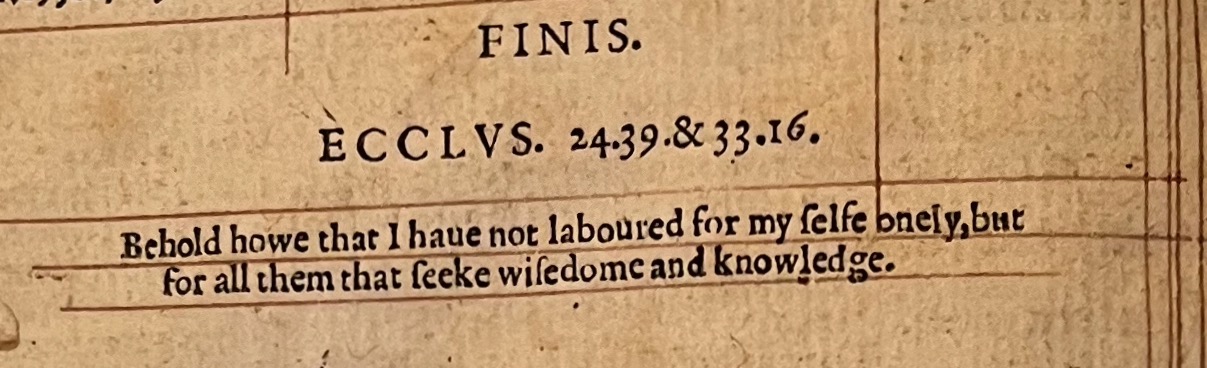
[The Bible,] Geneva version, published by Christopher Barker, London, circa 1580-1588. Collection of the Jonathan Clark House, photo credit: Reed Perkins, 2022.

What a year!

Finis. The End. Today is December 31, the last day of a long and eventful 2022. I’m not up to the task of summarizing all the highs and lows of the past year. I’ll leave that to others.

But I thought recalling one special summer day at the Clark House might make a nice valediction at the close of the old year and the beginning of the new. And for me, without question, the best day for the Clark House this year was July 23, 2022, the day we celebrated the generous donation of the historic Bonniwell family Bible and papers.

Continue reading