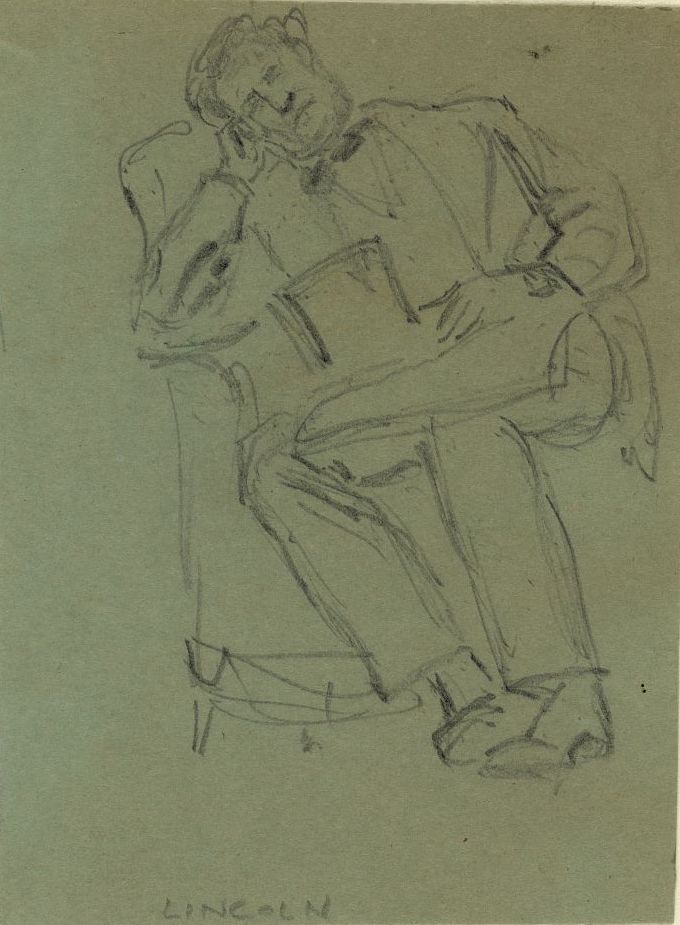
It’s the end of a long week. I’m kind of tired, and don’t feel much like writing. I think i’ll take off my hat and rest a bit.
Waud, Alfred R., [Lincoln Resting in Chair, Top Hat in Lap.], United States, between 1860 and 1865. Library of Congress. Click to open larger image in new window.
Earlier this summer, while putting together the post How’d they get here? – early Erie Canal images, I came across a tidily-drawn print that helps illustrate the story of the Peter and Rachael (Gay) Turck family’s life before coming to Mequon. It’s downtown Palmyra, Wayne county, New York, in 1825:
Unknown artist, Eastern view in Main-street, Palmyra., in Cadwallader Colden, et. al., Memoir…at the Completion of the New York Canals, New York, 1825. Image from “extra-illustrated” edition in New York Public Library Digital Collections, scanned copy of standard edition of book available via GoogleBooks. Click to open larger image in new window.
UPDATED August 16, 2021, to include more information on the Ho-Chunk language, inadvertently omitted from the original post.

I’m working on more posts for our series about the early Mequon immigrants and “How’d they get here?” I needed a map that showed all of the Great Lakes, as well as the Eastern seaboard states and ports from which these immigrants began their westward journeys. And hey, I found a great map from 1825, the year the Erie Canal was completed:
Finley, Anthony and David H. Vance, Map Of The United States Of North America. Philadelphia, 1825. Credit, David Rumsey Map Collection, David Rumsey Map Center, Stanford Libraries, non-commercial use permitted under Creative Commons license. Click image to open larger map in new window.
One of the really neat aspects of researching and writing about Clark House history on this site is the feedback I receive from blog readers. I love hearing from you, whether you have a comment or a question about the topic at hand, or perhaps there is something else that you want to know more about.
[Occupational Portrait of a Salesman], Three-Quarter Length, Seated, Displaying His Wares. Daguerreotype, between 1850 and 1860, cropped and lightly color-adjusted. Library of Congress. Click to open larger image in new window.
“UPDATED…”
History is never “done.” No one can know it all. There are always new sources with fresh information, and new ways to look at well-known material. A question or a new bit of information from a reader will often prompt additional research or a correction to previous statements. The result is that this blog—and our knowledge of the Clark family, their neighbors, and their era—is constantly evolving.
Chambers, Thomas. Storm-Tossed Frigate, oil on canvas, mid 19th century (c. 1836-1845). National Gallery of Art, gift of Edgar William and Bernice Chrysler Garbisch. Public domain. Click to open larger image in new window.
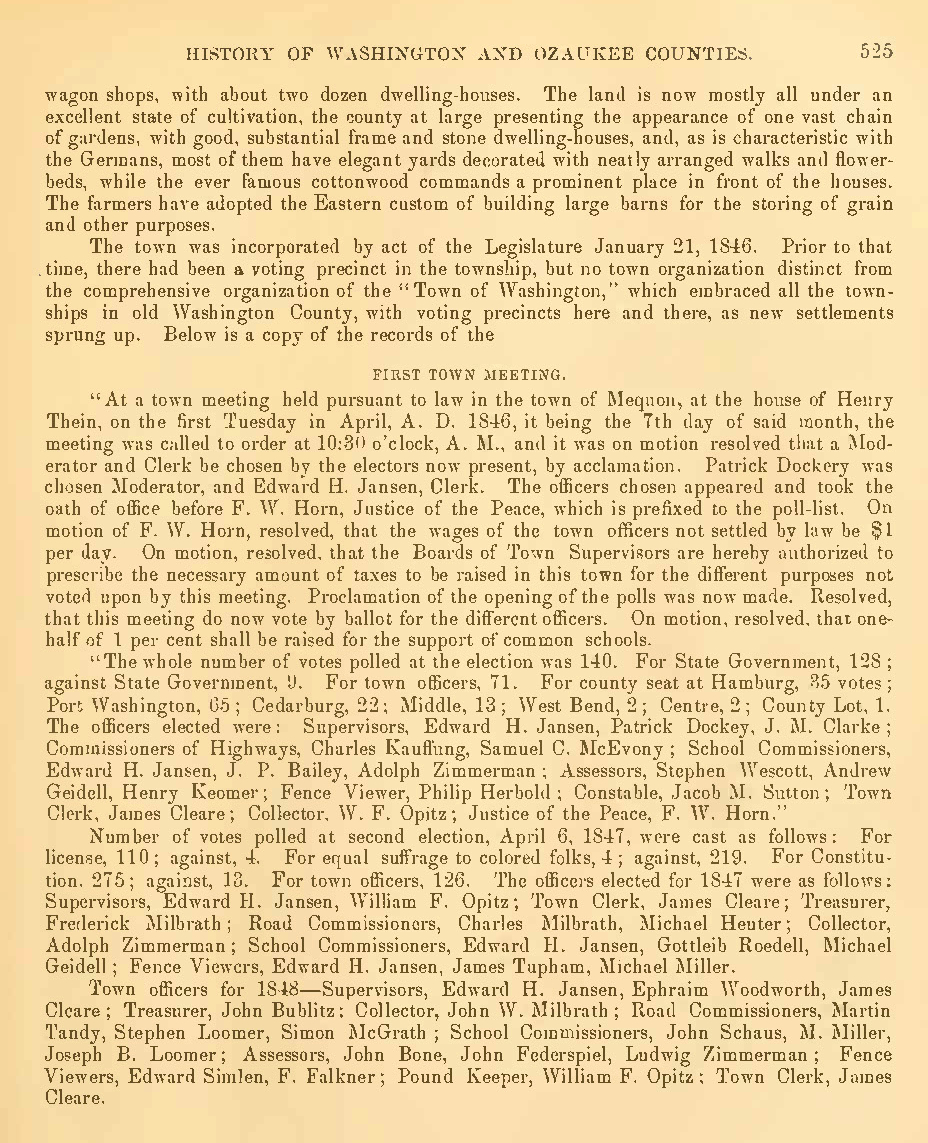
Every now and then it pays to take a fresh look at familiar sources. One of the key sources for the early history of Mequon and its parent counties is The History of Washington and Ozaukee Counties, Wisconsin […] Illustrated, published in Chicago in 1881. And even though I’ve been using this book for Clark House research for over a decade, I still discover (or, in this case, re-discover) facts about Mequon—and, specifically, Jonathan M. Clark—that I had either not known before, or had noticed, “filed for future reference,” and forgotten to write about. Today’s post fixes one such omission.1
The first meeting of the Town of Mequon, April 7, 1846
Page 525 of The History… contains a load of information about the beginnings of town government in Spring, 1846. Unfortunately, it’s the sort of densely worded, 19th-century “history” writing that makes the reader want to skip ahead to something less dry. Here, take a look; start with the first full paragraph, beginning “The town was incorporated”…
The History of Washington and Ozaukee Counties, Wisconsin […] Illustrated, Western Historical Co., Chicago, 1881, page 525, pdf of full book via GoogleBooks. Additional online, pdf copies can be found at Hathi Trust, the Wisconsin Historical Society and Archive.org. Click to open larger image in new window.
That’s a lot of info: names, dates, job titles. Let’s break things up a bit and take a closer look at what’s going on as old Washington county transitioned from the original county-wide system of government to the new system, in which each town will be responsible for much of its own governance.
Well, I haven’t actually gone fishing, but I am taking another short break, and I thought I’d illustrate this with a historic drawing or lithograph of some Clark-era folks fishing. A little play on words. Just for fun and all.
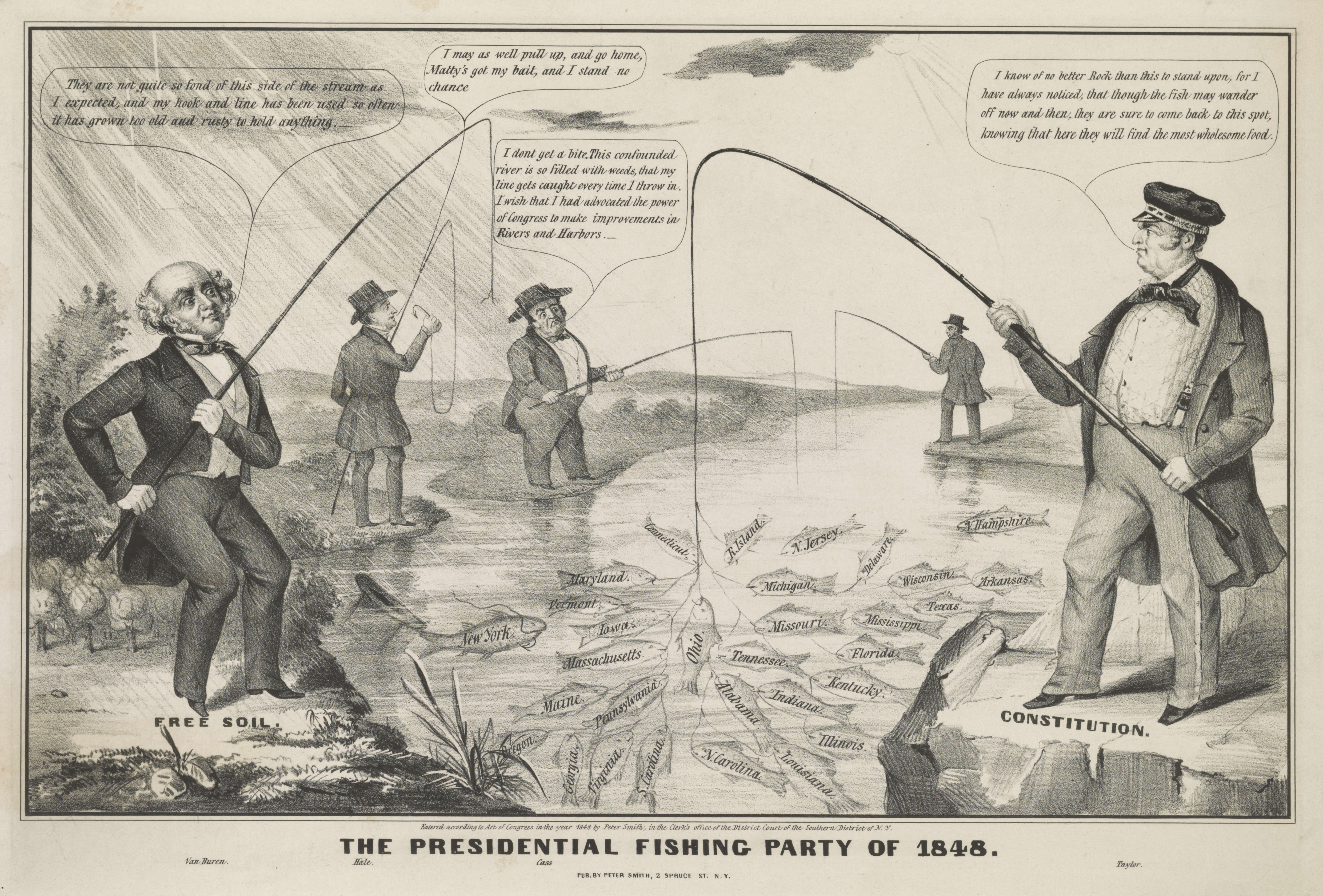
The best I could do today—alas—was this 1848 political cartoon:
N. Currier. The Presidential fishing party of. United States, 1848. [New York: Pub. by Peter Smith i.e., Nathaniel Currier, 2 Spruce St., N.Y]. Library of Congress. Click to open larger image in new window; this is the only way to view the text clearly, by the way.
Like all political cartoons of the era it is heavy-handed, visually busy, and full of long-winded text, explaining some now-obscure but highly-contentious issue of the day in the most tedious manner possible. (This is why I usually avoid using 19th-century political cartoons to enliven the discussion here at Clark House Historian.)
What’s it all about?
Anyway, 1848 was an important year for the nation, and for our Mequon settlers. The war with Mexico ended, Wisconsin attained statehood and—closer to home—the Jonathan M. Clark house was built. This cartoon, verbose as it may be, actually covers some key issues of the 1848 U.S. presidential race. Here’s a helpful explanation from the staff at the Library of Congress (I’ve added a few paragraph breaks for easier reading):
On my way to doing more research on Henry M. Clark’s possible service with the Union army, circa 1863-65, I stopped to re-check some essential resources. One of these is the National Park Service’s Civil War Soldiers and Sailors Database. This is a very useful and handy resource when searching for information on individual soldiers and the histories of the units in which they served.
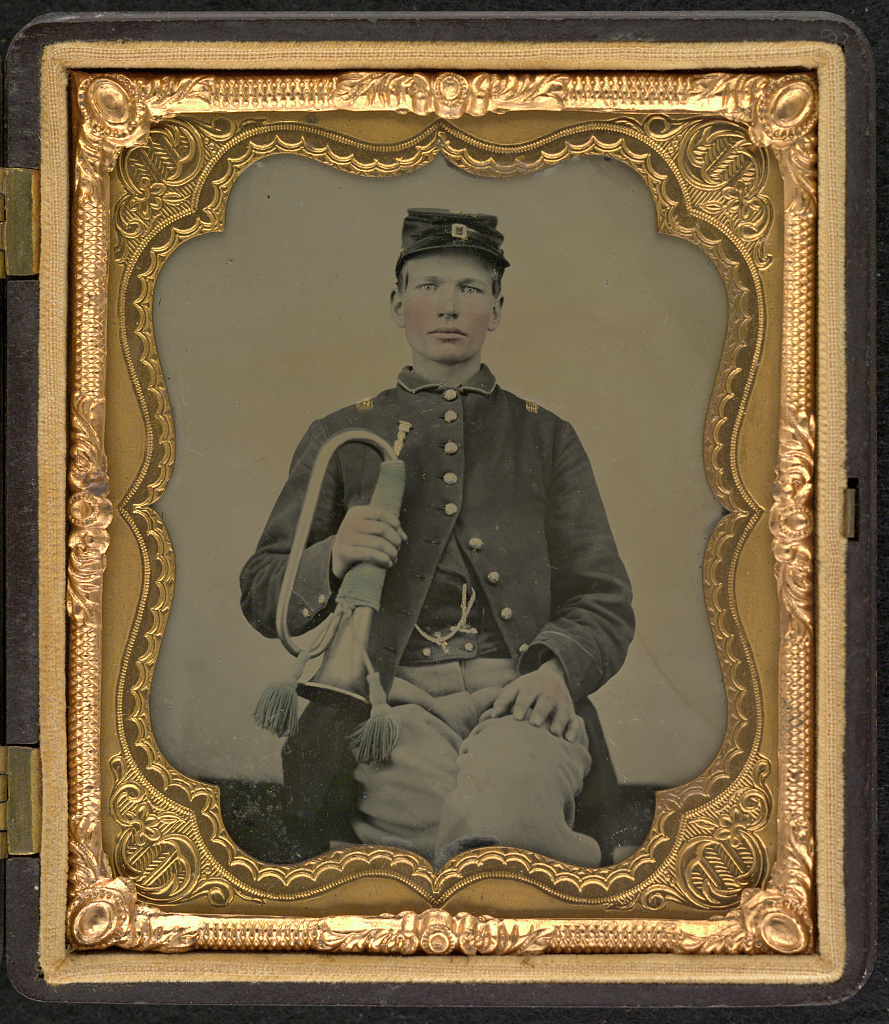
I thought I’d recheck the service info of some other Mequon-born or -related soldiers, including young Evander B. Bonniwell. As mentioned in earlier posts, Evander Bonniwell (1847-1930), was the son of Clark House neighbors James and Phebe (Capes) Bonniwell. Evander served as a bugler, rank of private, Company I, 2nd Regiment, Wisconsin Cavalry. He enlisted at age 14, and served for four years as company bugler.
[Unidentified soldier in Union uniform with bugle], photographer unknown, United States, c. 1861-1865, Library of Congress. Note: this is not a photograph of Evander B. Bonniwell, but of another young, unknown, Union Army bugler from Evander Bonniwell’s era.
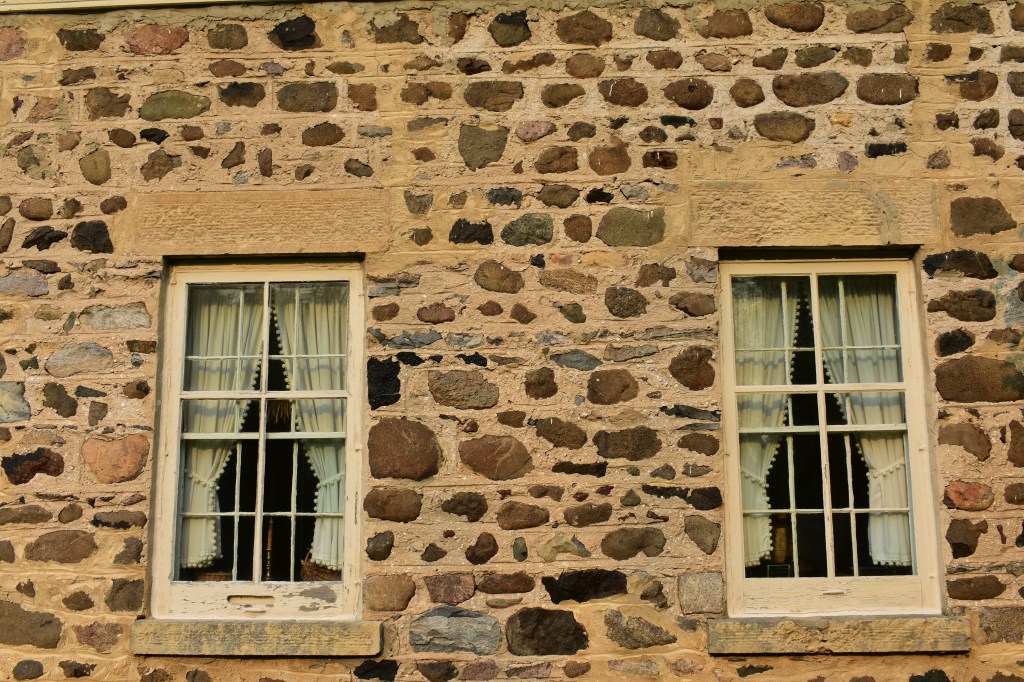
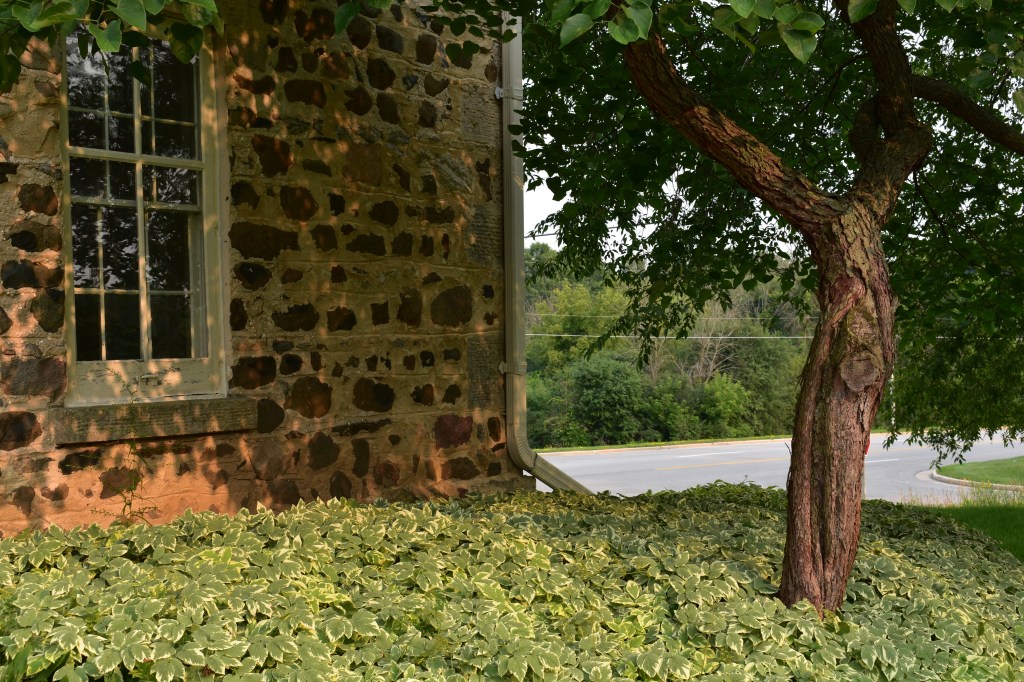
There was still some daylight left after the annual “Pie on the Patio” event at the Clark House last week, so I thought I’d stop by Mequon’s historic Isham Day House on my way home. Isham Day was one of Mequon’s first settlers, and he built his tidy home, sometimes known as the “Yankee Settler’s Cottage,” in 1839. It’s a town landmark, and I’d never been to see it.
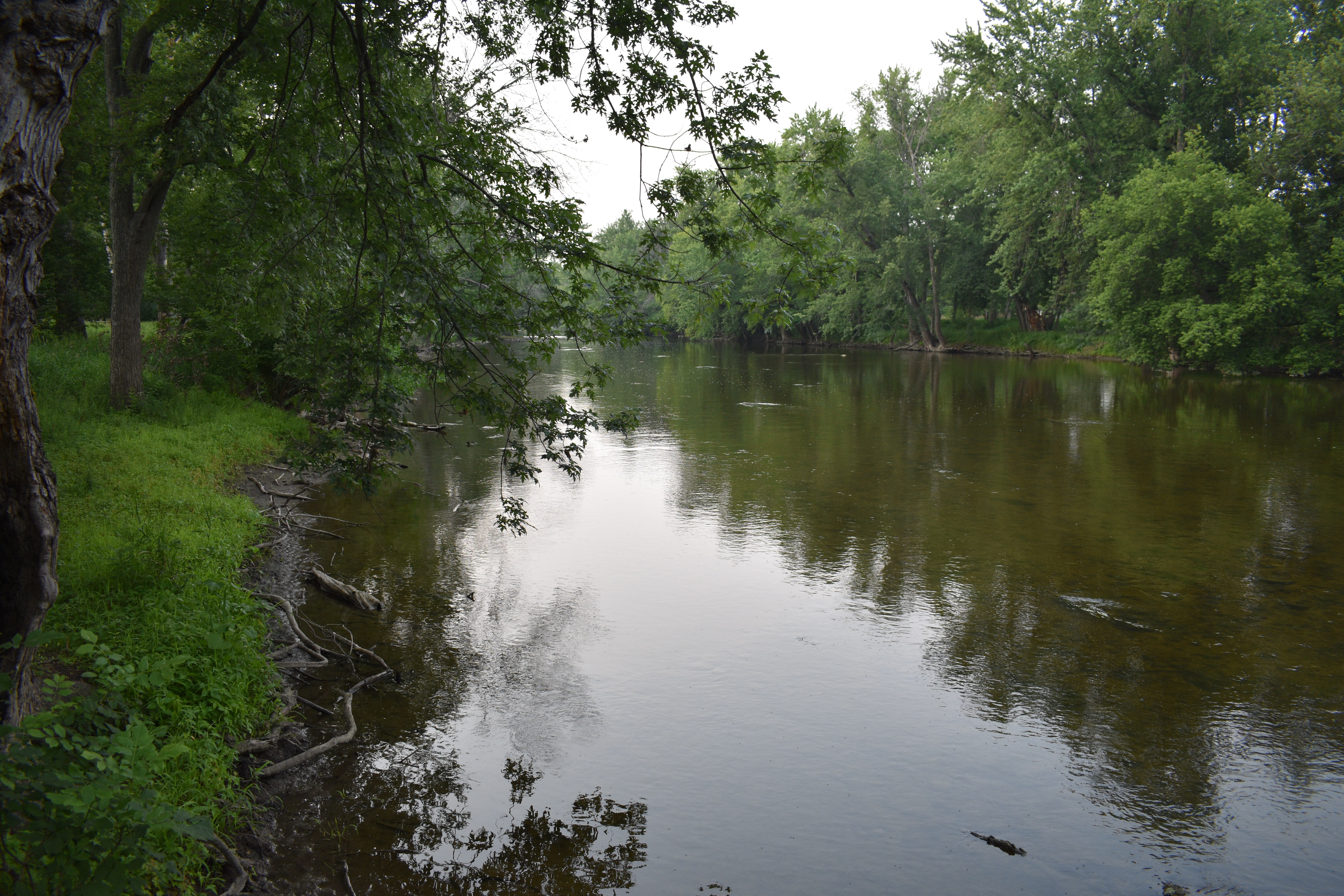
While enjoying my first look at the Day House, I also took the opportunity to meander through the adjacent Settlers Park. It’s a beautiful little park, with an accessible boardwalk that leads down to and along the west bank of the Milwaukee River. It’s a short, easy stroll; I highly recommend it. By the time you reach the riverbank you’ll forget you are in a busy 21st-century downtown.
Photo credit: Anna Perkins, 2021. Click any photo to open gallery and access larger versions of the images.







 Clark House Historian