Bitter cold? Sounds like fun!

In an earlier post, “Intensely Cold Weather,” we examined the negative effects of several episodes of bitterly cold winter weather during the Clark family’s era and shortly afterwards. Today we look at some of the positive aspects of frigid winters in our part of the Old Northwest.

It’s no secret. Wisconsinites like to do stuff outdoors in the winter cold. Ice fishing. Skating. Cheering for the Packers.
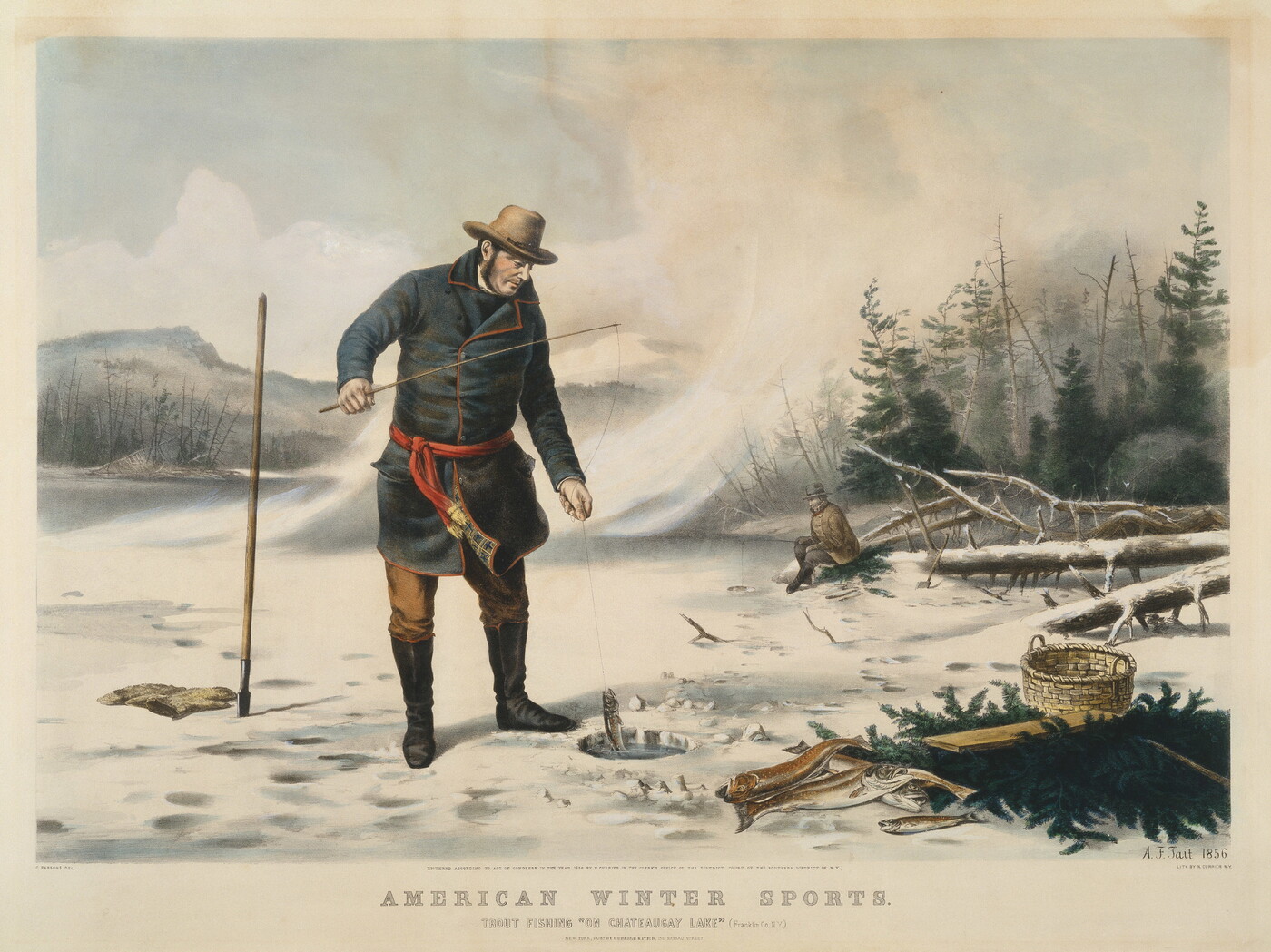
But the Green Bay Packers professional football team wasn’t organized until 1919, a full eighty years after Jonathan M. Clark bought his first parcel of Mequon land in 1839. So what did our intrepid Wisconsin pioneers do back in the mid-1800s when those deep snows fell and cold north winds began to blow? Well, if you believe the newspapers of the era, there was no finer way to occupy a clear, frosty day—or moonlit evening—than to bundle up, go outside, and enjoy a…

Continue reading
“Intensely Cold Weather”

We’re having some very cold weather this weekend, not unusual for Wisconsin in mid-winter. But it got me thinking, wondering what sort of winter weather did the Clarks and Turcks and Bonniwells experience, and what effect the did the cold have on their daily lives?

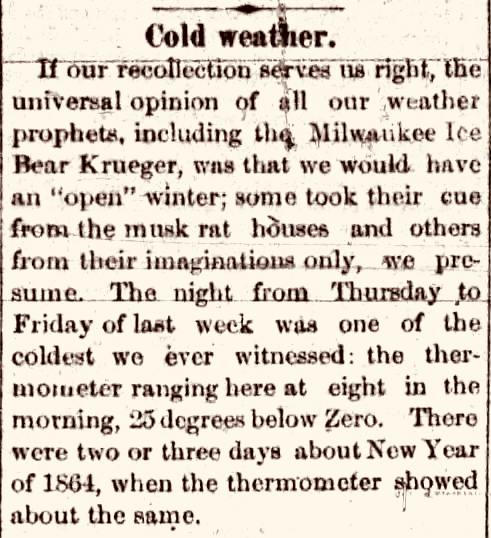
To find out, I started by searching digitized old newspapers, looking for the phrase “below zero,” in Wisconsin, between the years 1833-1899. Oh boy, did I get results! After narrowing my search to more local sources, I found this news item on page 2 of the Wednesday, January 2, 1884 issue of the Cedarburg News:

This article suggests that the winter of 1883-1884 was expected to be somewhat mild; an “open” winter was one with little or no snow cover on the ground. All the signs and predictions thought this would be the case. Apparently, the local muskrats had built their houses differently in 1883, as muskrats do when they expect a milder winter. The “universal opinion” of the “local weather prophets”—including Milwaukee’s famed “Ice Bear,” Henry Kroeger—thought so, too. But on the night of December 28-29, 1883, the thermometers in Cedarburg—just a few miles from the old Jonathan Clark farm—dropped to 25 degrees below zero (Farenheit). It was the coldest morning in decades.

But by the 1880s many of the older members of the Clark, Turck, and Bonniwell families had died, and many of the younger generation had left Ozaukee county and relocated to Milwaukee, Chicago, Minnesota, and elsewhere. Some or most of them may have missed this late-1883 cold snap. But this short article also mentions another, similar record cold spell, one that Mary Turck Clark and her children actually lived through, in Milwaukee, around the New Year of 1864.

Continue reading