The Holidays are upon us, and I’m taking time to celebrate and enjoy some time with family, That means I won’t have much new for you for the next week or so. (Don’t worry, we will wrap up the Alfred T. Bonniwell story in the very near future. I promise!) But in case you need a little Clark House history for fireside reading this week, I’m going to re-post several seasonal CHH favorites from past years. And since much of the Midwest is currently under a blizzard warning, I thought we should begin with this essay, which originally appeared in early 2021, was revised last February, and has been updated with an additional Currier & Ives lithograph for today’s post.
Snow, and often lots of it, was a feature of Jonathan and Mary Clark’s life in Wisconsin. And if you wanted to go to town or church or visit your neighbors during the snowy Wisconsin winter—or just enjoy a pleasant winter ride in the country—you’d need a sleigh.
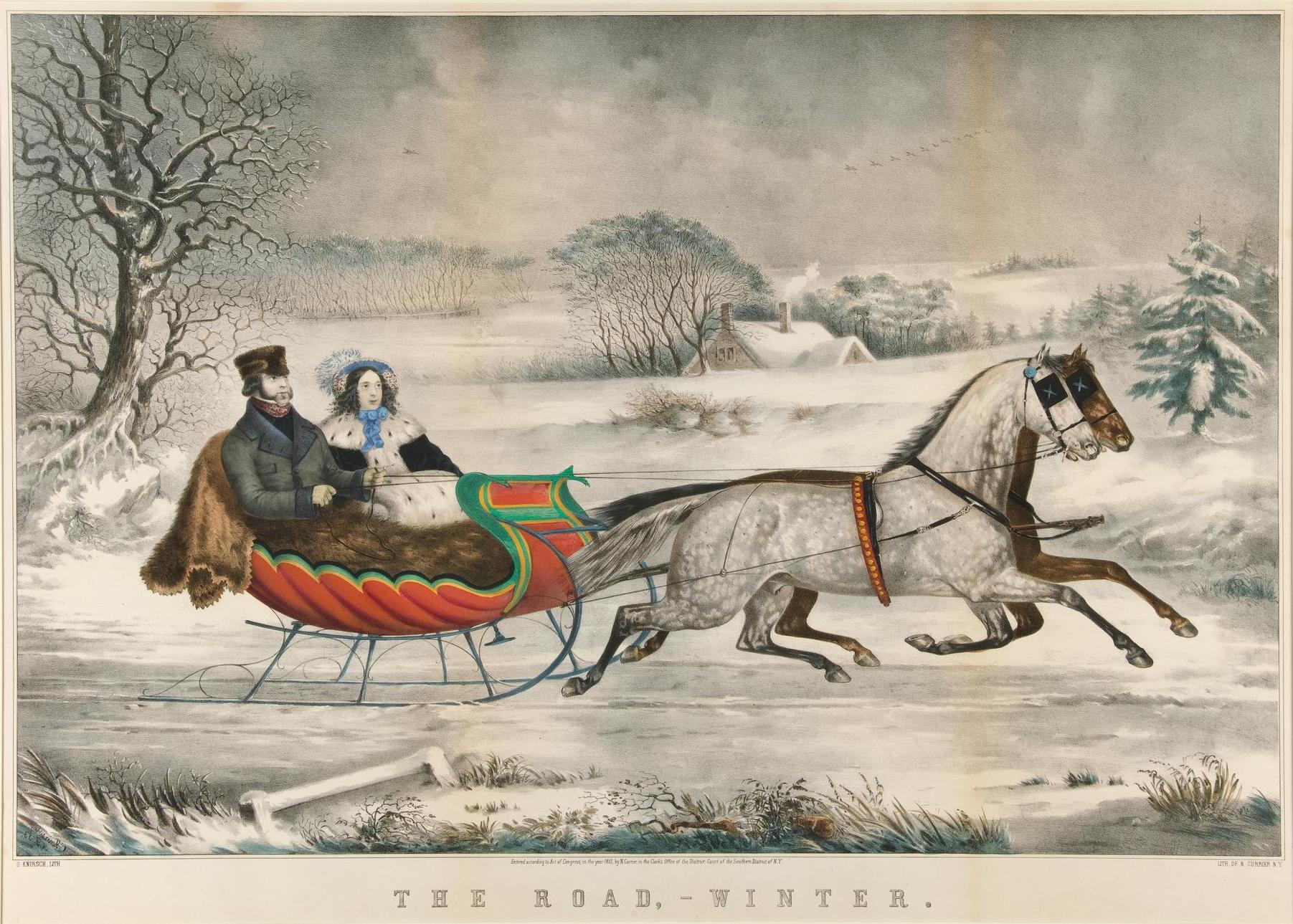
Currier, Nathaniel (1813-1888), The road, winter / O. Knirsch, lith., 1853. New York: Published by Currier & Ives. Yale University Art Museum, Whitney Collections of Sporting Art, given in memory of Harry Payne Whitney (B.A. 1894) and Payne Whitney (B.A. 1898) by Francis P. Garvan (B.A. 1897) June 2, 1932. Public domain. Click to open larger image in new window.1
We don’t know if the Clarks owned a sleigh while they lived in Mequon. I suspect they did, though their sleigh—and their clothing—may not have been quite as posh as those in this Currier & Ives lithograph from 1853.
Continue reading



 Clark House Historian