Monday: Map Day! – Wisconsin’s Federal Roads in 1840

I spent much of January and February preparing my March 9th, 2024, Civil War presentation at the Cedarburg History Museum. In that talk I tried to take a more personal and local look at the war by examining the military service of few of the Cedarburg relatives and future in-laws of 1868-1873 Clark House resident Fred Beckmann. In my research, I found some unique stories of their years of Union service in the 9th and 26th Wisconsin Infantry Regiments, as well as the impact of the war on families and friends back home in Wisconsin.

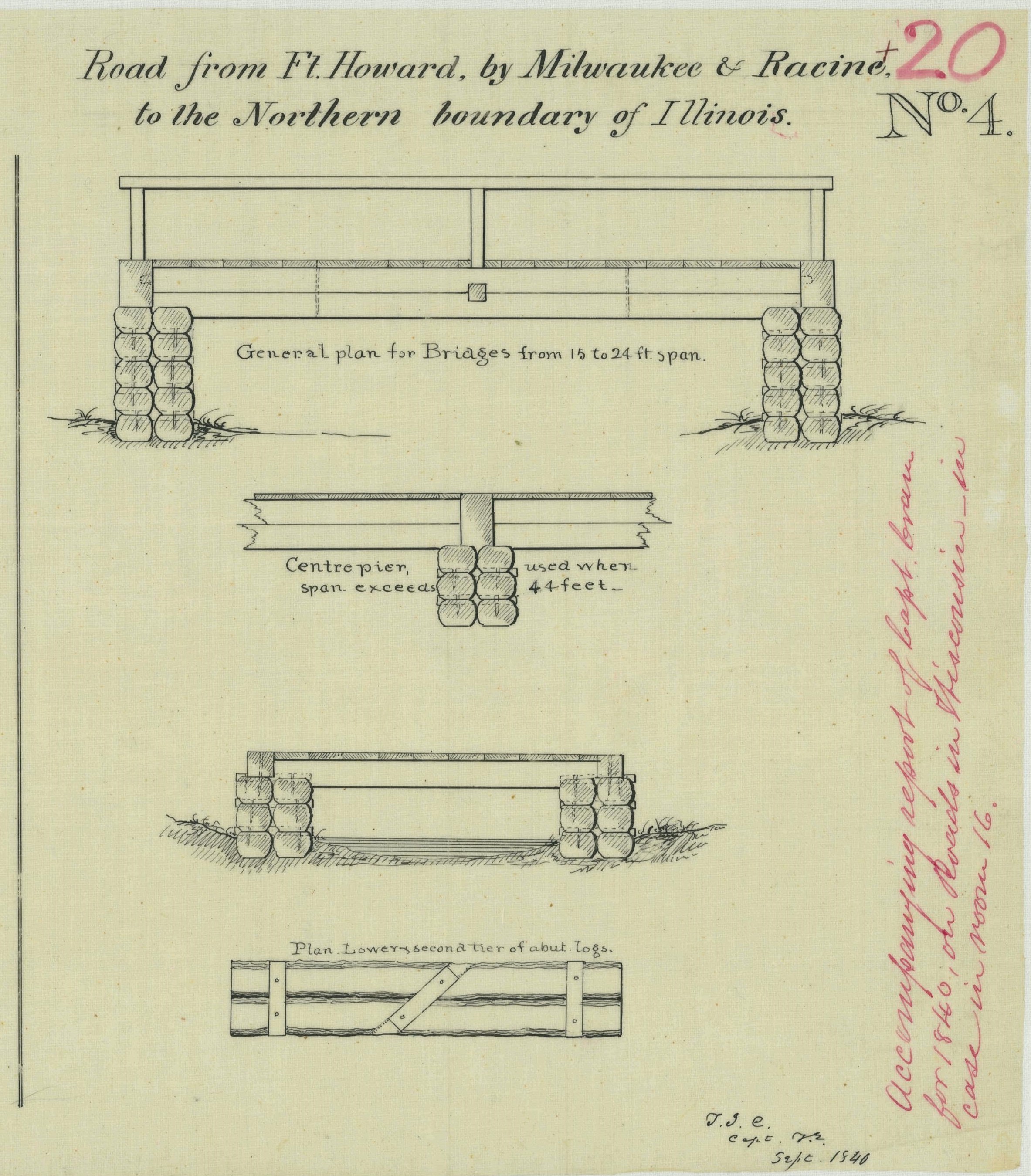
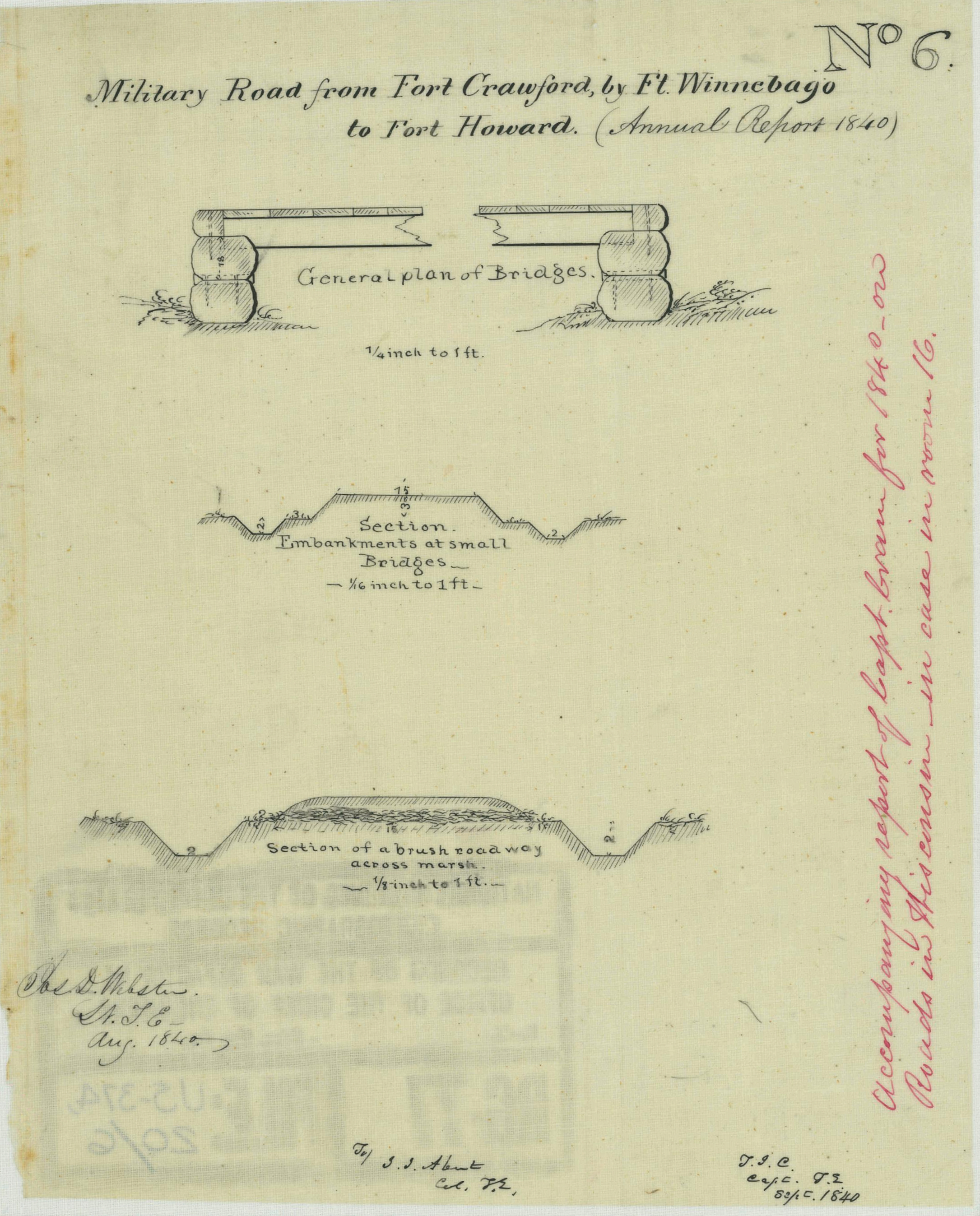
I also found several new online collections of unique maps and historical documents. Today’s map is from one of those online sources, the digitized map collection of the National Archives and Records Administration (more on NARA and its holdings, below). This map was made 20 years before the Civil War, in September, 1840, and is one of the earliest—if not the earliest—maps of the federal roads in Wisconsin Territory.1

U.S. Roads in Wisconsin Territory, 1840

Continue reading

Random bits of Gold Rush history

UPDATED, May 28, 2023 with additional information about Panama (City) and Postal Museum hours.

I’m still organizing a final roundup of what we know about the Bonniwell gold rush expeditions and when everyone returned to Wisconsin. Until that’s ready, here are three random bits of history that might interest you. All are closely tied to the homecoming experiences of the Clark House neighbors that went prospecting in California between 1849 and the mid-1850s. And if you missed our series of Farewell to California! The Bonniwell party returns, you can catch up with these links to Part 1, Part 2, Part 3 and Part 4.

Piracy

In a follow-up question to part 4 of this series, reader Laura Rexroth asked: “Reading about the robberies on land, traveling from San Francisco to New York, I’m wondering if there was any piracy at sea with all these ships carrying so much gold dust?”

That’s a good question. As I mentioned in my original reply, the U.S. Mail Steamers that served the Pacific and Atlantic sides of the California mail route were considered the latest and greatest in ocean transportation and I suspect they could probably out run most other ships of the day. That said, I did find this interesting news item, “Arming of the Chagres steamers” on page 2 of the September 10, 1851, Milwaukee Weekly Wisconsin:

Continue reading

Farewell to California! The Bonniwell party returns (part 4)

If you’re just joining us, you may want to read the first three parts of this series: (part 1), (part 2), and especially (part 3) before continuing with today’s Part 4.

April, 1851: Alfred T. and (George? or Charles?) Bonniwell to NYC

Based on the documents that I have been able to locate so far, the next members of the Bonniwell expeditions to return from California were Alfred T. Bonniwell and one of his older brothers.

Like Henry Bonniwell and P.M. Johnson at the end of 1850, in the spring of 1851 Alfred and his brother had a choice of routes and providers for the return home from San Francisco.

“Vessels Advertised,” for Panama and New York City, San Francisco Daily Alta California, January 10, 1851, page 1.

Like Henry Bonniwell and P.M. Johnson before them, Alfred and his brother appear to have chosen to travel on the ships of the Pacific Mail Steamship Company. They probably sailed on the steamer Sarah Sands from San Francisco to Panama (City). then crossed the isthmus of Panama (via some combination of horse, mule and/or canoe) and boarded the U.S.Mail Steamer Cherokee for the trip to New York:

Continue reading

Farewell to California! The Bonniwell party returns (part 3)

UPDATED, May 13, 2023, with a few minor text edits and additions for clarity.

If you’re just joining us, you might want to read the first two parts of this series: Farewell to California! The Bonniwell party returns (part 1) and Farewell to California! The Bonniwell party returns (part 2), before continuing with today’s Part 3.

Since its beginnings in 1848, news of the California Gold Rush was highly sought after across the nation. U. S. newspapers published all the latest doings, and raced to print the latest updates before competing papers could do so. Readers were breathlessly informed of the amounts of gold and cash (usually in the form of specie, or money as coins) that regularly arrived at eastern ports. Lists of passengers departing to and arriving from the gold fields occupied inch after inch of column space. Ships arriving from the west fed America’s appetite for the latest developments by carrying eastward the U.S. Mail and the latest California newspapers. Ship captains prided themselves on delivering the news more quickly than their competitors.

December, 1850: Henry Bonniwell and P. M. Johnson

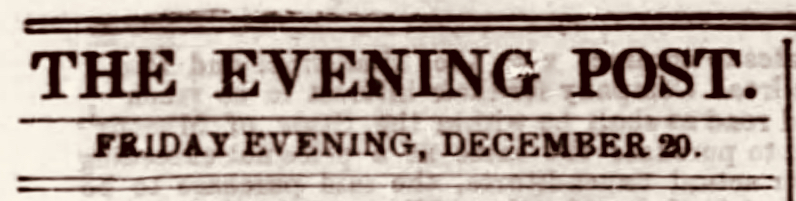
The result of this insatiable need for California news—available to 21st-century readers via digitized and searchable historic newspaper collections—is that I have been able to identify the names of several of our returning Bonniwell expedition members, along with their date of return and means of travel. From what I’ve learned so far, the first two of our Wisconsin adventurers to return were Henry V. Bonniwell and Phineas M. Johnson, who arrived in New York City harbor on the morning of Friday, December 20, 1850, as passengers on the steamer Cherokee.

Today’s Clark House Historian post uses just one of these gold rush articles as its source. The original article occupied the complete first column (and a bit of the second) of page 2 of the Friday evening, December 20, 1850, New York Evening Post. There’s a lot of news packed into the original article; to make that news easier to digest, I have divided the unbroken column of type into several smaller parts. Let’s take a closer look…

Continue reading

Farewell to California! The Bonniwell party returns (part 2)

The Bonniwell party’s prospectors had gone to the California gold fields via two very different routes. The 1849 party went west using a combination of land and water transportation to get from Milwaukee to El Dorado via steamship from New Orleans, then across the Isthmus of Panama by foot, mule and canoe, and then another steamer to San Francisco. Compared to the overland route, it was quicker, more reliable, and safer, but more expensive.

The larger Bonniwell party of 1850, led by “Captain” William T. Bonniwell, took the shorter but more strenuous—and risky—overland route. After fitting out their wagon train at Independence, Missouri, they headed west, across the vast plains and the great western desert, and then struggled up and across the Sierra Nevada. This route was much less expensive, and much less secure. They faced constant dangers, including lack of adequate food and water, unpredictable weather, equipment failure, the threat of bandits, and the possibility of Indian attack.

Both Bonniwell parties survived their journeys and made it to the gold region. They appear to have had some success, mixed with much tedium and many futile efforts. Eventually, our Wisconsin prospectors—like many, if not most, California gold seekers—decided to return home. And then the question became: how to get home safely, economically, and reasonably quickly? For most adventurers, especially those with even a modest amount of gold dust or specie in their baggage, it was clear that the overland route was too long, impractical and dangerous. So some kind of (mostly) ocean voyage seemed like the best bet, and the San Francisco newspapers were full of enticing deals for homeward travelers.

San Francisco to Panama, and beyond

San Francisco newspapers regularly featured advertisements for competing steamship lines. Here’s one from the Daily Pacific News of January 21, 1850, for the Empire City line, promoting the trip from San Francisco to Panama [City] on their newest ship, the Sarah Sands.

This 1850 lithograph, like the ad above, suggests the iron ship Sarah Sands was new, modern and cut a sleek line through the sea. Just the thing for a returning miner’s comfortable trip homeward:

Continue reading

Snow!

The Holidays are upon us, and I’m taking time to celebrate and enjoy some time with family, That means I won’t have much new for you for the next week or so. (Don’t worry, we will wrap up the Alfred T. Bonniwell story in the very near future. I promise!) But in case you need a little Clark House history for fireside reading this week, I’m going to re-post several seasonal CHH favorites from past years. And since much of the Midwest is currently under a blizzard warning, I thought we should begin with this essay, which originally appeared in early 2021, was revised last February, and has been updated with an additional Currier & Ives lithograph for today’s post.

Snow, and often lots of it, was a feature of Jonathan and Mary Clark’s life in Wisconsin. And if you wanted to go to town or church or visit your neighbors during the snowy Wisconsin winter—or just enjoy a pleasant winter ride in the country—you’d need a sleigh.

Currier, Nathaniel (1813-1888), The road, winter / O. Knirsch, lith., 1853. New York: Published by Currier & Ives. Yale University Art Museum, Whitney Collections of Sporting Art, given in memory of Harry Payne Whitney (B.A. 1894) and Payne Whitney (B.A. 1898) by Francis P. Garvan (B.A. 1897) June 2, 1932. Public domain. Click to open larger image in new window.1

We don’t know if the Clarks owned a sleigh while they lived in Mequon. I suspect they did, though their sleigh—and their clothing—may not have been quite as posh as those in this Currier & Ives lithograph from 1853.

Continue reading

Monday: Map Day! – To the gold fields, 1849 & ’50

I love a great map, and today’s example is particularly fine in several respects: as a detailed view of our hemisphere at a particularly dynamic moment in U.S. history, as an excellent example of mid-19th-century cartography, and—as we’ll see in our next post—as a clear illustration of how members of Mequon’s Bonniwell family made their way to and from the California gold fields in the heady days of the early Gold Rush of 1849 and 1850.1

Gold! where it is and how to get there, 1849

Atwood, John M., Map of the United States, the British provinces, Mexico &c.: showing the routes of the U.S. mail steam packets to California, and a plan of the Gold Region. New York: J. H. Colton, 1849. From the collection of Millard Fillmore. Library of Congress.

I’ve published some great old maps on Clark House Historian, and this is one of my favorites. In our next post, I’ll annotate a copy of this map to illustrate the Bonniwell’s Gold Rush travels in 1849 and the early 1850s. But today I’d like to show the map as it was in 1849, with all its “extra features.” I recommend you begin by clicking the map image, above, which opens a much higher-resolution copy of the map in a new window (FYI, this may take a few seconds; it’s a big, detailed image).

Continue reading